
What if true healing doesn't force you to choose between modern medical science and whole-person wellness? Too often, people assume that holistic opioid recovery means avoiding proven medical treatments or enduring uncomfortable withdrawal alone. In reality, sustainable healing happens when we stop treating you like a symptom on a chart and start caring for the complete human being behind the health history.
If you've ever felt like an anonymous number in a crowded clinic, struggled with physical pain that doctors ignored, or worried about the unfair stigma surrounding medication, your feelings make complete sense. It is exhausting to feel like healthcare only focuses on the substance you want to leave behind, rather than your overall dignity and daily peace of mind.
Discover how integrating medical treatment, mental health support, and primary care creates a sustainable path to long-term opioid recovery. In the guide ahead, we explore what compassionate, full-spectrum care looks like, from quietly managing cravings and restoring physical vitality to finding a dedicated, non-judgmental medical partner who supports your future.
Key Takeaways
- Explore how holistic opioid recovery relies on the Bio-Psycho-Social model to treat your biological needs, emotional health, and everyday living environment as connected parts of one journey.
- Discover why medications like Suboxone, Sublocade, and Vivitrol serve as essential stabilizing foundations that make deeper emotional and lifestyle healing possible.
- Learn how integrating dedicated primary care resolves overlooked physical health conditions, chronic discomfort, and nutritional needs under one compassionate roof.
- Understand how behavioral health counseling equips you with healthy coping mechanisms, self-compassion, and personalized strategies for lasting emotional resilience.
- Find out how modern outpatient scheduling and telehealth consultations provide the privacy and flexibility you need to heal without pausing your career or family life.
What is Holistic Opioid Recovery? Defining the Bio-Psycho-Social Model
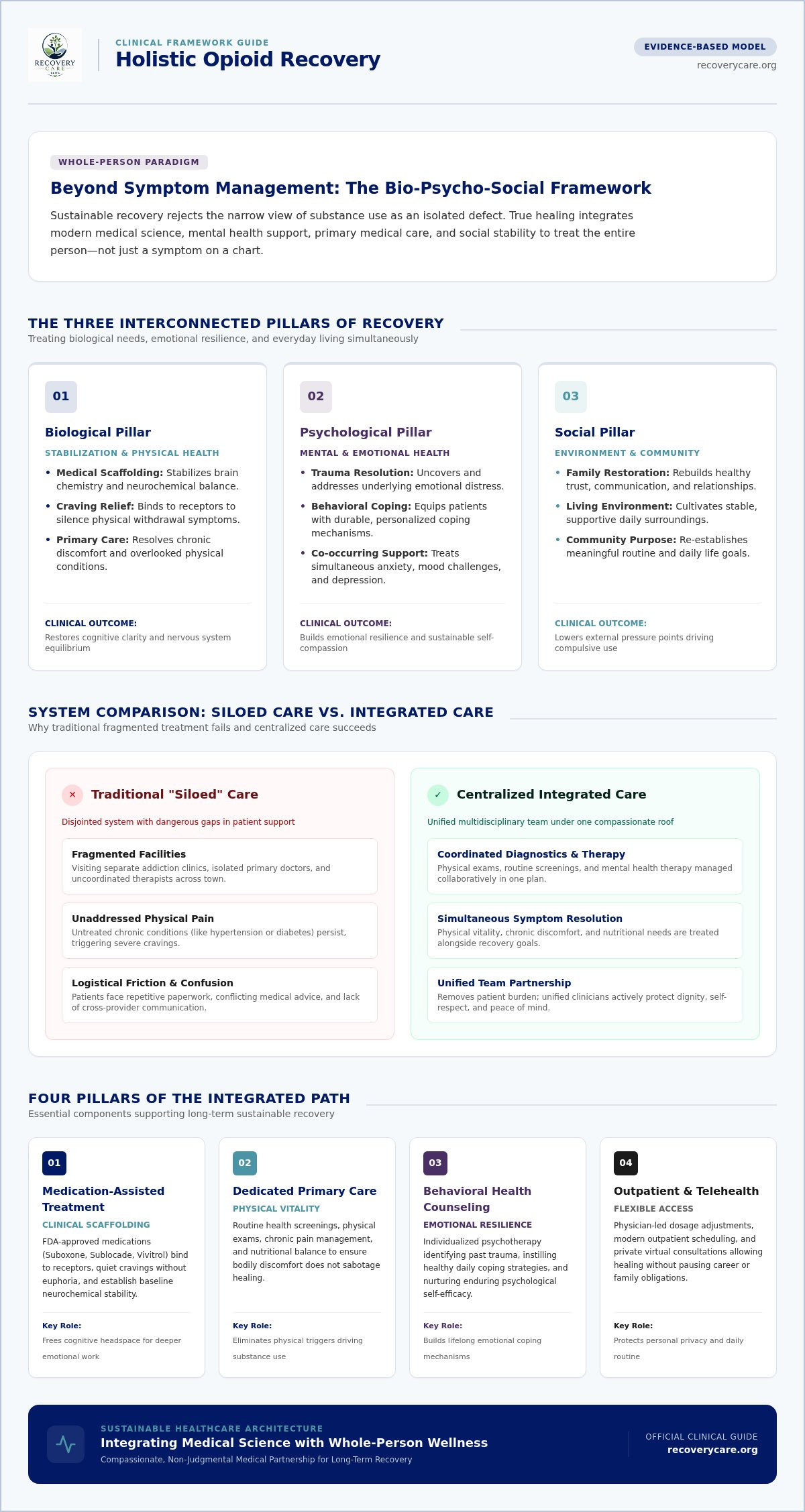
For decades, conventional treatment treated substance use as a simple moral failing or an isolated biological defect. If you stopped taking the substance, you were considered "cured," regardless of whether your body ached, your anxiety spiraled, or your home life remained chaotic. True holistic opioid recovery rejects this narrow view. Instead, it recognizes that lasting sobriety requires healing your biological systems, emotional health, and social connections simultaneously.
Clinically, this whole-person perspective relies on the biopsychosocial model, a comprehensive framework that views health through three interconnected lenses. Substance use disorder alters brain chemistry, but it also intertwines with emotional distress, physical illness, and community stressors. Moving past simple abstinence allows care to focus on total quality of life. By answering every underlying pressure point that drives compulsive substance use, this integrated framework dramatically lowers the risk of relapse.
The Three Pillars of Holistic Healing
Sustainable recovery relies on three foundational elements working in harmony:
- Biological: Modern medications stabilize brain chemistry, soothe physical cravings, and silence relentless withdrawal symptoms so you can think clearly.
- Psychological: Dedicated therapy helps uncover unresolved trauma, equips you with healthy coping mechanisms, and treats co-occurring mood challenges.
- Social: Rebuilding trust with family, creating safe living environments, and reconnecting with community establish purpose beyond recovery.
Why Traditional "Siloed" Care Often Fails
Traditional healthcare routinely separates physical medicine from addiction services. You might visit a specialized clinic for recovery, travel across town to a separate doctor for untreated diabetes or hypertension, and see a therapist who knows nothing about your medical history. This disjointed approach creates massive patient confusion, repeated paperwork, and dangerous gaps in care. When severe physical discomfort goes unaddressed, cravings often return with a vengeance.
A centralized outpatient model changes the dynamic completely. Having your physical exams, routine diagnostic screenings, mental health support, and medication management coordinated under one compassionate roof removes logistical friction. You aren't left managing conflicting advice on your own. Instead, you gain a unified team focused on restoring your full vitality, self-respect, and daily peace of mind.
The Clinical Foundation: Integrating MAT into a Holistic Plan
A common misconception in modern healthcare suggests that a holistic approach must avoid pharmaceutical intervention. In truth, Medication-Assisted Treatment (MAT) is a clinical cornerstone of holistic opioid recovery. Opioid use disorder alters the brain's delicate neurochemistry, locking individuals into persistent cycles of physical cravings and severe withdrawal. Expecting someone to resolve complex emotional trauma or adopt positive wellness habits while their body experiences intense chemical distress is neither realistic nor compassionate.
Utilizing FDA-approved medications for opioid use disorder establishes physical equilibrium. Proven therapies like suboxone treatment bind to opioid receptors, effectively quieting cravings without producing a euphoric high. This medical baseline frees your mental energy, creating the calm headspace necessary to engage deeply in behavioral counseling and rebuild your life.
Stabilizing the Brain for Deeper Work
Prolonged opioid exposure downregulates natural dopamine production and disrupts stress response networks. Stabilization acts as medical scaffolding. By eliminating the constant fear of withdrawal sickness, medication restores cognitive clarity and emotional baseline stability. When your nervous system feels secure, personal reflection, therapy, and health routines can finally take root.
Personalized Medication Management
Effective recovery plans must flex around individual needs rather than rigid protocols. Under physician-led guidance, dosages are adjusted based on your physical comfort, lifestyle, and recovery milestones. While daily sublingual films offer accessible stability, long-acting depot therapies eliminate the daily stress of taking a pill.
Transitioning to a monthly sublocade injection or Vivitrol injection provides continuous receptor coverage without daily reminders of past habits. This level of personalized care protects privacy, removes diversion risks, and frees you to focus entirely on daily living. If you are exploring comprehensive care options, you can connect with a supportive care team to evaluate the medical approach that aligns best with your personal goals.
Healing the Body: The Essential Role of Primary Care
Active substance use takes a profound toll on physical well-being. Years of navigating intense stress often mean routine doctor appointments get canceled, minor symptoms get ignored, and basic wellness falls by the wayside. That is why primary care for recovery patients is an indispensable component of long-term healing. When physical discomfort, chronic inflammation, or undiagnosed ailments persist, the brain stays in survival mode, making sustained mental peace far harder to protect.
Comprehensive physicals for recovery patients in early treatment establish a clear, non-judgmental health baseline. A dedicated clinician looks beyond the addiction itself to uncover vital signs of wear, such as cardiovascular strain, liver stress, infectious disease exposure, or severe vitamin deficiencies. Healing these physical wounds restores baseline stamina and mental focus, reinforcing your commitment to holistic opioid recovery.
Diagnostic Testing and Health Monitoring
In-house laboratory screenings remove the guesswork from bodily healing. Utilizing routine diagnostic testing for addiction treatment ensures patient safety across several vital areas:
- Hepatic and Renal Panels: Tracking liver and kidney function to ensure medications are metabolized safely and effectively.
- Cardiovascular Screening: Checking blood pressure, resting heart rates, and lipid balances stressed by historical instability.
- Nutritional Bloodwork: Identifying deficiencies in B vitamins, iron, and vitamin D that trigger deep fatigue and brain fog.
Reviewing these objective markers alongside your clinician shifts health from an abstract fear into a measurable recovery project where you can visibly trace progress.
Managing Co-occurring Conditions
Untreated pain represents one of the most significant triggers for opioid recurrence. When a doctor understands both general medicine and addiction recovery, you don't have to choose between suffering in silence or risking your stability. Your care team can recommend non-opioid medications, targeted physical therapy, and anti-inflammatory strategies that ease distress safely; specialized centers like Minsu’s Healing Oasis highlight how gentle manual therapy and physiotherapy can assist the body in releasing stored tension and soothing physical strain.
General practitioners who understand substance use disorder also recognize the ripple effects of chronic insomnia, sleep apnea, and gastrointestinal issues common in early sobriety. Treating these day-to-day ailments gives your nervous system the physiological peace it needs to heal completely.
While medication stabilizes physical receptor activity, long-term freedom requires retraining your cognitive habits and emotional responses. Engaging in structured counseling for opioid addiction supplies the tools needed to untangle old thought loops, process difficult memories, and navigate everyday triggers without reverting to past coping strategies.
Every person processes emotional healing differently. Some individuals find immense comfort in one-on-one sessions, where deep personal histories and private concerns can be unpacked at a personalized pace. Others flourish in group therapy settings, discovering profound relief in shared experiences and mutual validation. Techniques like Cognitive Behavioral Therapy (CBT) empower you to spot automatic negative assumptions, challenge destructive impulses, and replace them with intentional, healthy responses. As emotional regulation takes hold, high-stress situations lose their power to disrupt your stability.
The Power of Non-Judgmental Support
Shame remains one of the largest obstacles to sustained recovery. When you walk into a clinical space marked by warmth and confidentiality, defensiveness naturally gives way to honesty. Therapeutic relationships built on genuine empathy directly improve treatment retention. If setbacks or intense cravings occur, a compassionate counselor treats them as valuable diagnostic information rather than personal failure, adjusting your care plan without guilt or punitive measures.
Mindfulness and Stress Management
Early sobriety often brings sudden emotional volatility, sometimes called toxic stress. When old numbing mechanisms are gone, everyday pressures can feel overwhelming. Practical grounding practices break this cycle by connecting body and mind:
- Box Breathing: Slowing your breath to signal immediate physiological safety to an overactive nervous system.
- Sensory Grounding: Using physical touch, sight, and sound to pull your attention away from racing mental panic.
- Somatic Awareness: Recognizing how tension in your jaw, chest, or stomach directly fuels the urge to escape.
Mastering these simple strategies gives you the confidence to navigate life's inevitable storms without fear. To build an emotional toolkit designed around your unique life circumstances, schedule a behavioral health appointment with our dedicated clinical team today.
Designing Your Holistic Path: Outpatient and Telehealth Options
Reclaiming your life shouldn't require dismantling it. Inpatient stays can disrupt employment, detach you from family, and isolate you from daily routines. Outpatient care creates a sustainable bridge, allowing you to practice new habits directly within your normal environment. You sleep in your own bed, maintain career responsibilities, and lean on local support systems while receiving comprehensive medical attention.
Modern telehealth options have expanded this convenience significantly. Integrating virtual care into holistic opioid recovery means that medical appointments bend around your life, not the other way around. Evaluating prospective recovery programs requires looking past standard prescription services. You want a provider that coordinates behavioral health, monitors physical benchmarks, and provides non-judgmental accountability at every step.
The Benefits of Telehealth in a Holistic Model
Incorporating virtual care removes significant logistical friction from the healing journey:
- Eliminating Transit Obstacles: Long commutes, unreliable vehicle access, and costly childcare no longer force you to cancel appointments.
- Uninterrupted Treatment Continuity: If work commitments shift or you travel, telehealth addiction counseling keeps your scheduled check-ins intact.
- Total Personal Privacy: Secure, confidential video consultations allow you to engage honestly from the quiet comfort of your private living space.
Taking the First Step Toward Whole-Person Healing
Preparing for your initial consultation is simpler than most people anticipate. You don't need all the answers or a flawless track record; you only need a willingness to speak openly about your challenges and goals. During your intake, your clinical team will review your complete health history, address current withdrawal symptoms, and outline tailored care options.
Navigating the financial side of treatment shouldn't be an obstacle, either. Comprehensive outpatient centers frequently accept insurance plans like Medicaid and Medicare, helping make combined recovery and primary medical care broadly accessible. Under the clinical oversight of experienced practitioners like Medical Director Dr. Heather Rosen, your care plan gradually evolves from acute stabilization toward sustainable vitality, emotional balance, and true long-term wellness.
Embrace a Better Future with Whole-Person Care
You deserve a healthcare experience where your dignity is respected and your complete health is prioritized. Achieving lasting wellness is about far more than simply putting down a substance. Sustainable healing happens when you stabilize your brain chemistry with evidence-based medications, restore your physical vitality through attentive primary care, and rebuild emotional strength through counseling. That is the lasting promise of holistic opioid recovery.
You do not have to piece together fragmented appointments or navigate judgment from disconnected providers. Under the compassionate guidance of Medical Director Dr. Heather Rosen, our team provides an integrated medical home where primary care, Medication-Assisted Treatment, and behavioral therapy align under one roof. With accessible telehealth consultations and broad coverage options through Medicaid and Medicare, expert outpatient support fits right into your daily life.
A healthier, more stable tomorrow is within reach. Begin your journey to whole-person healing with Recovery Care today.
Frequently Asked Questions
What does "holistic" mean in the context of opioid recovery?
In opioid recovery, holistic care means treating your mind, body, and social environment together rather than viewing substance use as an isolated issue. It combines evidence-based medications with primary medical care and counseling. This coordinated framework resolves underlying emotional pain, physical illness, and daily stressors so you can build a stable, healthy life.
Can I still use Suboxone if I want a holistic recovery?
Yes, medications like Suboxone serve as a foundational element of modern holistic opioid recovery. Far from conflicting with holistic values, FDA-approved medications calm severe cravings and restore brain chemistry. This medical baseline gives you the physical comfort and mental focus needed to engage in counseling, improve your physical health, and rebuild routines.
How does primary care improve my chances of staying sober?
Primary care significantly improves recovery outcomes by diagnosing and treating unresolved physical pain, nutritional deficiencies, and chronic ailments that often trigger relapse. When you feel physically sick or exhausted, emotional resilience drops. Addressing blood pressure, chronic inflammation, or sleep issues removes physiological distress so your body can heal alongside your mind. For those looking to address structural strain and support nervous system health naturally, you can check out Restore Chiropractic Center to discover how specialized upper cervical care aids overall physical recovery.
Is holistic opioid recovery covered by Medicaid or Medicare?
Yes, outpatient holistic opioid recovery programs typically accept both Medicaid and Medicare for core medical and counseling services. Coverage generally includes doctor consultations, medications like Suboxone, diagnostic testing, and behavioral therapy. Dedicated care teams help verify your specific benefits ahead of time so you can begin treatment without financial surprises.
What is the difference between holistic and alternative treatment?
Holistic treatment integrates conventional medical science with lifestyle and behavioral support, whereas alternative treatment often attempts to replace proven medicine with unverified therapies. In an integrated recovery model, prescription treatments and clinical diagnostics form the foundation. Emotional counseling and healthy lifestyle habits then work alongside medical care to support the whole person.
How often do I need to see a doctor in a holistic program?
Appointment frequency depends on your current stage of care and individual health needs. During early stabilization, you might meet with your clinical team weekly or bi-weekly to fine-tune medications and manage symptoms. As stability grows, appointments often transition to monthly outpatient visits or telehealth check-ins, paired with ongoing counseling that fits your schedule.
Can holistic recovery be done through telehealth?
Yes, many aspects of a comprehensive plan can be delivered securely through telehealth consultations. Virtual visits allow you to attend medical evaluations, manage buprenorphine prescriptions, and complete therapy sessions from home. If routine diagnostic screenings or physical exams are required, your care team coordinates them smoothly alongside your virtual care.
Why is diagnostic testing included in a holistic plan?
Diagnostic testing provides objective clinical insight into your overall physical health, ensuring your recovery plan is both safe and effective. Routine lab work checks liver and kidney function, monitors metabolic balance, and detects nutritional gaps caused by past stress. These clear medical markers allow your physician to tailor primary care treatments and track physical healing.


