
What if the greatest obstacle to your recovery isn't a lack of willpower, but a neurological hurdle that your body simply cannot clear alone? Many people hesitate to start suboxone treatment because they fear the agony of withdrawal or the weight of social stigma. You might feel trapped between the physical pain of dependency and the frustration of searching for a doctor who accepts Medicaid or Medicare. It's exhausting to feel like the healthcare system doesn't see the person behind the diagnosis, but your struggle doesn't define your future.
We agree that you deserve a path to wellness that prioritizes your dignity and comfort. This guide will show you how a medically backed path provides the tools to overcome opioid dependency and reclaim your life. We will explore 2026 protocols for physical stabilization, methods for reducing cravings, and how integrating primary care and counseling helps you return to a healthy work and family routine.
Key Takeaways
- Understand how the "lock and key" science of stabilization reduces withdrawal symptoms and cravings to give your brain the space it needs to heal.
- Learn why suboxone treatment is a medically backed tool for managing a chronic condition, allowing you to move past the stigma of addiction.
- Explore the importance of a holistic recovery plan that integrates primary care and behavioral health to support your long-term success.
- Identify the simple steps to start your journey through confidential medical evaluations, whether you prefer in-person visits or the convenience of telehealth.
What is Suboxone Treatment and How Does It Support Recovery?
Taking the first step toward recovery is a courageous act of self-care. It's a moment where you decide that your future is worth more than the cycle of dependency. Suboxone treatment serves as a vital bridge in this transition, offering a medically backed way to stabilize your body and mind. As a cornerstone of Medication-Assisted Treatment (MAT), it's widely recognized as the gold standard for outpatient opioid recovery because it addresses the physical hurdles that often make early sobriety feel impossible.
It's vital to understand that addiction is a chronic medical condition, not a moral failure or a lack of willpower. Your brain chemistry has changed, and seeking medical help is a responsible step toward healing. Using medication to manage these changes is a medical necessity that provides the stability needed to reclaim your daily life and focus on long-term wellness.
The Components: Buprenorphine and Naloxone
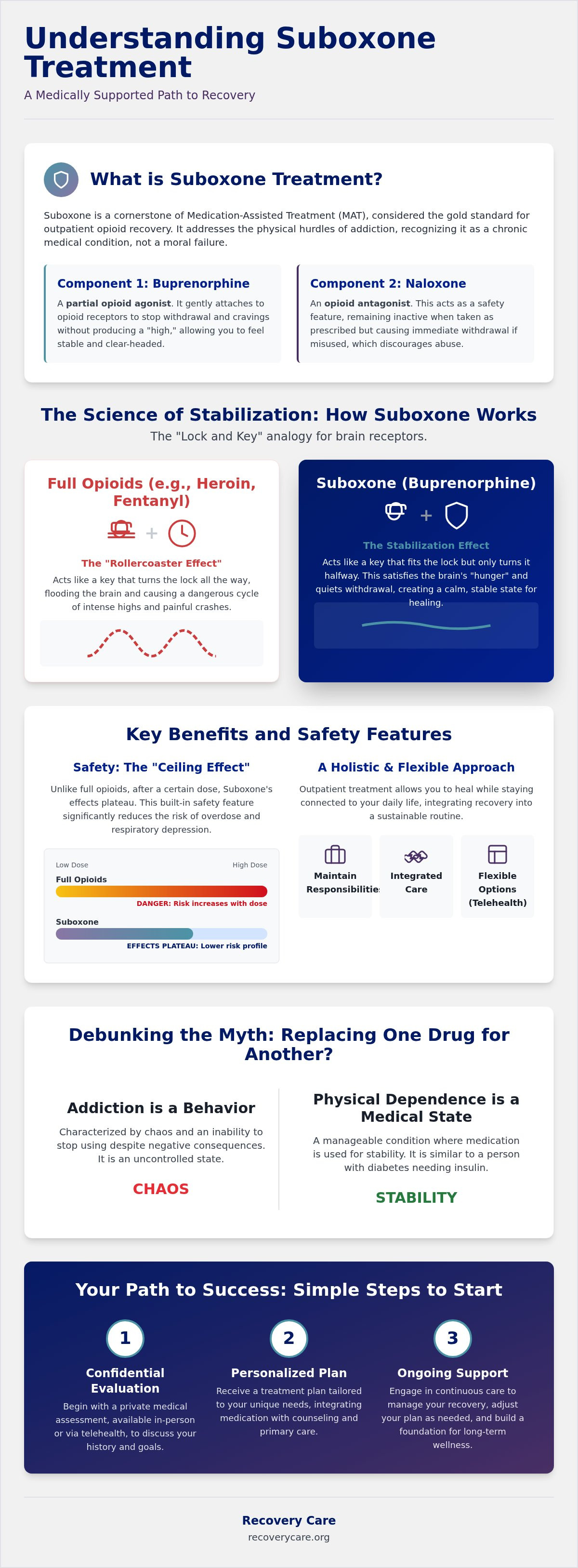
The effectiveness of this medication lies in its two primary ingredients. Buprenorphine is a partial opioid agonist, which means it attaches to the opioid receptors in your brain just enough to satisfy physical cravings and prevent withdrawal symptoms without creating a dangerous high. This allows you to feel clear-headed and physically stable throughout the day.
Naloxone is included as an essential safety mechanism. It's an antagonist that remains inactive when the medication is taken as prescribed but triggers withdrawal if the substance is misused or injected. These two components work in tandem to satisfy the brain's chemical needs while providing a built-in layer of protection against misuse.
Why Outpatient Treatment is Effective
Many people worry that they'll have to leave their jobs or families to find help, but suboxone treatment through an outpatient model offers a different path. You can receive expert care while remaining grounded in your community. This continuity is often a key factor in long-term success because it allows you to practice new coping skills in the same environment where you live and work.
- Maintain Responsibilities: You don't have to choose between your career and your health.
- Family Support: Stay close to the people who care about you most during your journey.
- Flexible Care: Modern options like telehealth consultations make it easier than ever to fit medical appointments into a busy schedule.
By integrating recovery into your existing routine, you build a sustainable lifestyle that supports lasting wellness without the disruption of inpatient stays. This flexibility empowers you to stay engaged with your life while you heal.
The Science of Stabilization: How Suboxone Works in the Brain
Understanding the biology of recovery can turn a source of fear into a source of hope. To visualize how suboxone treatment works, think of the opioid receptors in your brain as tiny locks. Full opioids, like heroin or fentanyl, act as keys that turn these locks all the way, flooding the system with chemicals that cause a high followed by a devastating crash. This cycle creates a "rollercoaster" effect that leaves you physically and emotionally exhausted. Buprenorphine, the primary ingredient in Suboxone, is different. It acts like a key that fits the lock perfectly but only turns it halfway.
This partial activation is the secret to stabilization. It satisfies the brain's physical "hunger" for opioids, which effectively quiets the noise of withdrawal. When your brain is no longer screaming for the next dose, the chemistry of your nervous system finally has the opportunity to begin healing. Stabilization provides the quiet, steady environment your brain needs to repair neural pathways that were damaged during active use. It isn't just about feeling better in the moment; it's about giving your body the biological space to recover over time.
The Ceiling Effect and Safety
One of the most reassuring aspects of this medication is the "ceiling effect." This means that after a certain point, taking more of the medication doesn't increase its effects. This built-in safety feature significantly reduces the risk of respiratory depression, which is the primary cause of opioid-related tragedies. Because the medication has a long half-life, it stays in your system for 24 to 72 hours, providing a consistent level of relief that prevents the sudden onset of sickness.
It is helpful to distinguish between physical dependence and the behavior of addiction. Being dependent on a daily medication to manage a chronic condition is a healthy, medical state. It's no different than a person with high blood pressure taking a daily pill to stay safe. If you're ready to move away from the chaos of active use, you can speak with a compassionate provider about how to begin your journey.
Managing Cravings and Withdrawal
Trying to "white-knuckle" your way through withdrawal is incredibly difficult and often leads to a cycle of relapse. The physical pressure of cravings isn't a sign of weakness; it's a biological response. Suboxone helps by binding so tightly to those brain receptors that it actually blocks other opioids from attaching. This creates a protective shield that prevents you from feeling the effects of other substances.
By removing the constant threat of painful withdrawal symptoms, you gain the mental clarity needed to focus on your life again. Stabilization is the essential first step that makes all other behavioral changes possible. It provides the firm ground you need to stand on while you rebuild your career, your relationships, and your sense of self.
Debunking the Myth: Is Suboxone Just Replacing One Drug with Another?
One of the most persistent hurdles in recovery is the weight of judgment from others, and sometimes, from yourself. You might hear the claim that using medication is just "trading one addiction for another." This perspective is not only inaccurate but also harmful because it creates unnecessary shame that prevents people from seeking help. In reality, suboxone treatment is a evidence-based medical intervention for a chronic disease. Just as a person with diabetes uses insulin to regulate their blood sugar, someone in recovery uses medication to stabilize their brain chemistry. It's a tool that restores balance, not a substitute for a high.
Addiction vs. Physical Dependence
It's vital to distinguish between these two concepts to understand why medical support is so effective. Addiction is a behavioral disorder characterized by uncontrolled use despite negative consequences to your health, job, and relationships. It's the chaotic, often desperate search for the next dose that consumes your mental energy and daily life.
Physical dependence is a different physiological state where the body has adapted to a substance. Many people are physically dependent on blood pressure medication or antidepressants to function safely. By providing a steady, controlled medical dose, suboxone treatment eliminates the "high" and the "crash." This breaks the cycle of drug-seeking behavior and allows you to focus on the following goals:
- Engaging deeply in behavioral health counseling to address root causes.
- Repairing and strengthening relationships with family and friends.
- Re-engaging with career goals and personal interests with a clear mind.
The Evidence for Long-Term MAT
The data supporting Medication-Assisted Treatment is overwhelming. Studies consistently show that individuals who utilize MAT have significantly higher success rates than those who attempt abstinence-only programs. Research indicates that MAT can reduce overdose deaths by approximately 50 percent, according to data from the National Institute on Drug Abuse. This isn't a temporary patch; it's a life-saving foundation that provides the security you need to build a new life.
Beyond survival, long-term stabilization supports your cognitive health. It gives the prefrontal cortex, which is the part of the brain responsible for decision-making and logic, the time it needs to heal from the impact of substance use. Recovery is a marathon, not a sprint. Taking the time to heal your brain with the help of medical experts is a sign of strength and a long-term commitment to a healthier, more stable future.
A Holistic Approach: Integrating Primary Care and Counseling
True healing happens when we stop looking at a diagnosis and start looking at the person. While suboxone treatment provides the physical stability needed to function, it's only one piece of a much larger puzzle. Lasting recovery requires a holistic approach that addresses your physical, emotional, and mental well-being simultaneously. By integrating primary care and behavioral health, you aren't just managing a condition; you're hitting a comprehensive health reset button on your entire life. This model ensures that no part of your wellness is left to chance, whether you are focusing on addiction recovery or exploring specialized resources like bariatric surgery New Jersey to improve your long-term physical health and vitality.
This philosophy of whole-person care extends to all stages of life, including the senior years, where Olympia Senior Care Services provides personalized adult family home care to ensure dignity and specialized support for older adults.
Medication handles the biological side of dependency, but counseling provides the emotional tools to stay the course. Individual and group therapy sessions are designed to help you identify specific triggers and build healthy coping mechanisms for the future. This synergy is powerful. When your body is calm because of the medication, your mind finally has the space to process the root causes of substance use. A non-judgmental support system is the cornerstone of this process, providing a safe environment where you can speak honestly without fear of being misunderstood or shamed.
Primary Care During Recovery
Years of active substance use can take a significant toll on the body, often masking underlying health concerns that require professional attention. This is why routine physicals, comprehensive blood work, and diagnostic testing are essential components of your journey. Monitoring your overall health helps identify nutritional deficiencies, organ function changes, or other issues before they become serious problems. It's about rebuilding your strength from the inside out.
Additionally, many people struggle with co-occurring conditions like anxiety, depression, or chronic pain alongside their recovery. Having a single medical home for both your primary care and addiction services ensures that your providers see the full picture of your health. This integrated model removes the stress of coordinating between different doctors' offices and ensures your care is consistent and safe. You can manage your suboxone treatment and your routine wellness checks in one supportive environment where every provider is on the same page.
If you're ready to experience a higher standard of care that prioritizes your dignity, you can start your comprehensive recovery journey today with a team that treats you as a whole person, not just a patient.
How to Start Suboxone Treatment: Your Path to Success
Deciding to begin suboxone treatment is a significant turning point, and the process of getting started should be as smooth and stress-free as possible. We understand that you may feel anxious about what to expect. By breaking the journey down into clear, manageable steps, we aim to replace that uncertainty with a sense of quiet confidence. Your path to stability is designed to be supportive, confidential, and deeply personalized to your unique medical needs.
- Initial Consultation: You begin by choosing the setting that feels most comfortable for you, whether that is an in-person visit or a virtual appointment.
- Medical Evaluation: A compassionate provider will review your medical history and current health status to ensure this path is the safest and most effective choice for you.
- Insurance Verification: Our team handles the logistics of verifying your coverage, including Medicare, Medicaid, and private insurance plans, so you know your costs upfront.
- The Induction Phase: During the first few days, your medical team works closely with you to find the exact dosage that eliminates withdrawal symptoms and makes you feel like yourself again.
- Ongoing Management: Recovery is a continuous process. You will have regular check-ins to manage your medication and adjust your care plan as you grow stronger.
Telehealth: Care from the Comfort of Home
Modern technology has made it easier than ever to access high-quality medical care without the stress of a long commute or the need to take significant time off work. Virtual visits work through a secure, HIPAA-compliant platform that ensures your conversation remains completely private. You receive the same level of clinical expertise and personal attention as you would in a physical office. This flexibility is especially helpful for individuals with transportation barriers or those who simply prefer the sanctuary of their own home during the early stages of recovery.
Navigating Costs and Insurance
Financial concerns should never be a barrier to life-saving medical care. Many providers prioritize accessibility by accepting a wide range of insurance options, including Medicare and Medicaid. Before your first appointment, the administrative team will verify your benefits and explain your coverage in plain language. This transparency ensures there are no surprises, allowing you to focus entirely on your health and your family. If you are ready to take the first step, contact Recovery Care today to speak with a team that is dedicated to your long-term success.
Reclaiming Your Future with Compassionate Care
Choosing to move toward wellness is a powerful decision that deserves a supportive medical partner. We have explored how suboxone treatment serves as a biological bridge to stability; it allows you to move past the fear of withdrawal and focus on your long-term goals. By combining medication with behavioral health and primary care, you can address your health as a whole person rather than just managing a single symptom. This comprehensive approach is the key to lasting success.
Under the leadership of Medical Director Dr. Heather Rosen, MD, our team provides a safe and non-judgmental environment where your dignity is always the priority. Whether you need the convenience of telehealth or prefer in-person visits, high-quality care is accessible because we proudly accept most major insurance plans, including Medicare and Medicaid. You don't have to face this journey alone. Our experts are ready to guide you toward a life of physical stabilization and renewed purpose. Start Your Journey to Recovery with Recovery Care today. Your recovery is possible, and we are here to support you every step of the way.
Frequently Asked Questions
How long do I need to be in Suboxone treatment?
The duration of your care is a personal decision made between you and your medical provider. Some individuals utilize the medication for a few months to stabilize, while others remain on it for years to prevent relapse and maintain their quality of life. There is no set timeline for recovery; the goal is to ensure you feel secure and supported enough to reclaim your future without the constant threat of dependency.
Does Suboxone show up on a standard drug test?
Suboxone does not typically appear on a standard 5-panel or 10-panel employment drug screen. These tests generally look for opioids like morphine, codeine, or heroin. However, specialized tests can detect buprenorphine if an employer or agency specifically requests it. Since suboxone treatment is a legally prescribed medical intervention, you are protected by privacy laws and can provide your prescription to a medical review officer if a test is required.
What are the most common side effects of Suboxone?
Most people tolerate the medication well, though some may experience mild side effects during the initial adjustment period. Common physical responses include:
- Headaches or mild nausea.
- Constipation or sleep disturbances.
- Dry mouth or increased sweating.
Can I start Suboxone treatment via telehealth?
Yes, you can begin your recovery journey from the comfort of your own home using our secure telehealth services. Virtual consultations provide the same high level of clinical care as in-person visits while offering greater flexibility for your schedule. During the video call, a provider will evaluate your medical history and discuss your goals. This modern approach removes barriers like transportation or childcare, making it easier for you to access support.
Does Medicare or Medicaid cover the cost of Suboxone?
Most Medicare and Medicaid plans provide comprehensive coverage for the costs associated with Medication-Assisted Treatment. This coverage often includes both the medical consultations and the medication itself. Our administrative team is dedicated to helping you navigate the insurance process. We will verify your specific benefits before your first appointment so you have a clear understanding of your coverage. This ensures that financial concerns don't hinder your stabilization.
How long must I wait after using opioids before starting Suboxone?
You should generally wait until you are in mild to moderate withdrawal before taking your first dose. This typically requires a waiting period of 12 to 24 hours after your last use, depending on the specific substance. Starting too early can cause precipitated withdrawal, which is a sudden and intense onset of sickness. Your medical team will provide clear guidance on the timing of your induction to ensure the transition is smooth.
Can I switch from Methadone to Suboxone?
It is possible to transition from methadone to a suboxone treatment plan with proper medical supervision. This process usually requires you to lower your methadone dose to a specific level, often 30mg or less, before making the switch. Because this transition is delicate, it must be managed carefully by an experienced provider to avoid discomfort. Your doctor will create a step-by-step tapering plan that prioritizes your safety and keeps your chemistry stable.
Is Suboxone treatment confidential?
Your privacy is a top priority, and all aspects of your care are protected by strict federal confidentiality laws. Under HIPAA and 42 CFR Part 2, your medical records and participation in recovery services cannot be shared with employers, family members, or outside agencies without your explicit written consent. We are committed to providing a safe, non-judgmental environment where you can focus on healing. Your journey remains entirely private and secure.


