
Sobriety is the vital first step on your journey, but it's specialized primary care for recovery patients that serves as the engine for long-term physical restoration and true vitality. You might feel hesitant to visit a traditional doctor because of past judgment or worry about how your history of substance use affects your current health needs. It's common to feel overwhelmed by neglected medical issues or confused about how medications like Suboxone or Vivitrol interact with other treatments. You deserve a medical home where your history is respected as part of your story, not a barrier to quality care.
This guide shows you how integrated primary care transforms addiction treatment into a comprehensive path toward total physical and mental well-being. We'll explore how finding a non-judgmental medical home allows you to restore your physical strength, manage co-occurring conditions, and coordinate every aspect of your care in one supportive environment. By the end of this article, you'll understand how a dedicated medical team helps you reclaim your health with the dignity and expert attention you've always deserved.
Key Takeaways
- Understand how a whole-person approach ensures your physical health keeps pace with your sobriety to prevent long-term complications.
- Learn why specialized screening for chronic conditions and infectious diseases is a critical safety net for those reclaiming their vitality.
- Discover how to identify a non-judgmental medical home that respects your history while providing high-quality primary care for recovery patients.
- Identify the essential blood panels and routine screenings that help your medical team monitor your progress and catch health issues early.
- Explore the benefits of managing your MAT, lab work, and routine physicals under one roof to ensure safe, coordinated care.
Why Primary Care is the Foundation of Long-Term Recovery
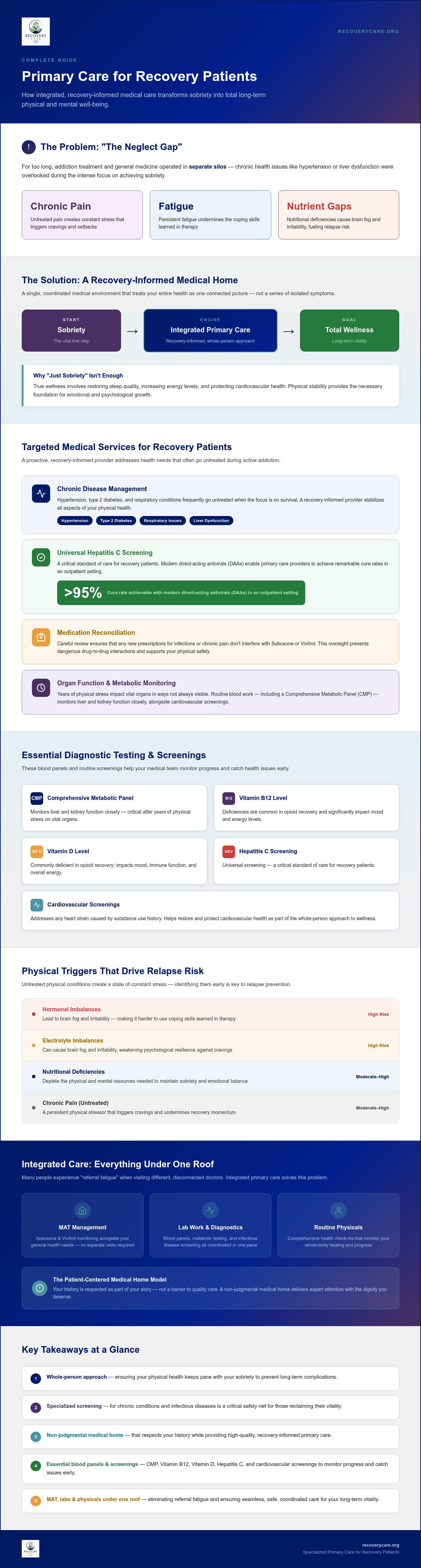
Recovery-informed primary care is more than just a routine checkup. It is a specialized form of medical support that understands the unique physiological needs of individuals with a history of substance use. For too long, addiction treatment and general medicine operated in separate silos. This separation often created a "neglect gap," where chronic health issues like hypertension or liver dysfunction were overlooked during the intense focus on achieving sobriety. By establishing a patient-centered medical home, you ensure that your journey is supported by a clinician who views your health as a single, connected picture rather than a series of symptoms.
A primary care provider acts as a vital stabilizer for your future. They don't just manage medications like Suboxone or Vivitrol; they monitor how your body heals after years of active use. This "whole person" approach is essential because treating addiction in isolation often leads to poor long-term outcomes. When your body feels strong, your mind is better equipped to handle the challenges of early and middle-stage recovery. Dedicated primary care for recovery patients ensures that no part of your health is left behind as you move forward.
The Connection Between Physical Health and Relapse Prevention
Your body's physical state directly influences your emotional resilience. Chronic pain, persistent fatigue, or untreated nutritional deficiencies can create a state of constant stress that triggers cravings. For example, hormonal imbalances or electrolyte issues can lead to brain fog and irritability, making it harder to utilize the coping skills you learn in therapy. Specialized medical care focuses on identifying these physical triggers before they lead to a setback. Physical stability provides the necessary foundation for emotional and psychological growth.
Moving Beyond 'Just Sobriety' to Total Wellness
Being drug-free is a massive achievement, but it's only the starting point. True wellness involves restoring your sleep quality, increasing your energy levels, and protecting your cardiovascular health. Many people experience "referral fatigue" when they have to visit different, disconnected doctors for every minor issue. Integrated primary care solves this by managing your routine physicals, diagnostic labs, and behavioral health needs under one roof. This coordination ensures that your healthcare journey is seamless, secure, and focused on your long-term vitality.
Targeted Medical Services: What Recovery Patients Need Most
Comprehensive medical support goes far beyond managing a single condition. For those on a journey toward long-term wellness, specialized primary care for recovery patients involves a deep dive into health metrics that often take a backseat during active addiction. This proactive approach ensures that your body has the resources it needs to heal while you focus on your sobriety.
Addressing chronic diseases like hypertension, type 2 diabetes, or respiratory issues is a top priority. These conditions frequently go untreated when the focus is on survival. A recovery-informed provider follows clinical practice guidelines for substance use disorder management to ensure every aspect of your physical health is stabilized. This includes universal Hepatitis C screening, which remains a critical standard of care. With modern direct-acting antivirals (DAAs), primary care providers can now achieve cure rates exceeding 95% in an outpatient setting.
Medication reconciliation is another cornerstone of safe, effective care. Your provider carefully reviews all your health needs to ensure that any new prescriptions for infections or chronic pain don't interfere with your suboxone treatment or other recovery medications. This high level of oversight prevents dangerous drug-to-drug interactions and supports your physical safety as you rebuild your life.
Monitoring Organ Function and Metabolic Health
Years of physical stress can impact your vital organs in ways that aren't always visible. Routine blood work, such as a Comprehensive Metabolic Panel (CMP), allows your medical team to monitor liver and kidney function closely. We also look for specific vitamin deficiencies, particularly B12 and Vitamin D, which are common in opioid recovery and can significantly impact your mood and energy levels. Additionally, we prioritize cardiovascular screenings to address any heart strain caused by past stimulant or opioid use. If you're ready to begin this comprehensive health review, you can schedule a primary care consultation with our compassionate team today.
Behavioral Health Integration
Physical health and mental well-being are inseparable. Our integrated approach links routine medical visits with counseling for opioid addiction to treat the whole person under one roof. During your routine physicals, we screen for co-occurring disorders like anxiety or depression. This allows your PCP and therapist to work together on a unified care plan, ensuring your medical and behavioral treatments support one another perfectly for a smoother recovery journey.
Overcoming the Stigma: Choosing a Recovery-Informed Medical Home
The fear of being judged often keeps people away from the doctor's office. Many individuals in recovery have experienced "medical stigma," where their history of substance use leads to dismissive treatment or suspicious questioning from providers. This hesitation creates a dangerous gap in care, leaving chronic conditions untreated. Choosing specialized primary care for recovery patients means finding a team that replaces judgment with a "medical home" approach. Unlike fragmented urgent care visits where you must explain your history to a new stranger every time, a medical home offers a continuous, supportive relationship. This model relies on integrated behavioral healthcare, ensuring your physical and mental health are managed by a team that views you as a whole person.
Transparency with your doctor is a powerful tool for your safety. When you have a provider who understands your journey, you don't have to hide your past to get quality care. This honesty allows your medical team to make better decisions about everything from anesthesia for minor procedures to managing acute pain without risking your sobriety. A recovery-informed medical home creates a stable environment where you can focus on healing rather than defending your character.
The Importance of a Non-Judgmental Environment
Identifying a recovery-friendly clinic starts with observing the atmosphere. Look for signs of trauma-informed care, such as staff who use person-first language and providers who prioritize your comfort during physical exams. When you're ready to have "the talk" about your history, be direct. You can simply state that you're in long-term recovery and need a partner who will respect that context in every treatment plan. You should expect your provider to act as a compassionate authority, offering the weight of clinical expertise delivered with the heart of a dedicated advocate.
Confidentiality and Trust in the Exam Room
Trust is built on the knowledge that your privacy is protected. Following the full implementation of the modernized 42 CFR Part 2 rules in February 2026, your health records are more secure than ever while still allowing for seamless coordination between your primary doctor and specialists. This trust enables you to report symptoms honestly, which is vital for accurate diagnosis and effective pain management. For many, telehealth addiction counseling offers an additional layer of privacy, allowing you to maintain your recovery program from a space where you feel most secure. This coordination ensures that every member of your care team is working toward the same goal: your total physical and emotional vitality.
Essential Diagnostic Testing and Routine Screenings in Recovery
Recovery is a season of profound physical transformation. For many, active addiction meant years of delayed medical visits, which can leave a person feeling uncertain about their current health status. Routine primary care for recovery patients begins with a thorough, head-to-toe annual physical to establish a baseline for your wellness journey. This exam is essential for identifying issues that may have been masked in the past. We prioritize comprehensive blood work to check for anemia, thyroid dysfunction, and electrolyte imbalances that can affect your daily energy and mood.
We also ensure you stay current with preventative screenings such as mammograms or colonoscopies and keep your vaccinations up to date. Toxicology monitoring is part of this process, but we view it as a therapeutic tool rather than a punitive measure. These tests provide objective data that helps us tailor your care plan to your specific needs. If you want a medical team that prioritizes your dignity while monitoring your health, schedule your comprehensive wellness exam with our experts.
The Role of Lab Work in Monitoring Recovery Progress
Lab results offer a clear map of your body's healing process. During the first year of sobriety, you can expect more frequent testing to ensure your metabolic functions are stabilizing. For those utilizing a sublocade injection or other long-acting medications, these labs are vital for monitoring safety and efficacy. We take the time to sit with you and explain your results, helping you understand how your body is successfully repairing itself over time.
Screening for Long-Term Effects of Substance Use
Substance use can sometimes have lasting effects on bone density and neurological health. We look for signs of nutritional deficits that might require specialized scans or supplements to prevent future fractures. Dental health is another area we closely monitor, as it's often neglected but remains vital for your overall health and self-esteem. By providing referrals to recovery-informed specialists, we ensure that specialized primary care for recovery patients covers every aspect of your body, from your vision to your oral health, as you build a healthier future.
Integrated Care: Managing Your Health and Recovery Under One Roof
Managing your health shouldn't feel like a second full-time job. When you're in recovery, the logistics of visiting one clinic for your Suboxone treatment and another for a routine physical can be exhausting. Integrated primary care for recovery patients solves this by bringing your medical, behavioral, and laboratory needs into a single, supportive environment. This one-stop model means you can coordinate your long-acting injections, diagnostic blood work, and chronic disease management in a single appointment, saving you time and emotional energy.
Beyond convenience, integrated care provides a critical safety net through unified medical records. Because your primary doctor and addiction specialists share the same secure system, they can instantly identify and prevent dangerous drug-to-drug interactions. For instance, if you need a prescription for a common infection, your team ensures it won't interfere with your recovery medications. This level of coordination reduces the "stigma barrier" because you're visiting a clinic where your history is already known, respected, and treated as a vital piece of your overall wellness puzzle.
Telehealth and In-Person Options
We understand that life is busy, so we balance high-tech diagnostic tools with high-touch personal support. While an initial head-to-toe physical or a Sublocade injection requires an in-person visit, many follow-up consultations are perfectly suited for telehealth. Our virtual platform ensures continuity of care, allowing you to check in with your provider from the comfort of your home. This hybrid approach ensures you never have to choose between your daily responsibilities and your health, providing a steady hand of support whether you're in our exam room or on a screen.
The Financial Aspect: Insurance, Medicare, and Medicaid
Navigating the costs of healthcare can be one of the biggest hurdles to staying consistent with your treatment. Choosing a clinic that accepts major insurance, including Medicare and Medicaid, simplifies the recovery process by removing financial guesswork. We believe that high-quality primary care for recovery patients should be accessible to everyone, regardless of their coverage type. Our team is experienced in navigating these benefits to ensure your routine physicals and specialized recovery services are fully coordinated. Take the first step toward total health—schedule your integrated care consultation today.
Reclaim Your Health and Your Future
Choosing to prioritize your physical wellness is a powerful act of self-respect. By integrating routine medical services with your recovery program, you're building a foundation that supports both your body and your long-term sobriety. We've explored how specialized primary care for recovery patients provides the diagnostic tools and compassionate oversight needed to address neglected health issues and prevent dangerous medication interactions. This unified approach ensures that every aspect of your vitality is monitored in a single, non-judgmental home.
Led by Medical Director Dr. Heather Rosen, MD, our team is dedicated to providing a full integration of MAT and primary care services. You don't have to navigate this journey alone or fear the stigma of traditional healthcare settings. We're here to act as your steady guide, offering expert clinical care with deep, human empathy. It's time to move beyond just being drug-free and start being truly healthy in every sense of the word. Schedule Your Comprehensive Recovery Health Assessment with Recovery Care today and take the next step toward the vibrant future you deserve. You've done the hard work of starting your recovery; let us help you finish the journey toward total well-being.
Frequently Asked Questions
Do I need a separate doctor for my Suboxone and my routine physicals?
No, you don't need separate providers for these services. At Recovery Care, we provide integrated primary care for recovery patients, which allows you to manage your Suboxone treatment and routine physicals during the same visit. This coordination ensures that every part of your medical team is on the same page. It also simplifies your life by combining your laboratory work and medication management into one streamlined, supportive appointment at our clinic.
Will my primary care doctor judge me for my history of addiction?
You should never feel judged when seeking medical assistance. Our clinic is led by Dr. Heather Rosen, MD, and is founded on a strictly non-judgmental philosophy that prioritizes your dignity. We view your history of substance use as important clinical context, not a character flaw. Our goal is to be a steady, compassionate authority that helps you navigate your health journey with the respect and personalized attention you deserve in every interaction.
What specific blood tests should a recovery patient have annually?
Annual blood work for those in recovery should include a Comprehensive Metabolic Panel to check liver and kidney function. We also perform a Complete Blood Count and universal Hepatitis C screening as part of our standard care. It's vital to check for common vitamin deficiencies, such as B12 and Vitamin D, which can impact your mood and energy. These tests allow us to monitor your body's repair process and optimize your physical health for longevity.
Can I get my diagnostic testing done via telehealth?
While many aspects of your care can be managed virtually, diagnostic testing like blood draws or physical exams requires an in-person visit. You can use our telehealth consultations to discuss your symptoms, review your lab results, and adjust your treatment plan from home. This hybrid model allows us to maintain high standards of diagnostic accuracy while offering the flexibility you need to stay consistent with your long-term recovery and health goals.
How does primary care help prevent a relapse?
Primary care prevents relapse by addressing the physical discomforts that often trigger cravings, such as chronic pain, sleep disturbances, or fatigue. When we treat these underlying medical issues, we lower your overall stress levels and improve your mental clarity. This stability makes it much easier to stay engaged with your behavioral therapy. By treating the whole person, we ensure your body is strong enough to support the emotional work required for long-term sobriety.
Does Medicare or Medicaid cover both MAT and primary care at the same clinic?
Yes, Medicare and Medicaid generally cover both MAT and primary care services at our integrated clinics. Following the 2026 Medicare Physician Fee Schedule updates, there are now specific codes for collaborative care that simplify how these services are billed together. This means you can receive your Suboxone treatment and routine physicals in one place without worry. We accept most major insurance plans to ensure that financial barriers don't stand in the way of your health.
What should I bring to my first primary care appointment in recovery?
For your first visit, please bring your current insurance card and a list of all medications you are taking, including Suboxone or other MAT prescriptions. It's also helpful to have a summary of your medical history and any recent lab results from other providers. Having this information ready allows us to spend more time discussing your health goals and building a personalized care plan that supports your physical restoration and continued success in recovery.
Can a primary care doctor help me manage chronic pain without opioids?
Absolutely. We specialize in non-opioid pain management strategies that respect your recovery journey while addressing the source of your discomfort. Our team uses a combination of non-addictive medications, physical therapy referrals, and behavioral health techniques to improve your mobility and quality of life. We work with you to find safe, effective solutions that manage pain without risking your sobriety, ensuring you can lead a comfortable and active life while maintaining your hard-earned progress.


