
Medication can quiet the physical symptoms of withdrawal, but it's specialized counseling for opioid addiction that builds the bridge to a permanent new life. You might feel exhausted by the clinical cycle or worry that therapy is just "talking" when you need real, actionable solutions. It's common to feel a sense of anxiety about the time commitment or fear that a professional might judge your journey rather than support it. We understand that recovery is a deeply personal process that requires more than just a prescription; it requires a partner who sees you as a whole person.
In this 2026 behavioral health guide, you'll discover how professional counseling and behavioral health services provide the essential foundation for lasting recovery. We'll demystify the role of therapy within Medication-Assisted Treatment (MAT) so you feel empowered to take the next step with confidence. You'll learn the practical differences between individual and group options, and how integrating primary care ensures your physical health is protected while you heal your mind. This is your path toward a stable, secure, and positive future where you're never walking alone.
Key Takeaways
- Learn how clinical therapy utilizes neuroplasticity to help your brain heal and develop healthier responses to specific triggers.
- Explore various formats of counseling for opioid addiction, such as individual sessions or telehealth, to find the setting that best supports your personal goals.
- Gain a clear understanding of the intake process to help lower anxiety and prepare you for a successful first session.
- Discover why a "Whole Person" model that combines behavioral health with primary care is the most effective path toward lasting wellness.
Understanding Counseling for Opioid Addiction: More Than Just Conversation
Seeking help isn't easy. It takes immense strength to look for professional support when your world feels heavy and uncertain. You aren't just looking for a simple conversation; you're looking for a way back to yourself. Clinical counseling for opioid addiction is a rigorous, evidence-based medical intervention designed to move you from the daily exhaustion of survival into a life where you can truly thrive. It's a space where your dignity is respected and your future is the priority.
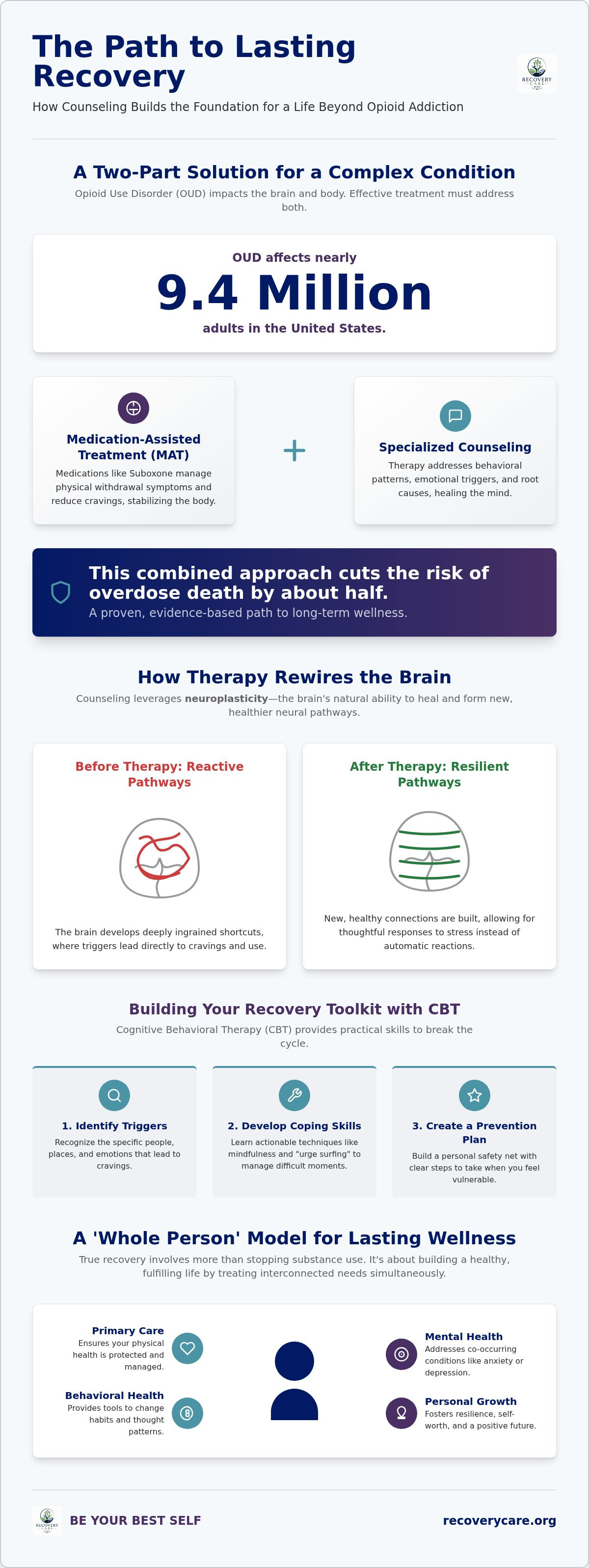
Opioid use disorder (OUD) is a chronic medical condition that affects nearly 9.4 million adults in the United States. Because it impacts both the brain's chemistry and its decision-making pathways, recovery requires a multi-layered approach. Behavioral health services provide the specific tools needed to address these psychological changes. This isn't about receiving "advice" from a stranger. It's about working with a trained professional to develop a personalized roadmap for long-term health.
The Role of Behavioral Health in Modern Recovery
For years, many people viewed addiction through a lens of shame. Today, we know that addiction is a complex health issue that deserves compassionate, medical-led care. Modern behavioral health focuses on identifying the root causes of substance use, such as untreated trauma, chronic anxiety, or depression. Behavioral health is the psychological bridge to physical sobriety. Our therapists help you understand why your brain responds to certain stressors and how to build new, healthier habits. We've moved away from outdated, judgmental models to create a safe, confidential environment where you can speak openly without fear.
Why Counseling is a Critical Pillar of MAT
Medication-Assisted Treatment (MAT) is the gold standard for treating OUD. While medications like Suboxone or Vivitrol manage the intense physical symptoms and cravings, they're only one part of a successful journey. Medication handles the biological side of the disease, while counseling addresses the behavioral patterns and emotional triggers that often lead to a return to use. You can explore how these medications support your body in our Suboxone Treatment: A Comprehensive Guide to Opioid Recovery in 2026. This combined approach is vital because MAT has been shown to cut the risk of overdose death by about half. By integrating counseling for opioid addiction, you ensure that you aren't just stopping a substance, but building a foundation that lasts a lifetime.
The Science of Behavioral Health: How Therapy Rewires the Brain
Addiction isn't a moral failure; it's a physiological shift in how your brain processes reward and stress. Specialized counseling for opioid addiction works by leveraging neuroplasticity, which is your brain's incredible ability to repair itself and build new neural pathways. Think of it as physical therapy for the mind. While opioids once dominated these pathways, consistent clinical support helps you "rewire" your responses. This isn't a quick fix, but a steady progression toward a more stable and resilient version of yourself where you can find joy in everyday life once again.
While medications like Suboxone or Sublocade provide a necessary physical foundation, therapy addresses the biological nature of addiction through a psychological lens. We utilize Evidence-based approaches to treating opioid use disorder to ensure your care is grounded in the latest clinical research. This dual approach ensures that both your body and your mind are healing at the same time. By treating the whole person, we help you transition from the constant cycle of withdrawal into a state of lasting wellness.
Breaking the Cycle of Cravings and Triggers
Triggers are essentially emotional or environmental shortcuts that lead your brain toward a craving. These might be as simple as a certain song or as complex as a stressful day at work. Through specialized counseling for opioid addiction and Cognitive Behavioral Therapy (CBT), we help you identify these cues before they become overwhelming. You'll develop practical coping mechanisms, such as mindfulness or "urge surfing," to manage these moments without returning to use. A solid relapse prevention plan acts as your personal safety net, giving you clear steps to take when you feel most vulnerable.
Addressing Co-occurring Mental Health Disorders
Recovery is rarely about just one issue. Many people with OUD also struggle with underlying conditions like anxiety, depression, or PTSD. Our Dual Diagnosis approach treats these concerns simultaneously because they're often deeply connected. When you address the root cause of your emotional pain, the urge to use opioids as a way to "self-medicate" begins to fade. Stabilizing your mental health creates a profound sense of security, making it easier to stay focused on your long-term wellness. If you're looking for a safe space to begin this journey, our team is ready to provide Behavioral Health Counseling that honors your unique story.
Comparing Counseling Formats: Finding Your Best Fit
Choosing how you engage with counseling for opioid addiction is a personal decision that should reflect your unique lifestyle and comfort levels. There's no single "right" way to start; the best format is the one that feels safest and most accessible for you right now. Whether you prefer a quiet, private setting or find strength in a community of peers, our primary goal is to provide a strictly confidential and non-judgmental environment. You're always free to start with one format and transition to another as your recovery goals evolve. Flexibility is a key part of staying committed to your long-term health.
Every recovery journey is different, and your care should reflect that. Some people find that they need the intense focus of one-on-one sessions in the beginning, while others thrive on the social support of a group. We're here to help you navigate these options so you feel empowered throughout the process. Our team focuses on creating a seamless experience where your dignity is always the priority, regardless of the setting you choose.
Individual Counseling: Personalized Recovery Strategies
One-on-one sessions offer a high level of privacy and dedicated clinical attention. This format is often ideal if you want to focus deeply on your personal history, underlying trauma, or specific lifestyle goals that require a customized approach. Working closely with a specialized counselor allows you to build a strong therapeutic alliance, ensuring every session is tailored to your immediate needs. It's a focused, quiet space where your voice is heard, and your progress is tracked with meticulous care. For many, this individual attention is the key to identifying the specific triggers that medication alone cannot address.
Group Therapy: The Power of Shared Experience
Isolation is often one of the heaviest burdens of addiction, making you feel as though no one truly understands your struggle. Group therapy helps lift that weight by connecting you with a community of peers who have faced similar challenges with opioids. In these sessions, you'll find a supportive environment that offers both accountability and genuine encouragement. Learning from the experiences of others can provide fresh perspectives on your own journey and help you develop new social skills. It's a powerful way to realize you aren't alone and to build a network of people who are also dedicated to a positive, substance-free future.
Telehealth Counseling: Overcoming Barriers to Care
Life doesn't pause because you're in recovery, and sometimes traditional office visits don't fit into a busy schedule. Telehealth allows you to access professional help from the comfort and privacy of your own home, removing common barriers like transportation issues or childcare conflicts. These virtual sessions maintain the exact same clinical standards and compassionate care as our in-person options. It's a flexible, modern way to ensure your treatment remains a consistent priority in your life. To learn more about how virtual care works, explore our Telehealth Addiction Counseling: A Comprehensive Guide to Virtual Recovery. This option ensures that high-quality counseling for opioid addiction is always within reach, no matter where you are.
What to Expect in Your First Addiction Counseling Session
Walking through the door for your first session is often the most difficult step in recovery. It's normal to feel a mix of hope and hesitation as you prepare to share your story. Our goal during this initial meeting is to begin building a "therapeutic alliance," which is a professional partnership based on trust, respect, and mutual goals. You aren't being interrogated; you're being heard. This first hour is dedicated to understanding your unique situation and ensuring that you feel like our team is the right fit for your journey.
During the first 30 days of counseling for opioid addiction, the focus is primarily on stabilization and safety. You don't have to have every answer figured out immediately. We'll discuss the role of drug testing, which we use as a supportive tool to track your progress and ensure your treatment plan is working effectively. It's a compliance-focused measure designed to provide a clear picture of your health, helping us celebrate your successes and adjust your care if challenges arise. This initial assessment is the foundation for effective counseling for opioid addiction, allowing us to align our resources with your specific needs.
The Initial Assessment: Creating Your Recovery Roadmap
The intake process involves a thorough look at your medical history and your experiences with opioids. Your counselor will ask about your previous attempts at recovery, your current physical health, and your long-term aspirations. This is also the time to discuss medication options like Suboxone or Vivitrol as part of your comprehensive care. Together, we'll develop a collaborative recovery roadmap that includes both medical milestones and behavioral goals. This ensures your treatment is never one-size-fits-all but is instead a reflection of what you need to succeed.
Privacy, Confidentiality, and Building Trust
We take your privacy seriously. Your medical information is protected by federal HIPAA laws, meaning your journey remains confidential and secure. Creating a non-judgmental environment is essential for honest communication; we're here to support you, not to critique your past. It's completely natural to feel vulnerable during these early sessions. We move at your pace, ensuring you feel safe as we work through the complexities of recovery together. If you're ready to begin building your personal roadmap, you can start your behavioral health journey with our compassionate team today.
Holistic Recovery Support: The Recovery Care Advantage
At Recovery Care, we believe that your health is more than a single diagnosis. Our "Whole Person" model is designed to treat you as a complete individual; we combine Medication-Assisted Treatment (MAT) with specialized counseling for opioid addiction and comprehensive primary care. This integrated approach ensures that every aspect of your well-being is managed by a single, dedicated medical team. By housing these services under one roof, we eliminate the fragmentation often found in traditional healthcare, providing you with a seamless and secure path toward lasting recovery.
Addressing your physical health through routine physicals and diagnostic testing is vital during this process. Addiction often takes a toll on the body that goes beyond cravings. Our team, led by Medical Director Dr. Heather Rosen, monitors your overall health to ensure your body is healing alongside your mind. We accept Medicare and Medicaid to make this high level of care accessible to as many people as possible, whether you visit us in person or utilize our national telehealth options. This level of coordination provides a sense of security, knowing that your clinicians are always on the same page regarding your care.
Integrating Medical Care and Behavioral Health
There's a powerful synergy between medical interventions and regular therapy. For many, long-acting injectables provide the stability needed to focus fully on the psychological work of recovery. You can learn more about these medications in our Sublocade Injection Guide: Comparing Long-Acting Recovery Options in 2026. When these treatments are paired with counseling for opioid addiction, the results are often more sustainable. Routine physicals and lab work allow us to catch and treat co-occurring health issues early, ensuring that your physical strength supports your mental resilience as you build a new life.
Compassionate Support for Lasting Change
Our commitment to your dignity and respect is the heartbeat of our practice. We understand the emotional barriers that often prevent people from seeking help, and we've built a safe, confidential environment to lower those hurdles. A professional support network provides the steady guidance you need when the road gets difficult. Recovery is entirely possible; you don't have to navigate these complexities alone. If you're ready to move toward a more positive future, we invite you to start with a confidential consultation today to see how our team can support your unique journey.
Your Path to a Stable and Positive Future
Lasting recovery is built on more than just overcoming physical withdrawal. It's about healing the mind and body together through a "Whole Person" model of care. Specialized counseling for opioid addiction leverages your brain's natural ability to heal, providing you with the clinical tools to manage triggers and build sustainable, healthy habits. Whether you choose the privacy of individual sessions or the shared strength of a group, your journey is supported by a foundation of dignity and medical expertise.
Led by Medical Director Dr. Heather Rosen, MD, our team is here to ensure you never feel alone in this process. We offer both telehealth and in-person options to fit your lifestyle, and we proudly accept Medicare and Medicaid to keep high-quality care accessible to everyone. You deserve a recovery plan that respects your unique story and prioritizes your long-term wellness. Start Your Journey with Compassionate, Confidential Recovery Care Today and discover the difference that integrated, non-judgmental support can make. Recovery isn't just possible; it's waiting for you, and we're ready to walk beside you every step of the way.
Frequently Asked Questions
Is counseling mandatory for someone taking Suboxone or Vivitrol?
Counseling is highly recommended as a core component of Medication-Assisted Treatment (MAT) because it addresses the behavioral aspects of addiction that medication alone cannot reach. While medical requirements can vary, most successful recovery plans integrate behavioral health to provide a stable foundation. At Recovery Care, we view counseling for opioid addiction as an essential partner to medications like Suboxone or Vivitrol, helping you build the necessary coping skills for a permanent lifestyle change.
How often will I need to attend behavioral health sessions?
Frequency depends on your individual needs and the stage of your recovery journey. In the early phases, you might meet with a counselor weekly to establish stability and manage immediate triggers. As you progress and feel more secure in your sobriety, sessions may move to a bi-weekly or monthly schedule. Your clinical team will work with you to create a personalized cadence that fits your life while providing consistent support.
Does health insurance, Medicare, or Medicaid cover addiction counseling?
Yes, most major insurance plans, including Medicare and Medicaid, provide coverage for behavioral health services related to addiction. Recovery Care is committed to accessibility and accepts these plans to ensure you can receive high-quality care without unnecessary financial stress. Coverage details can vary by specific plan, so we recommend a confidential consultation where our team can help you understand your benefits and any potential out-of-pocket responsibilities.
What is the difference between an addiction counselor and a psychiatrist?
The primary difference lies in their focus and medical training. A psychiatrist is a medical doctor who can diagnose conditions and prescribe medications like Suboxone to manage the biological side of addiction. An addiction counselor focuses on behavioral health, helping you navigate emotional triggers and develop healthy coping mechanisms through talk therapy. At Recovery Care, our team integrates both roles to ensure your physical and psychological needs are addressed simultaneously.
Can I do my addiction counseling sessions via telehealth?
You can access professional counseling for opioid addiction through our secure telehealth platform from the comfort of your own home. Virtual sessions follow the same strict clinical standards and confidentiality protocols as our in-person visits. This option is ideal for those with busy schedules, transportation challenges, or a preference for the privacy of their own environment. It ensures that high-quality support remains consistent and accessible, regardless of your location.
What if I don't feel comfortable in a group therapy setting?
It is completely normal to feel hesitant about group settings, and we offer individual counseling as a private alternative. Your comfort is our priority, and we want you to feel safe while sharing your story. If group sessions feel overwhelming, you can work one-on-one with a specialized counselor to focus exclusively on your personal goals. Many patients start with individual sessions and only transition to group therapy once they feel more confident.
How long does the counseling phase of recovery typically last?
There is no fixed timeline for recovery, as every individual's journey is unique. Some people find that a few months of intensive support provide the stability they need, while others benefit from ongoing counseling for a year or longer. The goal is to ensure you feel fully equipped to manage life's challenges without returning to opioid use. We regularly assess your progress and adjust the duration of your care based on your personal milestones.
Is my information shared with my employer or the government?
Your medical information is protected by federal HIPAA laws and strict confidentiality regulations, meaning it is not shared with your employer or the government without your explicit consent. We prioritize your privacy to create a safe, non-judgmental environment where you can focus entirely on your health. Our records are kept secure and confidential, ensuring that your decision to seek professional help remains a private matter between you and your clinical team.


