
What if the medical tests you associate with judgment and "failing" were actually the most powerful tools in your recovery toolkit? It's completely normal to feel a wave of anxiety when you hear you need a lab appointment, especially if you've felt scrutinized by healthcare providers in the past. You might worry about privacy or wonder why your doctor needs blood work just to treat a substance use disorder. We understand those fears, and we want to change the narrative. At its heart, diagnostic testing for addiction treatment isn't about monitoring compliance or catching you in a mistake; it's about seeing the full picture of your health so we can keep you safe and supported.
This guide will help you discover how integrated diagnostic testing bridges the gap between addiction medicine and primary health to support your long-term recovery journey. We'll walk through the clinical necessity of these tests, from identifying underlying health issues to monitoring your body's response to medication, and explain exactly what you can expect during your first visit. You'll learn how modern standards protect your privacy while allowing your care team to work together seamlessly. By the end, you'll see these diagnostics for what they truly are: a vital roadmap designed to honor your dignity and fuel your progress.
Key Takeaways
- Reframe diagnostics as a personalized roadmap for your recovery rather than a tool for judgment or punishment.
- Understand why diagnostic testing for addiction treatment includes vital screenings like metabolic panels to ensure your medications are working safely for your body.
- Discover the benefits of integrating primary care with addiction medicine to manage your physical and mental health in one supportive location.
- Learn exactly what to expect during your first medical evaluation to help lower anxiety and prepare you for a successful start.
- Gain insights into choosing a treatment center that prioritizes your whole health, privacy, and long-term success.
The Essential Role of Diagnostic Testing for Addiction Treatment
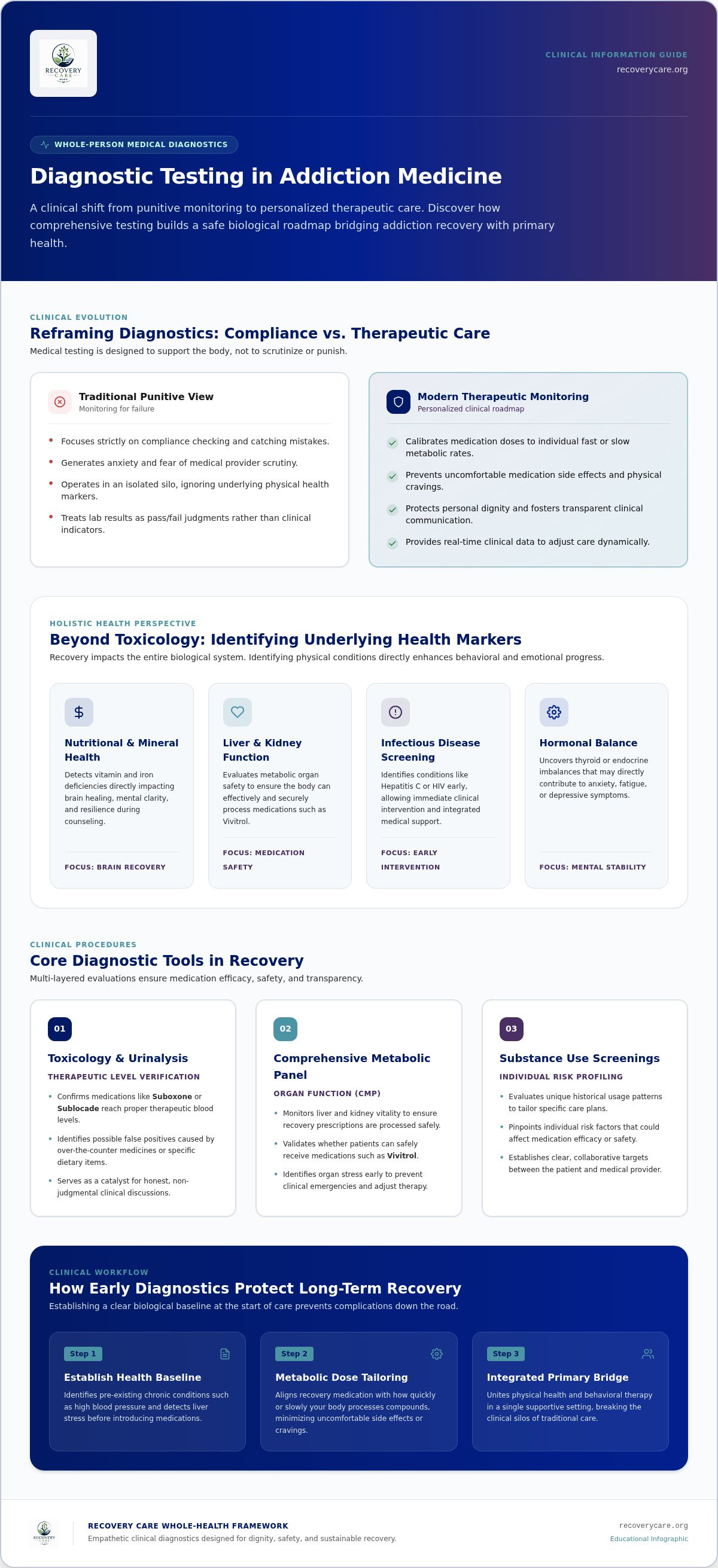
When you begin your recovery journey, you aren't just a set of symptoms or a diagnosis; you're a whole person with a complex biological history. We view diagnostic testing for addiction treatment as a supportive roadmap rather than a hurdle to clear. Instead of using tests to monitor for failure, medical diagnostics serve as the foundation for a personalized treatment plan that respects your body’s specific needs. This data helps your medical team understand how your system processes medications, ensuring that your path forward is both safe and effective from day one.
The medical community has seen a significant shift away from punitive testing. Today, we focus on therapeutic monitoring. This means we use biological drug testing methods to gather clinical insights that help us adjust your care in real time. For instance, these diagnostics allow your doctor to choose the most effective medication dosage by seeing how your metabolism is functioning. If your body processes medicine quickly or slowly, we can tailor your prescription to prevent uncomfortable side effects or cravings, keeping you stable and comfortable.
Beyond Toxicology: A Holistic Health Perspective
True recovery requires looking far beyond a simple toxicology screen. Addiction often impacts the entire body, and integrated care helps us identify underlying issues that might otherwise hinder your progress. We look for physical health markers that directly influence your behavioral health success. Integrated care commonly identifies:
- Vitamin and mineral deficiencies that impact brain healing
- Liver and kidney function markers essential for medication safety
- Infectious diseases like Hepatitis C or HIV that require immediate support
- Hormonal imbalances that may be contributing to anxiety or depression
Why Early Diagnostics Improve Long-Term Outcomes
Establishing a clear health baseline at the start of your journey is a proactive way to ensure success. By identifying potential risks early, we can reduce the chance of medication side effects and address chronic conditions like high blood pressure or liver stress before they become emergencies. This integrated approach allows us to provide a level of security that siloed treatment simply cannot offer. Diagnostic testing is a collaborative tool used to ensure patient safety and provide the most accurate clinical data for a life-long recovery plan.
Core Types of Testing in a Comprehensive Recovery Program
A comprehensive approach to recovery doesn't rely on a single data point. It uses a variety of clinical tools to build a safe, sustainable path forward. When we discuss diagnostic testing for addiction treatment, we're looking at several key areas of your health simultaneously. This includes everything from toxicology screens to detailed blood work that monitors your internal organs. By gathering this data, your medical team ensures that your body is physically prepared for the demands of recovery while keeping you safe from potential medication interactions.
Toxicology and Medication Compliance
Toxicology and urinalysis are about more than just monitoring for substance use. These tests help your care team confirm that medications like Suboxone or Sublocade are reaching therapeutic levels in your system. We also utilize substance use screening assessments to understand your unique risk factors and historical usage patterns. It's important to remember that "false positives" can occasionally happen due to certain over-the-counter medications or even specific dietary choices. We view these results as a starting point for an honest, non-judgmental conversation. This transparency ensures we're always working with the most accurate information to keep your treatment on track.
Metabolic and Organ Function Monitoring
Liver and kidney function are central to how your body processes recovery medications. A Comprehensive Metabolic Panel (CMP) is a standard part of our diagnostic process. We use these results to ensure your organs are healthy enough to metabolize medications like Vivitrol safely. If we notice your liver enzymes are elevated, we don't simply stop treatment; instead, we adjust your recovery plan to protect your long-term health. Proactive monitoring helps prevent unnecessary strain on your system and ensures your treatment remains effective and comfortable as your body heals.
Finally, we look at your overall immune health through a Complete Blood Count (CBC). This test helps us spot underlying infections or anemia that might be draining your energy and making recovery feel more difficult. Because substance use can sometimes lead to exposure to infectious diseases, we also provide routine screenings for Hepatitis C and HIV. Identifying these conditions early means we can manage them alongside your addiction treatment. If you're looking for a team that treats the whole person rather than just the symptoms, our integrated medical services are designed to support every aspect of your wellness.
Benefits of Integrating Primary Care with Addiction Medicine
Managing your health shouldn't feel like a full-time job. When you're in early recovery, the last thing you need is the exhaustion of "doctor shopping" or the anxiety of explaining your history to multiple different clinics. By combining Medication-Assisted Treatment (MAT) with primary care, you gain the advantage of a single medical team that manages your whole health under one roof. This integrated approach uses diagnostic testing for addiction treatment not just as a tool for recovery, but as a way to ensure your entire body is thriving during this transformative time.
Routine physicals and blood work do more than just monitor for substance use; they catch underlying health issues that could otherwise trigger a relapse. If you're dealing with chronic pain from an old injury or the fatigue of an undiagnosed thyroid issue, those physical stressors can make it much harder to stay focused on your behavioral health goals. Having your primary care provider and your recovery specialist on the same team means these issues are addressed immediately, providing a stable foundation for your long-term success.
Treating Co-occurring Health Conditions
Recovery doesn't happen in a vacuum. Many patients find that they need support for conditions like high blood pressure, diabetes, or asthma while they are also working through addiction. Physical health and mental stability are deeply connected. When your blood sugar is stable and your breathing is clear, you're better equipped to handle the emotional work of counseling. We believe that primary care for recovery patients is essential because it treats you as a whole person. Following the ASAM clinical drug testing guidelines, we use diagnostics as therapeutic markers to ensure your holistic opioid recovery plan is working for every system in your body.
Building Trust Through Consistent Medical Support
One of the greatest benefits of an integrated medical home is the sense of security it provides. You deserve a non-judgmental environment where you can be honest about your health without fear of criticism. Regular diagnostic check-ups reinforce your sense of progress; seeing your liver enzymes improve or your cholesterol stabilize provides tangible proof of your hard work. We encourage you to take ownership of your health data. When you understand what your lab results mean, you become an active partner in your care. This transparency builds a deep level of trust, making it easier to stay engaged with your treatment and confident in your path toward a healthier, more positive future.
What to Expect During Your Diagnostic Appointments
Walking into your first appointment can feel like a significant hurdle, but it's actually the moment where your path to wellness becomes clear. We design our intake process to be a welcoming experience that prioritizes your comfort and dignity. When you arrive for diagnostic testing for addiction treatment, you aren't just a patient being screened; you're a person being heard. The process typically begins with a clinical interview where we discuss your health history, followed by a physical evaluation and the collection of necessary lab samples. This comprehensive look at your health ensures we create a plan that fits your body's specific needs.
Preparing for Your Initial Evaluation
A little preparation can go a long way in making your first visit feel seamless. To help us get a full picture of your health, please bring a valid ID, your insurance cards, and a list of any current medications or supplements you're taking. Honesty during the clinical interview is your greatest asset. We need to know about your recent substance use not to judge you, but to protect you. This information allows your doctor to prescribe medications like Suboxone safely, avoiding dangerous interactions or uncomfortable side effects. For a deeper look at what the medical exam entails, you can read our guide on physicals for recovery patients.
The lab portion of your visit is handled with the same level of care. We typically collect a urine sample for toxicology and perform a quick blood draw for your metabolic panels. While some results from presumptive screenings are available almost immediately, more detailed blood work and definitive lab confirmations usually take between 24 and 72 hours. We'll schedule a follow-up to sit down and discuss these results with you, ensuring you understand every data point and how it influences your recovery roadmap.
Confidentiality and Your Rights
Privacy is often a top concern for those seeking help, and we take that responsibility seriously. Your health information is protected by strict federal laws, including HIPAA and 42 CFR Part 2. As of February 2026, updated federal regulations have further strengthened how your records are handled, ensuring your data is shared only with the providers you authorize for your treatment and care coordination. Your medical data is a specialized tool designed solely for your care and wellness, rather than a legal record meant for outside scrutiny. We're committed to maintaining a safe, transparent environment where you can focus entirely on your healing. If you're ready to take the first step in a secure and supportive environment, you can schedule your initial evaluation today.
Choosing a Treatment Center That Prioritizes Your Whole Health
Finding the right partner for your recovery journey means looking for a facility that sees you as a whole person rather than just a set of symptoms. "One-stop" clinics provide superior support because they eliminate the communication gaps that often occur when primary care and addiction services are separated. When a single medical team manages your entire health profile, they use diagnostic testing for addiction treatment as a powerful tool to build a safer, more effective plan. This integrated approach ensures that every laboratory result and physical finding is used to strengthen your recovery roadmap.
When you're evaluating a potential clinic, pay close attention to their philosophy regarding diagnostics. A high-quality center will prioritize your dignity and offer transparent access to your own health data. They should view testing as a way to support your progress, not as a tool for judgment. Accessibility is also a vital factor in your decision. We believe that everyone deserves high-quality medical care, which is why we accept most insurance plans, including Medicare and Medicaid. This commitment ensures that financial concerns don't stand in the way of the comprehensive diagnostics and compassionate support you deserve.
The Recovery Care Difference
Led by our Medical Director, Dr. Heather Rosen, MD, our team merges clinical expertise with a deep commitment to compassionate advocacy. We're dedicated to providing a non-judgmental environment where diagnostics are used to empower you. This integrated medical model allows us to offer advanced options like the sublocade injection with a higher level of clinical oversight. By monitoring your metabolic health and medication levels in-house, we can transition you to long-acting recovery options with total confidence in your physical safety and long-term stability.
Taking the First Step Toward Holistic Recovery
Scheduling your first consultation and diagnostic screening is a simple, low-pressure process designed to lower the emotional barriers to seeking help. If you have concerns about the testing process or feel anxious about your medical history, we encourage you to share those feelings with our staff. We're here to listen and provide the reassurance you need to feel secure and well-supported. Remember, you aren't just a diagnosis; you're a person who deserves respect, kindness, and specialized care. We're ready to serve as your steady, knowledgeable guide as you move toward a more positive and healthy future. You can begin this journey today by reaching out to our team for a confidential evaluation.
Embrace a Healthier Future with Integrated Support
Your journey toward recovery is a deeply personal transformation that deserves the highest standard of medical care. By shifting the focus from compliance to comprehensive wellness, diagnostic testing for addiction treatment becomes a vital asset that ensures your safety and stability. You now understand that these screenings are not about judgment; they are essential tools for monitoring your organ function, identifying underlying health issues, and tailoring your medication to your body's unique needs. When your primary care and addiction medicine are managed by a single, integrated team, you can focus entirely on the work of healing.
Recovery Care is dedicated to providing confidential and non-judgmental outpatient care that honors your dignity at every step. Led by our Medical Director, Dr. Heather Rosen, MD, our team is here to serve as your steady, knowledgeable guide. We believe quality care should be accessible to everyone, which is why we accept Medicare, Medicaid, and most major insurance plans. You are more than a diagnosis; you're a person with a bright future ahead. Start your holistic recovery journey with Recovery Care today.
Frequently Asked Questions
Is diagnostic testing mandatory for starting Suboxone treatment?
Yes, initial diagnostic testing is a standard clinical requirement before starting Suboxone. These tests help your medical team confirm that the medication is safe for your specific physiology and that your organs can process it effectively. We use these results to establish a baseline for your health, which allows us to tailor your treatment plan from the very first day. This proactive approach prioritizes your safety and ensures the best possible start to your recovery journey.
Will my insurance, including Medicaid or Medicare, cover these diagnostic tests?
Most insurance plans, including Medicare and Medicaid, typically cover the diagnostic tests required for your treatment. Since these screenings are considered medically necessary for managing substance use disorders and primary health, they fall under standard coverage guidelines. Our team at Recovery Care works closely with a wide range of providers to minimize your out-of-pocket costs. We're happy to help you verify your specific benefits before your first appointment so you can focus entirely on your healing.
What happens if a drug screen comes back positive during treatment?
A positive drug screen is viewed as a clinical data point rather than a reason for punishment or discharge. We use these results to have an honest, non-judgmental conversation about your current needs and any challenges you're facing. It may indicate that your medication dosage needs adjustment or that you require additional behavioral health support. Our goal is to keep you safe and provide the resources necessary to help you get back on track with your recovery goals.
How often will I need to undergo diagnostic testing during recovery?
The frequency of testing depends on where you are in your recovery journey. During the initial phase of treatment, you might undergo screenings weekly to ensure your medication is at a therapeutic level. As you achieve long-term stability, these appointments typically become less frequent. Your care team will work with you to develop a schedule that balances clinical safety with your personal schedule, ensuring you always feel supported without feeling overwhelmed by the process.
Can I access my diagnostic test results through a patient portal or telehealth?
You can absolutely access your results and discuss them with your provider through our secure patient portal and telehealth consultations. We believe in total transparency and encourage you to take ownership of your health data. During a telehealth visit, your doctor can walk you through your lab work, explaining what each number means for your physical wellness and recovery. This digital access makes it easier to stay informed and engaged with your care from the comfort of home.
Why do I need blood work if I am only seeking behavioral health counseling?
Even if you're primarily focused on counseling, your physical health deeply impacts your emotional stability and mental clarity. Issues like vitamin deficiencies, hormonal imbalances, or thyroid dysfunction can mimic or worsen symptoms of anxiety and depression. By performing routine blood work, we can identify and treat these physical stressors. Addressing the whole body allows your behavioral health sessions to be more effective, providing you with the physical resilience needed to navigate the hard work of emotional recovery.
Is diagnostic testing for addiction treatment confidential?
Your results from diagnostic testing for addiction treatment are strictly confidential and protected by federal privacy laws, including HIPAA and 42 CFR Part 2. These regulations are specifically designed to safeguard substance use disorder records and prevent unauthorized access. At Recovery Care, we maintain a secure environment where your medical data is used only to coordinate your care with the providers you've authorized. Your privacy is a cornerstone of our practice, ensuring you can seek treatment with peace of mind.
What is the difference between a screening test and a diagnostic test in addiction care?
A screening test is typically a brief assessment or questionnaire used to identify potential risks or the presence of a substance. In contrast, a diagnostic test is a more comprehensive clinical evaluation that confirms a diagnosis and guides your treatment plan. This includes detailed lab work, physical exams, and in-depth clinical interviews. While a screen tells us where to look, a diagnostic evaluation provides the detailed roadmap we need to manage your health and recovery safely and effectively. To learn more about how facilities access timely screening tools, explore Rapid Diagnostic Test Kit Distribution to see options available for healthcare providers.


