
For people weighing Suboxone vs Vivitrol for opioid addiction, the key differences are how each medication works and when treatment can begin. Suboxone is usually taken daily and can help manage cravings and withdrawal; Vivitrol is a monthly injection that blocks opioid effects. Starting Vivitrol generally requires an opioid-free period, and the injection blocks opioid receptors for a period of time.
That opioid-free waiting period can feel like a major consideration when you’re weighing treatment options. Both medications are used for opioid use disorder, but their different mechanisms and schedules mean the decision involves more than choosing a pill or an injection.
This guide explains how Suboxone and Vivitrol work, what to know about the time before a first Vivitrol injection, and how long its effects last. You’ll also see the practical differences that can help you discuss treatment options with a clinician.
Key Takeaways
- Compare how Suboxone and Vivitrol work to understand why one may help with withdrawal while the other blocks opioid effects.
- Plan for an opioid-free period before Vivitrol; the usual window is 7-10 days.
- Learn how long a Vivitrol injection works and what its recurring schedule involves.
- Use the differences in medication, timing, and treatment routine to prepare for a conversation about which option may fit your needs.
Suboxone and Vivitrol as opioid use disorder medications
Medication-assisted treatment uses medication to ease withdrawal effects and reduce cravings during opioid use disorder recovery. Suboxone and Vivitrol differ in how patients start treatment, take medication, and maintain a routine.
Suboxone in Medication-Assisted Treatment
Suboxone combines buprenorphine and naloxone to treat opioid use disorder. Buprenorphine can help reduce cravings and manage withdrawal, and Suboxone is usually taken daily. In the United States, the Drug Enforcement Administration classifies buprenorphine as a Schedule III controlled substance. Unlike Vivitrol’s monthly injection, Suboxone involves a daily medication routine and may be started as withdrawal begins.
Vivitrol in Medication-Assisted Treatment
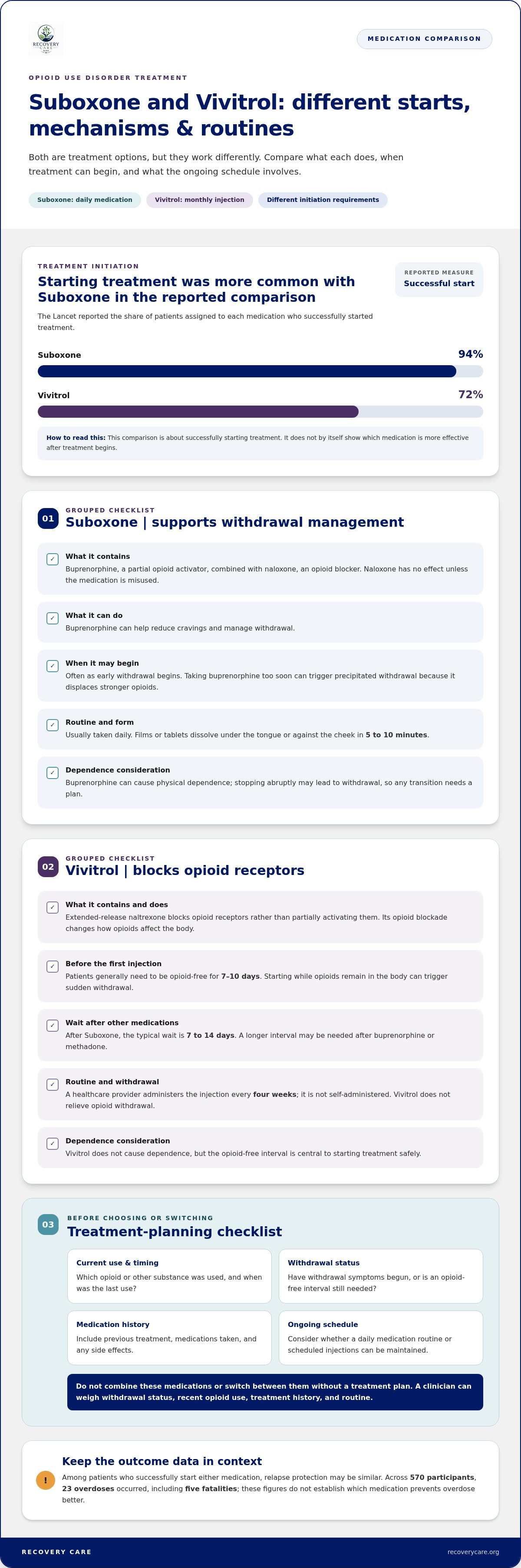
Vivitrol contains naltrexone, which blocks opioid receptors, and is given as a monthly injection. Unlike Suboxone, it doesn’t relieve withdrawal symptoms, so patients must first complete the opioid-free period required before treatment. The Lancet reported that 94% of patients assigned to Suboxone successfully started treatment, compared with 72% assigned to Vivitrol. This difference highlights how treatment initiation can affect the choice.
Choosing by Recovery Stage
Recovery stage can help frame a medication discussion. A person experiencing early withdrawal may consider how Suboxone can help manage withdrawal, while Vivitrol requires completing an opioid-free period first. The treatment routine matters, too: Suboxone is taken daily, while Vivitrol is administered monthly. A clinician can weigh current opioid use, withdrawal status, and the person’s ability to follow each schedule. For support finding treatment information in the United States, contact the Substance Abuse and Mental Health Services Administration’s National Helpline at 1-800-662-HELP (4357).
Medication Initiation and Withdrawal Timing
Starting medication at the right point matters. Suboxone is often started when early withdrawal begins; taking buprenorphine too soon can trigger precipitated withdrawal because it displaces stronger opioids. Vivitrol works differently: patients generally need to be opioid-free before starting. These distinct steps make recent opioid use and current withdrawal important details to discuss with a clinician before choosing or switching medication.
| Option | Routine | Initiation consideration |
|---|---|---|
| Suboxone | Daily medication | Usually begins as early withdrawal starts |
| Vivitrol | Monthly injection | Requires an opioid-free period before starting |
| Sublocade | Monthly injection | Buprenorphine treatment option |
Compare withdrawal timing, medication routines, and your current stage of recovery with a clinician.
How buprenorphine and naltrexone work
Relapse outcomes can vary, and patients who successfully start either medication may have similar relapse protection. Across 570 participants, 23 overdoses occurred, including five fatalities, so those figures don’t establish which medication prevents overdose better. Suboxone is generally taken daily; Vivitrol is a provider-administered injection every four weeks, so access and dosing routines differ.
Buprenorphine-Naloxone
Suboxone combines buprenorphine, a partial opioid activator, with naloxone, an opioid blocker. Buprenorphine can reduce cravings and manage withdrawal, while naloxone has no effect unless the medication is misused. This daily approach may suit patients who need withdrawal support and can follow a regular dosing routine. Films or tablets dissolve under the tongue or against the cheek in 5 to 10 minutes.
Extended-Release Naltrexone
Vivitrol is extended-release naltrexone, which blocks opioid receptors rather than partially activating them. A healthcare provider administers it as an injection every four weeks; it is not self-administered. Unlike buprenorphine-naloxone, naltrexone does not relieve opioid withdrawal, so treatment begins only after an opioid-free period. It may suit people who have completed withdrawal and prefer scheduled injections to daily medication.
Factors to discuss include current opioid use, withdrawal symptoms, previous treatment, and whether you can maintain the medication schedule. Buprenorphine can cause physical dependence, so stopping abruptly may lead to withdrawal; any transition needs a plan. Vivitrol does not cause dependence, but its opioid blockade changes how opioids affect the body. Share your medication history and any side effects with the clinician guiding your care.
For Suboxone, the clinician plans dosing around withdrawal onset because taking buprenorphine too early can trigger precipitated withdrawal. For Vivitrol, the opioid-free interval is central to safe initiation. Don’t combine the medications or switch between them without a treatment plan. To discuss how medication routines and transitions apply to your situation, review treatment options.
How Long Must You Be Opioid-Free Before Vivitrol?
Before Vivitrol, patients generally need to be opioid-free for 7-10 days. Starting naltrexone while opioids remain in the body can trigger sudden withdrawal, so recent use and medication history matter. After Suboxone, the typical wait is 7 to 14 days; people switching from buprenorphine or methadone may need a longer interval. Suboxone can ease withdrawal symptoms, while Vivitrol doesn’t treat withdrawal.
For opioid use disorder, the practical choice partly depends on whether withdrawal has begun and which treatment routine you can manage. Suboxone may be considered during early withdrawal, while Vivitrol requires completing an opioid-free interval first. When planning treatment, a clinician considers the opioid or other substance used, when you last used it, your current symptoms, and any medication you have taken. Do not switch between medications without a plan.
Vivitrol is also used for alcohol use disorder, but it does not treat alcohol withdrawal. Its role depends on the diagnosis: for opioid use disorder, naltrexone blocks opioid receptors after the required opioid-free period. Naltrexone pills are taken daily, while Vivitrol is an extended-release injection. The medication form, routine, and treatment visits are practical factors to compare. Costs vary by formulation and care needs.
During pregnancy or with other health conditions, treatment choices require careful consideration of current opioid use, withdrawal risk, medical history, and the effects of delaying care. A clinician can assess these factors before selecting or changing medication. U.S. clinical guidance focuses on whether a person can safely begin treatment and follow the plan: Suboxone can support withdrawal management, while Vivitrol requires an opioid-free start. Discuss your treatment history, preferences, and when you last used opioids.
Vivitrol injection and duration
Vivitrol is an extended-release injection containing 380 mg of naltrexone. A healthcare provider administers it into a muscle, rather than the patient taking it at home. Naltrexone acts as an opioid antagonist: it blocks opioid receptors instead of activating them like an opioid agonist. That mechanism differs from Suboxone, which contains buprenorphine and naloxone.
One injection blocks opioid receptors for approximately 28 to 30 days. Vivitrol is administered once every four weeks, making the next injection part of an ongoing treatment schedule. The practical takeaway is to plan around the four-week interval, rather than treating “monthly” as an open-ended duration. The medication does not treat opioid withdrawal, so the required opioid-free period comes before the first injection.
While naltrexone is active, it blocks opioid effects, but it does not eliminate overdose risk. Trying to overcome the blockade can be dangerous. After treatment ends, reduced opioid tolerance can also raise overdose risk if you return to opioid use. Discuss any treatment changes before stopping or switching medication, and include naloxone access and overdose response planning in your recovery support.
With Vivitrol, the care team administers each injection and plans ongoing treatment around its four-week dosing interval. Suboxone involves a regular medication routine, while Vivitrol requires a healthcare-provider visit for each injection. Treatment planning should also consider withdrawal status, prior medications, and how to transition between options. These details can help determine whether scheduled injections fit your recovery needs.
If you’re considering this schedule, explore Vivitrol injection treatment and discuss how it fits your medication plan.
Recovery Care: Suboxone Treatment
Recovery Care offers treatment options for opioid use disorder, including Suboxone Treatment, Vivitrol Injections, and Sublocade Injections. If you’re comparing daily medication with injections or considering a treatment change, a clinical conversation can help you discuss your medication history, current symptoms, and the timing needed for a safe transition.
Telehealth Consultations offer another way to discuss treatment options and next steps. Bring questions about starting or continuing medication and talk through which approach may fit your recovery needs. You don’t have to make the decision alone.
Contact Recovery Care or visit recoverycare.org to learn more.
Take Your Next Step Toward Treatment
Choosing between Suboxone and Vivitrol for opioid addiction is the start of a personal treatment conversation, not a test you have to pass alone. Consider what matters most right now: help managing cravings, a medication routine you can maintain, or support planning a transition. Sharing these priorities and your medication history with a clinician can make the discussion more focused.
Recovery Care offers Suboxone Treatment, Sublocade Injections, and Vivitrol Injections. Discuss these options and the next steps that may fit your recovery needs. Reaching out can help you move from comparing medications to talking through care.
Contact Recovery Care to start the conversation. You deserve respectful support as you consider what comes next.
Frequently Asked Questions
What is Vivitrol®?
Vivitrol is an extended-release naltrexone medication administered by a healthcare provider as an injection. It blocks opioid receptors and is FDA-approved for opioid use disorder and alcohol use disorder. The opioid use disorder dose is 380 mg, administered every four weeks. Unlike a medication taken at home, each injection requires a visit for administration. Vivitrol doesn’t treat opioid withdrawal, so treatment begins after an opioid-free interval.
How is Suboxone® Administered?
Suboxone is taken as a film or tablet that dissolves under the tongue or against the cheek. Allow 5 to 10 minutes for it to dissolve, and follow the prescribed directions for each dose. The medication combines buprenorphine and naloxone. Taking it too soon after opioid use can trigger precipitated withdrawal, so the start time and dose plan matter. Don’t change or share doses without clinical direction.
How do Suboxone and Vivitrol work for opioid use disorder?
Suboxone’s buprenorphine partially activates opioid receptors, helping reduce cravings and withdrawal symptoms; its naloxone component helps deter misuse. Vivitrol contains naltrexone, which blocks opioid receptors rather than activating them. Someone who needs help managing withdrawal, for example, faces a different medication mechanism from someone starting naltrexone after an opioid-free interval. Both are treatment options for opioid use disorder, but they work differently.
What are the main differences between Suboxone and Vivitrol?
Comparing Suboxone and Vivitrol for opioid addiction means weighing how each medication works, its routine, and when treatment can start. Suboxone is a daily buprenorphine-naloxone medication; a provider administers Vivitrol every four weeks. Suboxone can help manage withdrawal, while Vivitrol requires an opioid-free start. The practical question is whether daily medication or scheduled injections better fit your treatment plan and current stage of recovery.
What are the side effects and risks of Suboxone versus Vivitrol?
Reported side effects differ, and study figures come from different groups. With buprenorphine sublingual tablets, headache was reported by 29% of patients and nausea by 14%. For Vivitrol in opioid use disorder, higher liver enzymes were reported by 13%, and difficulty sleeping by 6%. Suboxone can cause withdrawal if stopped abruptly. Trying to overcome Vivitrol’s opioid blockade or returning to opioids after treatment can raise overdose risk.
How do you start Suboxone or Vivitrol, including opioid-free waiting periods?
Suboxone is generally started when early withdrawal begins. After short-acting opioids, the typical wait is 12 to 24 hours; long-acting opioids can require 24 to 72 hours or longer. Vivitrol generally requires 7-10 opioid-free days before treatment. If switching from Suboxone, the interval is typically 7 to 14 days after the last dose. Share your last use and medication history when planning the start.


