
The key difference in a Sublocade vs Vivitrol comparison is how each medication works, not just how often it is given. Sublocade releases buprenorphine, which can help control opioid withdrawal symptoms. Vivitrol blocks opioid receptors and does not reduce withdrawal symptoms. Vivitrol can also treat alcohol use disorder, while Sublocade is used for opioid use disorder.
Choosing between treatments can feel complicated, especially when both are long-acting injections. Your health history, current opioid use, and treatment goals all matter. You deserve clear, judgment-free information to help you understand the options.
This guide explains how the medications work, how their dosing and side effects differ, and what to consider when starting or switching treatment. It also covers when Vivitrol may be considered for alcohol use disorder, helping you prepare for an informed conversation about your care.
Key Takeaways
- Compare how each monthly injection works, where it’s administered, and how its effect on opioid withdrawal differs.
- Learn what side effects to watch for and why missed doses or opioid use after treatment can raise safety concerns.
- Understand the opioid-free period required before starting Vivitrol and why switching treatments needs careful timing.
- See how Vivitrol may also be used to treat alcohol use disorder, while Sublocade is for opioid use disorder.
What is the Difference Between Sublocade® and Vivitrol®?
A Sublocade vs Vivitrol comparison starts with their different actions: one provides buprenorphine, and the other blocks opioid receptors. Both are monthly injections used in medication-assisted treatment for opioid use disorder.
Medication Ingredients and Receptor Actions
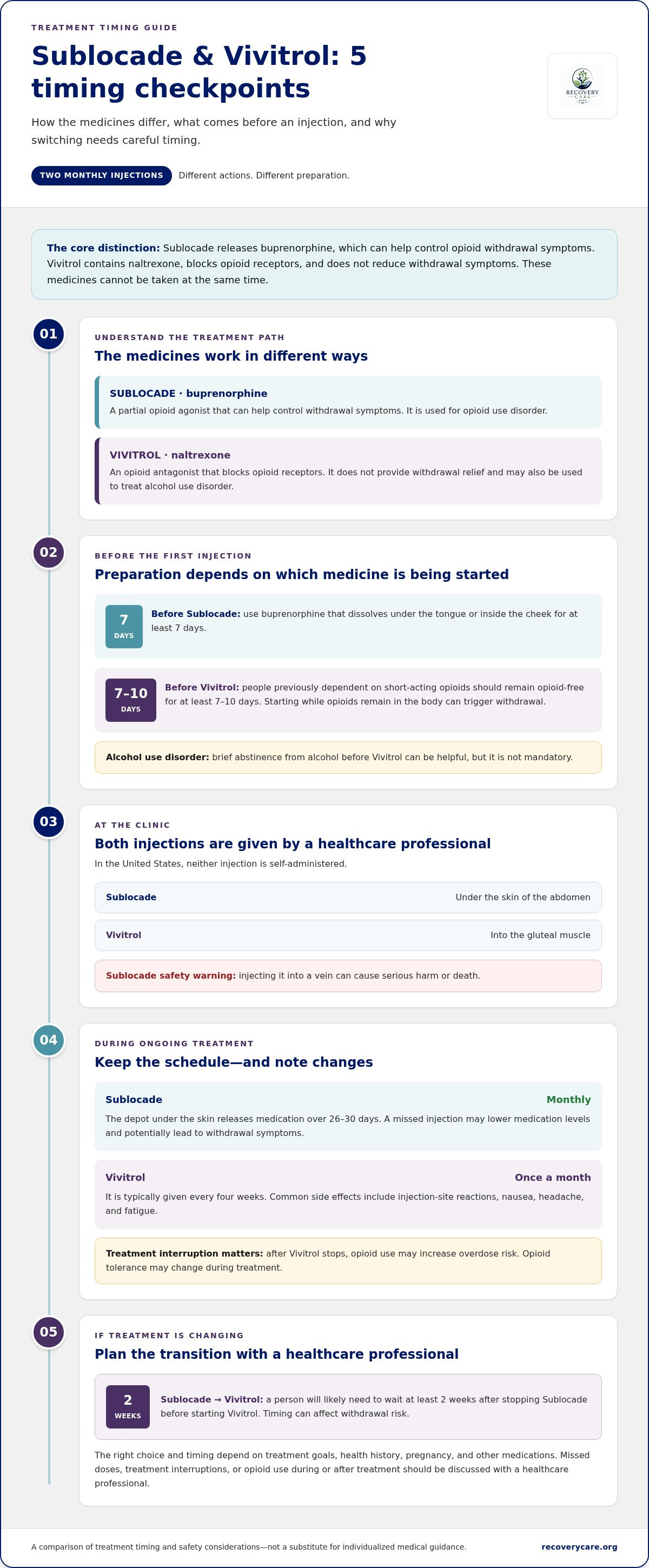
Sublocade contains buprenorphine, a partial opioid agonist that can help control withdrawal symptoms. It forms a depot under the skin of the abdomen, releasing medication over 26-30 days. Vivitrol contains naltrexone, an opioid antagonist that blocks opioid receptors. The National Institute on Drug Abuse describes Vivitrol as a long-acting injection given once a month. These medications cannot be taken at the same time.
Treatment Needs and Duration
The choice depends on treatment goals, health history, pregnancy, and other medications. Buprenorphine-based medications such as Sublocade are sometimes used during pregnancy under close medical supervision. Sublocade is administered monthly, while Vivitrol is typically given every four weeks. Treatment duration depends on the care plan. A Sublocade vs Vivitrol comparison should focus on whether buprenorphine treatment or receptor blockade better aligns with your needs.
Administration and U.S. Requirements
In the United States, trained healthcare professionals administer both injections. Sublocade is injected under the skin of the abdomen; Vivitrol is injected into the gluteal muscle. Before starting Sublocade, a person needs buprenorphine that dissolves under the tongue or inside the cheek for at least 7 days. Patients receive injections through scheduled clinical care, not self-administration.
U.S. Costs and Coverage
Insurance coverage depends on plan benefits, medication coverage, and treatment circumstances. The Affordable Care Act classifies substance use treatment as an essential health benefit, but plan terms affect coverage. Eligibility for patient-assistance programs also depends on their requirements.
| Option | Ingredient | Action | Schedule |
|---|---|---|---|
| Sublocade | Buprenorphine | Partial agonist | Monthly |
| Vivitrol | Naltrexone | Blocks opioid receptors | Typically every four weeks |
Choose based on the medication’s action and schedule, alongside your clinical needs.
What are the side effects of Sublocade and Vivitrol?
Common Vivitrol side effects include injection-site reactions, nausea, headache, and fatigue. Sublocade carries a serious boxed warning: injecting it into a vein can cause serious harm or death. When discussing treatment, consider each medication’s known effects, delivery method, and safety requirements.
The medications also differ in how they affect withdrawal symptoms. Sublocade can help control opioid withdrawal, while Vivitrol, which contains the opioid antagonist naltrexone, does not reduce withdrawal symptoms. That distinction matters if you are experiencing symptoms or considering treatment after opioid use. Because the medications act differently at opioid receptors, one cannot simply replace the other without considering treatment timing.
A missed Sublocade injection may lower medication levels and potentially lead to withdrawal symptoms. If Vivitrol treatment stops, opioid use may increase overdose risk. This matters because Vivitrol blocks opioid receptors while active, and opioid tolerance may change during treatment. Don’t treat a missed dose or treatment interruption as a routine scheduling change. Discuss timing with a healthcare professional.
Cravings and withdrawal are not the same experience. Sublocade can help control withdrawal symptoms, whereas Vivitrol’s blocking action is intended to help prevent opioid use after a person has quit. Vivitrol does not provide the withdrawal relief associated with buprenorphine. If symptoms arise between injections, note when they began and when you received your last dose. Those details can guide a treatment conversation.
For recovery, track symptoms after each injection, including nausea, headache, fatigue, or injection-site reactions with Vivitrol. Report changes and any missed dose promptly, particularly if opioid use has occurred or is being considered. Never try to administer Sublocade yourself. Its boxed warning makes proper administration essential, and Vivitrol also requires administration by a healthcare professional.
Can Vivitrol Treat Alcohol Use Disorder Too?
Yes. Vivitrol is approved to treat both alcohol and opioid addiction, while Sublocade is used for opioid use disorder, not alcohol dependence. The FDA approved extended-release Vivitrol to treat alcohol use disorder in 2006. Its role in treatment depends on the substance being addressed and whether opioids remain in the body.
Before starting Vivitrol, opioid-free timing matters. Its active ingredient, naltrexone, blocks opioid receptors; starting while opioids remain in the body can trigger withdrawal. Prescribing information recommends that people previously dependent on short-acting opioids remain opioid-free for at least 7-10 days. Brief abstinence from alcohol can be helpful before treatment, but it isn’t mandatory.
Buprenorphine treatment also affects the timing. Before starting Sublocade, a person needs to use buprenorphine that dissolves under the tongue or inside the cheek for at least 7 days. When switching from Sublocade to Vivitrol, the person will likely need to wait at least 2 weeks after stopping Sublocade. Ask a healthcare professional about when to start Vivitrol after using Sublocade or another buprenorphine product, since treatment timing can affect withdrawal risk.
The medicines also differ in opioid use disorder treatment. Buprenorphine is a partial opioid agonist: it activates opioid receptors in a limited way. Naltrexone is an opioid antagonist that blocks those receptors. In one study, 57% of participants assigned to Suboxone relapsed, compared with 65% assigned to Vivitrol during the study. That comparison involved daily buprenorphine/naloxone and extended-release naltrexone, not Sublocade.
The opioid-free period before Vivitrol is especially important for opioid safety. It is not a blanket requirement to stop drinking first. Share recent opioid and buprenorphine use when discussing treatment timing. If alcohol use disorder is your main concern, Vivitrol may address that condition; Sublocade targets opioid use disorder. Their different purposes can help frame a focused conversation about recovery.
How Sublocade and Vivitrol work
The clearest difference is how each medication acts at opioid receptors. Sublocade contains buprenorphine, a partial opioid agonist, while Vivitrol contains naltrexone, an opioid antagonist. One activates receptors in a limited way; the other blocks them. This difference helps explain why these extended-release injections have distinct roles in addiction treatment.
After a trained professional injects Sublocade under the skin, the medication forms a depot. Buprenorphine releases from that depot over 26-30 days, providing ongoing medication without a daily tablet. Because buprenorphine is a partial agonist, it can help control withdrawal symptoms. Its steady release supports treatment between appointments, while the care plan addresses cravings and other recovery needs.
Vivitrol works differently: its naltrexone blocks opioid receptors, so opioids cannot produce their usual effects while the medication is active. The National Institute on Drug Abuse describes Vivitrol as a long-acting injection given once a month. Unlike buprenorphine, naltrexone does not activate opioid receptors or treat withdrawal symptoms. Oral naltrexone is another form, but it must be taken daily to work as intended.
These mechanisms shape what patients may experience. Sublocade’s buprenorphine release can help manage withdrawal, while Vivitrol is intended to help prevent opioid and alcohol use after a person has quit. Neither injection makes recovery automatic; treatment goals, mental health, and possible side effects remain important parts of care. The medications are not interchangeable or taken together because they act differently at the same receptors.
In practical terms, compare the treatment role you need: ongoing buprenorphine support or opioid-receptor blockade after stopping opioids. For a clearer discussion of how each mechanism fits your goals, explore Sublocade and Vivitrol treatment with a healthcare professional.
Recovery Care: Suboxone Treatment
Recovery Care can help you explore medication-assisted treatment options for opioid use disorder. Its Suboxone Treatment, Sublocade Injections, and Vivitrol Injections provide different medication approaches, while Telehealth Consultations offer another way to access care. A conversation can help you consider how your treatment history, current symptoms, and goals relate to these options.
If you’re unsure where to begin, you can discuss your questions and next steps with Recovery Care. Reach out or visit Recovery Care to learn more.
Take the Next Step With a Plan That Fits
Your next step can be a focused conversation about what matters most in treatment: your goals, current symptoms, past medication experiences, and concerns about switching. A Sublocade vs. Vivitrol comparison can help you frame your questions, but your care plan should also reflect your health and recovery priorities.
Recovery Care offers Suboxone Treatment, Sublocade Injections, and Vivitrol Injections. If you’re weighing these options, bring questions about timing, side effects, and the treatment approach you hope to explore. A clinician can help you consider how those factors fit your situation.
You don’t have to have every answer before reaching out. Contact Recovery Care to discuss treatment options and take a thoughtful next step toward care that feels right for you.
Frequently Asked Questions
Does Sublocade or Vivitrol Block Opioids Better?
Vivitrol directly blocks opioid receptors; Sublocade does not act as an opioid antagonist. Sublocade releases buprenorphine, a partial agonist that helps control withdrawal symptoms. So if “block” means receptor blockade, Vivitrol has that action. This does not mean one treatment is better overall: Vivitrol blocks opioid effects, while Sublocade provides ongoing buprenorphine treatment for opioid use disorder.
Which Has More Overdose Risk: Sublocade or Vivitrol?
Neither medication carries a single, higher overdose risk in every situation. Using opioids after stopping Vivitrol may increase overdose risk. With Sublocade, missing an injection can lower medication levels and potentially cause withdrawal symptoms. These are different risks, not a direct ranking. Keep treatment discussions on schedule and disclose any opioid use or missed dose, since those details affect safety planning.
Are Sublocade and Vivitrol Controlled Substances?
Sublocade is a Schedule III controlled substance in the United States; Vivitrol is not a controlled substance. This difference reflects their active ingredients: Sublocade contains buprenorphine, while Vivitrol contains naltrexone. Classification does not determine which medication suits a particular treatment goal, but it helps explain differences in prescribing and medication handling. Tell clinicians about other prescriptions before treatment.
What are Sublocade and Vivitrol, and how do they work for opioid use disorder?
Both are FDA-approved medications for opioid use disorder, but they take different approaches. Sublocade provides extended-release buprenorphine, while Vivitrol uses naltrexone to block opioid receptors. A practical difference is their role during treatment: buprenorphine can help manage withdrawal symptoms, whereas Vivitrol is used after a person has stopped opioids. That timing matters when planning treatment initiation or a transition.
How effective is Sublocade compared with Vivitrol for opioid use disorder?
Available studies comparing Vivitrol with buprenorphine/naloxone should not be treated as direct trials of Sublocade versus Vivitrol. Sublocade is an extended-release buprenorphine injection, while those comparisons used daily buprenorphine/naloxone. Effectiveness also involves more than one outcome: starting treatment, staying on medication, controlling withdrawal, and supporting recovery. Discuss these priorities alongside each medication’s mechanism and schedule when considering your options.
What are the main differences in active ingredients, dosing schedules, and duration of action?
Sublocade contains buprenorphine and is administered monthly; its subcutaneous depot releases medication over 26-30 days. Vivitrol contains naltrexone and is typically administered every four weeks. Its opioid-receptor blocking effect typically lasts about 28 days. Both are long-acting injections, but their different ingredients and actions mean their schedules alone don’t make them interchangeable.


