
What if reclaiming your life doesn't require pausing it, but simply partnering with a physician who treats substance use like any other chronic medical condition? Consulting a qualified addiction medicine specialist bridges the gap between targeted medical pharmacology and everyday primary care, giving you expert support rooted in dignity rather than judgment.
If you've experienced exhausting setbacks, felt confused by medical credentials, or feared judgment in clinical settings, you're not alone. Addiction is a treatable medical condition, and trying to sort through medication options like Suboxone or Vivitrol while keeping up with daily responsibilities can feel overwhelming. You deserve evidence-based care that protects your whole health, not just your immediate symptoms.
This guide explains what an addiction medicine specialist does, how specialized outpatient treatment works alongside comprehensive healthcare, and how to verify physician credentials. You'll gain a clear roadmap for finding compassionate, insurance-covered medical care that supports lasting recovery on your terms.
Key Takeaways
- Understand how an addiction medicine specialist treats substance use disorders as chronic medical conditions, replacing judgment with specialized clinical care.
- Discover how evidence-based pharmacotherapies, including Suboxone, Sublocade, and Vivitrol, work to stabilize brain chemistry and support long-term healing.
- Learn how physician-led outpatient treatment allows you to rebuild your health without disrupting your career, family life, or daily routines.
- Find out what to expect during a confidential clinical intake, from complete medical histories to lab screenings and collaborative care plans.
- Gain a practical framework to identify accredited medical practices that provide whole-person support and accept insurance, including Medicare and Medicaid.
What Is an Addiction Medicine Specialist and When Should You See One?
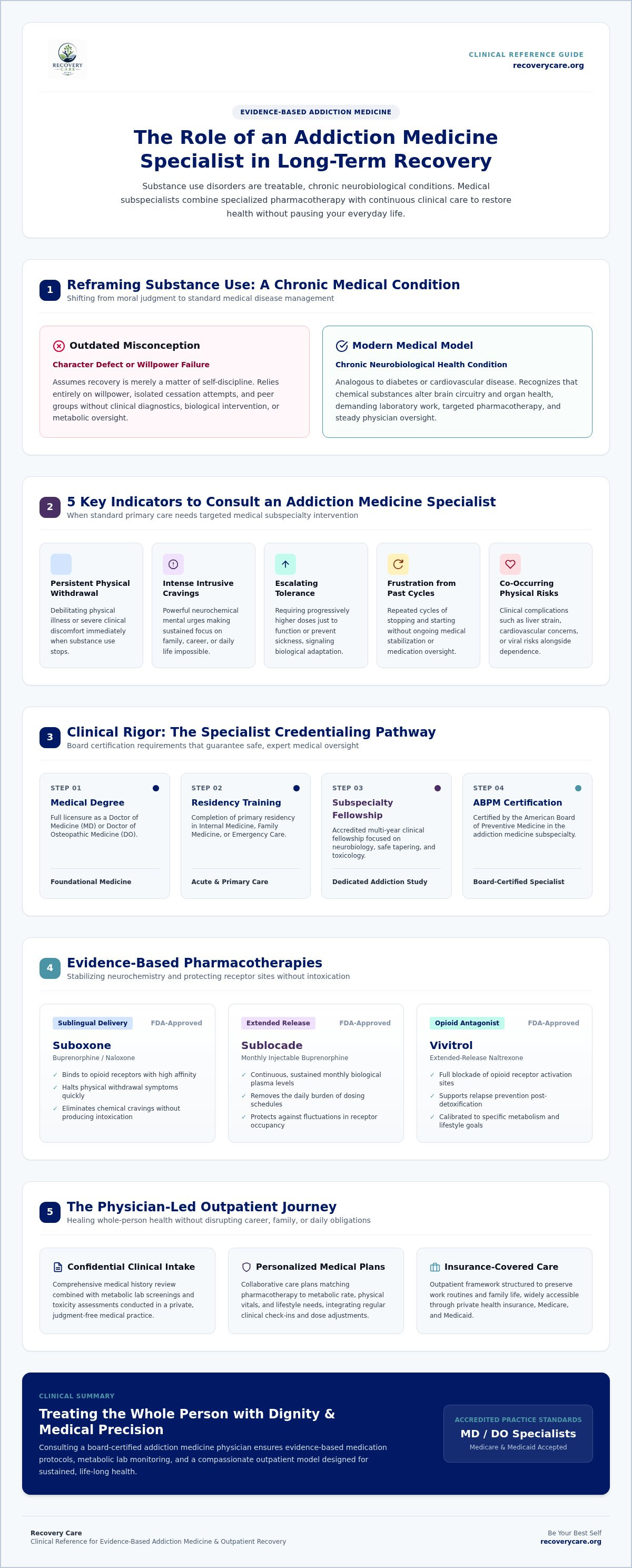
An addiction medicine specialist is a board-certified medical doctor who dedicates their clinical practice to preventing, evaluating, and treating substance use disorders. Rather than viewing addiction as an issue of willpower or personal fault, these physicians treat it as a chronic, recurring neurobiological condition. Much like managing diabetes or cardiovascular disease, stabilizing substance use requires precise pharmacological care, physical health monitoring, and sustained clinical support.
Defining the Role in Modern Medical Care
Physicians practicing within the accredited addiction medicine subspecialty undergo extensive post-residency fellowship training. This education equips them to understand how specific chemical substances alter brain circuitry, organ function, and psychological well-being. While peer-led support groups offer valuable community encouragement, they cannot conduct metabolic lab work, manage physical stabilization, or prescribe medications. An addiction medicine specialist pairs advanced pharmacotherapy with personalized guidance, protecting patient dignity in an environment free from clinical judgment.
Key Signs It Is Time to Consult a Medical Specialist
Speaking with a general primary physician is often a helpful first step, but complex physical dependencies frequently require deeper clinical expertise. A dedicated specialist provides targeted interventions when standard approaches fall short. Key indicators that warrant a consultation include:
- Persistent physical withdrawal: Suffering through debilitating physical illness or severe discomfort whenever substance use stops.
- Intense, intrusive cravings: Struggling with powerful mental urges that make sustained focus on work, family, or self-care feel impossible.
- Escalating tolerance: Requiring larger amounts to function or avoid sickness, which signals neurochemical adaptation that needs structured medical management.
- Frustration from past attempts: Experiencing cycles of stopping and starting without ongoing medical stabilization or proper medication oversight.
- Co-occurring physical symptoms: Needing specialized medical care for liver strain, viral risks, or cardiovascular concerns alongside substance dependence.
Partnering with a specialized physician creates a clear path toward holistic opioid recovery, allowing you to rebuild physical wellness and emotional stability without pausing your life.
Core Clinical Qualifications, Medical Training, and Evidence-Based Treatments
Substance use care requires deep scientific rigor alongside genuine empathy. An addiction medicine specialist combines extensive medical education with specialized clinical insights, creating a safe environment where healing takes priority. Instead of treating medication, therapy, and routine physical wellness as separate tracks, modern specialists weave these elements together into one cohesive medical plan.
Physician Credentials and Specialized Clinical Standards
Every qualified specialist begins as a fully licensed physician holding an MD or DO degree. After completing a standard residency in fields like internal medicine, family medicine, or emergency medicine, they complete an accredited multi-year fellowship in addiction medicine. Certification through the American Board of Preventive Medicine (ABPM) confirms a physician's deep mastery of neurobiology, safe tapering protocols, and clinical toxicology. This advanced background allows them to identify subtle medical complications that standard clinical settings often overlook.
Evidence-Based Medication Management
Stabilization relies on carefully calibrated pharmacotherapy tailored to your specific metabolic rate and lifestyle. Specialists prescribe FDA-approved evidence-based medications for substance use disorders to protect receptor sites and quiet chemical cravings:
- Sublingual Buprenorphine: Starting suboxone treatment binds to opioid receptors to halt withdrawal sickness without creating intoxication, giving your brain room to heal.
- Long-Acting Injectables: Transitioning to a monthly sublocade injection maintains steady medication levels in the bloodstream, removing the stress of daily pharmacy visits or morning dosing routines.
- Receptor Blockers: Monthly extended-release naltrexone injections (Vivitrol) shield opioid receptors from illicit substances and decrease alcohol cravings.
Specialists monitor your progress through supportive check-ins, routine lab panels, and therapeutic blood screenings. These tests are never punitive; they simply ensure your liver, kidneys, and prescription doses remain perfectly aligned. If you want to explore these therapies in a private setting, consulting with the clinical team at Recovery Care offers a dignified path toward combining evidence-based pharmacotherapy with ongoing counseling and whole-person wellness.
Specialist-Led Outpatient Care vs. General Practice and Inpatient Facilities
Choosing the right clinical setting shapes your long-term success. While standard medical clinics and residential facilities both serve distinct purposes across healthcare, specialized outpatient care occupies an essential middle ground. Working with a dedicated addiction medicine specialist allows you to maintain daily commitments while receiving advanced pharmacotherapy tailored to your body's exact recovery requirements.
Comparing Care Models Across Critical Dimensions
Primary care physicians manage an immense range of general conditions, but heavy caseloads often leave them with only fifteen minutes per visit. That brief window rarely permits the nuanced dose titrations, specialized toxicology evaluations, and deep counseling coordination required for substance use disorders. On the opposite end, residential programs demand that you put your life on hold for weeks or months, creating major logistical hurdles for your employment, parenting duties, and household finances.
Specialized outpatient clinics provide an effective, non-disruptive alternative. Physicians trained under rigorous board certification standards for addiction medicine possess the focused expertise to manage complex pharmacotherapy right alongside routine medical needs. Integrating specialized clinical oversight with primary care for recovery patients means you don't have to visit multiple disconnected doctors just to manage high blood pressure, check your cholesterol, and maintain your prescription stabilization. Everything happens under one trusted medical roof while protecting your personal privacy.
Why Whole-Person Health Integration Matters
Sustainable recovery requires addressing the physical wear that substance use places on the body. A dedicated addiction medicine specialist doesn't simply write a prescription; they actively restore your overall health through structured preventative care:
- Routine Physical Health Reviews: Completing comprehensive physicals for recovery patients monitors vital signs, sleep hygiene, and nutritional deficiencies that impact neurochemical healing.
- Targeted Clinical Labs: Using standard diagnostic testing for addiction treatment allows your physician to check liver enzymes, track therapeutic blood levels, and catch underlying issues before they trigger physical discomfort.
- Coordinated Emotional Care: Pairing regular medical visits with professional behavioral counseling ensures that personal stressors and past trauma receive compassionate attention alongside your biological recovery.
This balanced model treats your mind and body together. By healing the whole person within an outpatient routine, you build durable habits in the exact environment where you live and work every day.
What to Expect During Your Evaluation and Comprehensive Treatment Plan
Taking the first step into a clinic or opening a video visit can bring up natural nervousness. Understanding the clinical evaluation process removes that uncertainty. When you meet with an addiction medicine specialist, the intake feels like any other collaborative medical appointment, focused entirely on your relief, personal goals, and long-term health.
The Step-by-Step Initial Consultation Process
Your first appointment centers on open conversation rather than clinical interrogation. A dedicated physician guides you through every stage of onboarding with dignity:
- Confidential Health History: You and your doctor discuss your substance use history, past withdrawal challenges, physical symptoms, and co-occurring conditions in a private space protected by strict federal confidentiality standards.
- Baseline Diagnostic Screenings: Routine blood panels, liver function tests, and baseline toxicology screenings establish your biological health status to ensure medications are prescribed safely.
- Collaborative Craving Stabilization: You actively participate in shaping your care plan, discussing medication options to quiet acute cravings and halt physical withdrawal rapidly.
- Structured Follow-Up Cadence: During the initial stabilization phase, you will meet weekly or bi-weekly with your care team to fine-tune dosages and monitor your comfort.
In-Clinic Consultations vs. Virtual Telehealth Visits
Modern medical care fits into your everyday routine. Telemedicine rules allow patients to complete comprehensive evaluations and routine medical follow-ups remotely using secure, HIPAA-compliant video platforms. Integrating remote medical visits with specialized telehealth addiction counseling allows you to work through emotional triggers from the privacy of home while your doctor coordinates prescriptions with your local pharmacy.
At the same time, in-person clinical visits remain vital for certain medical services, including hands-on physical exams, on-site lab collections, and clinical administration of monthly injectable medications like Sublocade or Vivitrol. Many patients thrive in a hybrid model that blends the flexibility of virtual appointments with the focused support of periodic in-office visits. If you are ready to explore your options with an experienced medical team, you can schedule your initial consultation to begin building a treatment plan designed around your life.
How to Choose the Right Addiction Medicine Practice for Lasting Recovery
Finding the right clinical home can transform your entire experience with treatment. Recovery isn't a one-size-fits-all process, and partnering with a qualified addiction medicine specialist means choosing a provider who respects your lived experience while delivering uncompromising medical care. Evaluating a clinic's medical philosophy, accreditation, and patient culture ensures you receive the steady, dignified support you deserve.
Critical Questions to Ask Before Scheduling Care
Before you book an evaluation, contacting a clinic with a few direct questions helps clarify whether their clinical environment is the right fit for your needs:
- What are the physician's credentials? Confirm that the clinical team is led by board-certified physicians with specialized post-residency training in addiction medicine.
- What is the practice's philosophy on medication duration? A compassionate provider views medications like buprenorphine as long-term stabilizers, never forcing arbitrary deadlines or rushed tapering schedules.
- Does the practice offer comprehensive care under one roof? Ask whether you can access routine primary care and behavioral health counseling alongside your addiction pharmacotherapy.
- Which insurance plans are accepted? Transparent practices work directly with major commercial insurance plans, Medicare, and Medicaid to keep essential care accessible.
Accessible, Compassionate Outpatient Care with Recovery Care
At Recovery Care, treatment centers on the belief that addiction is a manageable medical condition requiring patience, dignity, and clinical excellence. Led by Medical Director Dr. Heather Rosen, MD, our physician-led outpatient model seamlessly combines evidence-based pharmacotherapy with integrated primary care and behavioral counseling. Patients access trusted medical options, including Suboxone, Sublocade, and Vivitrol, tailored precisely to their metabolic profiles and personal goals.
Whether you connect through flexible telehealth consultations or prefer in-clinic visits, our team provides judgment-free care that fits around your job and family obligations. We accept commercial insurance plans, Medicare, and Medicaid, ensuring financial barriers don't stand in the way of high-quality healthcare. You don't have to navigate withdrawal, cravings, or medical uncertainty on your own. Taking the first step toward lasting wellness begins with a confidential conversation with a clinical team invested in your long-term health.
Taking the Next Step Toward Lasting Health and Stability
Healing from substance use begins when you treat it like any other chronic medical condition. By partnering with a qualified addiction medicine specialist, you replace exhausting cycles of withdrawal and intense cravings with steady, evidence-based care. You don't have to pause your career, step away from your family, or navigate recovery without proper clinical management.
At Recovery Care, our physician-led team is directed by Medical Director Dr. Heather Rosen, MD. We combine specialized addiction pharmacotherapy with routine outpatient primary care and behavioral counseling, ensuring your complete physical and emotional health is protected. With flexible appointment options and broad coverage across major commercial insurance, Medicare, and Medicaid, expert outpatient support is always within reach.
A healthier, more stable future is entirely possible. Connect with a compassionate Recovery Care specialist today to begin your personalized treatment plan in an environment rooted in dignity and respect.
Frequently Asked Questions
What is the difference between an addiction medicine specialist and an addiction psychiatrist?
An addiction medicine specialist typically trains in primary care fields like internal or family medicine before completing specialized addiction fellowship training. They focus extensively on the physical, toxicological, and whole-body aspects of substance use disorders. In contrast, an addiction psychiatrist completes a general psychiatry residency first, focusing primarily on diagnosing and managing complex co-occurring psychiatric disorders like severe bipolar disorder alongside chemical dependency.
Can an addiction medicine specialist prescribe Suboxone or Vivitrol during my first visit?
Yes, a board-certified addiction medicine specialist can often prescribe medications like Suboxone during your initial consultation if clinically appropriate. Following a thorough medical intake and symptom evaluation, your physician works quickly to stabilize uncomfortable withdrawal symptoms. For injectable options like Sublocade or Vivitrol, doctors typically initiate sublingual or oral trial formulations first to confirm tolerance before administering the long-acting monthly injection.
Does health insurance, Medicare, or Medicaid cover visits with an addiction medicine specialist?
Yes, most major commercial health insurance plans, Medicare, and Medicaid provide robust coverage for outpatient addiction medicine care. The Mental Health Parity and Addiction Equity Act requires insurers to cover substance use treatments similarly to other chronic medical conditions. Coverage typically includes physician consultations, routine diagnostic lab work, behavioral counseling, and prescription medications like buprenorphine formulations or extended-release naltrexone.
How long do patients typically stay under the care of an addiction medicine specialist?
Treatment duration depends on your individual health needs and personal recovery goals. Because substance use disorder functions as a chronic condition, many patients remain under clinical care for several months or years. Maintenance therapy with medications like Suboxone or Sublocade provides long-term stability and protects against overdose. Your physician won't rush your timeline or force an arbitrary tapering schedule before you feel steady.
Can I see an addiction medicine specialist online through telehealth appointments?
Yes, you can complete consultations and routine medical follow-ups through secure telehealth appointments. Federal telemedicine regulations permit licensed physicians to evaluate patients and prescribe buprenorphine medications for opioid use disorder remotely. Virtual appointments provide private, flexible access to clinical care directly from home, though periodic in-person clinic visits remain necessary if you choose monthly injectable therapies.
What happens if I experience a relapse while working with an addiction specialist?
A return to substance use is treated as a clinical signal that your treatment plan needs adjusting, never as a moral failure or reason for discharge. Your specialist will review your current dosage, explore emerging emotional stressors, and adjust your pharmacotherapy or counseling support accordingly. Honest communication ensures your safety, keeping the focus entirely on compassionate stabilization rather than judgment or punitive measures.
Will seeing an addiction medicine doctor appear on my regular employment record?
No, your treatment records will not appear on your employment history or public records. Outpatient addiction care is shielded by strict federal privacy regulations, including HIPAA and 42 CFR Part 2. Medical providers cannot disclose your treatment details, diagnoses, or appointment attendance to employers without your explicit, written consent, protecting your professional standing while you focus on your personal recovery.


