
What if the hardest part of your morning wasn't remembering a pill or a film, but simply deciding what to have for breakfast? For many, the daily routine of oral medication is a constant, sometimes heavy reminder of the past. You might feel the "daily ups and downs" that come with sublingual films, or perhaps you're curious if a sublocade injection could offer a more seamless alternative. It's completely normal to feel a bit of anxiety about missing a dose or the stigma of daily dosing. At Recovery Care, we believe your treatment should support your life, not define it.
This guide explores how this once-monthly option compares to daily medications and other injectables to find the best path for your long-term recovery. You'll discover how the latest 2026 clinical updates, including expanded injection sites and rapid initiation protocols, can help you move toward a steady state of health with confidence and dignity. Whether you're balancing a busy professional career or an active family life, finding a treatment that fits your rhythm is the first step toward lasting peace of mind. We're here to help you understand your options and choose the route that feels most supportive for your unique journey.
Key Takeaways
- Learn how a sublocade injection creates a "steady state" of medication in your system, helping you avoid the emotional and physical "ups and downs" of daily oral dosing.
- Compare the critical differences between Sublocade and Vivitrol, including why one requires a specific detox period while the other allows for a more immediate transition.
- Discover how the latest 2026 protocols offer more flexibility in treatment, including expanded injection sites and rapid initiation options tailored to your comfort.
- Understand the psychological benefits of moving to a monthly schedule, which can reduce the stigma of daily medication and free up mental energy for your long-term goals.
- Find out how the team at Recovery Care supports your journey by managing complex insurance coordination and providing a warm, confidential environment for your healing.
What is the Sublocade Injection and How Does it Support Recovery?
Choosing a path for recovery is a deeply personal decision, and for many, the shift from daily medication to a long-acting option marks a significant milestone in their journey. The sublocade injection is a once-monthly, extended-release form of buprenorphine designed specifically for those managing Opioid Use Disorder (OUD). Unlike traditional daily films or tablets that require your attention every single morning, this medication is administered subcutaneously, just under the skin, by a qualified healthcare professional. Sublocade serves as a steady-state solution that eliminates the daily "ups and downs" of recovery, providing consistent support without the need for a morning routine.
By providing a continuous release of medication over a full 30-day period, this treatment allows you to step away from the ritual of daily dosing. It's not just about convenience; it's about creating a foundation of physical stability that lets you focus on your life, your career, and your family. At Recovery Care, we see this as a way to reclaim your time and mental energy, moving the focus from managing a condition to simply living your life.
The Role of Buprenorphine in the Injection
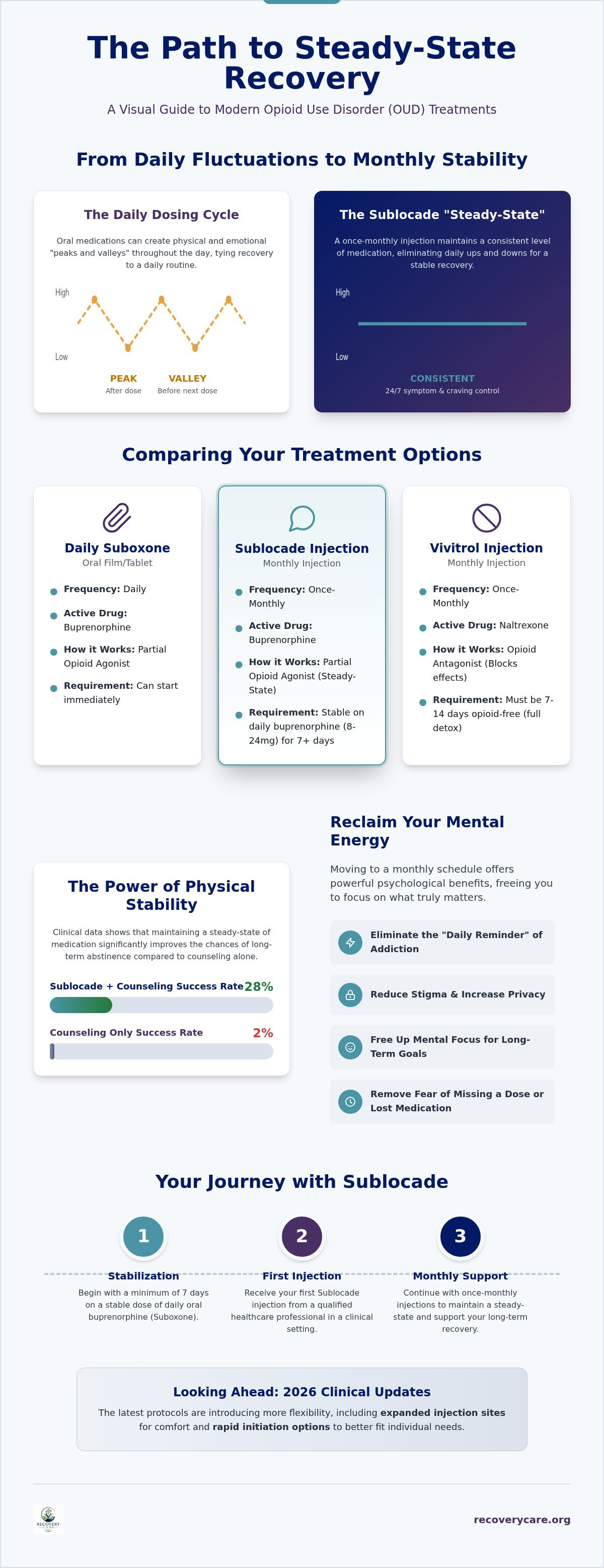
The active ingredient in this treatment is Buprenorphine, a medication that works as a partial opioid agonist. This means it attaches to the same receptors in the brain as other opioids, but it does so in a way that curbs cravings and prevents withdrawal symptoms without producing a "high." The slow-release mechanism of the injection is a major safety advancement, as it provides a controlled, level amount of medication in your system at all times. This prevents the "peaks and valleys" often associated with oral delivery. Because of how it's formulated, you must first be stable on a traditional suboxone treatment for at least seven days before transitioning. This ensures your body is ready for the long-acting dose and that the transition is as smooth and comfortable as possible.
Who is an Ideal Candidate for Sublocade?
This treatment is particularly effective for individuals who have already found some stability on a daily buprenorphine dose, typically between 8mg and 24mg. If you find that the daily reminder of taking a pill or film is a source of stress or stigma, the sublocade injection might be the right choice for you. It's an excellent fit for people with busy, active lifestyles or demanding professional roles where daily compliance might be difficult to manage. By removing the fear of missing a dose, you can travel, work, and engage with your community with a renewed sense of freedom and security. Our team works closely with you to ensure this option aligns with your specific recovery goals and physical needs.
The Science of Steady-State Recovery: Why Monthly Dosing Matters
Traditional recovery often involves a daily cycle of taking medication, waiting for it to work, and then feeling it slowly wear off. This creates "peaks and valleys" in your system that can be physically and emotionally draining. The science behind the sublocade injection is different because it focuses on achieving a "steady-state" of medication in your bloodstream. This means the level of buprenorphine remains consistent throughout the month, providing a stable foundation for your brain to heal. To understand what buprenorphine is and how it supports this process, it helps to look at how it interacts with your receptors without the constant fluctuations of daily dosing.
Clinical trials have highlighted the power of this stability. Participants using the injection saw a 28% success rate in achieving long-term abstinence, compared to just 2% for those receiving counseling alone. This data suggests that when the physical symptoms of withdrawal and cravings are managed consistently, the path to lasting recovery becomes much clearer.
Eliminating the "Daily Reminder" of Addiction
Moving to a monthly shot does more than just simplify your schedule; it breaks the habit-loop of daily dosing. When you don't have to take a pill or film every morning to feel "normal," you stop reinforcing the psychological trigger that medication is the only way to get through the day. This shift offers immense psychological freedom. You no longer have to worry about lost or stolen medication, and the stigma of carrying prescriptions while traveling or at work simply disappears. It allows you to move through the world with a sense of privacy and autonomy that daily medications often hinder.
Brain Healing and Long-Term Stability
Steady-state delivery is considered the gold standard for avoiding withdrawal symptoms. Because the receptors in your brain are consistently occupied by buprenorphine, your brain chemistry has the chance to truly stabilize over time. This consistency also provides a vital safety net; the sublocade injection helps prevent accidental overdose by effectively blocking the effects of other opioids. This level of protection allows you to focus on your personal growth, counseling, and rebuilding relationships rather than just managing survival. If you're looking for a way to move beyond the daily cycle, the experts at Recovery Care can help you determine if this stable approach is right for your goals.
Sublocade vs. Vivitrol vs. Daily Suboxone: A Comparison
Choosing the right medication is a pivotal step in your recovery journey, and understanding the differences between Sublocade, Vivitrol, and daily Suboxone helps you make an informed choice. While all three are effective tools, they work in very different ways. The active ingredient in both Suboxone and the sublocade injection is buprenorphine, a partial opioid agonist that binds to your brain's receptors to satisfy cravings and block the effects of other opioids. In contrast, Vivitrol uses naltrexone, an opioid antagonist that simply blocks receptors without providing any opioid-like effect. This "blockade effect" is present in both, but buprenorphine also manages the biological urge to use by partially activating those receptors.
One of the most significant differences is the "detox requirement." To start Vivitrol, you must be completely opioid-free for 7 to 14 days to avoid severe, precipitated withdrawal. This gap can be a difficult hurdle for many individuals in early recovery. Sublocade, however, doesn't require this waiting period. Instead, you transition directly from a stable period of oral buprenorphine. Dosing frequency also plays a role; while Suboxone requires a daily commitment, both Sublocade and Vivitrol offer the peace of mind that comes with a once-monthly administration by a professional.
Choosing Between Sublocade and Vivitrol
The choice between these two monthly injectables often comes down to how you experience cravings. If you find that the physical urge to use is a constant struggle, the buprenorphine in Sublocade is often preferred because it actively manages those cravings. Vivitrol is a non-narcotic alternative that often appeals to those who want to be completely off all opioids while still having a chemical "shield" in place to prevent relapse. At Recovery Care, we prioritize a thorough medical consultation to determine which pharmacological fit aligns with your physical health and your long-term goals for lasting recovery.
Sublocade vs. Daily Suboxone Films
The primary shift when moving from daily films to the sublocade injection is the logistical ease of replacing 30 daily doses with a single monthly visit. Taking a film every morning can keep your mind tethered to the habit of dosing, which can be a psychological burden over time. By moving to the injection, you bypass the daily ritual entirely. This change often leads to higher long-term retention in treatment programs because it removes the risk of forgotten doses, lost prescriptions, or the daily "ups and downs" associated with sublingual absorption. It's about moving from a state of constant management to a state of consistent, effortless stability.
What to Expect: The Sublocade Injection Process
Taking the step toward a long-acting treatment often brings up questions about what the actual appointment feels like. At Recovery Care, we prioritize your comfort by starting with a detailed consultation. Our medical team, led by Dr. Heather Rosen, reviews your history with suboxone treatment to ensure your body is properly stabilized. This preparation is vital for a smooth transition to the sublocade injection, as it confirms that your receptors are ready for the extended-release format. Once we've established your readiness, the administration itself is a straightforward process that happens right in our office.
The medication is administered subcutaneously, which means it's injected just under the skin in the abdominal area. It uses a specialized delivery system called Atrigel technology. When the liquid medication makes contact with your body's fluids, it transforms into a solid "depot." This small, biodegradable mass stays in place and slowly dissolves over the next 30 days, releasing a consistent stream of buprenorphine into your system. After the injection, you'll continue with monthly check-ins that combine your next dose with behavioral health support to ensure your recovery remains on track.
The Injection Experience: Pain and Aftercare
It's natural to feel a little anxious about the sensation of the shot. Most patients describe a brief stinging or a feeling of pressure during the administration, but the discomfort is typically short-lived. Because the medication forms a solid depot, you'll likely feel a small, harmless bump under the skin at the injection site. This is completely normal and is simply the medication doing its job. For aftercare, we recommend keeping the area clean and dry. It's also helpful to avoid wearing tight belts or restrictive clothing that might irritate the site for a day or two after your visit.
Timeline: From First Shot to Long-Term Recovery
Your journey with the sublocade injection usually begins with a loading phase. Most patients receive two monthly 300mg doses to quickly build up the medication in their system, followed by a 100mg maintenance dose. While every person's path is different, many stay on this protocol for 6 to 12 months or longer to ensure total stability. One of the unique benefits of this treatment is its "slow exit" from the body. Because it tapers off naturally over several months after your last shot, many find the eventual weaning process much easier than traditional methods. If you're ready to see how this timeline fits your life, you can schedule a confidential consultation with our experts today.
Compassionate Care at Recovery Care: Your Partner in Healing
At Recovery Care, we believe that clinical professionalism and deep, human empathy are not mutually exclusive. The journey toward lasting recovery often starts with overcoming the fear of judgment, which is why we've built a warm, non-judgmental environment centered on your dignity. Led by Medical Director Dr. Heather Rosen, MD, our team provides "compassionate authority," offering the weight of medical expertise with the heart of a dedicated advocate. We don't just treat a condition; we treat a whole person. By integrating primary care services into our model, we ensure your physical health is healing alongside your recovery. Every interaction is strictly confidential, providing a safe, professional space where you can focus entirely on your path forward.
Holistic Support Beyond the Injection
While the sublocade injection provides a stable physical foundation, we know that true healing involves the mind and spirit as well. Behavioral health counseling is an essential part of our comprehensive approach, helping you build the resilience needed for a life free from the "daily ups and downs" of addiction. We provide a range of support options, including telehealth consultations, to fit into your busy or active lifestyle. Our holistic model includes diagnostic testing and routine physicals to monitor your body's progress and ensure you're thriving. We're here to walk beside you, providing the tools and the encouragement needed to maintain long-term stability.
Navigating Insurance and Access
We understand that the administrative side of healthcare can feel like a heavy burden. Coordinating specialty medications and dealing with insurance shouldn't stand in the way of your health. Recovery Care has extensive experience working with most major insurance providers, including Medicare and Medicaid. Our team takes the lead on managing prior authorizations and specialty pharmacy coordination, making the process as seamless as possible for you. We're committed to ensuring that these life-changing options are accessible to those who need them. Your focus should be on your health, while we handle the logistics. If you're ready to find a treatment path that respects your lifestyle and your goals, take the next step in your recovery with Recovery Care today.
Your Path Toward Lasting Stability
Choosing the right treatment is about more than just managing symptoms; it's about reclaiming your time and your peace of mind. By moving away from the daily rituals of traditional medication, the sublocade injection offers a steady state of health that supports a busy, active lifestyle. This once-monthly option provides consistent receptor occupancy, which reduces the psychological triggers of addiction and allows your brain the space it needs to heal. Whether you are seeking to eliminate the stigma of daily dosing or simply want a more reliable safety net, this path offers a clear way forward.
At Recovery Care, our team is dedicated to providing a national standard of compassionate care that honors your dignity. Led by Medical Director Dr. Heather Rosen, MD, we handle the complex coordination with insurance and accept most major plans, including Medicaid and Medicare. You don't have to navigate this journey alone. Start your stable path to recovery—Schedule a Sublocade consultation with Recovery Care. Your future is waiting, and we are here to help you reach it with confidence and support.
Frequently Asked Questions
Does the Sublocade injection hurt?
Most patients feel a brief stinging or a sensation of pressure at the injection site during administration. This discomfort is usually temporary and fades quickly after the procedure is finished. Because a healthcare professional at Recovery Care performs the injection, they use specific techniques to minimize your discomfort and ensure your safety. It's helpful to remember that this one moment of pressure replaces thirty days of daily medication management, making it a preferred trade-off for many.
How long does Sublocade stay in your system after the last shot?
Buprenorphine has a very long half-life, so the medication can remain in your system for several months after your final dose. This slow taper is actually a clinical benefit, as it allows the medication to leave your body gradually rather than all at once. This natural decline often makes the weaning process smoother for patients compared to other methods. However, the exact duration varies based on your metabolism and how many monthly doses you received during treatment.
Can I switch from Suboxone to Sublocade immediately?
You cannot switch to a sublocade injection the same day you start your recovery journey. Clinical guidelines require you to be stable on a transmucosal buprenorphine product, like Suboxone, for at least seven days first. This ensures your body is adjusted to the medication and reduces the risk of withdrawal symptoms during the transition. Once your provider confirms you're stable on your daily dose, we can move forward with your first monthly appointment.
Is Sublocade covered by Medicaid or Medicare?
Yes, most Medicaid and Medicare plans provide coverage for this long-acting treatment. Recovery Care specializes in navigating these insurance requirements to ensure you can access care without unnecessary stress. Our team handles the prior authorization process and coordinates with specialty pharmacies on your behalf. We believe that financial or administrative hurdles shouldn't stand in the way of your recovery, so we work hard to secure these benefits for every patient who qualifies.
What happens if I miss my monthly Sublocade appointment?
If you miss your appointment, you should contact your provider at Recovery Care immediately to reschedule. Because the medication forms a solid depot that dissolves slowly, you'll still have buprenorphine in your system for a short window past the 30-day mark. However, staying on a strict monthly schedule is vital to maintaining the steady-state that prevents cravings and withdrawal. We offer flexible scheduling and telehealth support to help you stay consistent with your recovery plan.
Can I still experience withdrawal while on Sublocade?
Withdrawal is very uncommon while using the sublocade injection because it provides a consistent, level amount of medication in your bloodstream 24/7. This eliminates the physical lows that can sometimes happen between daily doses of oral films. If you do feel any discomfort, it's usually during the first month as your body reaches a full steady-state. Our medical team monitors you closely during this transition to ensure your dose provides complete, around-the-clock relief from cravings.
Is there a bump under the skin after the injection?
Yes, it's completely normal to feel a small, firm bump under the skin where the medication was administered. This is the depot created by the Atrigel delivery system, which holds the medication in place so it can release slowly over the month. The bump is harmless and will gradually decrease in size as the medication is absorbed by your body. You should avoid rubbing or picking at the site to prevent irritation or premature breakdown of the medication.
What is the difference between Sublocade and a Suboxone film?
The primary difference is the delivery method and the resulting feel of the medication. Suboxone films are taken daily and can cause minor fluctuations in how you feel throughout the day. In contrast, the monthly injection provides a level, continuous release that removes the need for a daily routine. This shift often helps patients break the psychological habit of taking something to feel better, which is a major step toward achieving long-term, stable recovery and independence.


