
What if your next checkup was the key to unlocking a new level of energy and confidence in your sobriety? It's common to feel a sense of dread when thinking about a medical exam, especially if you're worried about being judged for your past or anxious about the physical impact of substance use. We understand that scheduling physicals for recovery patients can feel like walking into a storm of "what-ifs" regarding liver health, heart strain, or how your primary care fits with your Suboxone or Vivitrol treatment.
You deserve a medical partner who sees your strength in choosing recovery rather than focusing solely on the damage of the past. This 2026 guide will help you navigate the process of obtaining a clear health baseline while ensuring you feel safe and respected every step of the way. We will walk through exactly how to prepare for a non-judgmental experience, the specific screenings that matter most for your long-term health, and how integrated care supports your journey toward lasting wellness.
Key Takeaways
- Learn how addressing physical symptoms like chronic fatigue or pain can remove hidden triggers and strengthen your long-term sobriety.
- Discover why physicals for recovery patients include specialized screenings, such as liver function tests, that standard exams often overlook.
- Understand the importance of a medical partner with expertise in MAT medications like Suboxone and Vivitrol to ensure your primary care is fully integrated.
- Find out how to prepare for your exam by organizing your medical history and identifying specific health goals you want to achieve in a safe environment.
- Explore how regular health assessments help your care team refine your treatment strategy for improved physical energy and lasting wellness.
Why Physicals for Recovery are Essential for Sobriety
Recovery is more than a change in habits; it's a complete biological reset. While much of the focus in early sobriety stays on mental health and behavioral changes, your body requires just as much attention. A recovery-focused physical is a comprehensive health assessment designed specifically for the unique needs of those in medication-assisted treatment (MAT). It goes beyond the scope of a routine physical examination by looking at how your organ systems are healing and how your body is responding to your recovery medications.
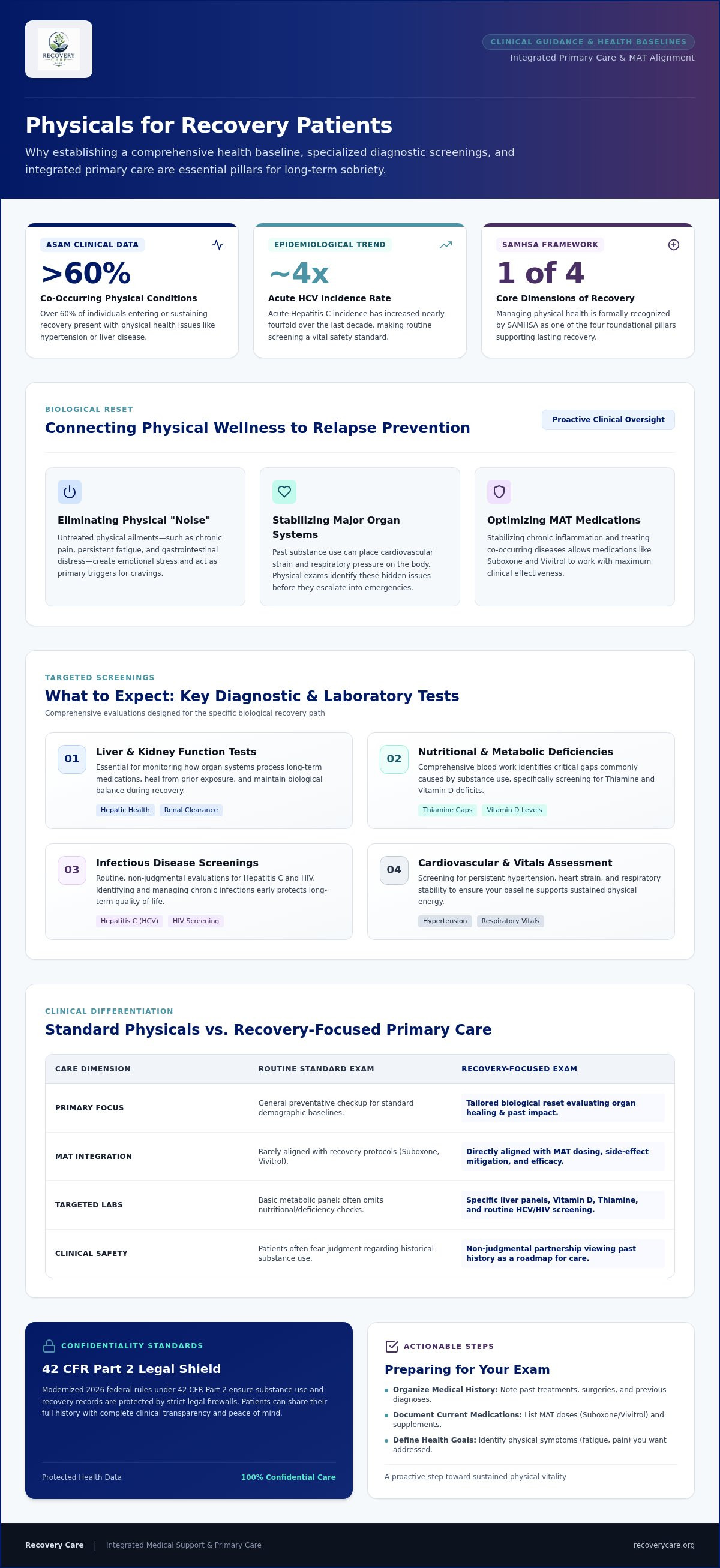
Establishing a clear health baseline in 2026 is a tactical move for your sobriety. According to data from the American Society of Addiction Medicine (ASAM), more than 60% of individuals entering or sustaining recovery present with co-occurring physical health conditions like hypertension or liver disease. Identifying these issues early allows you to move forward with a plan that supports your entire well-being rather than just managing symptoms as they arise. This proactive approach transforms your medical care into a pillar of your support system.
The Connection Between Physical Health and Relapse Prevention
It's hard to stay focused on growth when you're physically uncomfortable. Untreated ailments like chronic pain, persistent fatigue, or gastrointestinal distress create significant emotional stress. For many, this physical "noise" becomes a primary trigger for cravings. When you address these underlying issues, you're effectively lowering the barrier to a successful recovery. Managing chronic conditions like Hepatitis C or HIV early on is also vital. When your physical health is stable, your suboxone treatment can be far more effective, as your body isn't constantly in a state of high-alert or inflammation.
Addressing the Biological Impact of Past Substance Use
Past substance use can leave a lingering toll on your major organ systems, including cardiovascular strain and respiratory issues. These aren't always obvious to the naked eye. Specialized physicals for recovery patients allow a primary care provider to identify "hidden" issues through targeted lab work and diagnostic screenings before they become medical emergencies. This level of oversight is especially valuable during your first year of sobriety. Having a non-judgmental medical partner means you can be honest about your history, ensuring that every screening and recommendation is tailored to your actual needs. You don't have to hide your past to get high-quality care; in fact, your history is the roadmap we use to build your healthier future.
What to Expect During a Recovery-Focused Physical Exam
Walking into a medical office shouldn't feel like an interrogation or a source of anxiety. For many, the fear of being judged for past choices is a significant barrier to seeking care. Specialized physicals for recovery patients are designed to remove that barrier by providing a safe, compassionate environment where your history is respected as a part of your story, not a reason for shame. Our goal is to provide a comprehensive health assessment that acknowledges the unique biological path you've traveled while focusing entirely on your future wellness.
The exam begins with standard components: checking your vitals, reviewing your medical history, and conducting a thorough physical assessment. However, we go deeper than a traditional checkup. We prioritize transparency and safety. Because we follow the modernized 2026 federal rules under 42 CFR Part 2, your substance use records are protected by strict legal shields. You can be completely honest about your journey, knowing your information is secure and used only to improve your care. This honesty allows us to identify the specific needs of your body as it heals.
Key Diagnostic and Laboratory Tests
Diagnostic testing is a cornerstone of a recovery-focused physical. We utilize comprehensive blood work to look for metabolic health markers and nutritional deficiencies, such as thiamine or Vitamin D gaps, which are common after long-term substance use. Liver and kidney function tests are also essential, particularly for those utilizing long-term medications to manage their recovery.
We also include routine screenings for infectious diseases like Hepatitis C and HIV. Given that acute HCV incidence has increased nearly fourfold over the last decade, these tests are a vital, shame-free part of modern healthcare. Managing your physical health is a sign of strength and is recognized by SAMHSA as one of the four major dimensions of recovery. Identifying these issues early means we can treat them effectively before they impact your quality of life.
Behavioral Health Integration During the Exam
Your physical health and mental well-being are deeply connected. During the exam, we discuss lifestyle factors like sleep hygiene, stress management, and nutrition. We also use standardized tools to screen for co-occurring mental health disorders, such as depression or anxiety, which often accompany the recovery journey. These findings are used to refine your primary care for recovery patients plan, ensuring it's personalized to your specific needs. If you're looking for a medical home that treats you with dignity, connect with our team to schedule your baseline physical and start your holistic health journey.
Routine Physicals vs. Specialized Recovery Primary Care
A standard checkup often feels like a race against the clock. In a typical primary care setting, a physician might spend only a few minutes reviewing your vitals and asking basic lifestyle questions. While these visits are helpful for the general population, they often lack the depth required for someone navigating the complexities of long-term sobriety. Specialized physicals for recovery patients offer a much deeper level of history-taking. We don't just ask about your current symptoms; we look at the duration, route, and substances used in the past to understand exactly how your body is healing today.
This difference in approach is rooted in what we call "compassionate authority." You need a provider who carries the weight of medical expertise but delivers it with the heart of an advocate. When you feel respected and understood, you're far more likely to stay engaged with your healthcare. We bridge the gap between clinical data and human experience, ensuring that your physical health monitoring is seamlessly integrated with your telehealth addiction counseling. This creates a unified front where your medical team and your counselors are working from the same page to support your success.
The Importance of MAT-Informed Providers
If you're utilizing medication-assisted treatment, your primary care doctor must understand the pharmacology of your prescriptions. Providers who aren't familiar with Suboxone (buprenorphine/naltrexone) or Vivitrol may inadvertently prescribe medications that cause dangerous drug-drug interactions or trigger unnecessary withdrawal symptoms. An MAT-informed provider knows how to manage common issues like pain or infection without compromising your recovery. This specialized knowledge reduces the "stigma barrier" that often prevents patients from being fully transparent in the exam room. You shouldn't have to educate your doctor on your life-saving medication; they should already be your partner in managing it.
Holistic Health: Beyond the Stethoscope
Active substance use often leads to years of dental and nutritional neglect. A standard physical might overlook these areas, but a recovery-focused exam treats the whole person. We look for signs of vitamin deficiencies and metabolic imbalances that can affect your mood and energy levels. Having a single medical home for both your MAT and your primary care services ensures that nothing falls through the cracks. It simplifies your journey by providing one trusted location where your physical health, mental wellness, and recovery goals are all treated with equal importance. This comprehensive oversight is what transforms a simple doctor visit into a cornerstone of your long-term wellness strategy.
Step-by-Step: How to Prepare for Your Recovery Physical
Taking the step to schedule a checkup is a powerful act of self-care. It marks a transition from survival mode to thriving. To make the most of this time, preparation is key. Preparing for physicals for recovery patients involves both logistical and emotional steps. You aren't just a patient; you're an advocate for your own wellness. Start by gathering your complete medical history. This includes your current MAT dosages, such as Suboxone or Vivitrol, and any psychiatric prescriptions. Being precise about your medications allows your provider to ensure your treatment plan is safe and effective.
Honesty is your greatest tool during this visit. In 2026, federal protections under 42 CFR Part 2 are stronger than ever, meaning your recovery journey is legally shielded from punitive use. You can discuss your past and present with confidence. Before you arrive, check your insurance coverage. Most major plans, including Medicare and Medicaid, cover routine medical physicals as preventive care. This often means $0 out-of-pocket costs for standard screenings. If you're ready to partner with a team that values your dignity, schedule your appointment with Recovery Care today to begin your holistic health journey.
What to Bring to Your Appointment
Arriving prepared helps reduce the anxiety that often accompanies medical visits. Bring a written list of every medication and supplement you take. If you have records of recent immunizations or diagnostic tests from other providers, bring those too. It’s also helpful to write down specific questions about how your physical health impacts your recovery. For example, you might ask how your energy levels or sleep patterns relate to your current MAT dosage. Having these points on paper ensures you don't forget anything important during the conversation.
Advocating for Your Health
You have the right to lead the conversation about your body. Don't feel self-conscious about asking for specific screenings, such as liver function panels or infectious disease tests. These are standard tools for wellness. Use "I" statements to express your needs. You might say, "I am concerned about my fatigue," or "I want to discuss non-opioid options for my back pain." It’s also okay to set boundaries. If a certain part of the physical assessment makes you uncomfortable due to past medical trauma, speak up. A compassionate provider will always respect your comfort level and work with you to find a path forward.
Integrating Primary Care with Your Recovery Plan
Your journey doesn't end when the physical exam is over; that's where the real integration begins. The results from physicals for recovery patients provide a roadmap that your medical team uses to refine your overall treatment strategy. If your blood work reveals specific nutritional gaps or metabolic changes, we don't just hand you a list of supplements. We look at how those factors interact with your recovery medications and your daily energy levels. This data-driven approach ensures that your body is a strong foundation for your sobriety rather than a source of added stress.
A major benefit of this integrated model is the synergy between physical health and behavioral support. When you feel physically well, you have more emotional bandwidth to engage in counseling for opioid addiction. On the flip side, ongoing diagnostic testing for addiction treatment helps maintain safety and compliance, giving you and your family peace of mind. Receiving your primary care and MAT in one location simplifies your life. You don't have to explain your history to multiple doctors or worry about fragmented care. At Recovery Care, we are committed to providing a one-stop medical home where your dignity is the priority and your health is handled with expert, confidential care.
The Role of Ongoing Health Monitoring
An annual physical is a vital starting point, but long-term wellness requires consistent attention. Regular check-ins allow your provider to catch minor health issues, like rising blood pressure or emerging sleep disorders, before they become major setbacks. Stability is the goal. In 2026, clinical observations show that patients who maintain a consistent relationship with their primary care provider report higher levels of physical energy and more confidence in their long-term sobriety. This steady monitoring creates a safety net that supports you through every phase of your recovery.
Starting Your Holistic Journey Today
Scheduling your first comprehensive physical in 2026 is simple and low-pressure. Whether you prefer an in-person visit at one of our clinics or a follow-up through our secure telehealth consultations, we make it easy to stay connected. You don't have to wait until you feel "perfect" to seek medical care. You deserve world-class support that respects where you've been and focuses on where you're going. Take this moment to prioritize your health; your future self will thank you for the stability and strength you're building today.
Your Path to Lasting Wellness Starts Here
Prioritizing your physical health is one of the most powerful decisions you can make for your long-term success. By establishing a clear health baseline, you're not just checking a box; you're removing the physical stressors that often lead to cravings and fatigue. Specialized physicals for recovery patients ensure that your medical care is fully integrated with your MAT and behavioral health goals, providing a unified strategy for your healing. You don't have to navigate this journey alone or fear being misunderstood by your doctor.
At Recovery Care, led by Medical Director Dr. Heather Rosen, MD, we offer a patient-centered, holistic environment where your dignity is always respected. We accept Medicare, Medicaid, and most major insurances to ensure our services remain accessible to everyone. It's time to treat your body with the kindness and expertise it deserves as it recovers and grows stronger. Schedule your compassionate, non-judgmental physical at Recovery Care today. You've already done the hard work of choosing recovery; let us help you build the healthy, vibrant future you deserve.
Frequently Asked Questions
Do I need a physical if I am already on Suboxone?
Yes, an annual physical is essential even if your Suboxone treatment is going well. While MAT manages the neurological aspects of addiction, a physical exam monitors your overall organ health and metabolic function. It allows your provider to ensure that your body is healing correctly and that your medication dosage remains appropriate for your current weight, energy levels, and lifestyle needs in 2026.
Will my primary care doctor judge me for being in recovery?
At Recovery Care, our team is built on a foundation of "compassionate authority." We view your recovery as a significant personal achievement, not a reason for shame. Our staff is specifically trained to provide a non-judgmental environment where you can be completely honest about your history. We focus on your future wellness and treat every patient with the dignity and respect they deserve.
Does Medicaid or Medicare cover physicals for recovery patients?
Yes, Recovery Care accepts Medicare, Medicaid, and most major insurance plans. Under current 2026 healthcare guidelines, routine preventive physicals for recovery patients are typically covered at 100% with no out-of-pocket copayment. This ensures you can establish a health baseline and receive necessary screenings without financial strain. We recommend confirming your specific plan's network status with our office before your scheduled appointment to ensure seamless billing.
What specific blood tests are common for people in addiction recovery?
We typically order a comprehensive metabolic panel to check liver and kidney function, which is vital for those on long-term medications. Other common tests include:
- Screenings for infectious diseases like Hepatitis C and HIV.
- Nutritional panels to identify deficiencies in thiamine, folate, or Vitamin D.
- Complete blood counts to monitor for signs of infection or anemia.
How often should a person in recovery get a full physical exam?
We recommend a comprehensive physical exam at least once a year. However, during your first year of sobriety, your provider might suggest more frequent check-ins to monitor your biological reset. Regular monitoring helps us catch minor health issues, such as rising blood pressure or sleep disturbances, before they become significant stressors. Consistent care provides the stability needed to support your long-term success and physical vitality.
Can I get my physical via telehealth?
While we offer telehealth consultations for medication management and behavioral health counseling, a "full physical" generally requires an in-person visit. This allows our providers to listen to your heart and lungs, check your vitals accurately, and perform necessary blood draws. However, once your baseline is established, many follow-up appointments and lab reviews can be conveniently handled through our secure telehealth platform to fit your busy schedule.
What if I am afraid of needles or blood work during my exam?
Medical anxiety is very common, and we are here to support you. Our team uses trauma-informed care techniques to make the process as comfortable as possible. We encourage you to share your concerns with us before the exam begins. We can take things slowly, explain each step, and find ways to minimize your distress. Your comfort and sense of safety are our top priorities during every visit.
How does my physical health affect my cravings?
Physical discomfort is a major, often overlooked trigger for relapse. When your body is dealing with chronic pain, poor nutrition, or extreme fatigue, your emotional resilience drops, making it harder to manage cravings. By stabilizing your physical health through regular physicals, you remove these "hidden" stressors. A healthy, well-nourished body provides a much stronger foundation for the behavioral work you are doing in your recovery program.


