
What if the fear of an unexpected pharmacy bill is the only thing standing between you and the compassionate recovery care you deserve? If you find yourself asking, does medicare cover suboxone, you aren't alone. Trying to understand the difference between medical office visits and pharmacy benefits can feel exhausting, especially when you worry that out-of-pocket medication expenses or administrative hurdles might disrupt your healing.
You deserve clear answers and respectful care without surprise financial stress. The reassuring truth is that you can discover how Medicare Parts B, C, and D cover Suboxone, doctor visits, and addiction therapy so you can access care affordably. In this complete guide, we examine how different Medicare plans handle generic and brand formulations, how to verify your coverage rules, and how to take the first step toward confidential, stigma-free outpatient treatment.
Key Takeaways
- If you wonder does Medicare cover Suboxone, the reassuring answer is yes: Medicare Parts B, C, and D coordinate to fund clinical consultations, therapy sessions, and prescription medication.
- Uncover how Part B medical insurance covers your outpatient physician appointments and behavioral counseling, while Part D handles the prescription you pick up at the pharmacy.
- Learn how Medicare drug formulary tiers treat generic buprenorphine-naloxone formulations to keep out-of-pocket expenses manageable and predictable.
- Follow a simple four-step verification sequence to confirm your specific plan benefits, check prior authorization requirements, and prevent pharmacy delays.
- Discover how to access confidential, judgment-free outpatient support through both in-person clinics and Medicare-covered telehealth appointments.
Does Medicare Cover Suboxone for Opioid Use Disorder in 2026?
Seeking help for opioid dependence is a brave, life-affirming decision, and financial worries shouldn't stand in the way of your health. If you find yourself asking, does medicare cover suboxone, the reassuring reality is that federal Medicare guidelines provide robust, reliable coverage for this life-saving treatment. Medicare recognizes Suboxone coverage as an essential outpatient medical benefit, protecting your personal wellness and financial security as you pursue long-term recovery.
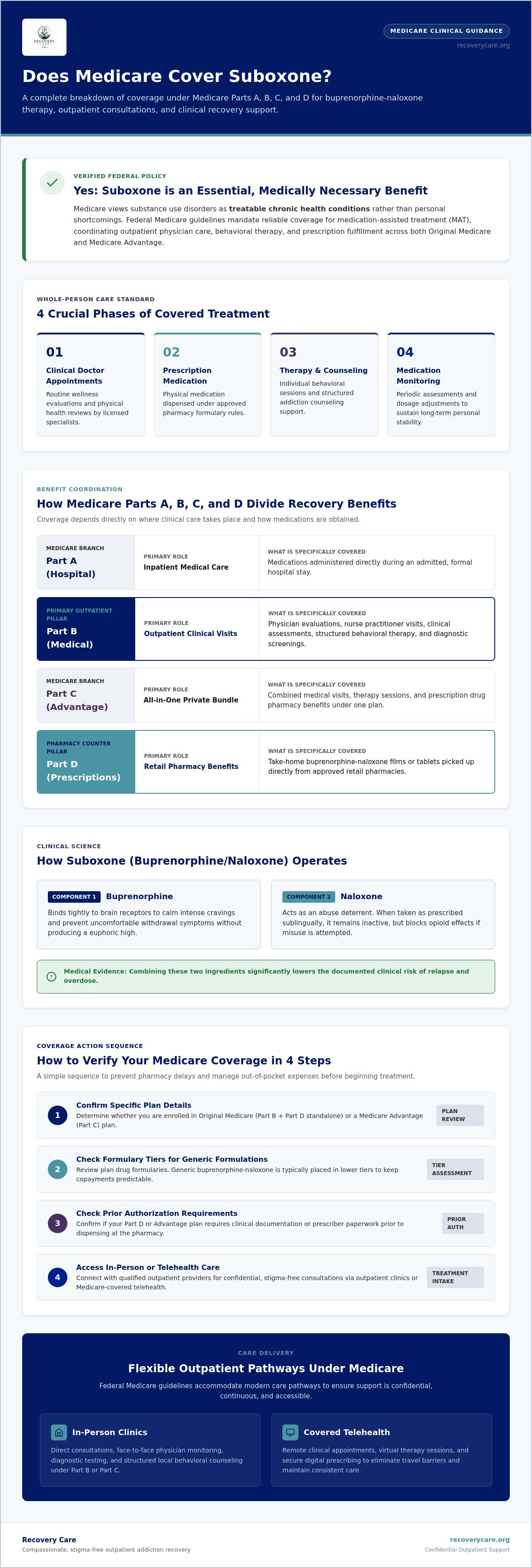
Your benefits extend far beyond simply picking up a prescription box at your neighborhood pharmacy counter. Both Original Medicare and Medicare Advantage plans offer pathways to access affordable care by funding every crucial phase of treatment, including:
- Clinical doctor appointments and routine wellness evaluations
- The physical prescription medication dispensed under approved plans
- Individual counseling and behavioral therapy sessions
- Ongoing medication adjustments to support continuous stability
Understanding how different Medicare parts operate ensures you avoid unnecessary out-of-pocket medical expenses while focusing entirely on your personal healing.
Understanding Suboxone as an Essential Recovery Medication
Living with opioid dependence takes a heavy physical and emotional toll, but recovery is achievable with proper clinical backing. The prescription medication buprenorphine/naloxone (Suboxone) works by binding to brain receptors to calm intense cravings and prevent withdrawal symptoms without producing a euphoric high. Medical research confirms that combining these two ingredients significantly lowers the risk of relapse and overdose. Your medical provider evaluates your specific physical needs, lifestyle, and history to establish a personalized, stabilizing daily dosage that helps you regain control.
How Medicare Classifies Medication-Assisted Treatment (MAT)
Medicare views substance use disorders as treatable chronic health conditions rather than personal shortcomings. Because of this clinical standard, Medicare classifies medication-assisted treatment as a medically necessary benefit for diagnosed opioid dependence. This classification requires plans to support a whole-person approach to health. Your coverage encompasses physician consultations, periodic assessments, and regular medication monitoring. Working with qualified outpatient medical providers allows you to explore comprehensive suboxone treatment options designed around dignity, safety, and sustained recovery.
How Medicare Parts A, B, C, and D Cover Suboxone Treatment
Medicare is divided into distinct parts that handle separate areas of your medical treatment. When asking, does Medicare cover Suboxone, the answer depends on where you receive care and how you obtain your medication. While Part B pays for your outpatient clinic visits, Part D handles the prescription picked up at your local pharmacy counter. If you need assistance sorting through these details, connecting with the dedicated clinical team at Recovery Care can help you verify your individual benefits with total peace of mind.
Here is how the four main Medicare branches coordinate your addiction recovery benefits:
| Medicare Branch | Primary Treatment Role | What Is Specifically Covered |
|---|---|---|
| Part A (Hospital) | Inpatient medical care | Medications administered during an admitted, formal hospital stay |
| Part B (Medical) | Outpatient clinical visits | Physician appointments, clinical assessments, and behavioral counseling |
| Part C (Advantage) | All-in-one private bundle | Combined medical visits, therapy, and prescription drug pharmacy benefits |
| Part D (Prescriptions) | Retail pharmacy benefits | Take-home buprenorphine-naloxone films or tablets from retail pharmacies |
Medicare Part B: Outpatient Clinic Visits and Counseling
Medicare Part B covers medical evaluations conducted by licensed physicians, nurse practitioners, and addiction medicine specialists. It also covers structured behavioral therapy, substance use counseling, and periodic diagnostic screenings. As SAMHSA explains buprenorphine treatment, combining therapeutic counseling with steady medication forms the cornerstone of effective recovery. These services keep you supported without requiring inpatient admission.
Medicare Part D: Prescription Drug Coverage and Formularies
Standalone Part D policies provide the coverage you need to fill take-home buprenorphine-naloxone sublingual films and tablets. Every private insurer manages a unique formulary list defining covered medicines and patient cost tiers. Since plans revise these formularies each autumn, reviewing your drug list annually ensures your exact dosage remains covered without unexpected pharmacy delays.
Medicare Advantage (Part C) All-in-One Recovery Plans
Medicare Advantage plans combine hospital care, doctor visits, and pharmacy benefits under a single private insurance policy. Many Advantage plans feature low copayments for routine primary care visits. To keep costs predictable, confirm that your treating physician and dispensing pharmacy are in-network before scheduling your first appointment.
Formulary Tiers, Generic Alternatives, and Out-of-Pocket Rules
Understanding prescription drug tiers helps remove financial anxiety at the pharmacy checkout counter. When determining does Medicare cover Suboxone affordably, drug formulary structure plays a decisive role. Medicare Part D and Medicare Advantage plans organize approved pharmaceuticals into numbered cost tiers. Generic formulations sit on lower tiers that carry significantly smaller copayment responsibilities, while brand-name versions usually occupy higher, more costly tiers.
Federal regulations under the Inflation Reduction Act protect your budget by placing a strict annual ceiling on total out-of-pocket prescription medication expenses. Once you reach this annual threshold, your Part D plan covers the full cost of your covered prescriptions for the remainder of the calendar year. Beneficiaries managing limited incomes can also apply for the federal Extra Help program, which drastically reduces deductibles and prescription copayments. In-depth resources detailing Medicare coverage for Suboxone show how these protective safeguards keep life-saving medications within reach.
Generic Buprenorphine-Naloxone vs. Brand Suboxone
Generic buprenorphine-naloxone sublingual tablets and films share identical active ingredients, clinical safety standards, and therapeutic efficacy with brand-name Suboxone. Choosing a generic alternative substantially lowers your monthly pharmacy copayment under nearly every Part D plan. Compassionate medical providers routinely prescribe bioequivalent generic options preferred by your insurer, ensuring continuous, affordable treatment without any compromise in your care.
Navigating Prior Authorization and Step Therapy
Some insurance plans establish prior authorization criteria or step therapy protocols before covering brand-name Suboxone. This process simply requires your doctor to submit medical documentation confirming that the medication is clinically necessary for your treatment. Experienced outpatient providers handle this paperwork directly with your insurer to obtain quick approvals, preventing disruptions to your regular pharmacy refills.
Injectable Alternatives: Long-Acting Recovery Options
Daily oral medications are not the only effective pathway to sustained sobriety. Patients seeking steady alternatives without the need for daily dosing often choose monthly extended-release buprenorphine injections. Learn more about clinical criteria in this detailed sublocade injection overview guide. Because medical professionals administer these extended-release injections in an outpatient clinical setting, they fall under Medicare Part B medical benefits rather than standard retail pharmacy plans.
How to Verify Your Medicare Suboxone Coverage in 4 Steps
Beginning outpatient addiction treatment shouldn't involve bureaucratic guesswork or stressful financial surprises. If you are wondering, does Medicare cover Suboxone under your current policy, following a methodical verification sequence provides absolute clarity before your initial clinical consultation.
- Locate your insurance identification cards: Gather your standard red, white, and blue Medicare card alongside your separate Part D prescription card, or have your all-in-one Medicare Advantage card ready.
- Review your formulary benefits: Check your prescription plan's online drug list or speak with member services to determine tier placement for buprenorphine-naloxone.
- Confirm provider participation: Ensure your recovery clinic accepts Medicare assignment so that outpatient doctor visits and behavioral therapy sessions are billed directly to Part B.
- Coordinate clinical paperwork: Connect with your medical provider's intake team to submit any required prior authorization documentation before your first pharmacy visit.
Locating Plan Documents and Member Service Contacts
Take a moment to examine your physical cards to identify whether you hold Original Medicare or a private Medicare Advantage plan. Call the member services telephone number printed on the back of your prescription card. Ask the representative specifically about the formulary tier, quantity limits, and clinical authorization requirements for buprenorphine sublingual films. Getting these answers upfront prevents unexpected delays at the pharmacy counter.
Partnering With Your Treatment Clinic's Intake Team
You don't have to tackle the verification process alone. Dedicated outpatient treatment centers employ supportive financial coordinators who can verify your insurance benefits directly with Medicare on your behalf. These professionals confirm in-network provider status, clarify deductible requirements, and establish estimated copays before your first appointment begins. This advocacy removes administrative stress so you can focus entirely on your health. To confirm your coverage and schedule an initial consultation, reach out to our compassionate team today.
Finding Compassionate Outpatient Care and Starting Recovery Today
Finding a medical partner who treats you with warmth and dignity is just as vital as answering does medicare cover suboxone. Sustainable recovery flourishes when your treatment is confidential, medically sound, and tailored to your everyday life. Thanks to Medicare guidelines extending telehealth flexibilities through late 2027, accessing high-quality outpatient care no longer requires complicated commutes or clinical stress.
The Convenience of Telehealth and Virtual MAT Visits
Medicare allows eligible individuals to attend physician appointments and counseling sessions directly from home. Utilizing telehealth addiction counseling eliminates logistical barriers like transportation hurdles, childcare demands, and inflexible work schedules. Through secure video platforms, you can speak openly with licensed clinicians who listen without judgment and calibrate your medication management in total privacy.
Comprehensive Healing: Combining Therapy and Primary Healthcare
Lasting wellness requires looking beyond medication alone. Whole-person outpatient care pairs medical management with emotional support and general physical wellness checks. Incorporating dedicated primary care for recovery patients helps manage chronic ailments, monitor preventative health, and restore physical vitality. Meanwhile, behavioral therapy equips you with practical tools to handle daily stress, identify triggers, and build long-term emotional stability.
Taking Your First Confidential Step Toward Healing
Taking the first step toward medical assistance is a powerful investment in your health and independence. During an initial outpatient consultation, a dedicated clinical team evaluates your medical history, discusses your personal recovery goals, and designs a customized treatment plan. You don't have to navigate this path on your own. Compassionate, Medicare-supported outpatient care is ready to welcome you with the respect and expertise you deserve.
Take the First Step Toward Affordable, Lasting Recovery
Navigating healthcare rules shouldn't keep you from reclaiming your life and peace of mind. Knowing the clear answer to does medicare cover suboxone gives you the freedom to pursue outpatient medical treatment without the fear of crippling pharmacy expenses. By coordinating Part B physician visits with Part D generic prescription options, you can access comprehensive addiction care designed to fit your budget securely.
At Recovery Care, our physician-led team, guided by Medical Director Dr. Heather Rosen, MD, provides an integrated outpatient model that pairs medication management with behavioral counseling and essential primary care. We accept Medicare and major insurance plans to ensure accessible, confidential support remains within reach for everyone. Your path toward renewed health and dignity begins with a single conversation. Begin your compassionate, confidential recovery journey with Recovery Care today, and take your next step toward a brighter, healthier tomorrow.
Frequently Asked Questions
Does Medicare Part D completely pay for Suboxone prescriptions?
Medicare Part D covers most of the cost, but beneficiaries usually pay a small copayment or coinsurance unless they have reached their annual out-of-pocket maximum or qualify for Extra Help subsidies. If you wonder does Medicare cover Suboxone at one hundred percent, it depends on whether your yearly deductible has been satisfied and where the drug falls on your plan's formulary tiers.
Can I get Suboxone covered through Medicare Advantage plans?
Yes, you can get Suboxone covered under Medicare Advantage (Part C) plans. Because Part C bundles hospital, medical, and prescription drug benefits into a single policy, your outpatient clinical visits and pharmacy prescriptions are covered under one umbrella. Just verify that your addiction medicine provider and retail pharmacy participate in your specific plan's network to keep your out-of-pocket expenses minimal.
Is generic buprenorphine-naloxone covered the same as brand Suboxone?
Yes, Medicare plans cover generic buprenorphine-naloxone, and they typically offer better coverage for it than brand Suboxone. Most Part D and Medicare Advantage formularies assign generic versions to lower copayment tiers. This means you will almost always pay significantly less at the pharmacy for the generic equivalent, which contains the exact same active ingredients, safety profile, and clinical efficacy as the brand-name formulation.
Does Medicare cover online or telehealth Suboxone appointments?
Yes, Medicare covers virtual outpatient consultations for opioid use disorder. Federal guidelines permit eligible patients to receive clinical evaluations, ongoing prescription management, and behavioral therapy from home via secure telehealth visits through late 2027. This regulatory flexibility allows you to consult licensed addiction medicine physicians confidentially without worrying about long travel times, clinic waiting rooms, or childcare challenges.
What should I do if Medicare denies my Suboxone coverage?
If your plan denies coverage, don't panic. Denials usually happen because of missing prior authorization paperwork rather than an outright refusal. Ask your healthcare clinic's intake team to submit an expedited appeal along with supporting medical records confirming medical necessity. When evaluating does Medicare cover Suboxone after an initial denial, working closely with your doctor's billing staff almost always resolves formulary exceptions quickly.
Will Medicare pay for addiction counseling alongside my medication?
Yes, Medicare Part B covers outpatient mental health services and behavioral therapy as essential components of substance use disorder treatment. Medicare actively supports a comprehensive recovery model, paying for individual counseling, psychiatric evaluations, and regular diagnostic screenings. Pairing professional therapeutic support with your prescribed medication provides the clinical and emotional foundation needed to sustain long-term healing with dignity.
Do I need a special referral to see a Medicare Suboxone doctor?
If you have Original Medicare (Parts A and B), you do not need a referral from a primary doctor to schedule an appointment with an outpatient addiction medicine specialist. You can contact an enrolled clinic directly to start care. If you are enrolled in a Medicare Advantage HMO plan, check your network rules, as some HMOs may require a primary care referral first.


