
Imagine waking up tomorrow morning without the immediate, crushing weight of withdrawal or the frantic search for a way to feel normal. For many, the path to healing feels blocked by anxiety about being judged or confusion over whether Suboxone, Sublocade, or Vivitrol is the right choice. You want a life that feels like yours again, where your schedule is defined by your work and family rather than a cycle of cravings.
We understand that taking the first step requires immense courage. Professional medication management for recovery isn't just about a prescription. It's a compassionate partnership that provides the clinical stability and dignity you deserve. With the federal extension of telemedicine flexibilities through 2026 and new rapid induction protocols for long-acting injectables, accessing high-quality care is more convenient and supportive than ever before.
This guide will show you how a stable clinical routine can reduce your cravings to zero and integrate seamlessly into your daily life. We will walk through your medication options, explain the benefits of integrated behavioral health, and show you how to find a path toward lasting, confident recovery.
Key Takeaways
- Learn how physician-led medication management for recovery stabilizes brain chemistry to eliminate cravings and provide a foundation for long-term health.
- Discover the clinical advantages of long-acting injectables like Sublocade and Vivitrol, which remove the burden of a daily dosing schedule.
- Understand the importance of integrating primary care and routine physicals to monitor your overall physical wellbeing throughout the healing process.
- Explore the journey from the initial induction phase to the stabilization phase, where your treatment plan becomes a seamless part of your daily routine.
- Identify how to find a compassionate, non-judgmental provider who accepts major insurance plans, including Medicare and Medicaid, to ensure accessible care.
Defining Medication Management in Modern Addiction Recovery
Medication management for recovery is a physician-led clinical process designed to optimize the treatment of opioid use disorder through science and empathy. It isn't just about handing over a bottle of pills; it's about regular, personalized evaluations that ensure your dosing remains effective while keeping side effects to a minimum. Instead of a "one size fits all" approach, this model focuses on your specific biological needs. The ultimate goal is to eliminate the physical distress of cravings and withdrawal, providing a stable floor that allows you to engage in the deeper emotional and behavioral work of healing. At its core, medication management is a dynamic, evolving partnership between patient and provider that changes as you grow stronger.
This clinical strategy is a cornerstone of opioid agonist therapy, which uses medications like buprenorphine to stabilize brain chemistry. By keeping your receptors occupied, these treatments prevent the highs and lows that often lead to relapse. It's about creating a sense of normalcy that lets you return to your family, your job, and your life without the constant noise of addiction. When your brain chemistry is balanced, you can finally focus on building a future rather than just surviving the day.
Why Management Beats Simple Prescription
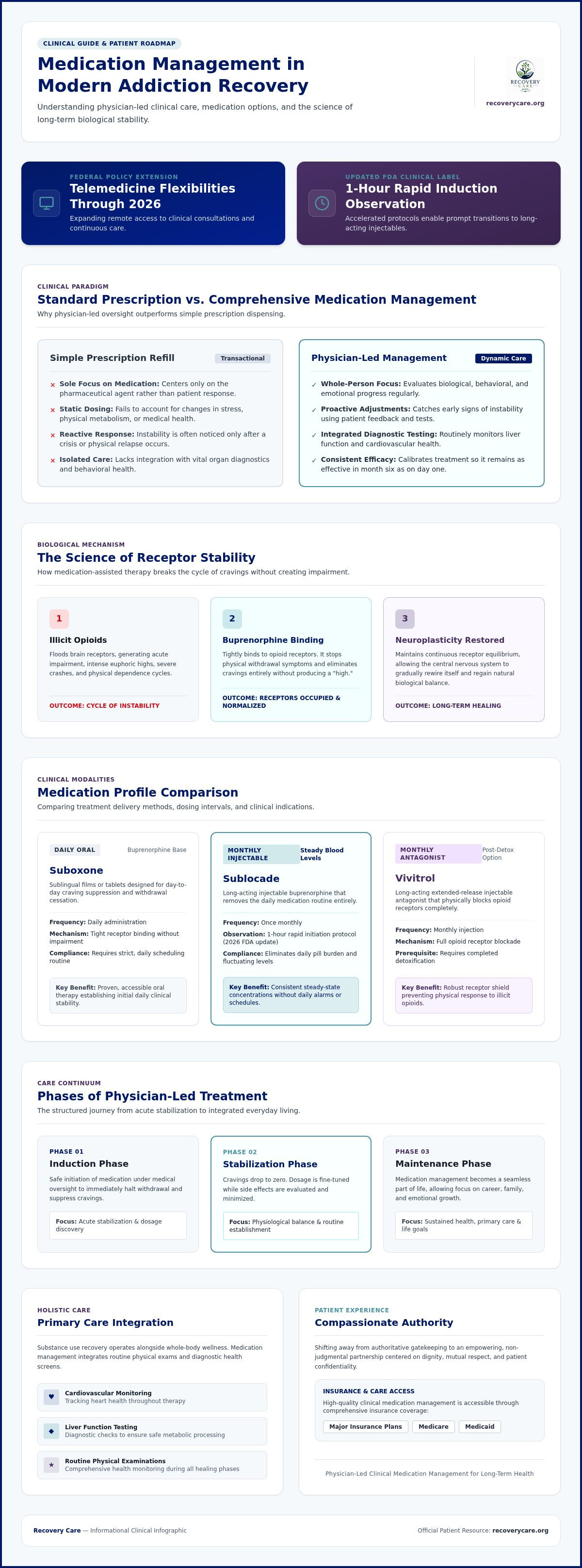
A standard prescription often focuses solely on the medication itself, but management focuses on the person taking it. Your body's response to treatment can change over time based on stress, physical health, or metabolism. Ongoing monitoring allows your clinical team to catch early signs of instability before they escalate into a crisis. We use routine diagnostic testing, such as monitoring liver function or cardiovascular health, alongside your direct feedback to make precise adjustments. This ensures your treatment plan remains as effective in month six as it was on day one, providing a level of safety and personalization that a simple pharmacy refill cannot offer.
The Compassionate Authority Model
Modern recovery has moved away from the gatekeeper doctor who simply dictates orders. Instead, we use a compassionate authority model where your provider acts as a knowledgeable, supportive guide. Choosing a non-judgmental recovery clinic changes the entire experience from one of shame to one of empowerment. In this environment, medication management for recovery becomes a collaborative effort. Dignity and confidentiality aren't just buzzwords; they're the foundation of every clinical interaction. When you feel respected and heard, you're more likely to stay engaged with your care, which is the single most important factor in long-term success.
The Science of Stability: How MAT Medications Support Healing
Understanding how recovery medications function is the first step toward reclaiming your life. One of the most common myths is that medication-assisted treatment simply replaces one addiction with another. In reality, clinical medication management for recovery provides a physiological bridge to health. While illicit opioids flood the brain and cause impairment, medications like buprenorphine—the active ingredient in suboxone treatment—bind tightly to receptors to stop withdrawal without creating a "high". This stability allows your brain to begin the long process of restoring neuroplasticity, essentially rewiring itself to function normally again.
Daily vs. Monthly Medication Options
Choosing between daily and monthly options depends on your lifestyle and recovery goals. Daily films or tablets are highly effective but require a strict routine and high compliance. For many, a sublocade injection is a game-changer because it removes the "daily pill" burden. This monthly option ensures steady-state blood levels, meaning you don't have to think about your medication every few hours. Thanks to 2026 FDA label updates, healthcare providers can now use rapid initiation protocols for these injectables, often requiring only a single hour of observation. If you've already completed a full detox, Vivitrol serves as a powerful antagonist that blocks opioid receptors entirely, preventing any physical response to opioids.
Managing Cravings and Brain Chemistry
Cravings aren't a sign of weak willpower; they're a complex biological response. When your brain is deprived of the substances it has become dependent on, the prefrontal cortex—the part responsible for logic and decision-making—loses control to the survival-driven midbrain. Professional SAMHSA substance use disorder treatment options emphasize that medication interrupts this cycle by keeping receptors satisfied. By quieting the noise of physical cravings, you give your brain the space it needs to regain authority over your actions and focus on your long-term goals. If you're ready to see how these options fit your specific needs, you can explore our specialized clinical programs to find a path that works for you.
This scientific approach ensures that you aren't just surviving recovery, but actually healing. When the physical symptoms are managed, the emotional work of counseling and behavioral health becomes much more effective. It's about moving from a state of crisis to a state of manageable, daily routine where you are the one in control, not the substance.
Integrating Primary Care: A Holistic Approach to Medication Management
True recovery is about more than just the absence of a substance. It's about the presence of health, vitality, and a body that feels like home again. Effective medication management for recovery isn't a siloed service; it's a bridge to comprehensive physical restoration. Many individuals have spent years putting their medical needs on the back burner while struggling with addiction. By integrating primary care into your treatment plan, we ensure that every aspect of your biology is supported as you heal.
Managing co-occurring conditions like hypertension, hepatitis C, or diabetes is a vital part of this process. When your blood sugar is stable and your heart health is monitored, you have more energy to commit to your emotional growth. Modern outpatient care treats you as a whole person, not just a set of symptoms. This level of coordination reduces the stress of juggling multiple appointments and ensures your recovery medications interact safely with any other treatments you might need.
The Role of Routine Medical Physicals
Regular physical exams are the diagnostic backbone of a successful recovery journey. These visits allow your clinical team to monitor your body's response to medication over the long term. We focus on liver function, cardiovascular health, and routine diagnostic testing to ensure your safety and track your progress. These physicals also help identify nutritional deficiencies that are common in early recovery. Seeing tangible improvements in your lab results or blood pressure provides objective proof of your hard work. It's a powerful reminder that your body is capable of remarkable repair when given the right support.
Behavioral Health and Counseling Synergy
Medication provides the physiological floor you need to stand on, but counseling provides the tools to build your new life. Clinical data suggests that medication management for recovery achieves the best outcomes when paired with individual counseling for addiction. While your medical provider focuses on stabilizing your brain chemistry, your counselor helps you navigate the emotional triggers and social pressures of daily life.
This coordination is what we call a "whole-person" model. Your care team works together to ensure your medical and emotional goals are aligned. Many patients also benefit from the social reinforcement found in group therapy for recovery. Healing together with others who understand your journey provides a unique layer of accountability and encouragement. When medical expertise and therapeutic support work in harmony, you aren't just managing a condition. You're building a sustainable, healthy future.
Navigating Your Treatment Plan: Monitoring, Adjustments, and Milestones
Your recovery journey isn't a straight line, but it follows a logical, evidence-based progression. Effective medication management for recovery is structured into three distinct phases to ensure you're always receiving the right level of clinical support. The Induction Phase focuses on safely finding your initial dose, typically within the first few days of treatment. Next, the Stabilization Phase helps you move from the initial crisis into a manageable daily routine where cravings are significantly reduced or eliminated. Finally, the Maintenance Phase allows for long-term health monitoring as you fully reintegrate into your work, family, and social life. This phase is about sustaining your health and protecting the progress you've worked so hard to achieve.
To make this long-term commitment sustainable, telehealth addiction counseling provides the flexibility to attend sessions from home or your office. This virtual option ensures your clinical routine fits into your busy schedule rather than disrupting it, making it easier to stay consistent with your treatment goals over months or years.
What to Expect During Clinical Visits
We prioritize open, honest dialogue during every clinical visit. Expect to discuss your cravings, your mood, and any side effects you might be experiencing. While drug testing is a standard part of compliance monitoring, we view it as a diagnostic tool to help us support you, not as a punitive measure. We'll also have transparent conversations about dose adjustments. It's a common misconception that more medication is always better or that taking less is always safer. The goal is to find the "sweet spot" where your brain chemistry is balanced and you feel completely like yourself again.
Managing Life Transitions on MAT
Life doesn't stop because you're in recovery. You might need to travel for work, undergo a medical surgery, or face a major life stressor. Your clinical team is there to help you navigate these transitions safely, ensuring your medication plan remains stable during times of change. If you eventually decide that you're ready to stop medication, the process of tapering must be physician-led and never rushed. Rushing this stage can increase the risk of return to use, so we move at a pace that respects your brain's unique healing process.
Success milestones in this phase are personal and go beyond just "days sober". They might include returning to a favorite hobby, rebuilding a strained relationship, or simply waking up with a sense of peace and purpose. If you're ready to take the next step toward these life milestones, connect with our clinical team today to start building your personalized path forward.
Finding a Compassionate Partner for Your Recovery Journey
The provider you choose is the most critical variable in your long-term success. Effective medication management for recovery requires more than just clinical expertise; it demands a partnership built on trust, dignity, and mutual respect. You aren't just looking for a clinic that can write a prescription. You're looking for a team that understands the complex intersection of addiction medicine and primary care. This integrated approach ensures that your physical health is monitored alongside your recovery progress, providing a safety net that supports your entire well-being. At Recovery Care, we bridge the gap between high-level medical authority and deep human empathy, creating a space where you can feel secure and understood.
Accessibility should never be a barrier to life-saving treatment. When evaluating potential partners, it's essential to look for a clinic that accepts major insurance plans, including Medicare and Medicaid. This ensures that your path to stability is sustainable and that you can focus on your healing rather than financial stress. A provider who is committed to inclusive care demonstrates a dedication to the community and to the long-term success of every individual they serve.
Evaluating Provider Qualifications
A Medical Director-led team provides a level of clinical oversight that is vital for safe medication management for recovery. Having an experienced leader like Dr. Heather Rosen, MD, ensures that your treatment plan is grounded in the latest evidence-based practices. When you speak with a potential provider, don't hesitate to ask about their experience with long-acting injectables like Sublocade or Vivitrol. You should also ensure the clinic offers a full spectrum of counseling for opioid addiction. Medication is the foundation, but behavioral health support is what helps you build a new life on top of that foundation.
Starting Your Journey Today
Taking the first step is often the hardest part, but we've made the process as seamless as possible. You can schedule an initial consultation through a telehealth visit or an in-person appointment, depending on what makes you feel most comfortable. To ensure a smooth start, have your identification, insurance information, and a list of any current medications ready for your first meeting. This helps your clinical team create an accurate and safe starting point for your care.
Recovery is possible, and you don't have to navigate it alone. With the right medical support and a team that truly cares about your future, you can find the stability you've been searching for. The path ahead is one of hope, health, and a return to the life you deserve. We're here to walk that path with you, providing the steady guidance and compassionate care necessary for lasting change.
Your Path to Lasting Stability and Health
We've explored how medication management for recovery acts as a foundation for your new life, bridging the gap between clinical science and personal healing. By combining advanced treatments like long-acting injectables with integrated primary care, you can move past the cycle of withdrawal and into a routine that feels normal again. Led by Medical Director Dr. Heather Rosen, MD, our team is dedicated to providing a secure, non-judgmental environment where your dignity is the priority. We accept Medicare and Medicaid to ensure that high-quality, professional care remains accessible to everyone who needs it.
Whether you prefer the convenience of telehealth or the connection of an in-person visit, we are ready to support your journey. Take the first step toward a stable recovery and schedule your consultation with Recovery Care today. You have the strength to heal, and with the right medical partnership, a brighter future is well within your reach.
Frequently Asked Questions
What is medication management for recovery exactly?
Medication management for recovery is a physician-led clinical process that uses FDA-approved medications like Suboxone or Sublocade to stabilize brain chemistry. It includes regular evaluations to ensure your treatment is effective and side effects are minimal. Unlike a simple prescription, this model involves ongoing monitoring and integrated primary care to support your whole-person health. This partnership ensures your treatment plan evolves alongside your progress toward long-term stability.
Is medication-assisted treatment just trading one addiction for another?
Medical treatment for a chronic disease is a path to health, not a trade for a new addiction. Medication management for recovery uses stable, clinical doses of medications like buprenorphine to restore normal brain function without causing a high. This stops the debilitating cycle of withdrawal and cravings that characterizes addiction. By stabilizing your physiology, you gain the clarity and strength needed to engage in counseling and rebuild your life.
How long does a typical medication management plan last?
There is no fixed timeline for your journey because recovery is deeply personal. Some patients utilize medication for several months, while others remain on a maintenance plan for years to ensure lasting stability. The duration of your plan is a collaborative decision between you and your provider. We focus on your specific milestones and physical health gains rather than rushing toward a deadline, ensuring you feel secure and supported throughout.
Does Medicare or Medicaid cover medication management for addiction?
Accessing life-saving care is a priority, and Medicare and Medicaid both provide coverage for outpatient medication-assisted treatment services. At Recovery Care, we accept these plans alongside most major private insurance providers to keep our services accessible. This coverage typically includes your medical consultations, behavioral health counseling, and medications like Sublocade or Vivitrol. We recommend checking your specific benefits during your initial consultation so we can help you plan your care.
Can I manage my recovery medication through telehealth?
Yes, you can manage many aspects of your recovery through telehealth consultations. Under federal flexibilities extended through December 31, 2026, practitioners can prescribe certain recovery medications via audio-video encounters without a prior in-person visit. While long-acting injectables like Sublocade must be administered in a clinic, your follow-up visits and behavioral health counseling can often be handled virtually. This makes it much easier to fit your recovery into a normal work and life schedule.
What happens if I miss a dose or an injection appointment?
If you miss a dose or an appointment, please contact your clinical team immediately to schedule a follow-up. We understand that life can be unpredictable, and our priority is keeping you safe and comfortable. Missing a dose can lead to the return of cravings, so we want to get you back on track quickly. Our team maintains a non-judgmental environment where you can speak openly about any challenges you face during your journey.
Are there side effects to medications like Suboxone or Vivitrol?
Like any medical treatment, these medications can have side effects, though they are generally well-tolerated. Some patients experience nausea or headaches during the initial induction phase, while long-acting injectables might cause mild soreness at the injection site. Our physician-led team monitors your response through routine physicals and diagnostic testing to minimize these effects. We work closely with you to adjust your plan, ensuring your medication provides stability without compromising your quality of life.
How often will I need to see my doctor for medication management?
Your visit frequency depends on your current phase of recovery and your individual needs. During the induction and stabilization phases, you may see your provider weekly or bi-weekly to ensure your dosing is correct. Once you reach the maintenance phase and demonstrate clinical stability, your appointments may become less frequent, often moving to once a month. These regular check-ins are vital for monitoring your physical health and providing the compassionate support necessary for long-term success.


