
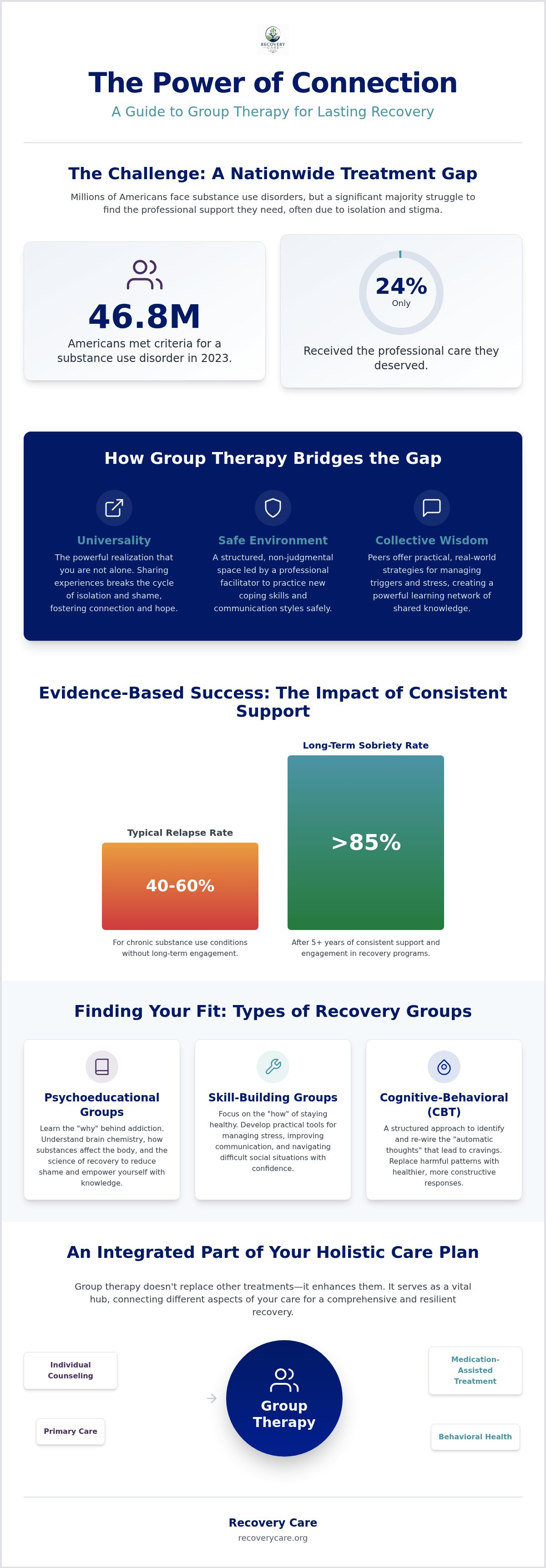
Did you know that 46.8 million Americans met the criteria for a substance use disorder in 2023, yet only about 24% received the professional care they deserved? This treatment gap often leaves people feeling misunderstood by their families or paralyzed by the fear of being judged by society. If you've felt that social anxiety in your own journey, it's important to know there's a place where your voice is truly valued. Engaging in group therapy for recovery transforms the healing process from a solitary struggle into a powerful, shared experience that builds lasting health and connection.
We believe that no one should have to navigate the complexities of wellness alone. This 2026 guide is designed to help you find a supportive community and learn the practical coping skills necessary for long-term success. We'll explore how modern sessions, including convenient telehealth options, work to reduce the shame associated with addiction and provide a secure, non-judgmental environment for growth. You're about to discover how the collective wisdom of a group can become your greatest asset in creating a stable, confident, and fulfilling future.
Key Takeaways
- Understand the psychological power of universality and how realizing you aren't alone helps lower the emotional barriers to long-term health.
- Discover the specific benefits of psychoeducational and skill-development groups, which provide practical tools for managing stress and improving communication.
- Learn how group therapy for recovery offers unique social accountability and peer learning that works alongside individual counseling for a more complete experience.
- Master a step-by-step approach to your first session, including how to prepare your mindset and respect the essential ground rules of confidentiality.
- See how behavioral health counseling fits into a holistic plan that includes primary care and medication-assisted treatments like Suboxone or Vivitrol.
Understanding Group Therapy for Recovery: The Science of Connection
Group therapy for recovery is much more than a simple conversation between peers; it's a structured, clinical environment where a professional facilitator guides individuals toward shared health goals. In these sessions, you aren't just a patient. You're part of a community. The facilitator ensures the space remains productive and non-judgmental, allowing every member to feel secure while exploring their journey. This setting functions as a social microcosm, providing a safe place to practice new coping mechanisms and communication styles before applying them in your daily life. Whether you're meeting in person or through telehealth, the focus remains on building a stable foundation for the future.
By integrating Group psychotherapy principles, these sessions help bridge the gap between clinical treatment and real-world application. You learn to navigate social dynamics and accountability in a way that individual sessions cannot always replicate. The presence of a trained advocate helps manage group flow, ensuring that everyone has a voice and that the atmosphere remains supportive rather than overwhelming.
Why Peer Support Accelerates Healing
Isolation is often the silent fuel for substance use disorders, making the transition to a shared path vital for long-term wellness. When you step into a group, you tap into a "collective wisdom" that offers practical solutions to the triggers and stresses you face daily. You might hear a peer describe a specific strategy for managing a craving at work that you hadn't considered before. Universality is the moment a patient realizes their experiences are shared by others. Breaking this cycle of loneliness allows you to trade shame for connection, which is a fundamental step toward lasting health.
Evidence-Based Benefits for 2026
The data supporting this approach is clear and encouraging. While relapse rates for chronic substance use conditions typically range between 40% and 60%, continuous support changes the outlook significantly. Research shows that after five years of consistent support and engagement, the long-term sobriety rate exceeds 85%. This success is partly due to improved emotional regulation, as participants learn to process their feelings through shared empathy and constructive feedback from people who truly understand the struggle.
These sessions are particularly effective when they reinforce the work done in specialized counseling for opioid addiction. By combining medical expertise with the social power of group therapy for recovery, you create a multi-layered defense against relapse. It's about moving beyond surviving to truly thriving within a community that respects your history and supports your growth.
Types of Recovery Groups: Finding the Right Fit for Your Journey
Choosing the right environment is a critical step in your healing process. Not all sessions follow the same structure, and understanding the different types of groups in substance abuse treatment helps you select the one that matches your current needs. Some groups focus on teaching you the science of your condition, while others provide a space to practice social interactions or re-wire harmful thought patterns. Identifying these differences ensures that your time spent in group therapy for recovery is both productive and empowering.
Clinical therapy groups differ significantly from peer-led support groups like Alcoholics Anonymous. While peer groups offer wonderful community support, clinical groups are led by licensed professionals who provide medical oversight and evidence-based interventions. Cognitive-Behavioral (CBT) groups, for example, are highly structured. They help you identify the specific "automatic thoughts" that lead to cravings, allowing you to replace them with healthier responses. This level of professional guidance is especially helpful if you are also managing co-occurring mental health conditions.
Psychoeducation and Skill Building
These groups focus on the practical "how" of staying healthy. In a psychoeducational setting, you learn about brain chemistry and how medications like Suboxone work to stabilize your system. Knowledge is a powerful tool against shame. When you understand how a substance has physically changed your brain's reward pathways, it becomes easier to view your recovery as a medical journey rather than a moral failing. Skill-development groups take this a step further by using practical exercises. You might role-play how to decline an invitation in a high-risk social situation or practice specific breathing techniques to manage a sudden spike in anxiety. This hands-on approach builds the confidence you need to handle real-world challenges.
Interpersonal Process Groups
If you're looking to dig deeper into the emotional roots of your journey, an interpersonal process group might be the right fit. These sessions focus on the relationships and emotions that influence your daily life. By observing how you relate to other group members, you gain insights into your social patterns. This helps you develop emotional sobriety, which is the ability to feel your feelings without being overwhelmed by them. It's about personal growth and building a life where you feel connected and understood. If you feel ready to explore these deeper dynamics, our team can help you find the right behavioral health counseling options to support your goals.
Recovery isn't one-size-fits-all. You might start in a skill-building group to gain immediate stability and later transition into a process group for long-term emotional work. The key is to remain open to the different ways group therapy for recovery can strengthen your path toward lasting health.
Group vs. Individual Counseling: Which Do You Need?
Many people starting their wellness journey feel they must choose between one-on-one sessions and a group environment. This is a common myth that can actually limit your progress. In reality, these two formats serve different purposes and often work best when used together. While one provides a private space for deep personal work, group therapy for recovery offers a social laboratory where you can practice new skills with people who truly understand your experience.
The Benefits of Individual Attention
Individual sessions offer a secure and confidential space to discuss topics that might feel too sensitive or private for a larger group. This includes processing deep-seated personal trauma, exploring complex family histories, or managing co-occurring mental health conditions. Your provider can create a tailored treatment plan that moves at your specific pace, ensuring you feel supported every step of the way. This focused attention is vital for addressing the unique psychological roots of your journey. You can learn more about these personalized sessions in our detailed guide to individual counseling for addiction.
The Unique Advantages of the Group Setting
If individual sessions are about the "self," then the group setting is about the "community." One of the most significant benefits is the natural accountability that comes from peers. There is a unique power in being encouraged by someone who has faced the same cravings and obstacles you have. This environment helps reduce the isolation that often fuels substance use disorders. Consider these specific advantages of the group format:
- Peer Accountability: Staying on track is easier when you're part of a group that expects to see you every week.
- Diverse Perspectives: You gain access to a variety of problem-solving strategies and "collective wisdom" from people at different stages of their journey.
- The Power of Mentorship: As you progress, you have the opportunity to support newer members, which reinforces your own commitment to health.
By integrating group therapy for recovery into your schedule, you also gain more consistent access to professional guidance. This is especially true with modern telehealth options, which make it easier to fit sessions into a busy life. Combining these two paths ensures that you have both the deep, private healing of individual care and the strong, social foundation of a supportive community.
How to Participate in Group Therapy: A Step-by-Step Guide
Taking the first step into a shared healing environment requires courage and a willing heart. When you begin group therapy for recovery, focus on approaching each session with a "listening-first" attitude. This mindset allows you to absorb the collective wisdom of the room without the immediate pressure to perform or explain yourself. By focusing on the words of your peers, you'll likely find that their challenges mirror your own, which strengthens your personal resolve. It's perfectly normal to feel a bit hesitant at first; most people do.
Every group operates on a foundation of mutual respect and non-negotiable ground rules. Finding your voice is a gradual process, and you should feel free to share at your own pace. There is no requirement to disclose your entire history in the first hour. Instead, try to practice active listening by valuing the experiences of others as much as your own. This creates a reciprocal environment where everyone feels safe to be vulnerable. As you become more comfortable, you'll find that sharing your own hurdles actually helps others in the room heal too.
Preparing for Your First Session
Practical preparation can significantly reduce "pre-group" anxiety. Before you arrive, take a few minutes to practice simple grounding techniques, such as box breathing or focusing on your immediate surroundings. This helps calm your nervous system so you can remain present. You don't need to bring much, though a small notebook for jotting down helpful insights is often useful. Leave behind any distractions, especially your phone, to ensure you can give the group your full attention. Most importantly, remember that the Rule of Confidentiality is the cornerstone of trust in every session. Knowing that what is said in the room stays in the room allows for a level of honesty that is rarely found elsewhere.
Navigating Virtual Group Therapy
Many patients now choose the convenience of a digital format to maintain their health goals. Setting up a private, quiet space is essential for your telehealth addiction counseling to be effective. Ensure you have a stable internet connection and use headphones to protect the privacy of other group members. Online etiquette is similar to in-person sessions; stay focused on the screen and avoid multi-tasking. Digital peer support offers a unique level of accessibility, making it easier to stay consistent even with a busy schedule. If you're ready to join a community that understands your path, you can schedule a consultation with our compassionate team today to find the right group for your needs.
Integrating Group Therapy into Holistic Outpatient Care
Recovery isn't a series of isolated appointments; it's a comprehensive ecosystem of support. When you choose an outpatient model, your medical providers work closely with behavioral health specialists to ensure every aspect of your health is addressed. This holistic approach includes primary care services and diagnostic testing alongside medication management. Integrating group therapy for recovery into this system ensures that as your body heals through medical intervention, your mind and social connections heal too. This coordination prevents the "medication-only" gaps that often lead to setbacks.
Modern care relies on a steady, methodical transition from intensive early recovery to long-term wellness. Your team of experts remains personally invested in your success, providing a safe and confidential environment where you can move at your own pace. By combining physical health monitoring with emotional support, we create a stable foundation that respects your dignity and supports your long-term success.
The Synergy of MAT and Behavioral Health
Medication-Assisted Treatment (MAT) is a powerful tool for stabilizing brain chemistry, but it works best when paired with emotional support. While medications like suboxone treatment handle the physical cravings, group sessions provide the space to address behavioral triggers. This combination is essential for lasting health. In these groups, members often discuss their experiences with long-acting recovery options, such as the sublocade injection. Hearing a peer's success story with an injection can reduce the stigma often associated with medication and provide validation that you're making the right choice for your future.
Taking the Next Step with Recovery Care
We understand that the logistics of healthcare can sometimes feel like a barrier. That's why we prioritize accessibility by accepting most major insurances, including Medicare and Medicaid. Whether you prefer in-person visits or the flexibility of telehealth, our team is here to guide you. Under current 2026 federal regulations, telehealth prescriptions for controlled substances remain accessible through December 31, 2026, making it easier than ever to maintain your treatment schedule from the privacy of your home. group therapy for recovery fits seamlessly into this modern, flexible care model.
Recovery is a marathon, not a sprint. You don't have to run it alone. Transitioning from early recovery groups to long-term wellness support is a natural progression that our team manages with compassion and expertise. By choosing a partner that offers primary care, behavioral health, and specialized MAT, you're investing in a stable, secure path toward a better life. Start your journey today by scheduling a consultation and discovering the power of a shared recovery path.
Embracing a Shared Path to Lasting Health
Choosing to join a community of peers is one of the most proactive steps you can take for your long-term wellness. As we've explored, group therapy for recovery provides the essential social accountability and practical skill-building that individual sessions alone cannot replicate. By integrating these sessions with professional medical oversight and medication-assisted treatment, you create a comprehensive defense against the cycle of isolation. You aren't just managing a condition; you're building a life rooted in connection and mutual respect.
Our team, led by Dr. Heather Rosen, MD, is dedicated to providing a secure and non-judgmental environment for every patient. We prioritize your accessibility by offering both telehealth and in-person options, and we proudly accept Medicare and Medicaid to ensure that high-quality care remains within reach. You don't have to navigate the complexities of healing on your own. Start your healing journey today with Recovery Care's compassionate support. We're here to walk beside you as you move toward a brighter, more stable future.
Frequently Asked Questions
Is group therapy for recovery confidential?
Yes, confidentiality is a non-negotiable cornerstone of group therapy for recovery. Every participant agrees to strict privacy rules before joining, ensuring that what's shared in the room stays in the room. Federal regulations, including 42 CFR Part 2, provide additional legal protections for addiction treatment records. Our team ensures a secure and confidential environment where you can speak honestly without the fear of your information being shared outside the group.
Do I have to speak during my first group therapy session?
You don't have to speak if you aren't ready. We encourage a "listening-first" approach for your initial sessions to help you become comfortable with the group dynamic. Sharing is a personal choice that should happen at your own pace. While active participation is a goal for long-term health, simply being present and absorbing the collective wisdom of others is a valuable first step in your healing process.
How many people are typically in a recovery group?
Most clinical recovery groups consist of 5 to 12 participants. This size is intentional; it's small enough to ensure everyone receives personal attention from the facilitator but large enough to provide a diverse range of perspectives. Keeping the group intimate helps lower social anxiety and fosters a sense of security. Whether you're attending in person or via telehealth, these smaller numbers help maintain the quality of the behavioral health counseling.
Is group therapy as effective as individual therapy for addiction?
Group therapy is highly effective and often yields results comparable to individual sessions. While individual therapy focuses on private history and trauma, the group setting excels at teaching social skills and providing peer accountability. Research shows that a combination of both often leads to the best long-term outcomes. By integrating group therapy for recovery into a holistic plan, you address both the personal and social aspects of your journey.
Can I attend group therapy sessions online?
Yes, you can attend sessions through our secure telehealth platform. Virtual group therapy offers the same level of professional oversight and peer support as in-person meetings but with the added convenience of joining from home. This is an excellent option for those with busy schedules or transportation challenges. Our team ensures that digital sessions remain confidential and easy to access, keeping you connected to your support community regardless of your location.
Does insurance or Medicaid cover group therapy for recovery?
Most insurance plans, including Medicare and Medicaid, cover these services as part of a comprehensive behavioral health plan. Recovery Care is committed to making treatment accessible, so we work with a wide range of providers to minimize your out-of-pocket costs. Federal laws require most plans to cover addiction treatment at the same level as medical benefits. We can help verify your specific coverage for group therapy for recovery during your initial consultation.
What happens if I see someone I know in a group therapy session?
Seeing a familiar face is more common than you might think, especially in community-focused settings. If this happens, the same rules of confidentiality and mutual respect still apply to everyone in the room. You can choose to acknowledge the connection or discuss any discomfort with the facilitator privately. Most patients find that sharing the journey with someone they know actually strengthens their bond and provides an additional layer of support.
How long does a typical group therapy session last?
A typical session lasts between 60 and 90 minutes. This timeframe provides enough room for a professional check-in, a focused lesson or discussion, and time for individual members to share their progress. We find that this duration allows the group to dive deep into meaningful topics without feeling rushed or overwhelmed. Consistency is key, so these sessions are usually scheduled at the same time each week to provide stability in your routine.


