
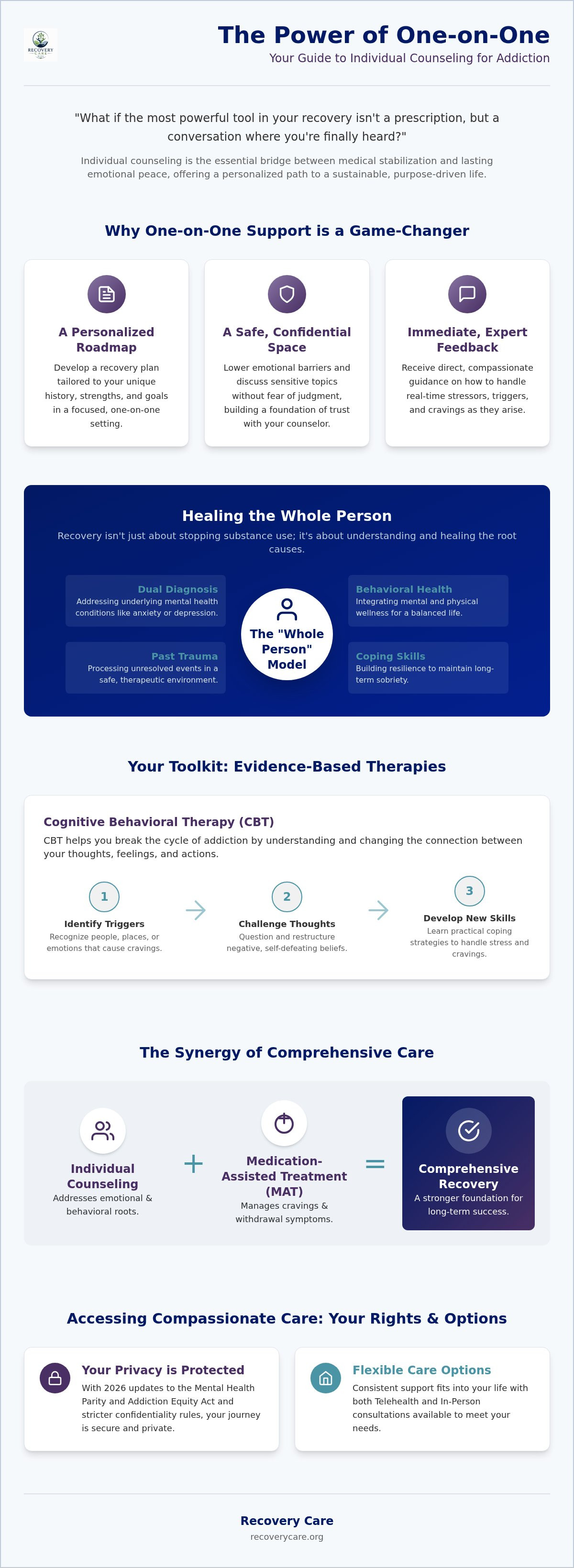
What if the most powerful tool in your recovery isn't a prescription, but a conversation where you're finally heard? Many people starting their journey feel like just another number in a large, impersonal system. You might worry about being judged for your past or feel confused by clinical terms like CBT and DBT. It's natural to want more than a generic plan; you deserve a space that respects your dignity. This is why individual counseling for addiction is the essential bridge between medical stabilization and lasting emotional peace.
In this 2026 guide, you'll discover how personalized one-on-one therapy transforms your recovery into a sustainable, purpose-driven life. We'll show you how to build a roadmap tailored to your specific needs, providing the tools you need to handle triggers and process trauma without fear. With the 2026 updates to the Mental Health Parity and Addiction Equity Act and stricter confidentiality rules now in full effect, your access to a secure, private environment is more robust than ever. We will explore how these sessions offer the non-judgmental support you need to focus entirely on your healing and long-term success.
Key Takeaways
- Learn why individual counseling for addiction is the heart of long-term sobriety by addressing the unique emotional roots of your substance use.
- Understand how modern evidence-based tools like CBT and DBT provide you with a personalized roadmap to manage triggers and cravings effectively.
- Discover the "Whole Person" model that combines behavioral health with medical treatments like Suboxone or Vivitrol for a more comprehensive recovery.
- Demystify the therapy process and learn about your rights to a confidential, non-judgmental space under the latest 2026 privacy regulations.
- Explore how flexible care options, including telehealth and in-person consultations, make it easier to fit consistent support into your daily life.
The Essential Role of Individual Counseling for Addiction
Individual counseling for addiction is a specialized, one-on-one therapeutic relationship that serves as the foundation for your recovery. While group settings provide a sense of community, individual sessions offer a private sanctuary where you can speak openly without the fear of being judged by others. This focused attention allows you to explore deep-seated habits and emotional triggers that might be too sensitive for a group setting. Your counselor acts as a compassionate authority, combining clinical expertise with a steady, empathetic presence to guide you through the difficult moments of early sobriety. We believe that behavioral health is the heart of this process because it addresses the person behind the symptoms, not just the substance use itself.
Why One-on-One Support Matters
Having a dedicated professional in your corner changes the dynamic of your healing. It creates a safe, non-judgmental environment where honest self-reflection can finally take root. In these sessions, the focus is entirely on your needs, allowing for a level of depth that isn't possible in a crowded room. This personalized approach offers several key benefits:
- A Personalized Roadmap: You and your counselor develop a recovery plan tailored to your unique history, strengths, and goals.
- Lowered Emotional Barriers: Building a foundation of trust makes it easier to discuss difficult topics that you might otherwise avoid.
- Immediate Feedback: You receive direct, expert guidance on how to handle real-time stressors and cravings as they arise.
Addressing the Root Causes of Substance Use
True healing requires looking beneath the surface to understand what drives the need for escape. When exploring the complexities of Substance abuse, it becomes clear that physical cravings are often just one piece of a much larger puzzle. Many people struggle with underlying mental health conditions, often referred to as a dual diagnosis, or past traumas that haven't been fully processed. Behavioral health is the integration of mental and physical wellness, and it's this holistic focus that allows you to address these root causes directly. By prioritizing individual counseling for addiction, you gain the resilience needed to maintain long-term sobriety and build a healthier, more balanced future. You aren't just stopping a behavior; you're starting a new way of living that respects your dignity and your potential.
Evidence-Based Modalities in Individual Addiction Therapy
Effective recovery isn't based on guesswork. It's built on scientifically validated methods that have helped thousands of people find their way back to a healthy, balanced life. Modern outpatient care relies on a variety of techniques to ensure that every person receives the specific support they need. This commitment to proven science is why evidence-based care remains the gold standard for counseling for opioid addiction. With the 2026 enforcement of stricter mental health parity rules, accessing these specialized therapies has become a more accessible and essential part of the standard care model.
The National Institute on Drug Abuse highlights these approaches in their Principles of Effective Treatment, emphasizing that no single treatment is right for everyone. By utilizing a flexible range of modalities, individual counseling for addiction can target the physiological, psychological, and social aspects of your journey simultaneously. This ensures that you aren't just treating a symptom, but healing as a whole person. These methods are designed to evolve with you as your needs change during the recovery process.
Cognitive Behavioral Therapy (CBT) for Cravings
CBT is a powerful tool that helps you understand the direct link between your thoughts, feelings, and actions. It's especially effective for managing the intense cravings that often arise in early recovery. Your counselor will help you identify high-risk situations and teach you practical "thought-stopping" techniques to interrupt the cycle of addictive thinking. Through these sessions, you'll work on:
- Identifying Triggers: Recognizing the people, places, or emotions that lead to the urge to use.
- Restructuring Thoughts: Replacing negative or self-defeating beliefs with balanced, realistic perspectives.
- Skill Building: Developing a toolkit of healthy coping mechanisms to replace substance use during stressful moments.
Dialectical Behavior Therapy (DBT) and Mindfulness
While CBT focuses on logic, DBT emphasizes emotional regulation and distress tolerance. It's about finding a balance between accepting your current reality and working toward positive change. You'll learn mindfulness practices that allow you to observe an "urge" to use without feeling compelled to act on it. It’s about learning to sit with discomfort rather than fleeing from it. This modality also helps you build essential interpersonal skills, which are vital for repairing the relationships that may have been strained during active addiction. It teaches you how to communicate your needs clearly and set healthy boundaries.
Trauma-Informed Care and EMDR
Many individuals entering recovery carry the weight of past trauma or PTSD. A "safety-first" approach is critical here to ensure you feel secure while processing difficult memories. Trauma-informed counseling ensures that sessions are conducted in a way that respects your boundaries and prevents re-traumatization. Tools like Eye Movement Desensitization and Reprocessing (EMDR) can be incredibly effective for processing deep-seated triggers that fuel addictive behaviors. This technique helps the brain reprocess traumatic events so they no longer carry the same overwhelming emotional charge. If you're looking for a safe space to start this work, you can explore our personalized support options today.
The Synergy: Individual Counseling and Medication-Assisted Treatment (MAT)
In 2026, the gold standard for recovery is the "Whole Person" model. This approach recognizes that addiction affects both your biology and your psychology. While medication-assisted treatment (MAT) focuses on stabilizing the brain's neurochemistry, individual counseling for addiction focuses on healing the mind. Think of medication as the floor that stops you from falling; counseling is the ladder that helps you climb out. One provides the stability you need to survive, while the other provides the tools you need to thrive.
We often hear the concern that using medication is simply replacing one substance with another. This is a misconception we address through patient education. Medication is not a crutch but a medically supervised tool that corrects chemical imbalances. It allows you to participate fully in your life again. When your brain isn't constantly screaming for a substance, you finally have the mental bandwidth to engage in the deep work of therapy.
Biological Stability and Psychological Growth
Medications like Suboxone or Vivitrol are essential for managing physical withdrawal symptoms and intense cravings. These treatments provide the biological baseline necessary for you to focus on your emotional growth. During your sessions, your counselor plays a vital role in monitoring your suboxone treatment progress, ensuring the medication is supporting your recovery goals without becoming the only focus.
Counseling provides the "why" and "how" of staying sober long-term. While the medication handles the physical urges, therapy uncovers the reasons those urges existed in the first place. Regular medical consultations alongside your therapy sessions ensure that your care is balanced and responsive to your evolving needs.
Relapse Prevention as a Collaborative Effort
Relapse is rarely a sudden event; it's a process that begins with emotional and mental shifts long before a substance is used. Your therapy sessions are a safe space to identify these red flags early. By discussing your stressors and emotional state openly, you and your counselor can spot patterns that might lead to a setback. This early detection is key to maintaining the progress you've worked so hard to achieve.
This collaborative effort allows for real-time adjustments to your care plan. For instance, if you experience a therapeutic breakthrough regarding past trauma, your medical team might adjust your medication management to better support that transition. The most successful outcomes combine medical oversight with frequent individual support. This integrated approach ensures that every aspect of your health is prioritized, giving you the best possible chance at a sustainable future.
What to Expect: Your Journey Through Individual Therapy
Starting something new is often the hardest part of the recovery process. You might feel a mix of hope and nervousness as you prepare for your first session, and that's completely normal. Individual counseling for addiction is designed to be a collaborative partnership where your privacy is the top priority. Thanks to the updated federal regulations that took full effect on February 16, 2026, your treatment records are protected by even stricter confidentiality standards that align closely with HIPAA. This ensures that your personal information remains between you and your care team, creating a secure foundation for honest, deep healing.
Goal setting in therapy isn't about meeting a generic standard; it's about what you want for your future. Your counselor acts as a steady guide, helping you measure progress through tangible shifts in your daily life. Whether it's improved sleep, reduced anxiety, or better communication with loved ones, these milestones are celebrated as evidence of your resilience. As you move from acute care into long-term maintenance, the frequency and focus of your sessions will adapt to your growing strength and independence.
The Initial Assessment and Goal Setting
Your journey begins with an assessment that feels more like a conversation than an intake form. During this first "get to know you" session, your counselor will ask about your history, your current environment, and your personal values. You'll work together to define what success looks like for your life. We also prioritize the practical side of recovery. We'll establish a schedule that respects your work and family commitments, ensuring that your path to wellness is sustainable and fits into your real-world routine.
Ongoing Sessions: From Crisis to Growth
As you gain stability, the focus of your sessions will naturally shift. In the early stages, you'll likely spend more time managing daily cravings and identifying immediate triggers. Over time, the conversation moves toward building a purpose-driven life and exploring your long-term aspirations. There will be "tough" sessions where deep emotions arise, but these are often the moments where the most significant growth occurs. To support this work, you'll often have small assignments or practices to try between appointments. These real-world applications help you turn the insights gained in therapy into lasting habits. If you're ready to begin this process, you can schedule your initial consultation with our compassionate team today.
Accessing Compassionate Care: Telehealth and In-Person Options
Choosing the right setting for individual counseling for addiction is a deeply personal decision. We understand that the logistical hurdles of seeking help, like finding transportation or taking time off work, can often feel as overwhelming as the recovery process itself. This is why we've designed our services to be as flexible and accessible as possible. Whether you prefer the face-to-face connection of an in-person visit or the convenience of a virtual session, our goal is to ensure that nothing stands between you and the support you deserve. We believe that high-quality behavioral health care should meet you exactly where you are.
Financial concerns shouldn't be a barrier to your healing either. Recovery Care is committed to inclusivity, which is why we accept most major insurance plans, including Medicare and Medicaid. Under the 2026 updates to the Mental Health Parity and Addiction Equity Act, insurance providers are now held to stricter standards regarding how they cover substance use disorder services. This means your path to a healthier life is more supported by your benefits than ever before. We handle the complexities of insurance verification so you can focus entirely on your emotional and physical wellness.
The Benefits of Virtual Individual Counseling
For many, telehealth addiction counseling has become a vital tool for maintaining consistent progress. It's not just an alternative to traditional care; it's a specialized way to protect your privacy and dignity. By attending sessions from the safety of your own home, you eliminate the fear of being seen at a clinic, which can be a significant concern for those in early recovery. Virtual care offers several distinct advantages:
- Total Privacy: You can process your journey in a space where you feel most secure.
- Consistency: You can maintain your schedule even if you're traveling or have limited transportation options.
- Time Efficiency: Virtual sessions fit seamlessly into a busy workday or family schedule without the need for a commute.
Recovery Care’s Commitment to You
Our practice is led by Medical Director Dr. Heather Rosen, MD, whose expertise in outpatient addiction medicine ensures that every patient receives professional, evidence-based care. We don't just treat the addiction; we look at the whole person. This is why we integrate primary care services with our behavioral health counseling. Addressing your physical health alongside your mental well-being creates a more stable foundation for long-term sobriety. You aren't just a patient to us; you're an individual with a unique story and a bright future.
Taking the first step is often the most courageous act in the entire recovery journey. We're here to make that transition as smooth and supportive as possible. If you're ready to start building your personalized roadmap to healing, we're ready to walk beside you. Schedule your confidential counseling assessment today and discover how a dedicated partner can help you reclaim your life.
Embrace a Future Defined by Hope and Healing
Individual counseling for addiction is more than just a clinical requirement; it's the sanctuary where your personal transformation takes place. By combining evidence-based therapies like CBT and DBT with the biological stability of medication-assisted treatment, you create a comprehensive defense against relapse. You've seen how modern care models in 2026 prioritize your dignity, offering the flexibility of telehealth and strict confidentiality to ensure that support is always within reach. This integrated approach ensures that you aren't just surviving each day but actively building a life you're proud to lead.
Under the leadership of Dr. Heather Rosen, MD, our team provides a safe, non-judgmental environment tailored to your unique story. We accept most major insurance plans, including Medicare and Medicaid, to make high-quality recovery as accessible as possible. Whether you choose in-person visits or confidential virtual sessions, we're here to help you bridge the gap between medical treatment and long-term emotional peace. You have the strength to change your narrative, and we're honored to be your partner in that process.
Begin your personalized recovery journey with Recovery Care today. Your path to a healthier, purpose-driven life is ready when you are.
Frequently Asked Questions
Is individual counseling for addiction covered by Medicaid or Medicare?
Yes, individual counseling for addiction is a covered benefit under both Medicare and Medicaid. Recovery Care accepts these public programs along with most major private insurance plans. Recent 2026 updates to the Medicare Physician Fee Schedule increased reimbursement for substance use services by approximately 4%, making these vital treatments more accessible. Our team handles the insurance verification process for you, ensuring that financial logistics don't stand in the way of your recovery.
How long does a typical individual counseling session last?
Standard sessions generally last between 45 and 60 minutes. This duration provides enough time to explore complex emotions and develop coping strategies without causing mental fatigue. Your initial assessment might take slightly longer as we work to understand your history and set personalized goals. We respect your schedule and ensure that every session is focused on providing the specific tools you need to maintain your stability and long-term emotional peace.
Can I do individual counseling online or do I have to go to a clinic?
You have the flexibility to choose between confidential telehealth consultations and in-person visits. Our virtual platform is a game-changer for accessibility, allowing you to attend sessions from any private location that feels safe for you. This option removes barriers like transportation or the need for time off work. Whether you prefer the face-to-face connection of a clinic or the privacy of your own home, you'll receive the same compassionate, expert care.
What is the difference between individual counseling and group therapy for addiction?
Individual sessions offer a private, one-on-one environment focused entirely on your unique triggers and personal history. While group therapy provides valuable peer support, individual counseling for addiction allows for the deep processing of trauma and the development of a highly personalized recovery roadmap. This focused attention is essential for addressing sensitive issues that you might not feel comfortable sharing in a group setting. Both modalities serve different but complementary roles in your healing.
How often should I see my addiction counselor?
The frequency of your visits is determined collaboratively based on your specific needs and stage of recovery. Most individuals begin with weekly sessions to build a strong foundation of trust and stability. As you gain confidence and develop healthy coping mechanisms, you might transition to bi-weekly or monthly maintenance sessions. We adjust your care plan as you grow, ensuring you always have the right level of support to handle life's challenges without returning to substance use.
Will my counselor tell my doctor or family what we talk about?
Your privacy is protected by strict federal laws, including the 2026 updates to 42 CFR Part 2 and HIPAA. Your counselor cannot disclose your treatment details to your family or even your primary care doctor without your explicit written consent. We prioritize creating a non-judgmental space where you can be completely honest. The only exceptions involve immediate safety concerns, which are clearly explained during your first session to ensure you feel secure and informed throughout your care.
Can I change my counselor if I don’t feel we are a good match?
Yes, finding a counselor who makes you feel understood and respected is vital for your success. We understand that the therapeutic relationship is a personal one and that a "good match" is essential for deep healing. If you feel that your current provider's style doesn't resonate with you, we encourage you to let us know. Our team will work with you to find a different professional within our practice who better aligns with your personality and recovery goals.
Does counseling help with medications like Suboxone or Vivitrol?
Counseling is a critical component of successful medication-assisted treatment. While medications like Suboxone or Vivitrol manage physical cravings and withdrawal, individual counseling for addiction addresses the psychological and behavioral roots of the condition. This "Whole Person" approach ensures that you aren't just treating symptoms but are actually healing the mind. Counseling provides the emotional tools and resilience needed to make the most of your medical treatment and achieve a sustainable, purpose-driven life.


