
One missed Suboxone dose usually isn’t a reason to panic, but taking extra to make up for it isn’t the answer. If you’re wondering what happens if you miss a suboxone dose, your next step depends on when you remember and when your next dose is due. In general, take the missed dose when you remember unless it’s nearly time for the next one, and don’t double your dose.
It’s understandable to worry about withdrawal, cravings, or losing progress, but missing a dose isn’t a reason to feel ashamed. One missed dose may not cause significant symptoms, while missing multiple doses can bring on withdrawal symptoms or cravings. Follow your medication instructions and individual treatment plan, and contact your prescriber if you’re unsure what to do.
This article explains how to respond to a late or missed dose, which symptoms to watch for, and when to seek personalized medical advice. You’ll also learn why restarting after several missed doses, especially if you’ve used another opioid, calls for guidance from your prescriber. A calm, informed next step can help you continue treatment safely.
Key Takeaways
- What happens if you miss a suboxone dose can depend on your prescribed schedule and when you remember, so start with your prescription label.
- Review your instructions, note when you missed the dose, and follow the directions provided. Don’t take extra medication to compensate.
- Your timing, treatment stage, and individual plan can affect what guidance is right for you.
- If you’ve missed more than one dose, contact your prescriber before making a major change to your medication schedule.
- Recurring missed doses are something you can discuss without judgment as part of individualized Suboxone care.
What happens if you miss a Suboxone dose?
Missing one dose doesn’t automatically mean your treatment has failed or that you’ll experience withdrawal. If you’re asking what happens if you miss a suboxone dose, start with your prescription label and any guidance from your prescriber. They can account for your schedule and personal treatment plan.
Suboxone contains buprenorphine and naloxone. Buprenorphine remains in the body for a while after a dose, so missing one may not cause significant symptoms, although people can respond differently. Learn more about buprenorphine/naloxone (Suboxone) and how the medication works. The key point is not to double your next dose. Follow your label and prescriber’s instructions instead.
Can one missed Suboxone dose cause withdrawal?
Withdrawal symptoms aren’t inevitable after one missed dose, though you may notice changes. Your response can depend on your treatment routine and individual circumstances. Some people may notice symptoms such as muscle aches, sweating, nausea, anxiety, or cravings; others may not notice a significant change. If symptoms concern you, contact your prescriber rather than adjusting your dose on your own.
Does a missed dose mean treatment has failed?
No. A missed dose is a medication-management concern, not a moral failing, and it doesn’t erase your effort or progress. Schedules can be disrupted for many reasons. What matters now is responding safely and keeping communication open with your care team.
If you feel worried or embarrassed, you can still reach out. Tell your prescriber what happened, including when you missed the dose and whether you’ve noticed symptoms, so they can advise you appropriately. There’s no need to hide a missed dose or try to make up for it by taking extra medication. Ongoing Suboxone care can help you discuss practical ways to manage medication concerns alongside your recovery needs, without judgment.
What should you do after missing a Suboxone dose?
A missed dose can leave you unsure whether to take it late or wait. Use your own prescription instructions rather than guessing or trying to catch up. The right step depends partly on how much time has passed and when your next dose is scheduled.
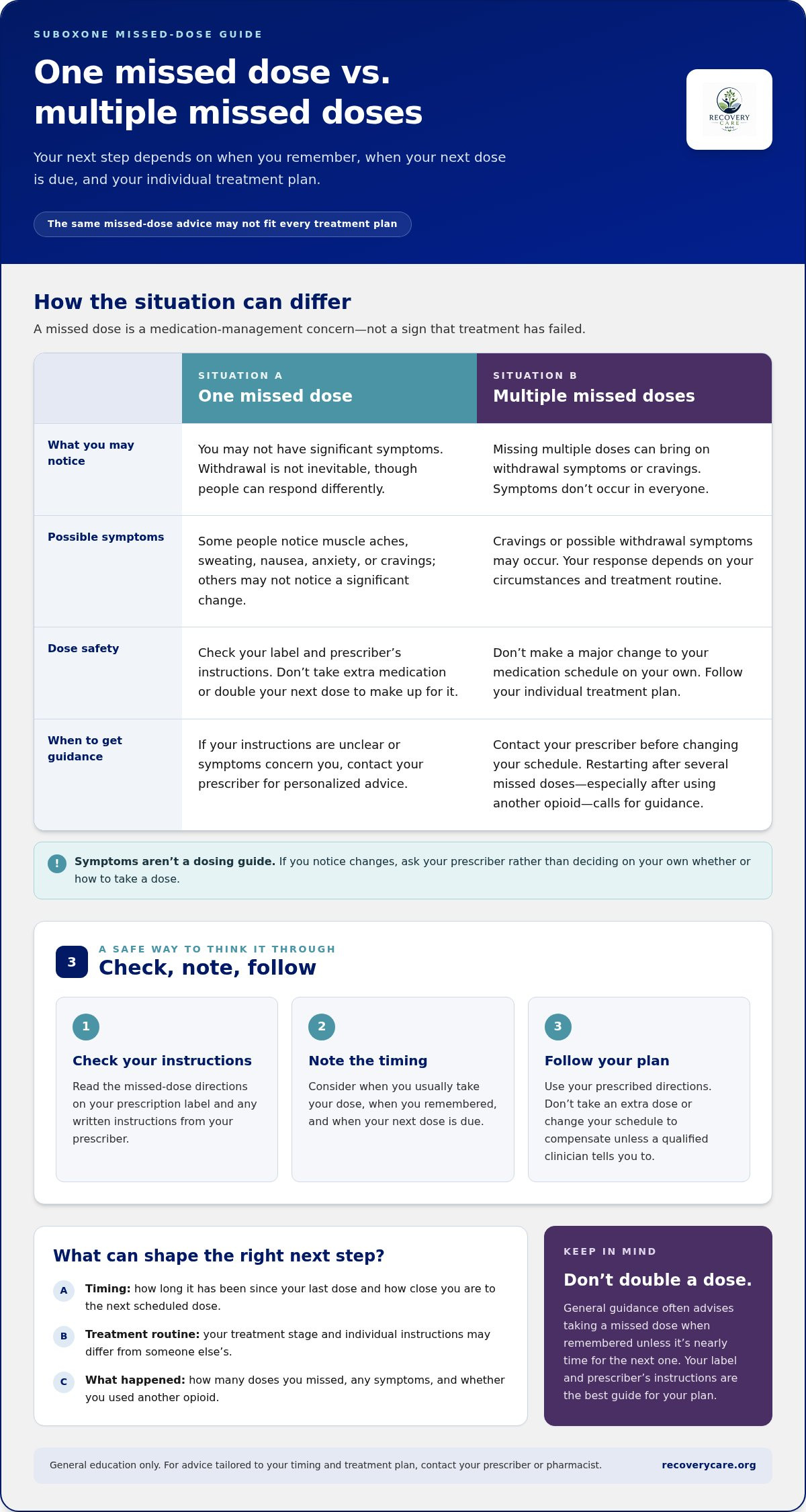
- Check your prescription label. Read the missed-dose directions and any written instructions from your prescriber.
- Note the timing. Consider when you usually take your dose, when you remembered, and when the next one is due.
- Follow your prescribed directions. Don’t take an extra dose or change your schedule to compensate unless a qualified clinician specifically tells you to.
General medication guidance commonly advises taking a missed dose when remembered unless it’s nearly time for the next one, and not doubling doses. Your label and prescriber’s instructions remain the best guide for your treatment plan. This is general education, not individualized medical advice. For more background on buprenorphine and its role in treatment, see SAMHSA’s information on buprenorphine.
Should you take a missed dose when you remember?
Check your instructions before deciding. The time since the missed dose and how close you are to your next scheduled dose can matter. Don’t take two doses together or take extra medication to make up for the missed one. If the label doesn’t clearly explain what to do in your situation, get personalized guidance before changing your schedule.
What if you are unsure what your prescription says?
Start with the medication label and any written treatment instructions. If they’re missing, unclear, or don’t fit your timing, ask your prescribing clinician or pharmacist before taking a different amount or adjusting your schedule. It’s reasonable to ask for clarification. You don’t have to figure it out alone.
If you’re still wondering what happens if you miss a suboxone dose, share when you last took it and when your next dose is due when you seek guidance. If questions about your medication routine keep coming up, individualized Suboxone treatment support can help you discuss them as part of ongoing care.
Why the right response can vary after a missed dose
A late dose and several missed doses can raise different questions. Your usual schedule, how long it’s been since your last dose, and where you are in treatment all help shape appropriate guidance. Suboxone contains buprenorphine and naloxone, but people don’t all respond to a missed dose in the same way. The same missed-dose advice may not fit every treatment plan.
How timing and treatment routine can affect next steps
If you remember a dose relatively soon, the question may be how to follow your instructions without taking doses too close together. After multiple missed doses, your prescriber may need to consider more about your circumstances before advising you. No single timing rule safely covers every situation. Tell your prescriber when you last took Suboxone, how many doses you missed, and when your next dose is scheduled so they can interpret the timing within your treatment plan.
Your treatment stage can matter, too. Your routine and instructions may differ from someone else’s, so don’t rely on another person’s experience or change your dose based on general information online. If you’re unsure how to proceed, ask your prescriber for guidance tailored to you.
What symptoms should you pay attention to?
Some people may notice cravings or possible withdrawal symptoms, such as anxiety, sweating, muscle aches, or nausea, while others may not. These symptoms don’t occur in everyone, and they aren’t a reliable way to decide on your own whether or how to take a dose. Contact your prescriber if symptoms appear, worsen, or concern you.
Possible withdrawal symptoms are different from signs of a medical emergency. Unusually slow or shallow breathing, or being difficult or impossible to wake, can signal an overdose or another urgent problem. Call emergency services right away if these signs occur. Don’t wait for a routine medication discussion or assume the symptoms are simply from missing a dose.
If you’re asking what happens if you miss a suboxone dose because your situation doesn’t match the instructions you have, share the details with your care team. Ongoing medical management can put medication questions in context alongside your broader recovery needs.
What to do if you missed more than one Suboxone dose
After missing multiple doses, don’t guess how to restart or make a major change to your schedule on your own. Contact your prescriber for instructions tailored to your situation. The safest next step can depend on your treatment plan, how long it’s been since your last dose, any symptoms you’re experiencing, and whether you’ve used other substances. Don’t take extra medication, stop treatment, or restart at a different dose without clinical guidance.
If you’ve returned to opioid use, tell your prescriber honestly. Opioid use after a break from treatment may raise overdose risk, especially if your tolerance has changed. This isn’t a reason to hide what happened or avoid care. The information helps your clinician advise you more safely.
When should you call your prescriber?
Reach out after multiple missed doses, or any time you’re unsure whether or how to restart. Be ready to share when you last took Suboxone, how many doses you missed, and whether you’ve noticed withdrawal symptoms or cravings. Also mention any opioid or other substance use. Honest details help your care team give guidance that fits your circumstances, without judgment.
If you’re searching for what happens if you miss a suboxone dose because you’ve missed more than one, general online guidance can’t determine the right restart plan for you. Your prescriber can consider the details of your treatment and advise you on what to do next.
When is a missed-dose situation an emergency?
A missed dose or withdrawal symptoms usually call for clinical guidance, but suspected overdose requires immediate help. Warning signs can include being unresponsive or having slow, shallow, or difficult breathing. Call 911 right away. If naloxone is available, use it according to its instructions while emergency help is on the way. Don’t wait for a routine clinic message or appointment when someone may be overdosing.
For non-emergency questions about missed doses or ongoing Suboxone care, connect with Recovery Care about Suboxone treatment. Medication management and behavioral health support can help you discuss concerns as part of individualized, compassionate care.
How ongoing Suboxone care can help you stay on track
A missed dose can raise questions, but it can also be a chance to discuss what would make your medication routine work better. If you’re still wondering what happens if you miss a suboxone dose, ongoing care gives you a place to bring those concerns and review your instructions with a clinician. The goal is collaborative, individualized support, not blame or a promise of a particular outcome.
Making medication routines easier to manage
Talk with your care team about practical reminders or routine adjustments that fit your day. You might discuss a phone alert, a calendar reminder, or keeping your current medication instructions somewhere easy to find. These tools can support your routine, but they don’t replace your prescriber’s guidance. If your schedule changes or the written directions are unclear, ask for advice before changing how you take your medication.
Recovery support beyond a single missed dose
Suboxone care can include medication management and behavioral health support, so you can discuss both practical medication concerns and the emotional or behavioral parts of recovery. For more background, explore this Suboxone treatment guide. For additional information about counseling, see the guide to opioid addiction counseling.
Recovery Care provides outpatient Suboxone treatment with medical management and behavioral health counseling. Bring questions about missed doses, recurring routine challenges, or other recovery concerns to your care team without shame. If you’d like to learn more about ongoing support, explore the guides above and reach out when you’re ready.
Take your next step with confidence
If you’re asking what happens if you miss a suboxone dose, remember that one missed dose doesn’t mean treatment has failed. Check your prescription instructions, don’t take extra medication to make up for a dose, and contact your prescriber if you’re unsure what to do. If you’ve missed multiple doses, ask for individualized guidance before changing or restarting your schedule. Cravings or withdrawal symptoms may occur, but they aren’t inevitable, and you deserve support without judgment.
Recovery Care provides outpatient medication-assisted treatment, including Suboxone treatment, with medical management and behavioral health counseling. Telehealth consultations are also available. Support can help you discuss medication questions and recovery concerns as part of your individual care.
You don’t have to work through uncertainty alone. Explore compassionate, individualized Suboxone treatment and take the next step when you feel ready. A missed dose is a moment to seek guidance, not a reason to lose hope.
Frequently Asked Questions
What should I do if I miss one Suboxone dose?
Check your prescription label and follow the missed-dose instructions provided for your medication. Don’t take an extra dose to make up for the one you missed. If the directions don’t answer your question, contact your prescriber or pharmacist and explain your usual schedule and when you missed the dose. If you feel unwell or symptoms concern you, seek medical guidance rather than changing your dose on your own.
Can missing a Suboxone dose cause withdrawal symptoms?
It can, but not everyone notices symptoms after one missed dose. Your response may depend on your treatment routine and individual circumstances. You might notice cravings or returning withdrawal symptoms, such as anxiety, muscle aches, sweating, or nausea. Contact your clinician if symptoms are severe, worsening, or worrying. Don’t take extra medication or change your dose to try to prevent symptoms unless a qualified clinician instructs you to.
Should I take Suboxone as soon as I remember a missed dose?
Check your prescription instructions before deciding, because the right step depends on your directions and when your next dose is due. Don’t assume a late dose is always appropriate, and don’t double up to catch up. If your label or written treatment plan doesn’t clearly address your situation, ask your prescriber or pharmacist before taking a different amount or changing your schedule.
What happens if I miss Suboxone for several days?
Missing Suboxone for several days calls for individualized guidance, especially before restarting or changing your usual schedule. Contact your prescriber and share when you last took a dose, any symptoms you’re experiencing, and whether you’ve used other substances. Don’t restart at an altered dose based on guesswork. If you suspect an overdose or someone is having trouble breathing, call 911 for emergency help.
Can I double my next Suboxone dose after missing one?
No. Don’t double your next dose to compensate unless your prescribing clinician specifically tells you to. Taking more than directed can create safety risks and may not address why you missed a dose. Check your medication instructions and contact your prescriber or pharmacist if you’re uncertain what to do next. Continue taking medication only as directed in your treatment plan, and don’t adjust the schedule on your own.
What if I miss Suboxone and start having strong cravings?
Strong cravings are a reason to reach out for support, not to change your medication dose on your own. Contact your prescriber or care team and explain what happened, including any substance use. Returning to opioid use can raise overdose risk, particularly if your tolerance has changed. Keep naloxone available if prescribed or accessible. Call 911 if you suspect an overdose, such as if someone is unresponsive or breathing slowly.
When should I get emergency help after missing Suboxone?
A missed dose alone isn’t necessarily an emergency, but suspected overdose needs immediate help. Call 911 if someone is unresponsive, can’t be woken, or has slow or difficult breathing. Give naloxone if it’s available and follow the emergency dispatcher’s instructions. For medication questions or symptoms that are concerning but not immediately life-threatening, contact your prescriber or another qualified clinician for guidance tailored to your situation.


