
What if a craving during Suboxone treatment is a reason to reach out, not proof that you’ve failed? Cravings can feel frightening, especially when you’re following your treatment plan. But they don’t automatically mean treatment isn’t working. Learning about managing breakthrough cravings on suboxone can help you respond with care instead of blame.
You don’t have to manage a craving alone or change your medication without guidance. Your prescriber can help explore possible contributors, review your treatment, and discuss safe next steps. Sharing what you’re experiencing is a constructive part of care, not a setback.
This article explains why cravings may happen during treatment, practical steps to try in the moment, and what details to share with your care team. You’ll also learn when to seek support and how clinician-guided medication management and counseling can help you consider triggers and coping strategies. A clear conversation gives you and your care team a chance to discuss options together.
Key Takeaways
- Cravings during Suboxone treatment can happen for different reasons and aren’t proof that you’ve failed.
- Use a steady, safety-focused sequence when a craving feels difficult to manage.
- Managing breakthrough cravings on suboxone can include noticing patterns in stress, sleep, routines, and surroundings.
- A brief record of cravings can help you share useful context with your clinician and discuss possible next steps.
- Know when to contact your treatment team and when suspected overdose or immediate danger calls for 911.
What breakthrough cravings on Suboxone can mean, and what they do not mean
A craving during treatment can be unsettling, especially if you expected the urge to use opioids to disappear. It deserves attention, but it isn’t a reason to judge yourself or assume you’ve failed. Tell your prescriber what’s happening and ask for help understanding it.
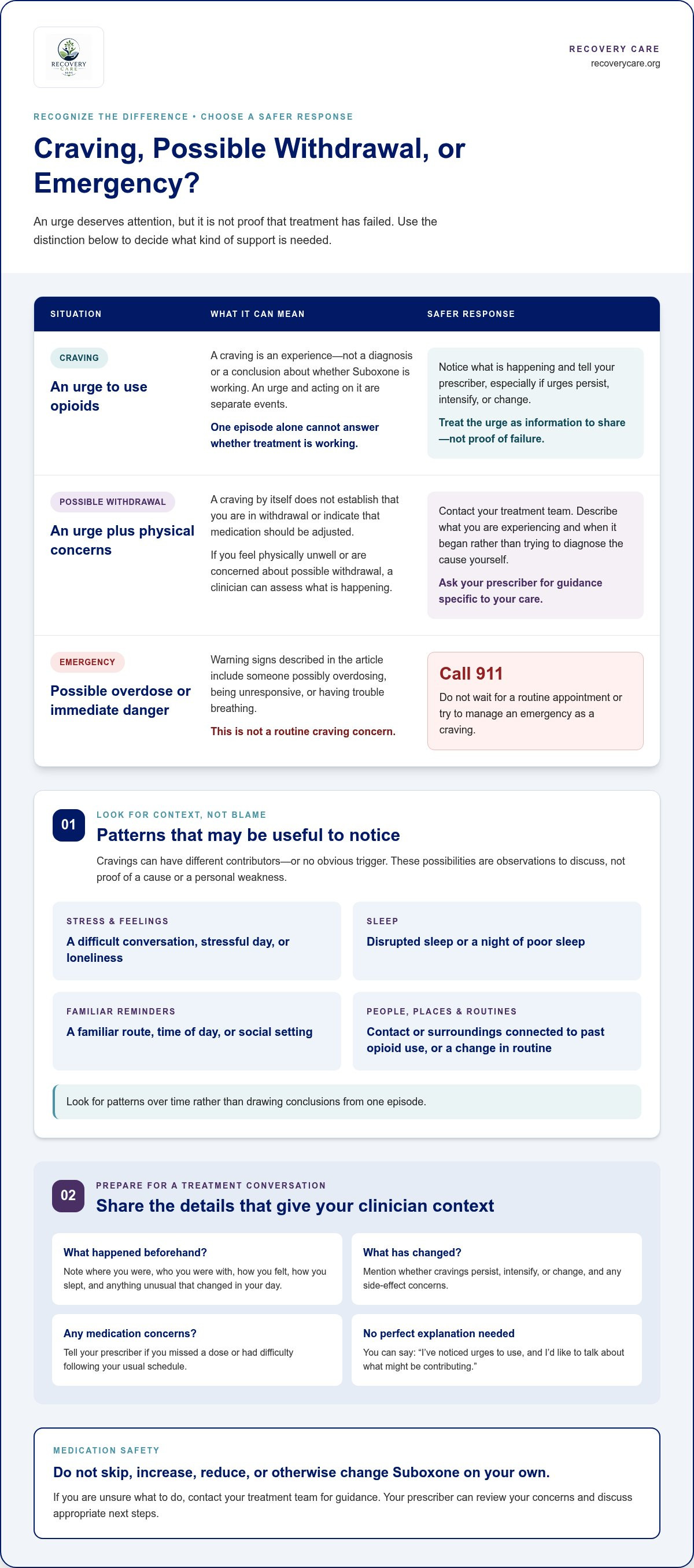
Breakthrough cravings are urges to use opioids that occur while a person is receiving treatment with Suboxone. The phrase describes an experience, not a diagnosis or a conclusion about whether treatment is working. One craving episode alone can’t answer that question. Your clinician can consider the broader picture, including how the urge feels, whether it recurs, and any other symptoms or concerns.
An urge is not the same as returning to opioid use. A craving may involve thoughts, feelings, or a pull toward using; acting on it is a separate event. If you’re working on managing breakthrough cravings on suboxone, treat the urge as information to share, not proof that you’ve done something wrong. The Buprenorphine/naloxone (Suboxone) overview describes the medication’s uses and effects, but discuss your own symptoms and treatment questions with your prescriber.
Why a craving does not automatically mean Suboxone has failed
People’s experiences during treatment vary. A craving may be influenced by circumstances or symptoms that need individual assessment; one person’s experience can’t determine what another person’s treatment should be. If urges persist, become more intense, or change, tell your prescriber. They can review your concerns and discuss whether your care plan needs attention. Don’t increase, reduce, skip, or otherwise change your medication without their guidance.
You can be direct: “I’ve noticed urges to use, and I’d like to talk about what might be contributing.” You don’t need a perfect explanation before reaching out. Sharing what you’re experiencing is a useful step in care, not an admission of failure.
The difference between an urge, withdrawal symptoms, and an emergency
A craving is an urge. By itself, it doesn’t establish that you’re in withdrawal or tell you to adjust your medication. If you’re also feeling physically unwell or are concerned about possible withdrawal, contact your treatment team for clinical assessment rather than trying to diagnose the cause yourself. Describe what you’re experiencing and when it began.
Possible overdose or immediate danger is different and requires emergency help. If someone may be overdosing, is unresponsive, or is having trouble breathing, call 911. Don’t wait for a routine appointment or try to manage an emergency as a craving. Once the immediate danger has passed, your treatment team can help you discuss ongoing care and next steps.
Why cravings may continue during Suboxone treatment
Cravings don’t always have one clear cause. They may occur alongside stress, disrupted sleep, familiar reminders, changes in routine, or contact with people and places connected to past opioid use. These are possibilities to notice and discuss, not evidence that you’re doing something wrong. A craving can also happen without an obvious trigger.
Possible contributing factors can guide a conversation, but they can’t determine your personal medical needs on their own. Your prescriber can consider the pattern alongside your health, treatment experience, and any other symptoms or concerns.
Triggers, stress, and daily routines
Sometimes an urge follows a difficult conversation, a stressful day, loneliness, or a night of poor sleep. A familiar route, a certain time of day, or a social setting may also bring up memories and expectations connected to past routines. A trigger is a cue to pay attention, not a personal weakness or a prediction that you’ll return to use.
When you notice an urge, consider what happened shortly beforehand. Note where you were, who you were with, how you were feeling, how you slept, and whether anything unusual had changed in your day. Look for patterns over time rather than drawing conclusions from one episode. If stress or recurring situations are part of the picture, behavioral health counseling may help you explore triggers and develop coping strategies alongside medical care.
Medication concerns to raise with the prescriber
Bring medication-related questions to your prescriber instead of trying to solve them alone. Tell them if cravings persist or change, if you’re concerned about side effects, or if you missed a dose or had difficulty following your usual schedule. Be open about what happened and what you’re worried about. This information can help your care team assess the situation and discuss appropriate next steps.
Don’t skip, increase, reduce, or otherwise adjust Suboxone on your own in response to a craving or missed dose. If you’re unsure what to do, contact your treatment team for guidance specific to your care. For broader context on treatment, the Suboxone treatment guide explains more about the role of treatment in opioid recovery.
Managing breakthrough cravings on suboxone can include noticing patterns and bringing questions to a clinician, rather than trying to identify a cause by yourself. Recovery Care provides clinician-guided Suboxone treatment where you can discuss cravings and treatment concerns.
Managing Cravings: Practical Steps for Safety
A strong urge can make it hard to think through what to do next. A simple plan gives you safe actions to focus on while you connect with support. These steps may help you get through an intense moment, but they aren’t a substitute for your treatment plan or clinical care.
A brief coping plan for the next few minutes
Start by pausing and naming what’s happening: “I’m having an urge right now.” You don’t have to argue with the feeling or blame yourself for it. Then, if you can do so safely, move away from anything that makes the moment feel less safe, such as a stressful setting or a situation where opioids are present.
- Pause. Notice the urge without judging yourself. If it feels manageable, try a slow breath or name a few things you can see and hear.
- Change your surroundings. Move to a calmer or safer place, such as a shared space with someone you trust.
- Reach out. Call or message a trusted person or an established recovery support. You could say, “I’m having a hard moment. Can you stay with me or talk for a bit?”
- Follow your care plan. Use the steps you and your clinician have discussed. Don’t take extra Suboxone, change your schedule, or use opioids to try to quiet the urge.
If it feels helpful, choose a brief grounding activity or distraction, such as listening to a familiar song, taking a short walk in a safe place, or focusing on a simple task. These are optional coping tools, not treatments, and they won’t work the same way for everyone. Avoid alcohol or other substances as a way to manage a craving; combining substances can create added safety risks.
Make the environment and support plan safer
Planning ahead can make it easier to act when you feel under pressure. With your treatment team, consider which situations tend to feel difficult, who you can contact, where you could go, and which coping steps fit your care plan. Keep the plan simple enough to use in the moment. Managing breakthrough cravings on suboxone is not something you have to address by improvising medication changes.
Naloxone can temporarily reverse an opioid overdose. Ask your clinician or pharmacist about having it available and learn how to use the specific product you have. If you suspect an overdose or someone is in immediate danger, call 911. Give naloxone if it’s available, following its instructions, and stay with the person until emergency help arrives. Naloxone is an emergency response, not a substitute for medical care.
If cravings recur or feel difficult to manage, tell your treatment team so you can discuss support and next steps. Recovery Care provides Suboxone treatment, and behavioral health counseling can support work on triggers and coping strategies alongside medication treatment.
How to track cravings and prepare for a treatment conversation
A few brief notes can make it easier to describe what’s been happening, especially if a craving is hard to explain in the moment. You don’t need a perfect record or a complete account of every day. A simple log can help you and your clinician look for patterns and decide what questions to explore. It can inform a conversation, but it can’t establish a diagnosis or determine treatment changes on its own.
What to note before the appointment
After an urge, write down what you remember while it’s still fresh. Keep the record somewhere private, and share the details that feel relevant to your care. You might include:
- Timing and duration: When did the urge start, and about how long did it last?
- Intensity: How strong did it feel to you, using words such as mild, moderate, or intense?
- Context: Where were you, what was happening, and what feelings or reminders came up beforehand?
- Sleep and stress: Had your sleep or stress level changed around that time?
- Medication concerns: Were there missed doses, side effects, schedule difficulties, or questions you want to raise?
Keep the notes factual and manageable. A short entry such as “Evening, strong urge after a stressful call, slept poorly” may be more useful than a detailed explanation. If keeping a log makes you feel more distressed, stop and bring up the concern in conversation instead. Don’t change your medication based on what you record.
How to explain cravings without feeling judged
It’s okay to begin plainly: “I’m still having cravings and want help understanding them.” You can also say what worries you most, even if you’re unsure why the urges are happening. Your clinician can review what you share, ask follow-up questions, and discuss appropriate next steps with you.
If you’ve used opioids or another substance, or have a safety concern, sharing that information can help your care team understand the situation and support you. You don’t have to frame it as a confession or have all the answers before speaking. Be as honest as you can, and ask for clarification if a question feels unclear.
Consider bringing a few questions so the conversation covers what matters to you. For example:
- “What details would help us understand when these cravings happen?”
- “How do we assess whether my current treatment plan is meeting my needs?”
- “What should I do if I miss a dose or have concerns about side effects?”
- “Could counseling help me work on triggers or coping strategies alongside medication treatment?”
The opioid addiction counseling guide offers related context on behavioral health support. To discuss cravings and treatment concerns with a clinician, connect with Recovery Care about Suboxone treatment. Clear notes can help you start the conversation, but you don’t need a log to deserve support.
When to seek clinical or emergency help for cravings on Suboxone
It can be hard to know whether a craving is something to bring up at your next check-in or a sign you need help sooner. A useful distinction is whether you’re experiencing cravings or treatment concerns, or whether someone may be in immediate physical danger. You deserve support in either situation, and you don’t need a perfect explanation before reaching out.
When to contact your treatment team
Contact your prescriber or treatment team if cravings keep returning, feel more intense, or are becoming difficult to manage. Follow up as well if you have questions about side effects, missed doses, your medication schedule, or changes in your sense of safety. Sharing these concerns helps your clinician assess what’s happening and discuss options that fit your individual care.
Be as specific as you can: describe when the cravings occur, how they’ve changed, and whether anything else has shifted in your health or routine. If you’ve used opioids or another substance, let your clinician know so they can understand the full picture and support you without judgment. You don’t have to make medication decisions alone. Don’t stop, skip, or change your Suboxone dose without guidance from your prescriber.
Managing breakthrough cravings on suboxone may involve reviewing your treatment plan and discussing additional support, but what’s appropriate depends on your circumstances. Outpatient medication-assisted treatment and behavioral health counseling provide a setting to discuss medication concerns, triggers, and coping strategies. Telehealth consultations can also connect you with a clinician remotely.
Recognizing an emergency and finding ongoing support
Suspected overdose or immediate danger is an emergency, not a routine treatment question. Warning signs can include being unable to wake someone or seeing slow, irregular, or stopped breathing. If you think someone may be overdosing, call 911 right away. If naloxone is available, use it according to the product instructions, and stay with the person until emergency responders arrive. Naloxone can temporarily reverse an opioid overdose, but emergency care is still needed.
If you’re unsure whether a situation is an emergency, take immediate danger seriously and call 911. For cravings or concerns that don’t involve an immediate emergency, contact your treatment team to discuss what’s going on and what support makes sense. Recovery Care offers a supportive outpatient setting with Suboxone treatment, counseling, and telehealth consultations. Reaching out is a practical step, not a sign of failure.
Take the Next Step With Support
A craving can be a moment to pause and reconnect with support. You don’t need every answer before starting a conversation. If you’re thinking about managing breakthrough cravings on suboxone, consider what would help you feel more supported as you continue care, whether that’s reviewing concerns with a clinician or exploring counseling alongside medication treatment.
At Recovery Care, outpatient medication-assisted treatment includes Suboxone treatment, with behavioral health counseling and telehealth consultations available as part of care. Treatment is led by Medical Director Dr. Heather Rosen, MD. Your needs and questions deserve to be heard with compassion, and a clinician can help you discuss appropriate next steps without judgment or pressure.
Explore Recovery Care’s outpatient treatment and support to learn about care that may fit your needs. Reaching out is a meaningful step, and you can take it one conversation at a time.
Frequently Asked Questions
Can you still have cravings while taking Suboxone?
Yes, some people experience cravings while taking Suboxone. An urge by itself doesn’t show that treatment has failed or that you’ve done something wrong. Make a brief note of when it happened and what was going on, then mention it to your prescriber. Reach out sooner if cravings keep returning, grow stronger, or make you feel unsafe. Continue taking your medication only as directed.
What should I do if I have a craving on Suboxone?
Pause and move to a place where you feel safer, then use a coping step you’ve discussed with your care team. For managing breakthrough cravings on suboxone, a short call or message to someone you trust may help you feel less alone while you follow your plan. Don’t take extra medication or use alcohol, opioids, or another substance to manage an urge. Contact your clinician about recurring cravings; call 911 if there’s immediate danger.
Does having cravings mean Suboxone is not working?
Not necessarily. Cravings are one part of your experience, and a clinician needs to consider them alongside your health, circumstances, and treatment goals. Describe how often urges occur, how intense they feel, and whether anything has changed. Be honest even if you feel embarrassed. Cravings are a reason to ask for support, not a verdict on your progress or a reason to feel ashamed.
Should I take more Suboxone if cravings continue?
No, don’t increase, reduce, skip, or otherwise change your Suboxone without instructions from your prescriber. The right response depends on your individual medical situation. Contact your care team and explain when cravings happen, whether you missed a dose, and any side effects or schedule concerns. If you feel in immediate danger, seek emergency help rather than waiting for a routine appointment. Your notes can help guide the discussion, but shouldn’t determine medication changes on their own.
Can stress or reminders trigger cravings while on Suboxone?
They may be connected for some people, though triggers differ from person to person. A tense conversation, a familiar route, or a change in routine might be worth noting if an urge follows. Record what happened beforehand without assuming you’ve identified the cause. If a particular situation comes up repeatedly, tell your treatment team so you can discuss supportive ways to prepare. A trigger isn’t a personal failing, and noticing a pattern doesn’t mean a return to use is inevitable.
When should I seek emergency help for a craving on Suboxone?
A craving alone isn’t necessarily an emergency, but suspected overdose or immediate danger needs urgent action. If someone is unresponsive, can’t be woken, or is having trouble breathing, call 911. Give naloxone if it’s available and follow the product instructions; stay with the person while help is on the way. For recurring cravings without immediate danger, contact your treatment team. Don’t wait for a routine appointment if someone’s safety is at risk.
Can counseling help with cravings during Suboxone treatment?
Counseling may help you explore situations or stressors linked with urges and practice coping strategies alongside medication treatment. For example, you might talk through how to handle a difficult social situation or build a plan for a stressful routine. The kind of support that fits varies, and counseling doesn’t replace medical guidance about Suboxone. Tell your care team what’s been challenging and ask how behavioral health counseling could fit into your care plan.


