
If you’re wondering, “what happens if I miss my sublocade shot,” it’s understandable to worry about cravings, symptoms, or what comes next. A missed shot doesn’t automatically mean withdrawal is inevitable. Sublocade releases medication over time, so effects vary and symptoms may not appear right away. An occasional delay of up to two weeks isn’t expected to have a clinically significant impact, but your next steps should be guided by a healthcare professional.
You deserve support, not judgment, if you miss an appointment. Contact your prescriber promptly. Share when your last injection was due and any symptoms or cravings you’re experiencing. Don’t change or restart medication on your own. This article explains what a delay may mean, what information to share with your care team, and how your clinician can help plan follow-up. It also covers why timing matters and when additional assessment may be needed.
Key Takeaways
- Learn what happens if I miss my sublocade shot, including why a delay doesn’t affect everyone the same way.
- Watch for possible changes such as cravings or withdrawal symptoms, and share them with your prescriber.
- Have your last injection date, missed appointment date, symptoms, and medication list ready when you reach out.
- Your prescriber can guide your next dose date and treatment plan. Ongoing medication management, counseling, and primary care can support continuity.
Missed a Sublocade Shot? What the Delay May Mean
A missed appointment is a reason to reconnect with your care team, not a reason for shame. Scheduling conflicts, transportation problems, illness, or an unexpected event can disrupt treatment. One late injection doesn’t define your recovery or automatically mean treatment has failed.
A late Sublocade injection is an appointment that happens after its planned date. A clinician-directed treatment change is a deliberate adjustment to your plan made with your prescriber. If you’re asking “what happens if I miss my sublocade shot,” the answer depends on your circumstances, including when your last injection was and how you’re feeling. A delay doesn’t automatically mean you’ll have withdrawal or cravings. Don’t make medication changes on your own.
How Sublocade continues working between injections
Sublocade is an extended-release injection of buprenorphine, a medication used as part of opioid use disorder treatment. It forms a small deposit under the skin that releases medication over time. Medication levels can decline as time passes, but the timing and effects of a delay vary from person to person. Your prescriber plans the injection schedule to guide treatment safely. For medication-specific instructions, review the current Sublocade prescribing information with your care team. You can also read a general overview of Buprenorphine.
Why one missed appointment does not define recovery
Life can interrupt even a carefully planned routine. Contact your prescriber promptly so they can consider your timing and symptoms and advise you about the next step. The prescribing information says an occasional delay of up to two weeks is not expected to have a clinically significant effect. That general guidance doesn’t replace individual medical advice. For more about this treatment approach, see Sublocade Injection Guide: Comparing Long-Acting Recovery Options in 2026.
If your delay is longer, or you’re experiencing withdrawal symptoms or cravings, tell your prescriber. They can assess your situation and determine the appropriate next dose date and follow-up plan. You don’t need to explain a missed appointment perfectly or have everything figured out before reaching out. Reconnecting is a practical step toward continuing care.
What Symptoms Might Follow a Delayed Sublocade Injection?
A delayed injection doesn’t mean you’ll necessarily feel different. Because Sublocade releases buprenorphine over time, a missed appointment may not cause an immediate change, and some people may not notice symptoms at all. Symptoms and their timing after a missed Sublocade injection vary from person to person.
Possible changes to discuss with your treatment team
If you’re wondering what happens if I miss my sublocade shot, pay attention to changes without assuming what they mean. Cravings may return, you may feel generally unwell, or you may notice possible opioid withdrawal symptoms such as anxiety, restlessness, muscle aches, nausea, or difficulty sleeping. These symptoms can have different causes, so your prescriber is the right person to assess them.
When you contact your treatment team, share:
- When symptoms began and whether they’re improving, worsening, or staying the same.
- Whether you’re experiencing cravings or changes in how you feel day to day.
- When your last injection was and when the next one was scheduled.
The FDA’s official prescribing information says an occasional delay of up to two weeks is not expected to have a clinically significant effect. That general information can’t predict how you’ll feel or determine your next dose date. Contact your prescriber about symptoms or cravings, and don’t take extra medication or change your treatment plan without their guidance.
When symptoms may require urgent help
Discuss withdrawal symptoms and cravings with your prescriber. Signs of a suspected overdose need emergency action. A person who is difficult or impossible to wake, or whose breathing is very slow or shallow, may be experiencing a life-threatening emergency. Call 911 immediately. Don’t wait to see if the person improves.
If naloxone is available, use it according to its instructions while emergency help is on the way. Stay with the person and follow the dispatcher’s directions. Naloxone doesn’t replace emergency care, even if the person wakes or seems to improve.
If getting to an appointment is difficult, a telehealth consultation may help you discuss symptoms and next steps with your care team. It doesn’t replace an in-person injection visit when one is needed. Discuss your ongoing treatment with a supportive outpatient team and make a plan together.
Should You Restart, Switch, or Take Another Medication?
Don’t try to address a missed injection by doubling medication, restarting treatment, stopping, or switching to another medicine on your own. Your prescriber should determine the next injection date and treatment plan based on your last dose, how late it is, your symptoms, and your treatment history. If you’re asking what happens if I miss my sublocade shot, the safest next step is to get guidance rather than guess.
Why the next injection date needs clinical guidance
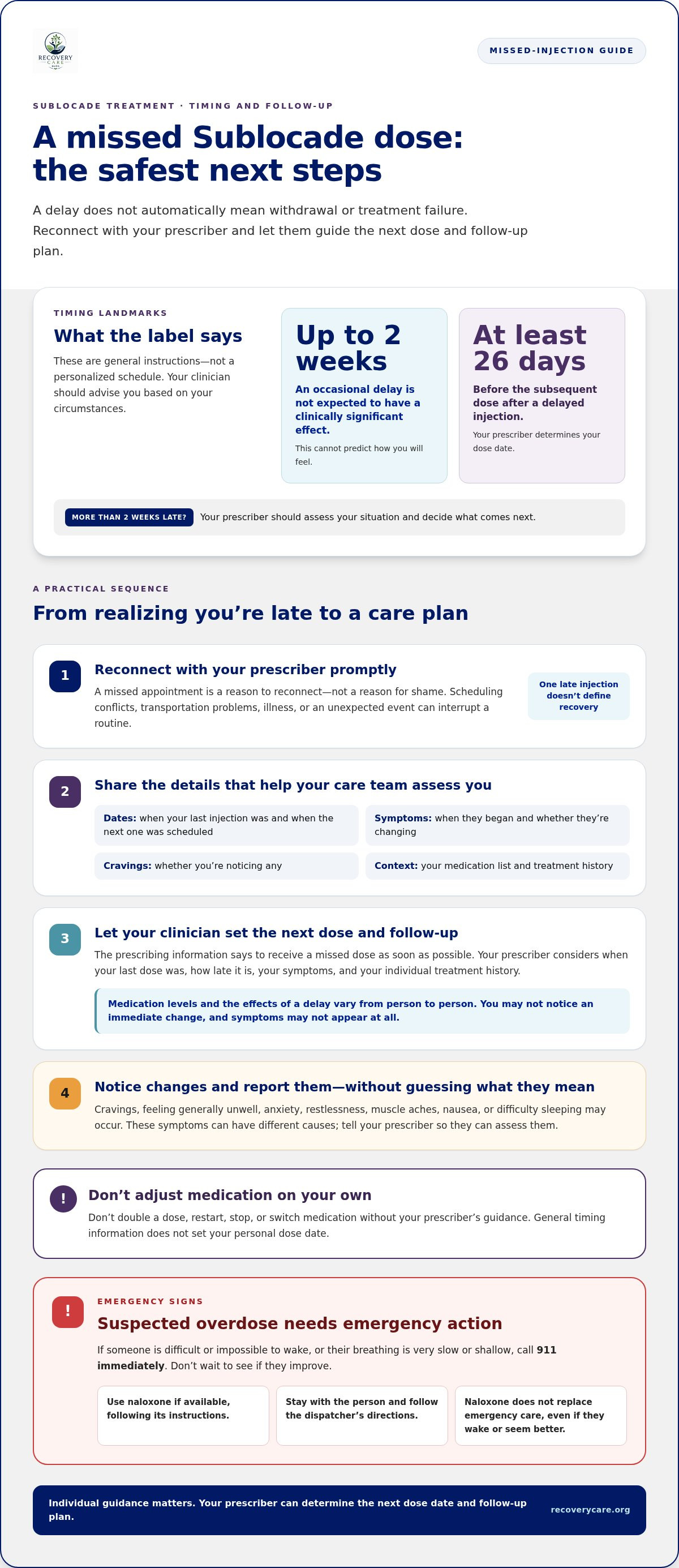
The FDA prescribing information says to receive a missed dose as soon as possible. It also says an occasional delay of up to two weeks is not expected to have a clinically significant effect. After a delayed injection, the subsequent dose should be given at least 26 days after the delayed dose was received. These are label instructions, not a personalized schedule. If you’re more than two weeks late, your prescriber should assess your situation and decide what comes next.
Timing can depend on the date of your previous injection and your individual circumstances. Tell your prescriber when your last shot was, how late you are, and whether you’ve noticed cravings or other symptoms. Don’t use general timing information to set your own dose date.
How a clinician may discuss other treatment support
Your clinician can assess whether your current plan remains appropriate or whether another medication approach or added support should be considered. Your symptoms, treatment history, and preferences can inform that conversation. For broader background on another buprenorphine-based treatment, read Suboxone Treatment: A Comprehensive Guide to Opioid Recovery in 2026.
| Situation | What to do |
|---|---|
| Your injection is late, and you’re not facing an immediate emergency. | Contact your prescriber promptly to discuss timing and the next step. |
| You have new or worsening cravings or feel unwell. | Tell your prescriber what you’re experiencing and when it began. Don’t take extra medication or change treatment without guidance. |
| You suspect an overdose or another immediate medical emergency. | Call 911. If naloxone is available, use it according to its instructions while help is on the way. |
If you’re having difficulty reconnecting with treatment or finding support, SAMHSA’s National Helpline offers confidential help finding treatment resources. It isn’t emergency care. Call 911 for an immediate emergency.
What to Do After You Realize Your Sublocade Shot Is Late
A missed appointment can feel stressful, but the next step is straightforward: contact your prescriber promptly and explain what happened. The safest next step after a late Sublocade injection is timely communication with the prescribing team. They can review your situation and tell you when to come in and how to follow up.
What to tell the prescriber or care team
Before you call or send a message, gather a few details. You don’t need to have every answer or explain the missed appointment perfectly. Clear information helps your care team understand the timing and your current needs.
- The date of your last Sublocade injection and the date your next dose was scheduled.
- Any cravings, withdrawal concerns, or other symptoms, including when they began and whether they’re changing.
- Your current medication list, including any new prescriptions or changes since your last appointment.
- Any relevant changes in your health or circumstances that may affect your treatment.
Ask what to do next, when to follow up, and whether your next step should be an appointment or a discussion with the clinical team first. Your prescriber should determine your timing and plan. Don’t take extra medication, restart, stop, or substitute treatment while waiting for a response unless your clinician has specifically instructed you to do so.
If you can’t reach your care team and you’re experiencing severe symptoms or believe you may be facing an immediate medical emergency, seek urgent medical help. For a suspected overdose, call 911. A non-emergency delay still deserves follow-up with your prescriber, but it isn’t a reason to change your medication independently.
How to make the next appointment easier
Once you’ve reconnected, talk through what made the appointment difficult. A reminder, a different appointment time, or an agreed way to follow up may help you stay connected to care. If travel or another barrier makes an in-person visit difficult, ask whether a telehealth consultation could support a care discussion. Telehealth can help you talk through next steps, but an injection can’t be given remotely. For more on virtual support, read Telehealth Addiction Counseling: A Comprehensive Guide to Virtual Recovery.
For help reconnecting with outpatient Sublocade care, contact Recovery Care’s treatment team and discuss a follow-up plan that fits your needs.
Get Support to Stay Connected With Sublocade Treatment
A missed appointment doesn’t close the door on care. Reconnecting with a supportive treatment team can help you understand what to do next and make a follow-up plan that reflects your needs. If you’re still wondering what happens if I miss my sublocade shot, outpatient medication management gives you a place to discuss the delay with a clinician rather than manage uncertainty alone.
What supportive outpatient follow-up can include
Follow-up may include reviewing your injection schedule, discussing how you’ve been feeling, and planning the next steps in your treatment. Your clinician can consider your circumstances and guide decisions about ongoing Sublocade care. No two situations are exactly alike, so your plan should be based on a conversation with the care team, not assumptions or someone else’s experience.
Recovery support can also include behavioral health counseling and primary care. Counseling offers space to talk about emotional well-being and challenges that may affect recovery. Primary care can support your broader health needs. Neither is a prerequisite for reaching out about a missed injection. You can start by discussing the appointment and your medication plan.
Take a manageable next step
Recovery Care provides outpatient treatment that includes Sublocade injections and telehealth consultations. If attending in person is difficult, telehealth can provide a way to discuss your care and follow-up with the team. It doesn’t mean a Sublocade injection can be administered remotely. Your clinician can guide you on the appropriate next steps for injection care.
You don’t need to wait until you feel certain about what to say. Let the team know you missed your appointment and would like to reconnect. If it helps, write down your last injection date, the appointment you missed, and any concerns before reaching out. A missed visit can be addressed as part of ongoing care, without judgment.
You deserve respectful, confidential support as you work out what comes next. Take a low-pressure first step by learning about Recovery Care’s treatment options and outpatient support.
Reconnect With Care and Keep Moving Forward
If you’re asking “what happens if I miss my sublocade shot,” remember that a delay doesn’t automatically mean withdrawal or treatment failure. The effects can vary, so contact your prescriber promptly, share when your last injection was and how you’re feeling, and let your clinician guide the next dose date. Don’t restart, stop, double, or switch medication on your own.
Ongoing outpatient medication management can help you make a clear follow-up plan. Counseling and primary care may also support your individual recovery needs, and you don’t need to have everything figured out before reaching out. Recovery Care provides outpatient Sublocade treatment and medication management, with in-person and telehealth consultations. Telehealth can support a care discussion, but injections aren’t administered remotely. Recovery Care accepts most major insurance plans, Medicare, and Medicaid. Coverage details can vary.
Explore compassionate outpatient recovery care and take one manageable step toward reconnecting with support. A missed appointment doesn’t define your progress. With guidance from your care team, you can make a thoughtful plan and continue moving forward.
Frequently Asked Questions
What should I do if I miss my Sublocade shot?
Contact your prescribing clinician or treatment team promptly. Tell them when your last injection was given, when your next dose was due, and whether you’re experiencing cravings, withdrawal concerns, or other symptoms. Have your current medication list ready, including any recent changes. Your clinician can advise you about the next dose date and follow-up plan. Don’t take extra medication, change your dose, or choose a new injection date on your own.
Can missing a Sublocade shot cause withdrawal?
Withdrawal symptoms or returning cravings are possible after a delayed injection, but this doesn’t happen to everyone, and timing varies. Sublocade releases medication over time, so missing an appointment doesn’t mean symptoms will begin immediately. If you notice changes, contact your prescriber and share when they started and how they’re progressing. Seek urgent medical help for severe or rapidly worsening symptoms. Don’t take extra medication without your clinician’s guidance.
How late can a Sublocade injection be?
There isn’t one personalized safe delay that applies to everyone. The prescribing information says to receive a missed dose as soon as possible and that an occasional delay of up to two weeks isn’t expected to have a clinically significant effect. It also says the next dose should be given at least 26 days after the delayed injection. Your prescriber should apply these instructions to your situation. Contact them promptly rather than setting your own injection date.
Should I take Suboxone if I miss my Sublocade injection?
Don’t start, stop, or change Suboxone or another medication on your own after a missed injection. A prescriber may consider treatment options based on your injection timing, symptoms, treatment history, and individual circumstances. Contact your care team, explain when your last injection was and when the next one was due, and follow their instructions. If you’re having cravings or feel unwell, mention that when you reach out so the clinician can assess your needs.
Can I get my Sublocade shot early after missing an appointment?
Your clinician should determine when you receive your next injection. The timing depends on your treatment schedule, the date of your previous injection, and your clinical circumstances. Contact your prescriber to discuss the missed appointment and confirm a follow-up plan. Don’t try to make up the dose by arranging an injection yourself or changing your medication. Your treatment team can review your injection history and guide the next step.
What if I cannot reach my Sublocade prescriber?
Keep trying the clinic through its usual contact channels and explain that you missed an injection. Don’t take extra or unprescribed medication while waiting for guidance. If you develop severe or rapidly worsening symptoms, seek urgent medical care. For a suspected overdose, call 911 immediately. If naloxone is available, use it according to its instructions while emergency help is on the way. Contact your treatment team again when you can to arrange follow-up.
Can I overdose after missing a Sublocade shot?
A missed injection alone isn’t enough information to assess your individual overdose risk. If you or someone nearby has very slow or shallow breathing, can’t be awakened, or may have overdosed, call 911 immediately. If naloxone is available, use it according to its instructions while waiting for emergency help. Even if the person seems to improve, emergency care is still needed. For non-emergency questions about your missed dose, contact your prescribing clinician.


