
What if you could wake up every morning without immediately reaching for a film or tablet? Many people find that while Suboxone provides a vital foundation for recovery, the daily ritual of dosing can feel like a constant reminder of the struggle they're working to overcome. If you're considering switching from suboxone to sublocade, you likely know the frustration of energy dips between doses or the persistent anxiety about losing your medication. It's natural to feel tethered to that daily schedule, but your recovery can offer much more flexibility and peace of mind than you might realize.
We understand that changing your medical routine can feel intimidating, so we've created this guide to show you exactly how the transition works in 2026. You'll learn about the updated FDA protocols that allow for a faster initiation, what the first week after your injection really feels like, and how to navigate insurance hurdles effectively. We'll also cover the practicalities of the expanded injection sites and how this shift helps eliminate the "peaks and valleys" of daily dosing. This is your comprehensive roadmap for moving from daily management to a steady, monthly rhythm of long-term wellness and security.
Key Takeaways
- Understand how Sublocade’s subcutaneous depot technology provides a consistent release of medication, helping you avoid the emotional and physical fluctuations of daily dosing.
- Learn the exact medical steps for switching from suboxone to sublocade, starting with a brief stabilization period to ensure your comfort and safety.
- Navigate the 2026 insurance process with confidence, knowing that most Medicare and Medicaid plans now cover long-acting injectables as a standard part of recovery care.
- Discover how a monthly injection schedule restores your privacy and freedom by removing the need for daily medication rituals and frequent pharmacy visits.
- See why an integrated approach that combines medication with personalized counseling and primary care offers the most secure path toward long-term wellness.
What is Sublocade? Understanding the Monthly Buprenorphine Injection
Sublocade represents a significant step forward in how we approach recovery. Buprenorphine, the active medication in Sublocade, is delivered through a monthly injection rather than a daily film or tablet. This formulation is designed specifically for people who are already stabilized on an oral buprenorphine product and are looking for more consistency in their treatment journey. It's a tool that helps bridge the gap between managing a condition and truly living your life.
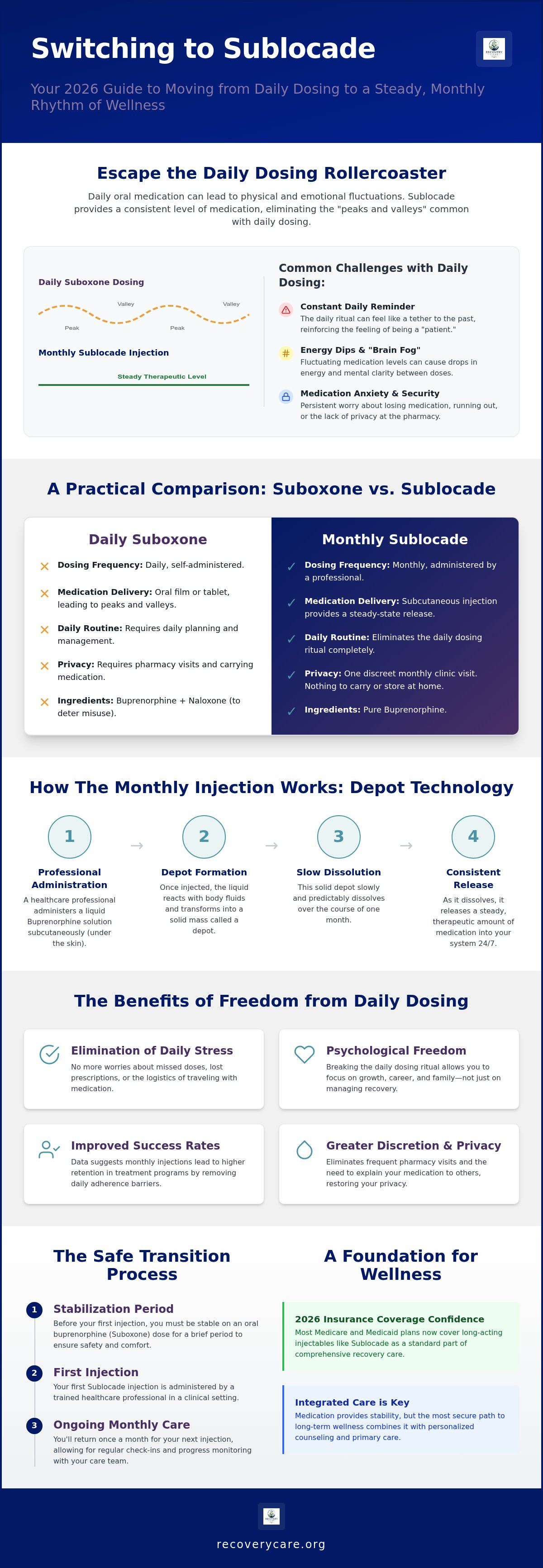
The science behind the injection involves a unique "depot" technology. When the liquid medication is injected into the subcutaneous tissue, it reacts with your body's natural fluids to transform into a solid mass. This solid depot slowly dissolves over the course of a month, releasing a precise, steady amount of medication into your system. By 2026, clinical consensus has solidified around the idea that this "steady-state" delivery is superior for many patients because it avoids the daily peaks and valleys of oral medication, keeping your levels consistent from morning until night.
You won't be managing this medication at home. To ensure your safety and the effectiveness of the treatment, Sublocade must be administered by a healthcare professional in a clinical setting. This monthly visit ensures the injection is placed correctly and allows your care team to monitor your progress in person, providing a layer of professional support that daily oral medications often lack.
How Sublocade Differs from Suboxone
Suboxone and Sublocade both use buprenorphine to manage cravings, but their formulations and delivery methods are quite different. Suboxone is an oral film that contains naloxone to deter misuse, whereas Sublocade is a pure buprenorphine injection without naloxone. Because the medication is released continuously from the subcutaneous depot, your brain's opioid receptors remain consistently occupied 24 hours a day, providing a stable biological foundation for your recovery. When you're switching from suboxone to sublocade, you're moving from a daily ritual to a monthly treatment that works quietly in the background.
The Benefits of Constant Medication Delivery
One of the most immediate changes patients report is a significant reduction in daily cravings and the "brain fog" that can sometimes accompany the rise and fall of oral dosing. Since the medication is always present at a therapeutic level, there's no risk of feeling "under-dosed" by the end of the day or experiencing the physical dip that can happen if you're a few hours late with a film.
- Elimination of daily stress: You no longer have to worry about missing a dose, losing a prescription, or the anxiety of traveling with medication.
- Improved success rates: Data suggests that the monthly injection leads to higher retention in treatment because it removes the daily decision-making process associated with recovery.
- Psychological freedom: Moving away from a daily dosing ritual helps break the "daily reminder" of addiction, allowing you to focus your energy on your career, family, and personal growth.
By switching from suboxone to sublocade, you're choosing a path that prioritizes pharmacological stability. This gives your mind and body the quiet space they need to heal without the constant interruption of a daily dosing schedule.
Sublocade vs. Daily Suboxone: A Practical Comparison
Choosing to move away from daily medication is a significant milestone in any recovery journey. While Suboxone treatment remains a gold standard for many, the physical act of taking a film every morning can sometimes feel like an anchor to the past. Switching from suboxone to sublocade replaces that daily reminder with a sense of monthly freedom. You're no longer planning your day around a dosing schedule or worrying about whether you remembered to pack your films for a weekend trip. This shift allows you to focus on who you are becoming, rather than being reminded of where you've been.
Discretion and security are also major practical upgrades that patients value in 2026. We've heard from many individuals who feel a sense of relief when they no longer have to stand in pharmacy lines or explain their medication to others. Because the medication is a monthly injection administered by a professional, it cannot be lost, stolen, or accidentally misused. This provides a layer of safety and peace of mind that is difficult to achieve with oral medications. According to the official FDA prescribing information, the steady release also ensures your energy levels remain consistent, preventing the mood dips that some people experience as their daily dose wears off in the late afternoon.
Lifestyle and Mental Health Advantages
One of the most profound benefits is breaking the hand-to-mouth habit. For years, the act of taking something to feel "okay" has been a central part of life. By removing that daily ritual, you allow your brain to heal and distance itself from the behaviors of active addiction. You reclaim the mental energy previously spent on managing your supply, counting films, and timing your doses. This newfound time can be redirected toward your career, your family, or your personal hobbies. If you're ready to see how this stability could change your daily life, our team can help you explore a personalized transition plan that fits your unique goals.
Potential Drawbacks to Consider
It's important to have a balanced view of this transition before making the move. While the benefits are extensive, there are a few practicalities to keep in mind. You'll need to schedule a monthly in-person visit to the clinic, which requires a bit more coordination than a simple pharmacy pickup. Some patients also report mild soreness or tenderness at the injection site for a few days after the procedure. Finally, there is a psychological adjustment period. Since the medication is released slowly, you won't "feel" it kick in like you might with an oral film. This is actually a sign of the medication's stability, but it can take a few weeks to get used to the new sensation of simply feeling "normal" all the time. By switching from suboxone to sublocade, you're embracing a more consistent, quiet form of support that works in the background of your life.
The Transition Process: How to Switch from Suboxone to Sublocade
The path for switching from suboxone to sublocade is methodical and designed to prioritize your comfort. We focus on ensuring that your body is ready for the transition so you don't experience any unnecessary discomfort or cravings. This isn't a process you'll navigate alone; our medical team guides you through every clinical and administrative hurdle. The transition typically follows a structured five step sequence to ensure long term stability.
- Step 1: Stabilization. You'll spend at least seven days on a steady dose of oral Suboxone. While 2025 FDA updates have made rapid induction possible in some cases, this week of stabilization remains a common clinical benchmark to ensure your body is ready for the long acting formulation.
- Step 2: Consultation and Authorization. When you're switching from suboxone to sublocade, our team handles the heavy lifting of the insurance prior authorization (PA) process to secure coverage for the medication.
- Step 3: The Loading Dose. Your first injection is typically a 300mg dose. This higher initial amount is crucial for building the "depot" in your system and establishing a therapeutic baseline.
- Step 4: Clinical Monitoring. During your first month, we'll monitor you closely. Some patients may require supplemental oral dosing if they experience minor breakthrough symptoms while the depot settles.
- Step 5: Maintenance. After the initial loading period, most patients transition to a 100mg monthly maintenance dose to keep their levels steady.
The First Week: What New Patients Should Expect
During the first week, you'll notice a small, firm lump under your skin at the injection site. This is the medication depot, and it's a completely normal sign that the delivery system is working. You won't feel the "kick" of a daily film, but you also won't feel the dip of withdrawal. Reading about a patient's experience switching to Sublocade can help you understand the psychological shift that happens when you stop daily dosing. For more details on how this compares to other treatments, see our Sublocade Injection Guide: Comparing Long-Acting Recovery Options in 2026.
Long-Term Maintenance and Success
Consistency is the secret to success with this treatment. Sticking to a strict 28 day injection schedule allows the buprenorphine to build up in your system over the first two to three months. This cumulative effect is what creates the "plateau" of stability that daily films can't match. The maintenance phase of Sublocade treatment is the period when your medication levels have reached a steady state, providing 24/7 protection without the need for daily intervention.
Cost and Insurance: Accessing Sublocade with Medicaid and Medicare
Accessing the treatment you need shouldn't feel like a full-time job. We know that the administrative side of healthcare can be overwhelming, especially when you're focused on your recovery. Switching from suboxone to sublocade involves moving to a specialty medication, which means the process is a bit different than picking up a standard prescription at your local pharmacy. However, in 2026, coverage for long acting injectables has become more streamlined than ever before. Approximately 88% of people with insurance now have some form of coverage for this medication, making it a highly accessible option for those ready for the next step.
If you're covered by Medicaid or Medicare, there's good news regarding your out of pocket costs. Most state Medicaid programs provide robust coverage for Sublocade; in fact, almost 90% of Medicaid patients pay nothing for the medication itself. For those who do have a co-pay, it typically ranges between $1 and $4 per month. For Medicare beneficiaries, costs can vary by plan, but the 2026 landscape is much more patient-friendly. Medicare Part D plans now have a $2,100 annual out of pocket maximum for covered prescription drugs, providing a vital safety net for your healthcare budget. If you're worried about coverage, contact our insurance specialists for a confidential benefits check.
For patients with commercial insurance, programs like "Insupport" can help bridge the gap by offering co-pay assistance. Regardless of your insurance type, the most important factor is choosing a clinic that handles the heavy lifting for you. We take pride in managing the coordination between your insurance provider and the specialty pharmacy so you can stay focused on your wellness.
Navigating the Prior Authorization Process
Prior authorization is simply a way for your insurance company to verify that the treatment is medically necessary. To secure approval, our team provides your insurer with your treatment history and confirmation that you've been stabilized on oral buprenorphine for the required period. Approval timelines have improved significantly; in a professional MAT setting, we typically see authorizations processed within a few business days. For a deeper look at these variables, see our guide on the Cost of Sublocade Injection with Insurance: A 2026 Patient Guide.
Sublocade vs. Vivitrol: Coverage Comparison
When comparing coverage, both Sublocade and Vivitrol are widely accepted by major payers, including Medicaid and Medicare. While Vivitrol is a naltrexone-based shot often used for different recovery goals, Sublocade is frequently preferred for those already on Suboxone because it continues the buprenorphine support your body is used to. You can learn more about alternative options in our guide to Starting Vivitrol Treatment: A Comprehensive Patient Guide to Monthly MAT. For most patients switching from suboxone to sublocade, the transition is the most logical path for maintaining biological stability while gaining lifestyle freedom.
Integrated Care: Why Medication is Only Part of the Journey
Recovery is a multifaceted journey that extends far beyond the pharmacy counter. While switching from suboxone to sublocade offers a new level of physical freedom, the most successful outcomes happen when medication is paired with comprehensive, person-centered support. We view the monthly injection as a steady foundation, but the house you build on that foundation is supported by counseling, primary care, and a dedicated medical team that knows your story. This "Whole Person" approach ensures that we aren't just treating a dependency; we're helping you reclaim your overall well-being in a safe and non-judgmental environment.
By integrating these services under one roof, we eliminate the stress of coordinating between different doctors and therapists. Your recovery journey deserves a healthcare home where every professional is on the same page, working toward your long-term success. This model of care allows us to look at your health through a wide lens, addressing the physical, emotional, and social factors that contribute to a flourishing life in recovery.
The Synergy of Counseling and Stability
One of the greatest advantages of the monthly injection is the pharmacological stability it provides. Because your buprenorphine levels remain steady, you don't have to deal with the "fog" or mood swings that can sometimes interfere with behavioral health sessions. This stability makes therapy significantly more effective; you can engage deeply with your counselor to address co-occurring conditions like anxiety or depression without the distraction of physical cravings. Behavioral health strengthens long-term sobriety by providing the emotional resilience and coping strategies needed to navigate life's challenges with confidence.
Primary Care and Diagnostic Support
Addiction often takes a toll on the body that goes unnoticed during active use. As you transition into a more stable phase of recovery, routine medical physicals and in-house diagnostic testing become essential tools for monitoring your health. We use these diagnostics to track your progress and catch potential health issues early, ensuring your body is as strong as your resolve. Managing your overall wellness is a primary pillar of relapse prevention; when you feel physically healthy, you're better equipped to maintain your recovery goals.
Our clinic is designed to be a supportive sanctuary where you can access primary care and behavioral support alongside your MAT. If you're ready to move toward a more holistic form of wellness, schedule a confidential consultation to discuss your switch to Sublocade. We're here to walk this path with you, providing the expertise and empathy you deserve.
Reclaiming Your Time and Your Future
Transitioning to a monthly injection is about more than just a change in medication; it's about reclaiming the mental space that daily dosing once occupied. By choosing this path, you replace the physical and emotional fluctuations of daily films with a steady, reliable foundation that works quietly in the background. Whether you're drawn to the added discretion or the relief of never worrying about a missed dose again, switching from suboxone to sublocade represents a significant milestone in your journey toward long-term wellness.
Our team, led by Medical Director Dr. Heather Rosen, MD, is dedicated to making this transition as smooth and secure as possible. We provide a compassionate, non-judgmental outpatient environment where your dignity is always the priority. Because we accept Medicare and Medicaid nationally, we ensure that high-quality care remains accessible to everyone ready for this change. Take the next step in your recovery journey; contact Recovery Care for a confidential consultation today. Your path to a more flexible and stable future is well within reach, and we're here to support you every step of the way.
Frequently Asked Questions
Is the Sublocade injection painful?
Most patients experience a brief stinging or pinching sensation during the actual injection process. A small, firm lump called a depot will form under the skin; it might feel tender for a few days as the site heals. We prioritize your comfort by using topical numbing agents or cooling techniques when requested. It's a quick procedure that provides a full month of stability, making the minor discomfort a worthwhile trade for many.
Can I switch from Suboxone to Sublocade immediately?
You typically need a brief stabilization period on oral buprenorphine before switching from suboxone to sublocade. While 2025 FDA updates allow for rapid induction after a single dose in some clinical scenarios, the standard protocol often involves at least seven days of oral treatment. This ensures your body tolerates the medication well before we administer the long acting monthly depot. Our team will determine the safest timeline for your specific needs.
What happens if I miss my Sublocade appointment by a few days?
Don't panic if you're a few days late; the medication remains at therapeutic levels in your system for quite some time. Because of the way the depot technology works, buprenorphine is released slowly over several weeks. However, you should contact us as soon as possible to reschedule. Maintaining a consistent 28 day rhythm is the best way to ensure your recovery stays on a steady and predictable path.
Does Sublocade show up on a drug test?
Sublocade will show up as buprenorphine on specialized toxicology screenings. Standard 5 panel workplace drug tests usually don't look for buprenorphine, but more comprehensive panels often do. Since this is a legally prescribed medication administered by a healthcare professional, we provide all necessary documentation. We'll help ensure your treatment is recognized as a valid medical necessity by employers or other agencies requiring testing for compliance.
Will Medicaid cover the cost of my Sublocade shot?
Yes, most state Medicaid programs provide robust coverage for this treatment in 2026. In fact, nearly 90% of Medicaid beneficiaries pay $0 for the medication, with others seeing small co-pays between $1 and $4. Our team handles the prior authorization paperwork for you. We focus on ensuring that financial barriers don't stand in the way of your transition to a long acting injectable.
How long does Sublocade stay in your system after the last injection?
Buprenorphine can remain detectable in your system for several months after your final dose. The depot technology is designed for a very slow, controlled release, which provides a natural taper effect if you eventually decide to stop treatment. This long tail of medication helps prevent the sudden onset of withdrawal symptoms. Many patients find this much easier than tapering off daily films or tablets.
Can I drink alcohol while on Sublocade?
You should avoid drinking alcohol while receiving Sublocade injections. Combining alcohol with buprenorphine increases the risk of serious side effects, including extreme drowsiness, respiratory distress, or even coma. Your safety is our primary concern; so we encourage open and honest conversations about lifestyle choices during your consultations. We're here to support your holistic health and long term wellness, not just manage your medication.
Is Sublocade better than daily Suboxone for long-term recovery?
Whether one is better depends on your personal goals, but many find that switching from suboxone to sublocade offers superior stability. The injection removes the daily hand to mouth ritual and eliminates the peaks and valleys of oral dosing. By providing a constant level of medication, it allows you to focus fully on counseling and rebuilding your life without the constant reminder of a daily pill or film.


