
What if your opioid cravings weren't a sign of weakness, but a predictable biological response that your brain is actually capable of unlearning? You know the heavy weight of intrusive thoughts that feel impossible to silence. It's exhausting to live with the physical restlessness and the nagging fear that these urges might never truly fade away. Many people feel a sense of shame when they can't simply "will" themselves into peace, but managing opioid cravings is a medical necessity, not a moral struggle.
You deserve a recovery journey that feels stable and supported rather than a constant uphill battle. This comprehensive guide will show you how to combine long-acting medical treatments with cognitive tools to create a craving-resistant brain. We'll explore the science behind medications like Sublocade and Vivitrol, which offer a steady path toward lasting recovery. By the end of this article, you'll have actionable strategies to use the moment an urge hits, helping you reduce the frequency and intensity of cravings. It's time to replace the fear of relapse with the quiet confidence of a science-backed plan that treats your health with the dignity it deserves.
Key Takeaways
- Understand the biological "brain hijack" that triggers urges and why your recovery relies on treating these impulses as medical symptoms rather than moral failings.
- Explore how science-backed MAT options like Sublocade and Vivitrol provide a steady foundation for managing opioid cravings without the need for daily dosing.
- Master the "15-Minute Rule" and other actionable behavioral tools that help you ride out intense urges until they safely subside.
- Learn to use the HALT method to identify physical and emotional triggers, such as hunger or loneliness, before they lead to a breakthrough craving.
- Discover how a holistic approach combining primary care, telehealth, and counseling creates a personalized and secure path toward your long-term success.
Understanding Opioid Cravings: Why Your Brain Asks for More
Cravings often feel like a tidal wave, appearing out of nowhere and demanding your full attention. At its core, a craving is an intense, often overwhelming psychological urge to return to opioid use. It's not just a passing thought; it's a profound signal from your brain. When you're in the process of Understanding Opioid Use Disorder, it's vital to recognize that these urges are a medical symptom of a chronic condition, not a sign of personal failure or a lack of willpower.
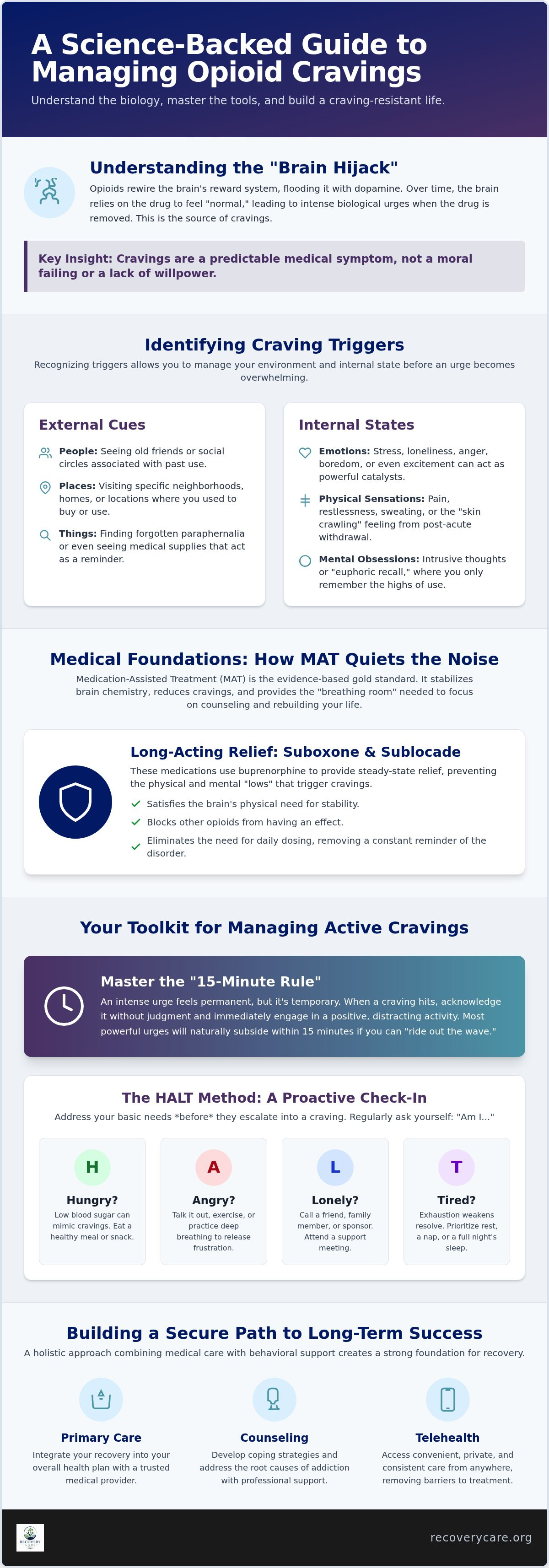
The "Brain Hijack" is a real biological event. Opioids rewire your brain's reward system by flooding it with dopamine, the chemical responsible for pleasure and motivation. Over time, your brain stops producing dopamine naturally and begins to rely on the drug to feel "normal." When the drug is removed, your dopamine pathways remain primed for that specific stimulus, leading to the persistent "noise" of cravings. Understanding this biology is the first step toward managing opioid cravings with compassion rather than shame.
The Difference Between Physical Urges and Mental Obsessions
It's helpful to separate the physical sensations of your body from the mental loops of your mind. Physical triggers often manifest as restlessness, sweating, or that distinctive "skin crawling" feeling. These are your body's way of signaling a need for chemical stability. While withdrawal is the acute phase of stopping, these lingering physical echoes can persist for weeks or months.
On the other hand, mental obsessions involve intrusive thoughts, "euphoric recall" where you only remember the highs of use while ignoring the lows, and even vivid dreams about drugs. Managing opioid cravings effectively means identifying which type you're experiencing. Physical discomfort might require medical stabilization like Suboxone, while mental obsessions often respond best to behavioral grounding techniques and counseling.
Common Triggers: People, Places, and Internal States
Your environment plays a massive role in how often cravings strike. External triggers are "cues" that your brain has linked to past use. This might include:
- Seeing old friends or social circles associated with using.
- Visiting specific neighborhoods or street corners where you used to buy or use.
- Finding forgotten paraphernalia or even seeing medical supplies.
Internal triggers are just as powerful. Stress, boredom, and physical pain can act as catalysts. Even specific emotions like loneliness or a sudden burst of anger can trigger a "cue-induced" craving. In long-term recovery, your brain remains sensitive to these associations. Recognizing these triggers early allows you to step away from the situation before the urge becomes unmanageable.
Medical Foundations: How MAT Quiets the Noise
Managing opioid cravings isn't just about willpower. It's about chemistry. Medication-Assisted Treatment (MAT) is widely recognized as the gold standard for evidence-based opioid use disorder treatments. It works by addressing the brain's physical need for opioids, allowing the "noise" of urges to quiet down so you can focus on healing. By stabilizing the reward system, these medications provide the breathing room necessary to engage in counseling and rebuild your life.
A common misconception is that MAT is "trading one addiction for another." This couldn't be further from the truth. Addiction is a chaotic, destructive cycle of misuse that impairs your ability to function. In contrast, MAT is a controlled, medical stabilization that restores your quality of life. It's a bridge to health, not a replacement for a habit. If you're curious about which path fits your life, our team can help you explore personalized MAT options that prioritize your dignity and long-term success.
Suboxone and Sublocade: Steady-State Relief
A cornerstone of modern recovery is suboxone treatment. This medication contains buprenorphine, a partial agonist that binds tightly to the brain's opioid receptors. It satisfies the physical hunger for the drug and blocks other opioids from taking effect, but it does so without producing the debilitating "high" associated with misuse. For many, the transition to a sublocade injection offers even greater freedom. Long-acting buprenorphine provides a steady level of medication in the bloodstream to prevent "lows" that trigger urges. This eliminates the daily reminder of taking a pill or film, which can be a powerful psychological trigger in itself.
Vivitrol: The Opioid Antagonist Approach
If you've already completed the detoxification process, starting vivitrol treatment might be the right path. Unlike buprenorphine, Vivitrol is an antagonist. It doesn't activate receptors at all; it simply sits on them like a shield. It's a non-narcotic option that offers immense peace of mind. Knowing that an opioid would have no effect if used can effectively "short-circuit" the craving cycle. This is often an ideal choice for those who want a monthly injectable that is completely non-addictive, providing a reliable foundation for managing opioid cravings over the long term.
How to Manage an Active Craving: A Step-by-Step Toolkit
You aren't alone if a craving catches you off guard. Even when you're on a stable path with medications like Suboxone or Sublocade, breakthrough urges can still happen. These moments don't mean your treatment is failing or that you've lost progress. Instead, they're opportunities to practice the behavioral skills that strengthen your sobriety. Managing opioid cravings becomes much easier when you view them as temporary visitors rather than permanent commands.
One of the most effective tools is the "15-Minute Rule." Think of a craving like a wave in the ocean. It starts small, builds to a peak of intensity, and then naturally breaks and subsides. Most cravings last less than 15 minutes if you don't "feed" them with attention or rumination. If you can commit to waiting just 15 minutes before taking any action, you'll often find the urge has lost its power by the time the clock runs out. While you wait, use Cognitive Behavioral Therapy (CBT) to "play the tape through." Your brain might focus on the initial relief of use, but you must intentionally visualize the rest of the story: the regret, the physical sickness, and the loss of the progress you've worked so hard to achieve.
Preparation is your best defense. Having a pre-written emergency plan for high-risk moments removes the need to make difficult decisions when you're feeling vulnerable. This plan should include a list of three supportive people you can call immediately and three activities that require your full focus, such as a specific hobby or a brisk walk in a new environment. Managing opioid cravings is about outlasting the urge with a clear, pre-set strategy.
Urge Surfing: A Mindfulness Technique
Urge surfing is a clinical technique that helps you stay present without giving in to the impulse to use. It involves three simple steps:
- Identify: Notice exactly where you feel the craving in your body. Is it a tight chest, a racing heart, or a knot in your stomach?
- Acknowledge: Name the sensation without judging it. Tell yourself, "I am experiencing a craving, and it is just a feeling."
- Focus: Use your breath as an anchor. Visualize yourself as a surfer riding the crest of the urge until it safely dissipates.
Grounding Exercises for Immediate Relief
When your mind is stuck in an obsessive loop, grounding pulls you back to the physical world. The 5-4-3-2-1 technique is a powerful way to reset: name five things you see, four you can touch, three you hear, two you smell, and one you can taste. If the urge feels overwhelming, try a physical reset. Holding an ice cube or splashing cold water on your face shocks the nervous system out of its panic state. Sometimes, simply shifting your physical environment by moving to a different room or stepping outside is enough to break a psychological trigger and restore your calm.
Building a Craving-Resistant Lifestyle
Recovery is about more than just the absence of a substance. It involves the active creation of a life where drugs no longer feel like a necessary escape. While medications provide the physical foundation, your daily habits and environment determine your long-term resilience. Managing opioid cravings is significantly easier when your body and mind aren't already depleted by stress or exhaustion.
The HALT method is a classic but vital tool for maintaining this balance. It reminds you to never get too Hungry, Angry, Lonely, or Tired. When these four basic needs are neglected, your brain's "defense system" weakens, making a passing urge feel like an emergency. By prioritizing regular meals, emotional processing, social connection, and restorative sleep, you keep your nervous system regulated. Social support acts as a critical buffer here. Isolation often breeds the intrusive thoughts that lead to relapse, while a strong network of supportive peers and professionals provides the accountability needed to stay on track.
The Role of Primary Care in Recovery
Brain recovery requires a healthy body. Many individuals struggle with managing opioid cravings because they have underlying physical issues, such as chronic pain or untreated infections, that trigger a desire to self-medicate. Routine medical care ensures these issues are managed professionally rather than through illicit use. Nutrition and sleep hygiene are also clinical priorities. A brain that is well-nourished and rested can repair its reward system much faster, allowing you to experience natural joy from "dopamine-healthy" hobbies like exercise, art, or community service. These activities slowly re-teach your brain that pleasure can be found in stable, healthy ways.
Creating a Safe Environment
Your surroundings can either support your sobriety or sabotage it. A "People, Places, and Things" audit is a practical way to identify high-risk triggers. This might mean deleting certain phone numbers, avoiding specific neighborhoods, or removing objects that remind you of past use. Setting firm boundaries with family or friends who don't respect your journey is an act of self-preservation, not unkindness. Behavioral health counseling plays a major role in this process, helping you develop the mental strength to maintain these boundaries even when it feels difficult. If you're ready to build a comprehensive plan for your health, you can schedule a primary care or counseling consultation to start your journey today.
Finding Compassionate Support with Recovery Care
You've learned the science of how your brain responds to triggers and the behavioral tools you can use to ride out an urge. You don't have to carry the weight of these challenges by yourself. Recovery Care offers a warm, non-judgmental environment where your dignity is always the priority. Led by Medical Director Dr. Heather Rosen, MD, our team provides a steady hand and expert guidance to help you navigate the complexities of managing opioid cravings. We see you as a person first, not a diagnosis. Our holistic approach ensures that both your medical and emotional needs are met under one roof, providing a sense of security as you move toward a more positive future.
Getting started with us is a simple, low-pressure process designed to lower the emotional barriers to seeking help. It begins with a quick insurance verification followed by a welcoming first consultation. During this initial meeting, we listen to your story and discuss your specific goals without any pressure or clinical coldness. We believe that a reliable partner makes the path to sobriety feel much more manageable. Our team is dedicated to providing the specialized care you need in a safe, confidential setting where you can feel truly supported.
Personalized Treatment Plans
Recovery is a deeply personal experience. There's no "one-size-fits-all" strategy for managing opioid cravings. Your brain chemistry, history, and lifestyle are unique, which is why our medical team monitors your progress closely and adjusts your treatment as you grow. This ensures your medication, whether it's Suboxone, Sublocade, or Vivitrol, provides the exact level of support you need at every stage. Recovery Care accepts Medicaid and Medicare to ensure everyone has access to life-saving craving management. This commitment to inclusivity means that high-quality medical assistance is within reach for our entire community, regardless of their financial situation.
Telehealth: Support Whenever You Need It
One of the biggest hurdles in recovery is finding help that fits into your daily life without compromising your privacy. Our telehealth consultations allow you to meet with specialists from the security of your own home. Virtual behavioral health counseling sessions are particularly effective for navigating triggers in real-time. Whether you're dealing with a sudden high-stress situation or need to talk through a difficult emotional state, our experts are just a click away. This seamless integration of care makes it easier to stay consistent with your recovery plan while maintaining your professional and personal responsibilities.
Contact Recovery Care today to discuss a personalized plan for managing opioid cravings.
Your Path to a Quieter Mind and Lasting Stability
You now understand that your urges are biological signals rather than personal failures. By combining the medical gold standard of MAT with practical behavioral techniques, you can effectively silence the noise. managing opioid cravings is a journey that requires both the right science and a compassionate support system. Whether you choose the daily stability of Suboxone or the long-acting peace of mind offered by Sublocade and Vivitrol, you're taking a brave step toward a healthier future.
Recovery Care is here to walk beside you. Led by Dr. Heather Rosen, MD, our team provides holistic, non-judgmental care through both telehealth and in-person consultations. We're dedicated to helping you build a life where you feel secure, respected, and empowered. You don't have to face these challenges alone; we're ready to provide the professional guidance you deserve. It's time to trade the weight of the past for a sense of quiet confidence and genuine hope.
Start Your Journey to a Craving-Free Life with Recovery Care and discover the difference that personalized, empathetic medical support can make in your recovery.
Frequently Asked Questions
How long do opioid cravings typically last during recovery?
Cravings often follow a specific timeline, peaking in early recovery and slowly fading as your brain heals. While the most intense physical urges may subside within weeks, psychological triggers can persist for much longer. Managing opioid cravings is a long-term process that requires patience and consistent support. Using long-acting injectables can help smooth out this process, providing a steady baseline that prevents the sudden lows that often lead to intense, intrusive thoughts.
Does Suboxone actually stop cravings or just prevent withdrawal?
Suboxone is designed to address both physical withdrawal and the mental obsession of cravings. It contains buprenorphine, which occupies the brain's opioid receptors to block other drugs while quieting the constant noise of an urge. This stabilization allows you to function normally without feeling impaired. It's a medical tool that restores balance to your reward system, making it much easier to stay focused on your personal goals and daily responsibilities.
Is it possible to manage opioid cravings without medication?
While it's possible for some, the success rate for recovery without medication is statistically lower due to the significant biological changes opioids cause in the brain. Medical support treats the chemical root of the problem, while counseling addresses the behavioral side. Most experts recommend a combined approach because it provides a stronger safety net. Treating cravings as a medical condition rather than a moral choice is often the key to achieving lasting stability.
What should I do if I have a breakthrough craving while on MAT?
First, recognize that a breakthrough urge is a medical symptom, not a personal failure. Use grounding techniques like splashing cold water on your face or practicing deep breathing to reset your nervous system. Afterward, it's important to reach out to your treatment provider. We can review your current plan and determine if an adjustment in medication or more frequent counseling sessions is needed to help you stay secure in your sobriety.
Can stress at work or home trigger a relapse even after years of sobriety?
Stress remains a powerful trigger even after years of successful recovery. Life changes, such as a high-pressure job or family conflict, can put a strain on your mental resilience. This is why maintaining a craving-resistant lifestyle is a lifelong commitment. Engaging in routine primary care and having a trusted medical partner like Recovery Care ensures that you're always prepared to handle new stressors with the right tools and professional support.
How can behavioral health counseling help me handle intrusive thoughts?
Counseling helps you identify the specific cues that lead to intrusive thoughts. By working with a professional, you'll learn behavioral techniques like Urge Surfing and CBT to deconstruct these thoughts before they gain power. This process is vital for managing opioid cravings because it empowers you to take control of your mental environment. It transforms overwhelming impulses into manageable moments, allowing you to move through your day with a greater sense of peace.
Does insurance or Medicaid cover medications for craving management?
Yes, the majority of private insurance plans, Medicaid, and Medicare cover medications like Suboxone and Vivitrol. At Recovery Care, we believe everyone deserves access to life-saving treatment. Our team handles the insurance verification process for you, ensuring you understand your coverage and any potential costs. We are committed to making your path to recovery as seamless as possible, providing you with the medical and behavioral support you need to succeed.


