
What if you could stop thinking about your recovery every single morning and instead focus on simply living your life? For many, the weight of daily medication or the constant fear of cravings feels like a second job. Starting vivitrol treatment offers a different path by providing a monthly shield that removes the daily pressure of choice. It's a steady, supportive approach to long-term sobriety that doesn't require you to remember a pill or film every few hours.
We understand that the transition period can feel overwhelming, especially the requirement to be opioid-free for 7 to 14 days. You might worry about precipitated withdrawal or wonder if you have the strength to bridge that gap. This guide is here to ease that anxiety and provide the reassurance you need. You'll discover everything you need to know about the preparation window, the benefits of a monthly injection, and how a clear, supported plan makes the transition to lasting recovery possible.
Key Takeaways
- Learn how Vivitrol acts as a physical shield by blocking opioid receptors, helping you break the cycle of daily dosing and "pill fatigue."
- Understand the critical importance of the 7-to-14 day opioid-free window when starting vivitrol treatment to ensure your safety and avoid precipitated withdrawal.
- Compare long-acting injectables like Vivitrol and Sublocade to determine which medication aligns best with your unique recovery goals and lifestyle.
- Discover how combining monthly injections with behavioral health counseling and primary care creates a comprehensive foundation for lasting wellness.
- Get a clear roadmap for your first appointment, including how to navigate insurance options like Medicaid and Medicare to cover your treatment costs.
What is Vivitrol? Understanding the Monthly Injection for Recovery
Vivitrol is a medication that changes how your brain responds to opioids and alcohol. Unlike daily medications that you have to remember every morning, Vivitrol is an extended-release injectable administered just once a month. When you're considering starting vivitrol treatment, it's helpful to think of it as a "monthly shield." For 28 days, the medication stays active in your system, providing a steady level of protection that helps you stay focused on your personal goals rather than your next dose.
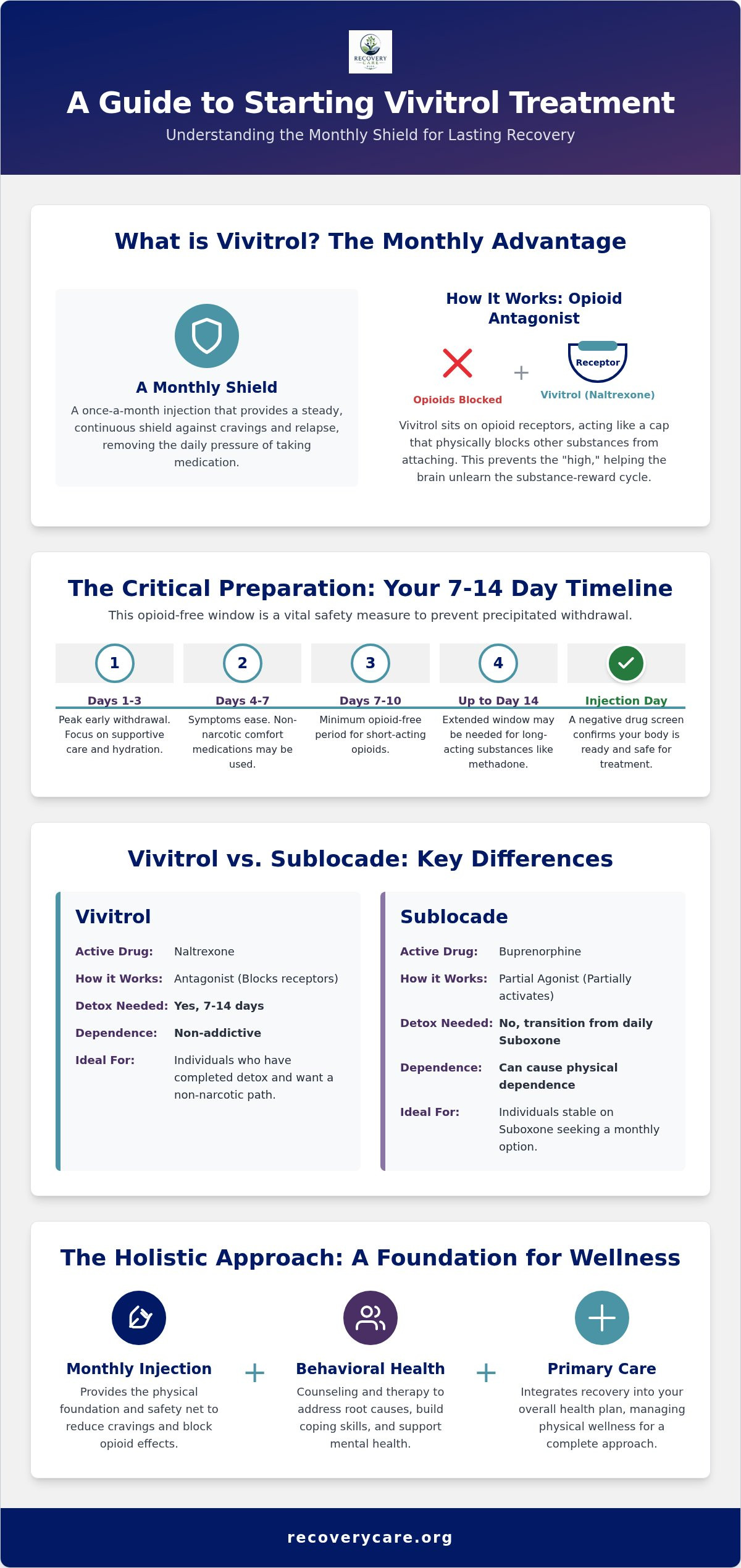
This treatment is an opioid antagonist. This means it doesn't activate your brain's receptors; instead, it sits on them like a cap on a pen, preventing other substances from getting in. This is a major shift from suboxone treatment, which is a partial agonist that helps manage withdrawal by partially activating those same receptors. Because Vivitrol doesn't produce a "high" or any physical dependence, it's often the ideal choice for individuals who have already completed detox and want a recovery path free from daily medication management.
The Science of Cravings Blockage
To understand how this works, we look at Naltrexone, the active ingredient in Vivitrol, and its relationship with the brain's mu-opioid receptors. By occupying these receptors without activating them, the medication effectively blocks the "reward" or euphoria that substances usually provide. If a person uses an opioid while on Vivitrol, they won't feel the expected effects. Over time, this blockage helps the brain unlearn the association between the substance and the pleasure it once caused, providing immense psychological relief. You don't have to fight the "to-take or not-to-take" battle every day because the choice is already made and supported by the medicine in your system.
Vivitrol for Alcohol vs. Opioid Dependence
While many people associate MAT only with opioids, Vivitrol is also FDA-approved to treat alcohol use disorder. It works similarly by reducing the urge to drink and blocking the pleasurable "buzz" that alcohol creates, which helps break the cycle of habituation. Vivitrol is a non-addictive, non-narcotic recovery tool. Whether you're recovering from alcohol or opioids, starting vivitrol treatment provides a foundation of safety, allowing you to engage more deeply in counseling and rebuild your life with confidence.
The Critical Preparation Phase: Navigating the 7-to-14 Day Window
Starting vivitrol treatment requires a period of physical patience that can feel daunting. This isn't a hurdle meant to discourage you; it's a vital safety measure. Because Vivitrol is an antagonist, it clears your receptors of any remaining opioids instantly. If you still have substances in your system, this leads to precipitated withdrawal, a sudden and severe onset of symptoms that we want to help you avoid at all costs. It's much safer to wait until your body is truly ready.
Clinical guidelines from the University of Arkansas for Medical Sciences emphasize an opioid-free duration of a minimum of 7–10 days for short-acting opioids. If you're transitioning from longer-acting substances like methadone or buprenorphine, this window may extend to 14 days. This time allows your body to naturally process out substances so the injection can provide a smooth, safe start to your recovery journey.
Step-by-Step Transition Timeline
The first 72 hours are often the most physically taxing as early withdrawal symptoms peak. During this time, we focus on supportive care and hydration to keep you as comfortable as possible. From days 4 to 7, many patients find relief using non-narcotic comfort medications that manage specific symptoms like restlessness or sleep disturbances without interfering with the upcoming injection. In the final 48 hours before your shot, the focus shifts to verification. A negative drug screen is a standard and necessary step to ensure your system is clear. This isn't a test of your willpower; it's a medical confirmation that your body is ready for the monthly shield to take over.
Overcoming the Anxiety of the Wait
It's natural to feel anxious about this gap. Instead of viewing it as a period of suffering, try reframing these days as a "clean slate" for your brain. This is the moment your receptors begin to reset, preparing for a life where they aren't constantly stimulated by outside substances. Staying busy is one of the best ways to manage the wait. Simple routines, like light walks, reading, or connecting with a supportive friend, can help pass the time. Our team at Recovery Care is here to guide you through every hour of this bridge, ensuring you never feel like you're navigating the transition alone. Having a compassionate clinical team by your side turns a difficult week into a manageable first step toward freedom.
Vivitrol vs. Sublocade: Comparing Long-Acting Injectables
Choosing the right path for your recovery is a deeply personal decision, and today's medical advancements offer more flexibility than ever. When you're considering the sublocade injection versus Vivitrol, you're looking at two different ways to achieve the same goal: long-term stability. Comparing Vivitrol and Sublocade reveals that while both are monthly shots, they interact with your brain in unique ways. Vivitrol is an antagonist that blocks receptors completely, whereas Sublocade is a partial agonist that provides a steady level of buprenorphine to manage withdrawal symptoms.
The preparation for each is quite different. As we've explored, starting vivitrol treatment requires a 7-to-14 day opioid-free window to ensure your safety. Sublocade, however, usually begins after you've stabilized on daily oral buprenorphine for at least seven days. From a lifestyle perspective, both options provide incredible freedom. You don't have to worry about carrying medication through airport security or remembering a dose during a busy work shift. Regarding finances, most patients find that insurance, including Medicaid and Medicare, provides significant coverage. You can explore more about the cost of sublocade injection with insurance to see how it compares to your specific Vivitrol benefits.
Which Injection Fits Your Recovery Goals?
If your goal is a non-narcotic path where you're completely free from any opioid-based medication, Vivitrol is often the preferred choice. It's an excellent fit for those who have already navigated the detox phase and want a "shield" against relapse. On the other hand, Sublocade might be better if you're worried about the 10-day waiting period or if you've found success with daily Suboxone but want to move away from the ritual of daily dosing. A consultation with a medical professional is the best way to determine which clinical profile matches your history and long-term objectives.
The Reality of the Injection Process
The Vivitrol shot is a gluteal injection administered by a healthcare professional in a clinical setting. It's a quick procedure, though you might feel some minor site soreness or a bit of fatigue for a day or two afterward. Because these are specialized, extended-release formulas, they must be administered in a clinic to ensure safety and proper dosing. This clinical environment also gives you a monthly chance to check in with your care team. These visits are a safe space to discuss your progress, manage any side effects, and adjust your support plan as you continue starting vivitrol treatment and moving toward a healthier future.
The Holistic Approach: Counseling and Primary Care Integration
While the monthly injection provides a vital physical safeguard, medication is rarely the complete answer to a complex challenge like addiction. True recovery involves more than just blocking a receptor; it requires rebuilding your life from the ground up. By integrating behavioral health counseling and primary care into your plan, you address the root causes of substance use while ensuring your body heals alongside your mind. This comprehensive strategy ensures that the stability you gain from starting vivitrol treatment becomes a permanent fixture in your life.
The synergy between Vivitrol and counseling is powerful. Because the medication reduces the constant noise of cravings, you finally have the mental space to engage in deep, meaningful therapeutic work. Instead of spending your energy fighting the urge to use, you can focus on learning new coping mechanisms and healing past wounds. Our integrated approach includes several key services:
- Routine Physicals: To monitor your baseline health and track your physical progress over time.
- Diagnostic Testing: To identify any nutritional deficiencies or underlying medical conditions that need attention.
- Behavioral Health Counseling: To provide the emotional tools and support systems needed for lasting change.
This ensures that any underlying medical issues are addressed promptly, giving you the best possible chance at long-term wellness. When you focus on the whole person, you aren't just treating a symptom; you're investing in your entire future.
Healing the Mind and Body Simultaneously
Finding the right therapeutic environment is a key part of the process. Whether you prefer the privacy of individual counseling or the shared experience of group therapy, having a community of support makes a world of difference. These sessions allow you to use the clarity provided by Vivitrol to explore the "why" behind your addiction. Holistic recovery is the purposeful combination of medical treatment, mental health support, and physical wellness to create a sustainable foundation for life. When these elements work together, you aren't just surviving; you're thriving.
The Importance of Continued Medical Oversight
Regular medical check-ups are a non-negotiable part of a safe recovery journey. Since naltrexone is processed through the liver, your care team will monitor your liver function through simple blood tests to ensure the medication remains safe for your body. As you reach new milestones, your "compassionate authority"—your medical provider—will help you adjust your recovery plan to fit your evolving needs. This ongoing oversight provides a safety net, allowing for professional guidance as you navigate the transitions of early sobriety. If you're ready to build a recovery plan that looks at the whole you, contact our team at Recovery Care to start your comprehensive journey today.
Starting Your Journey: What to Expect at Your First Appointment
Taking the first step toward recovery is often the hardest part of the process, but you don't have to do it alone. When you're considering starting vivitrol treatment, your first appointment is designed to be a foundation for your future. It's a safe, non-judgmental space where we focus on your history and your goals. We understand the courage it takes to walk through our doors, and our team is committed to treating you with the dignity and respect you deserve from the very first moment.
Your First Visit: A Roadmap
Your initial consultation is a comprehensive medical evaluation. It's a conversation, not an interrogation. During this time, our medical team will review your health history, conduct necessary lab work, and perform a screening to ensure your system is clear of opioids. This is also when we begin developing your personalized behavioral health plan. We believe that medication works best when it's paired with a strategy that fits your life. Your privacy is our highest priority; every discussion and test result is handled with strict confidentiality.
Setting realistic expectations for the coming months helps you stay motivated. Here is what the typical progression looks like:
- The First 30 Days: You'll focus on the physical transition and establishing a routine with your counselor while the "monthly shield" begins its work.
- The 60-Day Mark: As the blockade remains steady, the physical habit of substance use begins to fade. You'll likely notice more mental energy for your hobbies and relationships.
- At 90 Days and Beyond: Most patients report a significant increase in self-confidence and clarity. This is the period where deep therapeutic work often yields the most growth.
Insurance and Accessibility
We believe that high-quality recovery care should be accessible to everyone who needs it. Navigating the logistics of starting vivitrol treatment can feel overwhelming, so our team handles the heavy lifting for you. We assist with prior authorizations and work directly with your provider to verify coverage. Our clinic proudly accepts most major insurances, including Medicaid and Medicare, ensuring that cost isn't a barrier to your health. We're here to answer your questions and provide the steady guidance you need to move forward. If you're ready to reclaim your time and your life, schedule your confidential consultation today to begin your screening process.
Reclaiming Your Future with Monthly Support
Choosing a recovery path is a courageous decision that deserves the highest level of compassionate support. By understanding the science of the monthly shield and respecting the critical 7 to 14 day preparation window, you're setting a strong foundation for your wellness. This medication is most effective when it's part of a whole-person approach that includes behavioral health counseling and dedicated primary care. Starting vivitrol treatment means you no longer have to face daily "pill fatigue" or the constant pressure of making a choice every morning. Instead, you can focus on building a life that feels consistent, secure, and full of possibility.
At Recovery Care, our expert team led by Dr. Heather Rosen, MD, is here to provide integrated medical and behavioral health support in a non-judgmental environment. We accept most major insurance plans, including Medicare and Medicaid, to ensure your path to recovery is accessible. Start your journey toward lasting recovery with a confidential Vivitrol consultation today. You have the strength to begin this new chapter, and we're ready to walk beside you every step of the way.
Frequently Asked Questions
Can I start Vivitrol if I still have opioids in my system?
No, you must be completely free of all opioids before your first injection. Because Vivitrol is an antagonist, it will immediately displace any remaining substances from your brain's receptors. This causes a severe and sudden onset of withdrawal symptoms known as precipitated withdrawal. To ensure your safety and comfort while starting vivitrol treatment, a supervised 7 to 14 day opioid-free window is a mandatory requirement that we verify through diagnostic testing.
How long do I have to wait after my last dose of Suboxone to start Vivitrol?
You typically need to wait at least 14 days after your last dose of Suboxone before you can safely receive Vivitrol. Since Suboxone contains buprenorphine, which is a long-acting medication, it stays in your system much longer than short-acting opioids. Transitioning too soon can lead to intense physical distress. Our clinical team at Recovery Care will help you manage this transition period with a personalized plan that prioritizes your comfort.
Will Vivitrol help with my alcohol cravings as well as opioids?
Yes, Vivitrol is FDA-approved to treat both alcohol use disorder and opioid use disorder. It works by blocking the endorphin receptors in your brain that produce a sense of reward or euphoria when you drink. By removing this pleasurable "buzz," the medication helps break the cycle of habituation and significantly reduces the frequency of cravings. This makes it an excellent tool for individuals seeking a non-addictive path to long-term sobriety.
What happens if I miss my monthly Vivitrol injection date?
If you miss your injection, the protective "shield" in your system will gradually fade, and your cravings may begin to return. It is important to contact your provider immediately to get back on schedule. While a short delay isn't an emergency, staying consistent is the best way to maintain your recovery momentum. We offer flexible scheduling to help you stay on track and ensure your protection remains uninterrupted throughout your journey.
Does insurance, including Medicaid and Medicare, typically cover Vivitrol?
Yes, Vivitrol is widely covered by most major insurance plans, including Medicaid and Medicare. At Recovery Care, we understand that navigating insurance logistics can be stressful, so our team handles the prior authorization process for you. We're committed to making medication-assisted treatment accessible and affordable. We'll work directly with your insurance provider to verify your benefits and minimize any out-of-pocket costs so you can focus entirely on your healing.
Can I get the Vivitrol injection if I am pregnant or breastfeeding?
You should have a detailed consultation with your medical provider if you are pregnant or breastfeeding. While every patient's situation is unique, other forms of medication-assisted treatment are often preferred during pregnancy. Our team, led by Dr. Heather Rosen, will evaluate your specific medical history and recovery goals to determine the safest path for both you and your baby. We prioritize evidence-based care to ensure the health of your entire family.
Are there common side effects I should watch for during the first week?
Some patients notice mild side effects when starting vivitrol treatment, such as site soreness, fatigue, or slight nausea. These symptoms are generally temporary and tend to resolve as your body adjusts to the medication. It's also important to watch for any unusual skin reactions at the injection site or persistent changes in your mood. Our clinical team is always available to discuss your concerns and ensure that your treatment remains a comfortable experience.
How long does a typical course of Vivitrol treatment last?
The length of your treatment depends on your individual needs and long-term recovery goals. Many patients choose to stay on Vivitrol for 6 to 12 months, as this provides a stable environment to engage in counseling and rebuild healthy habits. You'll work closely with your care team to review your progress at each monthly appointment. We don't rush the process; instead, we adjust your plan based on your milestones and personal confidence.


