
Learning how to taper off Suboxone successfully starts with knowing that you don’t have to taper until you feel ready. Choosing to reduce or stop medication is a personal decision, not a test of commitment to recovery. Continuing treatment can be the right choice, too.
If you’re unsure when to taper, worried about withdrawal or cravings, or feeling pressured to stop, bring those concerns to your clinician. Stopping suddenly or changing your dose without medical guidance can make the process harder and put your stability at risk. You deserve a plan shaped around your health, goals, and how you’re feeling, without judgment.
This guide explains what a Suboxone taper may involve, what to discuss with your clinician, and how to prepare for a supported plan. You’ll learn why tapering is individualized, how to talk about symptoms and recovery supports, and why a plan can be adjusted if your needs change. Whether you decide to taper or continue treatment, you can make that choice with care and support.
Key Takeaways
- Learn why how to taper off suboxone successfully depends on a gradual, clinician-guided approach rather than a one-size-fits-all schedule.
- Understand that withdrawal discomfort, cravings, sleep changes, and mood changes can vary from person to person.
- Know that stopping medication isn’t a measure of recovery and that dose changes should be discussed with your prescriber.
- Use an appointment checklist to organize your goals, concerns, health updates, and recovery supports before discussing a taper.
- See how medical management and individualized behavioral health counseling can support your treatment decisions, whether you taper or continue medication.
How to taper off Suboxone successfully starts with the right decision
Considering a Suboxone taper can bring hope, uncertainty, and fear of what might change. You don’t have to rush into a decision. Tapering means gradually reducing medication with guidance from your clinician, rather than stopping suddenly or adjusting your dose on your own. Suboxone, a combination of buprenorphine and naloxone, is used in treatment for opioid use disorder; this overview of buprenorphine/naloxone provides background on the medication.
There’s no single endpoint that defines recovery. Staying on Suboxone may continue to support your health and stability, and it doesn’t mean you’ve failed to progress. A taper is a personal treatment choice, not a required achievement or proof of commitment.
Is tapering off Suboxone the right goal for everyone?
No. Treatment goals differ and can change as your health, circumstances, and priorities evolve. Consider whether you’re thinking about tapering because it feels right for you or because of pressure, stigma, or someone else’s expectations. Either way, your concerns deserve a respectful conversation.
Talk with your treating clinician about what you hope might change, what worries you, and what alternatives could support your goals. Together, you can weigh the potential benefits and challenges of continuing treatment or discussing a taper based on your individual situation.
What does a successful Suboxone taper mean?
A successful taper is a safe, individualized process that reflects your goals, protects your health and stability, and includes continued support. It isn’t simply reaching zero medication by a particular date. A thoughtful plan leaves room to check in about how you’re doing and make decisions together.
If the process doesn’t feel manageable, pausing, slowing down, or reconsidering the plan can be part of shared decision-making. Those conversations aren’t a setback; they help keep your care responsive to your needs. For broader context on treatment options and ongoing care, read the Suboxone treatment guide.
Understanding how to taper off suboxone successfully starts with an informed decision you make freely. You can bring questions to your clinician without committing to a change. The right next step may be exploring a taper, continuing medication, or taking more time to decide.
What can happen during a Suboxone taper: symptoms, cravings, and support
Your experience during a taper may differ from someone else’s. Some people notice withdrawal discomfort, cravings, changes in sleep, or shifts in mood; others may have different symptoms or find that changes emerge gradually. There’s no reliable calendar that predicts exactly how you’ll feel. Taper timing and response vary from person to person, so a clinician should guide the pace and help interpret changes in light of your health and recovery.
Monitoring your wellbeing matters more than sticking to a preset timetable. Your clinician can consider your symptoms, daily functioning, and recovery stability when discussing the plan. SAMHSA describes buprenorphine as part of a comprehensive treatment plan, which may include counseling and other supports alongside medication.
Which changes should you report during a taper?
Tell your clinician about new or worsening withdrawal symptoms, cravings, sleep difficulties, or mood changes. You don’t need to know what a symptom means before bringing it up. Note when it started, how it affects your day, and whether anything else has changed in your health or circumstances.
Brief notes between appointments can help you remember details and ask focused questions. Record what you’re experiencing, when it occurs, and what you want your clinician to know. Use your notes to support a conversation, not to diagnose yourself or change your medication without your prescriber’s guidance.
Why can cravings or relapse concerns return?
Opioid use disorder can involve ongoing vulnerability, and recovery needs may shift over time. Cravings or concern about returning to opioid use are important to discuss, not a reason for shame. If opioid use resumes after a period without it, reduced tolerance can increase overdose danger. Ask your care team about naloxone access and a practical overdose-response plan, including what people close to you should know.
These conversations help plan support; they don’t predict what will happen to you. If you’re exploring how to taper off suboxone successfully, keep your clinician informed about physical symptoms and how steady you feel in recovery. Medical management and behavioral health counseling can help keep your goals and support needs in view as you discuss your care.
To learn about treatment and support, visit Recovery Care’s Suboxone treatment.
Common Suboxone taper concerns: stopping suddenly, relapse, and stigma
Stopping Suboxone isn’t proof of recovery, and recovery doesn’t require stopping it. Medication can remain a meaningful part of care for as long as it supports a person’s health and goals. If you’re considering a change, your reasons matter, as does planning for continued medical support and monitoring.
Don’t stop or change your prescribed Suboxone without guidance from your prescriber. Abrupt changes can bring withdrawal symptoms or cravings. Your clinician can help you discuss these concerns and maintain continuity of treatment. The right approach depends on your circumstances, not pressure to meet someone else’s expectations.
Is it safe to stop Suboxone suddenly?
Stopping suddenly without consulting your prescriber isn’t a safe substitute for a planned decision. Contact your treating clinician before making any change. They can review your concerns, discuss possible withdrawal or cravings, and help you consider what support and follow-up may be appropriate. If you’ve already stopped or missed doses, let your clinician know rather than trying to create a medication plan on your own.
Does staying on Suboxone mean you have not recovered?
No. Shame about medication can make it harder to talk openly, but taking prescribed treatment doesn’t invalidate your recovery. Treatment duration and goals are individual clinical decisions. Some people may want to explore tapering; others may choose to continue medication. Neither choice should be treated as a universal measure of success. Counseling can complement medication and offer space to work through recovery goals; see this guide to opioid addiction counseling guidance.
| Consideration | Clinician-guided taper | Continued treatment |
|---|---|---|
| Focus | Explore whether reducing medication fits your goals, with clinical guidance and monitoring. | Continue medication management if it remains part of your recovery plan. |
| Support | Discuss changes in wellbeing and revisit the plan with your clinician. | Continue follow-up and discuss how treatment is working for you. |
| Best fit | A possible option when you and your clinician agree it’s appropriate to consider. | A valid choice when ongoing medication supports your health and stability. |
This comparison doesn’t recommend one path over another. Learning how to taper off suboxone successfully starts with an informed conversation, not a deadline. Discuss benefits, concerns, and alternatives with your prescriber, then make a decision together that respects your recovery.
How to prepare for a clinician-guided Suboxone taper
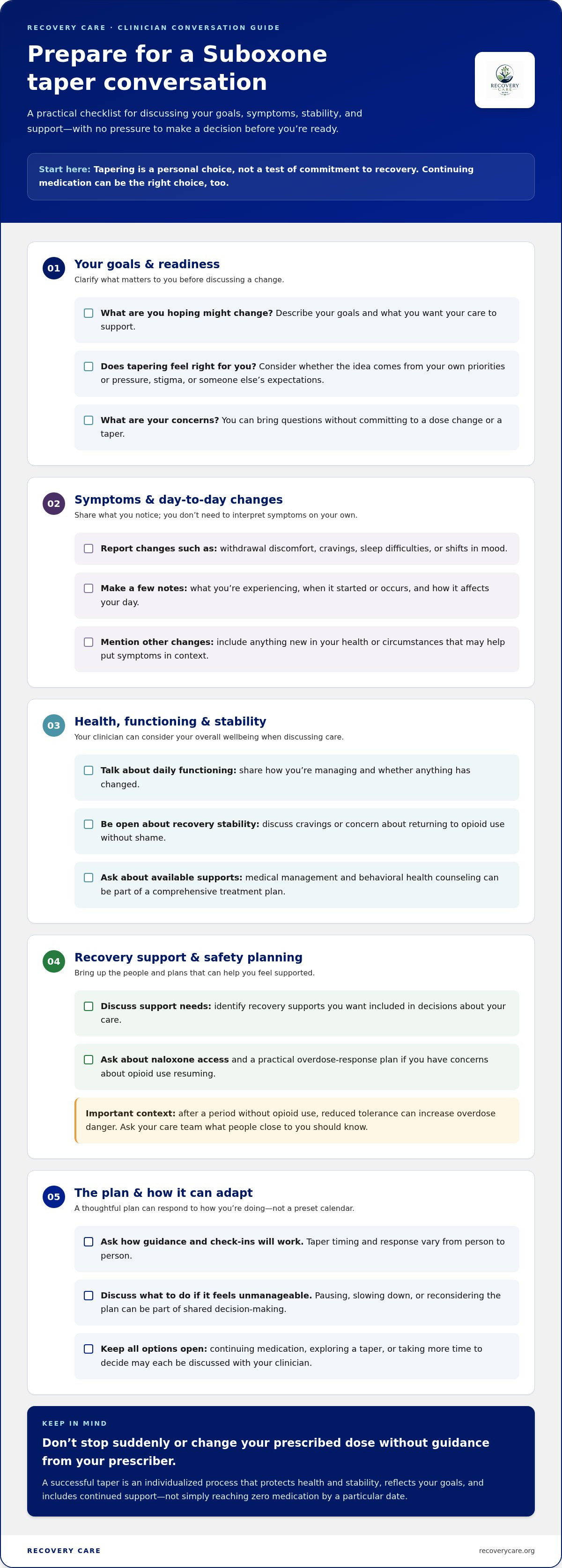
Preparation isn’t about designing a dose schedule yourself. It’s about giving your clinician a clear picture of your goals, health, concerns, and daily support so you can discuss whether a taper is appropriate and what follow-up may look like. Your clinician, not an article or checklist, determines whether and how to make medication changes.
What should you discuss with your Suboxone clinician?
Before your appointment, jot down what’s prompting you to consider a taper and what a good outcome would mean to you. Bring your notes even if you’re unsure about your decision. They can help you have an open, practical conversation.
Use this checklist to organize the discussion:
- Your goals and concerns: What do you hope might change? What feels uncertain or worrying?
- Your treatment history: What has helped, and what challenges have you experienced during treatment?
- Your current health: Share symptoms, changes in mood or sleep, other medications, and relevant health or life changes.
- Your recovery supports: Discuss counseling, trusted support people, and routines that help you feel grounded.
- Follow-up and next steps: Ask how often you’ll check in, what symptoms or concerns to track, and how to reach your care team if something changes.
- Flexibility: Ask how the plan could be revisited if symptoms increase or your circumstances shift.
Bring questions, not a self-directed schedule. A clinician can consider your circumstances and explain options for ongoing medication management and follow-up.
How can counseling and daily support help?
Behavioral health counseling can offer a confidential place to work through emotional concerns, strengthen coping strategies, and explore what supports your recovery. You can also plan practical routines, such as keeping regular appointments or deciding who you’d feel comfortable contacting for encouragement. Sharing your plans with someone is your choice; support should respect your privacy and preferences.
Recovery Care offers behavioral health counseling, medical management, and telehealth consultations, as well as in-person care. These services can support discussions about your treatment goals and ongoing care.
Use these steps to prepare for a conversation, not to decide on medication changes alone. For support with your Suboxone treatment goals, connect with Recovery Care.
Find compassionate support for your Suboxone treatment decisions
Deciding whether to continue Suboxone or discuss a taper can bring up personal questions about health, recovery, and what feels manageable. You don’t have to sort through them alone. Outpatient medical management gives you space to talk openly about your treatment goals, review your medication, and consider next steps with a clinician. Learning how to taper off suboxone successfully doesn’t mean committing to a taper; it means making informed decisions with appropriate support.
What support can Recovery Care provide?
Recovery Care provides outpatient Suboxone treatment and medication management in a compassionate, nonjudgmental setting. Care is led by Medical Director Dr. Heather Rosen, MD. Conversations can focus on your questions, current treatment, and goals, without assuming tapering is the right choice for everyone.
Behavioral health counseling is available alongside medical care. Counseling can offer individualized support for emotional wellbeing, coping strategies, and recovery goals, while medical management addresses medication-related discussions. Together, these services support a holistic approach to recovery.
Recovery Care offers in-person care and telehealth consultations. Most major insurance plans, Medicare, and Medicaid are accepted. Coverage and individual benefits vary by plan, so acceptance doesn’t guarantee that a particular service will be covered.
What is a gentle next step?
Start with a conversation. Share what’s prompting your questions, what you hope treatment will support, and any concerns you’d like to discuss. You don’t need to arrive with a decision already made. Your clinician can talk through your options and help you consider what fits your circumstances, including whether to continue treatment or discuss a possible taper.
Telehealth consultations are available if meeting in person is difficult. The care team can help you talk through your goals and questions, while keeping medication decisions grounded in clinical guidance. You don’t need to choose a particular path before you feel ready to have that conversation.
Whether you’re exploring a change or want support with your current Suboxone treatment, Recovery Care can help you discuss your needs with the care team. Your recovery goals deserve to be heard and treated with respect.
Choose a next step that respects your recovery
Learning how to taper off suboxone successfully starts with a personal, clinician-guided decision, not pressure to stop. A gradual plan, if appropriate, should respond to your health and goals. Continuing treatment is also a valid choice, and discussing concerns or adjusting course with your clinician can be part of thoughtful care.
Recovery Care provides outpatient Suboxone treatment, medication management, and behavioral health counseling. Care is led by Medical Director Dr. Heather Rosen, MD, with in-person care and telehealth consultations available. Most major insurance plans, Medicare, and Medicaid are accepted; coverage varies by plan.
You don’t need every answer before reaching out. Talk with Recovery Care about your treatment goals and share the questions you’d like to discuss. Whatever your next step, you deserve care that listens and supports your recovery.
Frequently Asked Questions
Can you taper off Suboxone successfully?
Yes, some people taper off Suboxone successfully with a plan guided by their clinician, but tapering isn’t right or necessary for everyone. A successful process is individualized and prioritizes health, recovery stability, and continued support, rather than reaching a particular dose by a deadline. If you’re considering how to taper off suboxone successfully, discuss your goals and concerns with your prescriber before making any medication changes.
How long does it take to taper off Suboxone?
There’s no standard timeline for tapering off Suboxone. The process may take months or longer than a year, depending on individual factors such as treatment history, health, response to dose changes, and recovery needs. Your clinician can discuss whether a taper is appropriate and how to monitor your wellbeing. Don’t use a schedule from an article as a personal dosing plan or change your medication without your prescriber’s guidance.
Is it safe to stop taking Suboxone suddenly?
Don’t stop taking or change your prescribed Suboxone suddenly without speaking with your prescriber. An abrupt change may bring withdrawal discomfort or cravings, and your clinician can help you consider the safest next steps for your situation. If you’ve already stopped or missed doses, tell your care team what happened. Avoid trying to restart, reduce, or otherwise adjust your medication based on general online advice.
What happens if withdrawal symptoms return during a Suboxone taper?
Contact your prescriber if withdrawal symptoms return or worsen during a taper. Symptoms and their intensity vary, so your clinician can help assess what you’re experiencing and discuss whether the care plan needs to be reconsidered. Keep notes about when symptoms occur, how they affect your day, and any changes in sleep, mood, or cravings. Don’t make dose changes on your own, even if symptoms feel familiar.
Can you stay on Suboxone long term?
Yes. Continuing Suboxone can be a valid part of recovery for as long as you and your clinician determine it supports your health and treatment goals. There’s no requirement to stop medication to prove recovery, and treatment duration is an individual clinical decision. Regular follow-up lets you discuss how treatment is working and whether your needs have changed. You can revisit your goals over time without pressure to choose a particular endpoint.
Does tapering off Suboxone increase overdose risk?
Overdose risk can increase if opioid use resumes after a period of reduced use because tolerance may be lower. This is a potential safety concern, not a prediction of what will happen to you. Discuss relapse concerns with your care team before and during any taper conversation. Ask about naloxone access and an overdose-response plan, including how people you trust can recognize an overdose and respond.
Can counseling help while tapering off Suboxone?
Yes. Counseling can complement medical care by helping you strengthen coping strategies, talk through emotional concerns, and identify supports that fit your recovery goals. It doesn’t replace medication management or determine whether a taper is appropriate. Behavioral health counseling can be part of individualized outpatient care, whether you’re considering a medication change or continuing treatment. Discuss with your clinician how counseling and medical follow-up can work together for your needs. Connect with Recovery Care to discuss your Suboxone treatment goals.


