
What if the safest Suboxone tapering schedule isn’t a fixed calendar? Online plans can make it seem as though everyone should reduce their dose at the same pace. It’s understandable to wonder what’s right for you, especially if you’re concerned about withdrawal, cravings, or losing hard-won progress.
A taper is an individualized medical process, not a test of willpower. Your dose, treatment history, symptoms, overall stability, and goals can all shape whether and when a change makes sense. Continuing Suboxone may also remain the right choice. Discussing a taper doesn’t commit you to stopping.
This guide explains why there’s no universal schedule, what a clinician may consider when discussing dose changes, and which symptoms or life changes to report. You’ll also find practical questions to bring to your prescriber, so you can talk through continuing, adjusting, or tapering treatment with support. Recovery Care offers medical management and behavioral health counseling to support these conversations as part of ongoing care.
Key Takeaways
- A suboxone tapering schedule is guided by a prescriber and tailored to the person, not set by a universal calendar.
- Your stability, treatment history, symptoms, goals, and support can all inform a conversation about whether a treatment change makes sense.
- Withdrawal symptoms or cravings may arise during a taper, but experiences vary. Tapering isn’t required to demonstrate recovery.
- Prepare for your appointment by noting your goals, concerns, symptoms, medications, and support needs. Don’t change your dose on your own.
- Medical management and behavioral health counseling can support an open discussion about continuing, adjusting, or tapering Suboxone.
What does a Suboxone tapering schedule mean?
Wanting to understand tapering doesn’t mean you’ve decided to stop Suboxone. You can ask questions, talk through your goals, and consider your options without committing to a change. For some people, continuing medication remains an appropriate part of recovery. Treatment duration is an individual clinical decision, not a deadline.
Suboxone combines buprenorphine and naloxone. Buprenorphine helps treat opioid use disorder, while naloxone is included in the medication formulation. Read more about the components in this overview of Buprenorphine/naloxone (Suboxone). If tapering becomes a goal, a prescriber can discuss whether gradual medication adjustments fit your circumstances and how to monitor your well-being.
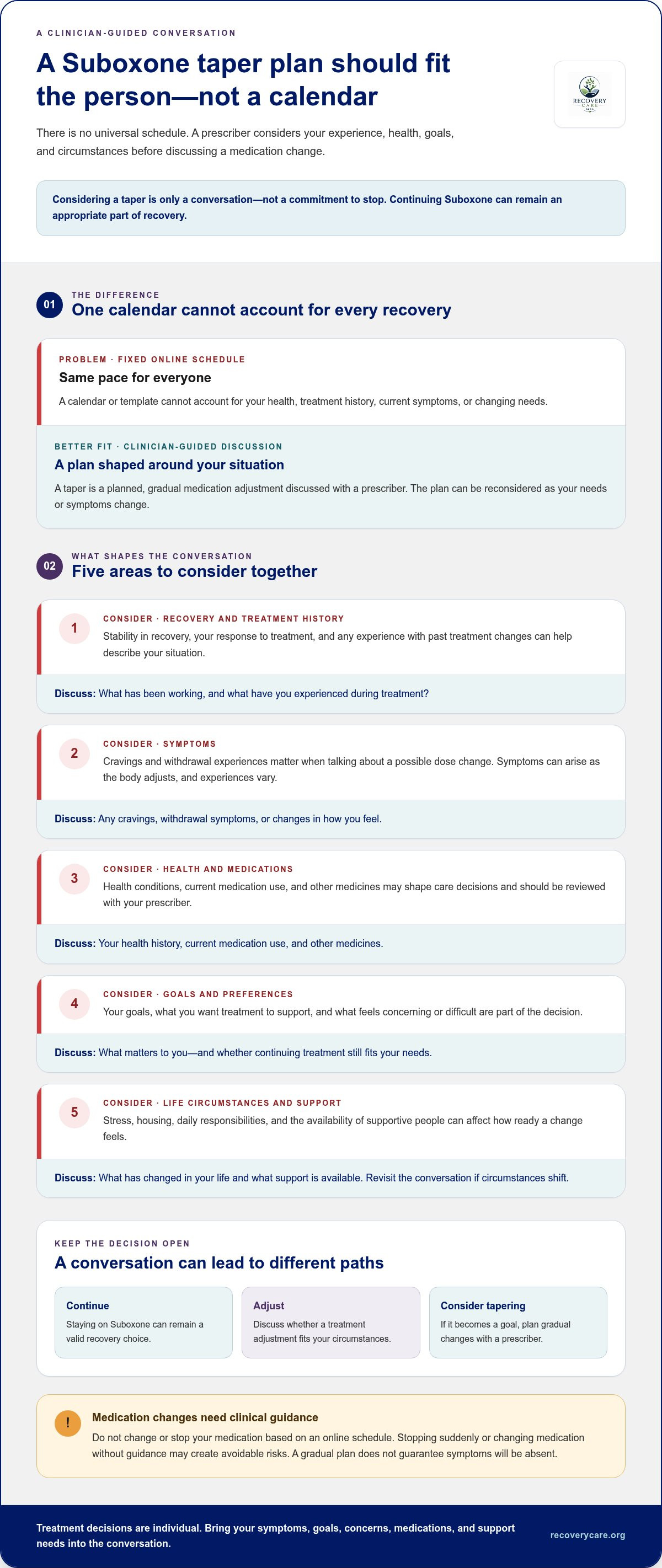
No single Suboxone tapering schedule suits everyone. A calendar found online can’t account for your health, treatment history, current symptoms, or changing needs. A clinician-guided plan takes shape through discussion and follow-up, rather than by applying the same timeline to every person.
What is a Suboxone taper, in plain language?
A taper is a planned, gradual medication adjustment discussed with a prescriber. The plan may be reconsidered as your needs or symptoms change. It isn’t the same as stopping suddenly, and an online template can’t replace clinical guidance. Don’t change or stop your medication based on a schedule you find online. Talk with your prescriber before making any medication changes.
Why might someone consider changing or stopping treatment?
People may have questions because their goals, health, or life circumstances have shifted. That’s a reason to start a conversation, not proof that tapering is necessary or the right next step. You can discuss what matters to you, including the benefits and concerns you associate with treatment, while keeping the decision open. Continuing Suboxone can remain a valid recovery choice.
Readiness isn’t determined by a calendar alone. Your prescriber can help you consider the full picture, answer questions, and talk through possible paths, including staying on your current treatment. You can explore those options at your own pace.
What determines an individualized Suboxone tapering schedule?
A prescriber doesn’t choose a taper timeline based on one detail or a standard formula. The discussion considers your overall clinical picture, including how you’re doing in recovery, what you’ve experienced during treatment, and what you hope to achieve. A change in dose may need to be reconsidered if your health, stress, or support needs shift.
Taper timing is individualized because each person’s health, treatment history, symptoms, goals, and circumstances are different. There’s no universal duration that accounts for all of these factors. A conversation about timing is a chance to weigh potential benefits and concerns together, not a commitment to begin tapering.
Which personal and treatment factors can affect the plan?
Your prescriber may ask about stability in recovery, cravings, withdrawal experiences, and how you’ve responded to past treatment changes. These details help describe your experience, but they don’t determine a plan on their own. Your preferences matter too, including what you want treatment to support and what feels concerning or difficult.
Practical circumstances can also be part of the picture. Stress, changes in housing or daily responsibilities, and the availability of supportive people may affect how ready a change feels. Other health conditions and medications should also be reviewed, since they may shape care decisions. If your circumstances change, tell your clinician so you can revisit the discussion.
What should a prescriber assess before discussing tapering?
A useful conversation may include your current medication use, symptoms, health history, other medicines, recovery goals, and available support. You and your prescriber can discuss what’s working, what concerns you, and whether continuing treatment or considering a change better fits your needs. Sharing past difficulties or uncertainty is helpful, not a reason for judgment.
SAMHSA offers background on buprenorphine and its role in treatment, which can support a conversation about a clinician-guided Suboxone taper. Any clinical guidance used to shape a specific plan should be reviewed by a qualified medical professional. For broader medication context, see this Suboxone treatment and recovery guide.
Recovery Care provides outpatient medication-assisted treatment, medical management, and behavioral health counseling. These services can support a conversation about your treatment goals without committing you to taper. Learn about Recovery Care treatment options.
Does tapering Suboxone cause withdrawal or increase relapse risk?
Withdrawal symptoms or cravings can happen as the body adjusts to a lower amount of medication, but people’s experiences vary. A gradual, clinician-guided plan doesn’t guarantee that symptoms will be absent, and symptoms don’t automatically mean a taper has failed. Tapering isn’t required to prove recovery. Continuing Suboxone can remain a valid treatment choice.
Stopping suddenly or changing your medication without guidance may create avoidable risks. If opioid use resumes after a period of treatment, tolerance may have decreased, raising the risk of overdose. This possibility is a reason for thoughtful planning and an open conversation with your care team, not a reason to feel ashamed or assume relapse will happen. An online suboxone tapering schedule can’t account for how you respond or what support you may need.
What symptoms or changes should someone report?
Tell your prescriber about symptoms or changes that appear during a dose adjustment, including body aches, sweating, restlessness, stomach upset, sleep disruption, anxiety, or cravings. Share mood changes too, and mention if daily routines or responsibilities are becoming harder to manage. Notes about when a symptom started and how it affects your day can help you describe what’s happening. Your care team can assess your experience and discuss next steps. Don’t try to diagnose the cause yourself or change your medication without speaking with your prescriber.
What if tapering feels difficult or recovery goals change?
Let your prescriber know if symptoms, cravings, or concerns make the plan feel difficult. You can revisit the discussion together and consider whether continuing treatment or adjusting the approach better fits your current needs. You’re not locked into a decision, and pausing a taper discussion or choosing to remain on treatment isn’t a failure.
It may also help to discuss overdose-prevention planning, including whether naloxone should be part of your safety plan and how people close to you can respond in an emergency. The American Society of Addiction Medicine’s guidance recognizes overdose risk after treatment discontinuation and return to opioid use. Your clinician can help make that information relevant to your circumstances. Asking for support early is a practical step toward protecting your recovery.
How can you prepare for a clinician-guided Suboxone taper?
A little preparation can help you explain what matters and leave room for a thoughtful conversation. It doesn’t mean you’ve decided to taper, and it shouldn’t involve changing your medication on your own. Preparation helps make taper discussions clearer, not predetermined.
What should you bring up at the appointment?
Use these prompts to organize your thoughts before meeting with your prescriber. You can bring notes or use them to remember what you want to discuss:
- Your goals and concerns: What has led you to ask about tapering? What feels uncertain or important to protect?
- Your recent experience: Note cravings, withdrawal experiences, mood or sleep changes, stressors, and any effect on daily routines.
- Your current medications and health: Bring an up-to-date medication list and share relevant health changes.
- Your support needs: Describe the people, counseling, or other recovery supports that are helpful, and where you may need more support.
- Your questions: Ask about potential benefits and risks, alternatives such as continuing treatment, symptoms to report, and how to reach the care team with concerns.
Be candid, even if you’re unsure how to describe a symptom or worry. Your prescriber can use that information to discuss options with you. You may decide that continuing Suboxone is the best fit for now, and that’s a valid outcome of the conversation.
How should follow-up and support fit into the plan?
If you and your prescriber decide a change is appropriate, discuss how follow-up will work, what symptoms or changes to track, and what steps to take if something unexpected comes up. Agree on check-ins and symptom reviews with your clinician. Don’t use a sample suboxone tapering schedule as a substitute for that guidance or adjust your dose independently.
Support can be personal, too. You might discuss whether behavioral health counseling or involvement from a trusted person would be useful. Telehealth consultations may offer another way to discuss care when appropriate. For more on remote counseling, explore telehealth addiction counseling options.
Recovery Care offers outpatient Suboxone treatment with medical management and behavioral health counseling. Explore Recovery Care treatment options and start a supportive conversation about your goals.
How can Recovery Care support a Suboxone treatment conversation?
Questions about tapering deserve a thoughtful, judgment-free conversation. Recovery Care provides outpatient medication-assisted treatment with Suboxone and medical management, giving you a place to discuss your treatment goals and concerns with the care team. Talking about a possible change doesn’t mean you’ve decided to stop medication or obligate you to follow a taper.
What can a Suboxone treatment conversation cover?
You can talk about how treatment is going, what you hope to change or maintain, and any concerns about symptoms, cravings, or support. The clinician can review your situation with you and discuss options, which may include continuing treatment. A conversation can clarify what questions need further attention, without promising a particular outcome or setting a taper plan in advance.
Behavioral health counseling may also be part of ongoing recovery support, alongside medical management. If meeting remotely is more suitable, Recovery Care offers telehealth consultations. The purpose is the same: to discuss your needs and goals with care, without pressure to make an immediate decision.
For broader information about medication and recovery, read this Suboxone treatment guide. Recovery Care accepts most major insurance plans, Medicare, and Medicaid. Coverage details vary, so review your current plan information.
What is a supportive next step?
Before a conversation, write down what’s working, what feels difficult, and what you want to ask. You can also note any changes in your health or support needs. You don’t need to arrive with a decision about tapering. The goal is to make space for a clear discussion of your options and what matters to you.
If you’re considering your next step, learn about Recovery Care’s Suboxone treatment and consultation options. Exploring care is simply a way to begin a conversation about your goals; it doesn’t commit you to changing your medication.
Take the next step at your own pace
A suboxone tapering schedule should be shaped with your prescriber around your health, treatment history, symptoms, and goals, not copied from a universal calendar. Withdrawal or cravings can happen, so share changes with your care team and agree on how follow-up will work. Tapering isn’t required to demonstrate recovery. Continuing treatment may remain the right choice for you.
Recovery Care provides outpatient medication-assisted treatment, including Suboxone, with medical management, behavioral health counseling, and telehealth consultations. The team can help you discuss your questions and treatment goals without making the conversation a commitment to taper. Recovery Care accepts most major insurance plans, Medicare, and Medicaid. Coverage details vary by plan.
If you’re ready to explore your options, Explore compassionate outpatient recovery care. Whether you’re considering a change or simply want to talk through your treatment, you deserve support that respects your pace and choices.
Frequently Asked Questions
Is there a standard Suboxone tapering schedule?
No, there isn’t one schedule that’s right for everyone. A prescriber considers your treatment history, symptoms, health, goals, and available support before discussing a medication change. An online schedule isn’t personal dosing guidance. If you’re curious about tapering, raise the question with your prescriber without committing to stop treatment. Continuing Suboxone may remain an appropriate recovery choice.
Can I taper off Suboxone on my own?
No. Talk with your prescriber before changing or stopping Suboxone. A clinician can help assess whether tapering fits your situation, discuss possible symptoms, and plan follow-up. If you’ve already changed your medication and feel unwell or unsafe, contact your care team promptly. For an immediate medical emergency, call emergency services. Don’t use an online plan to decide how to adjust your dose.
How long does a Suboxone taper take?
There’s no single timeline that applies to everyone. Your prescriber may consider your health, treatment history, response to changes, and recovery goals when discussing whether tapering makes sense. The plan can be reviewed if symptoms or life circumstances change. A calendar shared by another person or website isn’t a recommendation for you. Ask your prescriber how follow-up would work if you discuss a taper.
What happens if withdrawal symptoms or cravings start during a taper?
Contact your prescriber and describe what you’re experiencing, when it started, and any medication changes. Examples such as body aches, stomach upset, sleep problems, or cravings are useful details to share. Don’t make additional dose changes based on online advice. Your care team can assess your concerns and discuss whether the plan needs review or what support may help. If you’re in immediate danger, contact emergency services.
Is tapering Suboxone necessary for recovery?
No. Recovery doesn’t require everyone to stop medication, and continuing Suboxone may remain an appropriate choice. Whether to taper is an individual decision to discuss with a qualified prescriber, based on your health, goals, and circumstances. You can talk about concerns and alternatives without agreeing to a medication change. The focus is finding a treatment approach that supports your health and a sustainable recovery.
Can I return to opioid use after stopping Suboxone?
It’s possible to return to opioid use, and doing so can carry serious overdose risks. Tolerance may change after treatment, which can make a return to opioid use especially dangerous. Before any medication change, discuss overdose prevention and naloxone with your clinician. If you return to use or feel at risk, seek support promptly and be honest with your care team. You deserve compassionate help, not judgment.
Can I discuss a Suboxone taper through telehealth?
Telehealth consultations can be one way to discuss treatment questions with a clinician when appropriate for your care. You can share your goals, concerns, symptoms, and treatment history, then discuss possible next steps. Whether a specific plan can be managed virtually depends on clinical judgment and applicable requirements. Don’t change your medication before receiving medical guidance. Recovery Care offers telehealth consultations as part of its care options.


