
A routine drug screen may not test for Suboxone at all. If you're wondering, “does suboxone show up on a drug test,” the answer depends on what the test is designed to detect. Standard 5-panel and 10-panel tests don’t typically include buprenorphine, the active medication in Suboxone, but a test with a specific buprenorphine panel can detect it.
It’s understandable to worry that a result could be mistaken for undisclosed drug use, especially when testing policies aren’t clear. A positive result needs to be understood in context, including whether buprenorphine is part of your prescribed treatment. Workplace and other testing policies vary, so it helps to understand how the result will be reviewed and how to share medication information through the designated process.
This article explains which tests may detect Suboxone, how results are interpreted, and what practical steps you can take if you have concerns. If testing raises questions about treatment, your care team can help you discuss them. Recovery Care provides outpatient Suboxone treatment and behavioral health support in a compassionate, confidential setting.
Key Takeaways
- Whether does suboxone show up on a drug test depends on whether the panel specifically screens for buprenorphine.
- The sample type and testing process affect what a result can reveal.
- A positive result means buprenorphine was detected, but doesn’t by itself explain why it was taken or establish impairment.
- Before testing, read the instructions, share medication information accurately, and keep prescription details available.
- Questions about medication and testing are a reasonable part of care. Recovery Care provides outpatient Suboxone treatment and behavioral health support.
Does Suboxone Show Up on a Drug Test? The Short Answer
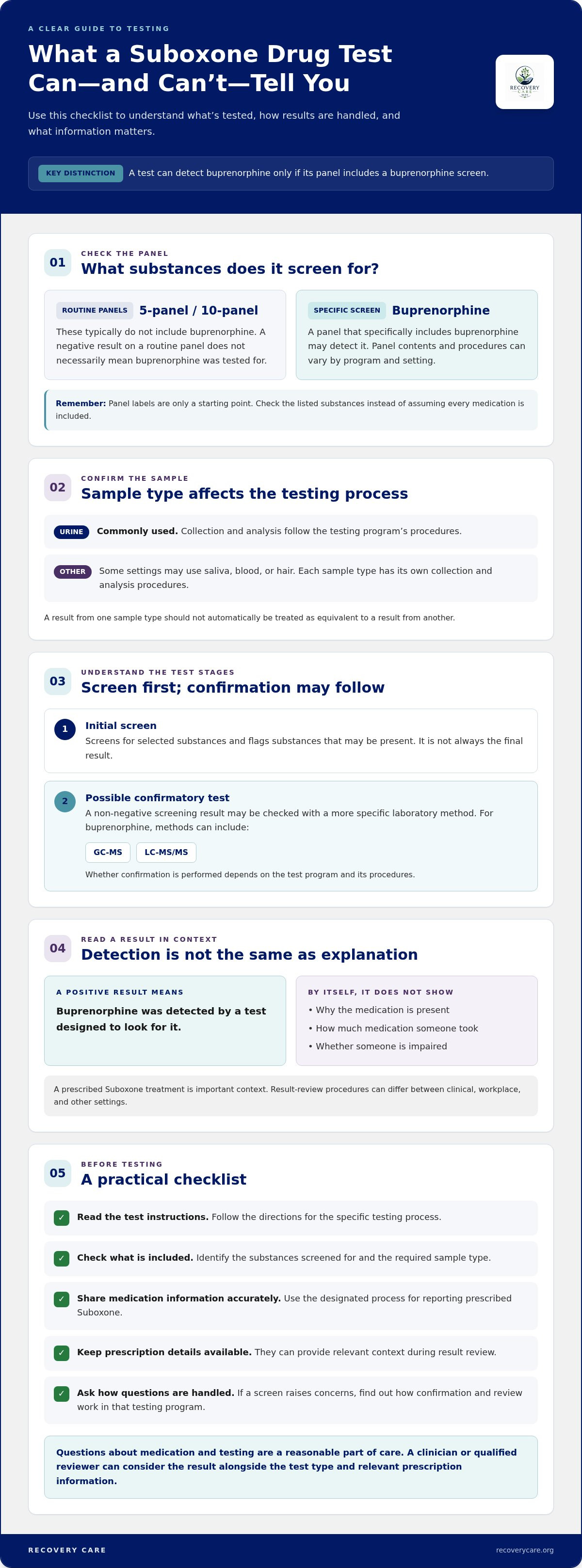
Sometimes. If you’re asking, “does suboxone show up on a drug test,” the answer depends on whether the test includes a screen for buprenorphine. Suboxone contains buprenorphine and naloxone, but not every drug panel checks for either ingredient. Standard 5-panel and 10-panel tests typically don’t include buprenorphine. A specific buprenorphine panel may be needed to detect it.
A positive result for buprenorphine means the test detected it. On its own, the result doesn’t explain why it’s present, establish how much medication someone took, or show whether they’re impaired. If you take prescribed Suboxone, that information is important context. Testing and result-review procedures can differ between clinical, workplace, and other settings.
Which ingredient can a drug test detect?
Buprenorphine is the Suboxone ingredient commonly targeted by a specific drug test. It’s a medication used in treatment for opioid use disorder, and a buprenorphine test generally looks for that substance or related markers, not a brand name. Naloxone is the other ingredient in Suboxone, but it isn’t the usual target of routine drug panels. Don’t assume one test identifies both ingredients.
Why the test panel changes the answer
A drug panel checks for selected substances, not every medication someone may take. A routine screen can therefore test negative for the substances it includes without assessing buprenorphine at all. To detect buprenorphine, the test generally needs to include a specific buprenorphine screen. The substances tested and the procedures used can vary with the setting and the organization arranging the test.
The specific test panel matters: a result can only speak to the substances the test was designed to detect. For example, a routine panel that doesn’t include buprenorphine can’t answer whether it’s present. A test that does include it may return a positive result. That result should be considered alongside medication and prescription information rather than treated as proof of misuse.
If you’re unsure what a result means, identify what the test screened for and whether it was an initial screen or a follow-up test. Keep these distinctions in mind:
- A negative routine panel doesn’t necessarily mean buprenorphine was tested for.
- A positive buprenorphine result indicates detection, not impairment or the reason for use.
- Prescription and review procedures vary, so follow the instructions for the specific testing process.
These distinctions can make testing results easier to understand. Suboxone treatment is healthcare, and questions about how medication appears on a test are reasonable to raise with your clinician or the testing contact responsible for your situation. You deserve a clear explanation without judgment.
How Suboxone Drug Testing Works: Panels, Samples, and Confirmation
Drug testing generally has two parts: a screen for selected substances, followed, in some cases, by a more specific laboratory test to examine a non-negative result. This distinction helps explain why asking “does suboxone show up on a drug test” can’t be answered by a panel’s name alone. The exact substances and procedures depend on the test ordered and the setting.
Urine is commonly used, but the sample type depends on the testing program. Some settings may use saliva, blood, or hair instead, and each sample type has its own collection and analysis procedures. A result from one type of test should not automatically be treated as equivalent to a result from another.
What a routine panel may or may not include
A panel screens for specific substances selected in advance. It isn’t a check for every medication. Standard 5-panel and 10-panel tests don’t typically include buprenorphine, though panel contents can differ among programs and providers. A buprenorphine-specific test may be added when detection is needed. For context on the medication itself, the DEA provides a Buprenorphine Regulation and Control resource.
Panel labels are a starting point, not a complete list of what will be tested. Read the test instructions or ask the organization administering it which substances are included and what sample is required. This helps clarify what a result can address, without relying on the panel’s name alone.
Screening results and confirmatory laboratory tests
An initial screen is designed to flag substances that may be present. It is not always the final word: a non-negative screening result may need confirmation using a more specific laboratory method. For buprenorphine, confirmatory methods can include gas chromatography-mass spectrometry (GC-MS) or liquid chromatography-tandem mass spectrometry (LC-MS/MS). Whether confirmation is performed depends on the test program and its procedures.
An initial screen flags a possible finding; confirmatory testing checks it with a more specific laboratory method. That distinction matters if a preliminary result is unexpected or may affect a treatment or workplace decision. A clinician or other qualified reviewer can interpret the result alongside the test type and relevant prescription information. The result alone doesn’t explain why the medication is present.
- Check which substances the panel includes, rather than relying on its label.
- Confirm what sample type and testing process apply to your situation.
- If a screening result raises questions, ask how confirmation and review are handled.
Testing can feel stressful, but asking how a result is processed is a practical healthcare question, not a reason for shame. If you’re receiving treatment or have concerns about medication testing, outpatient Suboxone treatment and behavioral health support can be part of a compassionate care conversation.
What a Positive Buprenorphine Result Does, and Does Not, Mean
A positive buprenorphine result means the test detected buprenorphine or a related marker it is designed to identify. It doesn’t explain why the substance is present. If you take Suboxone as prescribed, that information is important context, but the result itself may not identify a brand-name medication or show whether its use was prescribed.
A drug test is a limited snapshot, not a complete account of someone’s treatment or current condition. A positive result alone can’t establish the dose taken, whether medication was taken exactly as directed, or whether a person was impaired at the time of testing. Those questions require information beyond the test result.
Can a test distinguish prescribed treatment from other use?
A basic test result generally reports what it detected, not the circumstances behind it. Prescription information and relevant clinical records can help a qualified reviewer interpret a result when that review is part of the testing process. Procedures differ among employers, clinical programs, and other settings, so don’t assume every program follows the same steps or reaches a conclusion in the same way.
If you’re concerned that does suboxone show up on a drug test could lead to confusion, focus on clarifying what the result actually says and how it will be reviewed. A positive finding doesn’t automatically mean the test was improper, nor does it by itself establish misuse. Accurate medication information can help the appropriate reviewer understand the result in context.
What to do if a result seems unexpected
Pause before drawing conclusions. Ask the testing organization what substance was detected, whether the result was preliminary or confirmed, and what review process is available. If you take prescribed Suboxone, share that information through the designated process and provide prescription details to the appropriate medical reviewer. Keep a copy of any instructions or result documents so you can refer to the exact wording.
Practical next steps include:
- Request clarification about what the result means and which test was used.
- Ask whether confirmatory testing or a qualified review is available under that program’s procedures.
- Share accurate information about your medication and prescription with the designated reviewer.
- Discuss clinical questions or concerns with the clinician who supports your treatment.
Testing rules and review procedures vary, so these steps may differ depending on where and why the test was ordered. If you believe information was recorded incorrectly, explain the specific discrepancy calmly and ask how it can be reviewed. Keep your communication factual and retain relevant paperwork.
Most importantly, don’t change or stop your Suboxone treatment solely because you’re worried about a test result. A testing concern is a reason to seek clarification, not to make a medication change on your own. Your clinician can help you consider the result alongside your treatment plan and health needs, without judgment. Recovery Care’s outpatient Suboxone treatment and behavioral health support recognize that medication questions are part of care.
Before a Drug Test: Practical Steps if You Take Suboxone
Preparing for a drug test while taking prescribed Suboxone can feel stressful, especially if you’re unsure what the test covers or how to report medications. You don’t need to change your treatment to prepare. Follow the test instructions, use the designated process to share medication information, and ask how prescriptions are reviewed. Procedures differ across employers, clinical programs, and other settings, so rely on the instructions for your specific test.
How to prepare without stopping treatment
Continue taking Suboxone as prescribed unless your treating clinician advises otherwise. Don’t skip doses, stop treatment, or try to alter a test because you’re worried about the result. If you have questions about medication timing or what to disclose, ask your clinician or the testing administrator rather than guessing.
Before the test, take a few practical steps:
- Read the instructions carefully, including how and when medication information should be shared.
- Make a current list of medications and prescribing information available if the process requests it.
- Keep prescription details or other relevant documentation accessible in case the appropriate reviewer asks for them.
- Ask the testing administrator how prescribed medications are reviewed and who should receive that information.
Answer questions accurately. You don’t need to assume that every person involved in collecting or arranging a test is the right contact for prescription details. Follow the stated process, and ask who handles medication-related disclosures if the instructions aren’t clear.
What if the test is for work, court, or treatment?
The purpose of testing can affect the instructions and disclosure process. An employment screen, a clinical test, and a test connected with a court or another program may follow different procedures. For example, occupational health providers such as Persona Health conduct workplace medical assessments that follow structured protocols for evaluating health status and prescribed medications. Don’t assume the same person reviews every result, that the same information is requested in each setting, or that a particular outcome is guaranteed. Follow the instructions you’ve been given.
If the process is unclear, ask the organization administering the test how to report a prescription and whether there is a designated medical reviewer. For questions involving legal obligations or consequences, seek guidance from a qualified professional familiar with your situation. This isn’t legal advice, and privacy and disclosure rules may vary by setting.
People often ask, “does suboxone show up on a drug test?” Knowing that detection depends on the test is only part of preparing. It’s also helpful to understand the reporting steps, provide accurate information through the appropriate channel, and keep relevant records available. Avoid attempting to evade or manipulate a test. That can create additional concerns without answering the underlying question.
If you’re taking Suboxone and want support discussing treatment questions, connect with Recovery Care about Suboxone treatment. Your care team can help you address medication concerns while keeping treatment decisions grounded in your health needs.
Suboxone Testing Questions Are Part of Care, Not a Reason for Shame
Questions about medication and drug testing are a normal part of healthcare. If you’re still wondering, “does suboxone show up on a drug test,” or feel uneasy about explaining a result, you deserve a clear, respectful conversation. A testing question isn’t an admission of wrongdoing. It’s an opportunity to understand how your medication and care fit together.
Recovery Care provides outpatient Suboxone treatment and behavioral health support, with care available in person and through telehealth. Treatment is individualized, and discussing a concern with your care team can help you consider it alongside your health needs. For a broader overview of medication-assisted treatment and recovery, explore this Suboxone treatment guide.
When to discuss testing concerns with a clinician
Consider bringing up a confusing result, questions about how medication is documented, or worries about how testing could affect your treatment. You don’t need to have every detail sorted out before speaking up. Sharing what you know, such as the test instructions or the wording of a result, can help your clinician understand your question and explain what may be relevant.
Your care team can discuss medication in the context of your broader health and treatment plan. A question about a test does not mean you’ve done anything wrong, and it shouldn’t keep you from seeking guidance. If a result is connected to a workplace or other program, remember that the organization’s process may differ from clinical care. A clinician can help with health-related questions, while the testing organization can explain its own procedures.
Finding ongoing recovery support
Outpatient medication-assisted treatment is one option for ongoing recovery care. It can be considered alongside behavioral health counseling, with a plan shaped around individual needs. Recovery Care offers in-person and telehealth care, so people can discuss support in the format available to them. Treatment can provide structured clinical support, but no single approach can promise a particular outcome.
Behavioral health support may also give you room to talk through stress, concerns, and goals as part of care. Recovery Care offers opioid addiction counseling as part of its behavioral health support. You can take a simple next step: bring your questions to a confidential care conversation and share what support you’re looking for. Recovery Care describes its approach as compassionate and confidential, so you can raise medication and testing concerns without shame.
Move Forward With a Supportive Care Conversation
Questions about does suboxone show up on a drug test can be a starting point for a wider conversation about your health, treatment goals, and the support that feels right for you. You don’t need to have every concern resolved before reaching out. Bringing one question to a care conversation is enough to begin.
Recovery Care provides outpatient Suboxone treatment alongside behavioral health counseling and primary care, with in-person and telehealth options. A conversation can help you explore these supports and decide what you’d like to discuss next, without pressure to make a decision before you’re ready.
Talk with Recovery Care about supportive Suboxone treatment and share the questions on your mind. You deserve care that treats your concerns with respect and supports you as a whole person. One thoughtful next step can help you feel more informed and supported as you move forward.
Frequently Asked Questions
Does Suboxone show up on a 10-panel drug test?
It depends on the test’s contents, not just the “10-panel” label. The answer to “does suboxone show up on a drug test” varies because panels can differ, and buprenorphine may need to be specifically included. For example, two testing programs using 10-panel screens may check for different substances. Review the instructions or ask the testing organization what its panel covers, then follow its process for reporting prescribed medication.
How long does Suboxone stay detectable in urine?
There isn’t one detection window that reliably predicts an individual urine result. The outcome can depend on the test’s sensitivity and method, when the sample is collected, and individual factors. An estimate found online can’t tell you exactly what a particular test will show. If timing matters for a scheduled test, ask the testing organization what method it uses or discuss the question with your clinician.
Can Suboxone cause a false positive for other drugs?
A screening result can sometimes be unclear, but whether a medication affects a screen depends on the test and the substances it checks for. Don’t assume a result identifies its cause without appropriate review. If a finding doesn’t fit your medication history, ask the testing organization whether confirmatory testing is available and explain your medications accurately to the designated reviewer. Avoid changing treatment based on a preliminary result alone.
Can a drug test tell how much Suboxone someone took?
A drug test generally can’t be treated as a direct measure of someone’s exact dose. For instance, a result that detects buprenorphine doesn’t by itself show whether a person took a particular amount or followed a dosing schedule. Sample type, test method, and timing can affect interpretation. If a result raises a treatment question, discuss it with the prescribing clinician rather than trying to infer a dose from the test.
Can Suboxone be detected in a hair test?
Some testing programs use hair samples, but you can’t assume every hair test checks for buprenorphine. Detection depends on the laboratory method and which substances the program has requested. If you’re told a hair sample will be collected, ask the testing organization what the test is designed to detect and how results are reviewed. For questions about prescribed medication, your clinician can help you understand the health-related context.
Should I tell an employer that I take Suboxone before a drug test?
Follow the employer’s stated process for reporting prescription medications. Some programs direct employees to provide medication details to a designated reviewer rather than the person collecting a sample, but procedures vary. Ask the testing administrator how prescription information should be submitted and reviewed. General guidance can’t guarantee privacy or a particular employment decision. For personal medical advice, speak with your clinician and continue your medication as prescribed.
Can I stop taking Suboxone before a drug test?
No, don’t stop or change your Suboxone dose just to try to affect a test result. A medication change can affect your health and recovery, so discuss any treatment decision with your prescribing clinician. If you have an upcoming test, ask the testing administrator about its process and raise medication concerns with your care team. You deserve support addressing the test without making a sudden change to treatment on your own.


