
Could lingering symptoms after opioid withdrawal be part of recovery, or a sign that something else needs attention? If you’re searching for “post-acute withdrawal syndrome opioid” information, it’s understandable to feel unsettled when the most intense withdrawal has passed but your mood, sleep, energy, focus, or cravings still feel different.
These symptoms deserve care, but they don’t confirm PAWS on their own. Similar concerns can have other causes, so a clinician can help you understand what may be contributing and what support is appropriate. You don’t have to sort it out by yourself, and difficult symptoms don’t mean you’ve failed in recovery.
This article explains what post-acute withdrawal may involve, which symptoms call for prompt or urgent medical attention, and practical steps to take safely. It also covers how ongoing, individualized care can address opioid use alongside emotional and physical health needs. At Recovery Care, medical treatment, behavioral health counseling, and primary care can be considered together, with dignity and confidentiality at the center.
Key Takeaways
- Learn what clinicians mean by post-acute withdrawal syndrome opioid and why the term shouldn’t be used to diagnose yourself.
- Notice how lingering changes in sleep, mood, energy, concentration, or physical well-being may affect daily life.
- Understand why ongoing symptoms don’t automatically mean treatment has failed or relapse is inevitable.
- Prepare for a clinician conversation by tracking when symptoms occur, how intense they feel, and how they affect your routine.
- Explore how medication treatment, counseling, and primary care can be considered together as part of individualized recovery support.
What Is Post-Acute Withdrawal Syndrome After Opioid Use?
Lingering changes after acute opioid withdrawal can feel confusing, especially if you expected to feel better once the most intense symptoms eased. The term post-acute withdrawal syndrome, or PAWS, is sometimes used for symptoms that persist or return after that early withdrawal period. It describes a possible pattern, not a diagnosis you can make from symptoms alone.
In brief: PAWS is a term for ongoing or recurring experiences after acute withdrawal that may be associated with recovery, but symptoms can have different causes and need individual assessment. If you’re searching for “post-acute withdrawal syndrome opioid,” keep in mind that sources and clinicians may use the term differently. An overview of post-acute withdrawal syndrome (PAWS) describes the broader concept, but it can’t determine what’s causing your symptoms.
How Is PAWS Different From Acute Opioid Withdrawal?
Acute withdrawal generally refers to the earlier period after reducing or stopping opioids, when symptoms are more directly connected to that change. PAWS is often used to discuss symptoms that continue or reappear later, potentially after the initial phase has eased. This is a general distinction about timing, not a precise boundary, diagnostic test, or prediction of how recovery will unfold.
People’s experiences differ. Similar symptoms may happen at different points, and timing alone can’t show whether they’re related to withdrawal, another health concern, medication effects, or more than one factor. A change in symptoms doesn’t, by itself, tell you what comes next in recovery.
Why Does the Term PAWS Need Careful Explanation?
PAWS is a commonly used term in some recovery discussions, but sources and clinicians may not use it in exactly the same way. It should not be treated as a formal diagnosis based only on a list of symptoms. Changes in sleep, mood, energy, or concentration can overlap with other physical or behavioral health concerns, so it’s important to consider the whole picture.
If symptoms persist, change, or interfere with daily life, discuss them with a clinician rather than trying to label them yourself. Share when they began, whether they come and go, and how they affect your routine. A thoughtful assessment can help explore possible causes and appropriate support without assuming every lingering symptom is PAWS.
Which Symptoms May Continue After Acute Opioid Withdrawal?
Lingering changes can be unsettling, especially when they’re unpredictable or affect everyday routines. Experiences sometimes discussed in connection with post-acute withdrawal syndrome opioid recovery may include changes in sleep, mood, concentration, energy, cravings, or general well-being. Not everyone experiences the same symptoms, and there’s no single pattern that confirms PAWS.
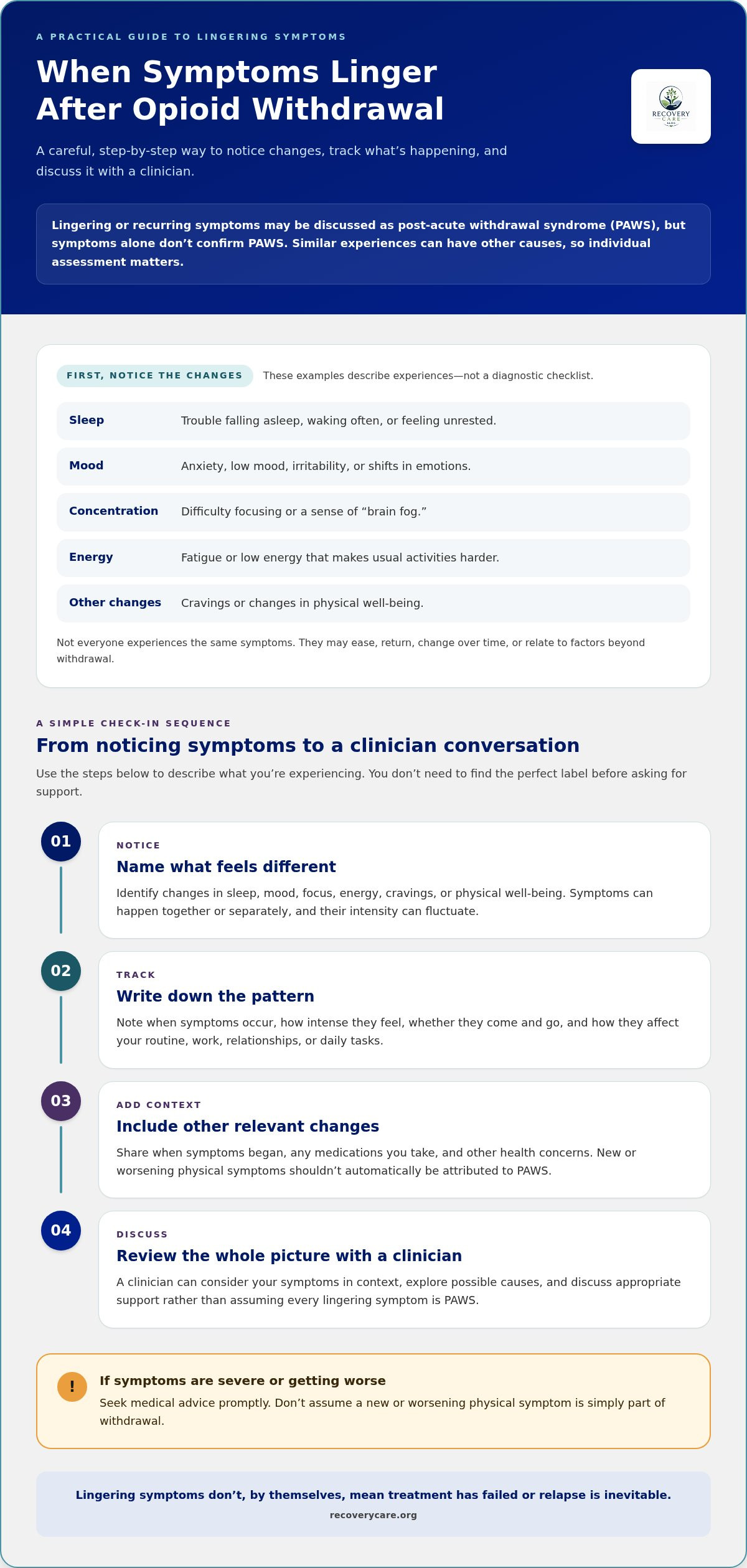
Persistent symptoms deserve assessment, not assumptions. Treat the examples below as ways to describe what you’re noticing, not as a checklist for diagnosing yourself. Symptoms may ease, return, or change over time, and they can have causes beyond withdrawal.
- Sleep: Trouble falling asleep, waking often, or feeling unrested.
- Mood: Anxiety, low mood, irritability, or shifts in emotions.
- Concentration: Difficulty focusing or a sense of “brain fog.”
- Energy: Fatigue or low energy that makes usual activities harder.
- Other experiences: Cravings or changes in physical well-being.
How Can PAWS Affect Mood, Sleep, and Concentration?
Some people describe feeling anxious, down, or more irritable than usual. Others notice disrupted sleep or difficulty concentrating on tasks they normally manage. These experiences may happen together or separately, and their intensity can fluctuate. They can also relate to other health concerns, stress, or medications, so their presence alone doesn’t identify the cause.
It may help to note what changes, when it happens, and whether it affects work, relationships, or daily tasks. You don’t need to find the perfect label before asking for support. Specific examples can help a clinician understand what you’re experiencing and consider it in context.
Can Physical Symptoms Continue During Recovery?
Fatigue and low energy may be among the experiences people report, but new or worsening physical symptoms shouldn’t automatically be attributed to PAWS. Note what has changed and share it with a clinician, including when symptoms began, whether they come and go, any medications you take, and other health concerns. Seek medical advice promptly if symptoms are severe or getting worse.
A careful conversation can help distinguish what may be related to recovery from other factors that also deserve attention. If ongoing concerns are affecting your well-being, opioid recovery care can provide a setting to discuss your symptoms with a medical team.
Are Lingering Symptoms Always PAWS, or Could Something Else Be Happening?
No. Ongoing symptoms don’t prove that treatment has failed, and they don’t mean relapse is inevitable. If you’re searching for “post-acute withdrawal syndrome opioid” symptoms, remember that sleep, mood, and concentration changes can have more than one explanation. A clinician can consider the pattern alongside your health and treatment history instead of assuming every symptom is PAWS.
What Else Can Resemble Post-Acute Withdrawal Symptoms?
Anxiety, low mood, poor sleep, or trouble focusing may overlap with mental health concerns, sleep problems, medication effects, or other physical health conditions. These are possibilities to assess, not conclusions you can draw from a symptom alone. A clinician can ask when symptoms began, how they have changed, what medications you take, and about your broader health to help decide what needs attention.
A simple comparison can help you organize what to share. It isn’t a diagnostic tool, and the same pattern may have different explanations for different people.
| Symptom pattern | Possible considerations | Appropriate next step |
|---|---|---|
| Sleep or focus changes that persist | Recovery-related changes, sleep concerns, medication effects, or other health factors | Discuss when they started and how they affect daily life with a clinician. |
| Mood changes that continue or feel disruptive | Withdrawal-related experiences or behavioral and physical health concerns | Seek clinical assessment rather than labeling the cause yourself. |
| New, severe, or rapidly worsening physical symptoms | Causes that can’t safely be identified from timing alone | Get urgent medical evaluation. |
When Should Lingering Symptoms Prompt Medical Attention?
Reach out to a clinician when symptoms persist, worsen, or interfere with sleep, responsibilities, relationships, or your ability to follow your recovery plan. Telehealth can make connecting with a physician more accessible; you can learn more about AskMyDoc.ca to see how virtual appointments support patients discussing lingering health concerns. You don’t need to wait until you know what to call them. Share what you’ve noticed and any recent changes in medications or health.
Severe or rapidly worsening physical symptoms need urgent medical evaluation. If you suspect an overdose, face immediate danger, or are thinking about suicide, seek emergency help now. Contact local emergency services or a crisis support line, and, if possible, tell someone you trust so you’re not handling the moment alone.
What Can You Do When Opioid Withdrawal Symptoms Persist?
Unsettling symptoms can make it hard to know what to do next. You don’t need to decide whether they’re PAWS before seeking support. A clear record and a conversation with a clinician can help turn uncertainty into practical next steps.
- Track what you notice. Record when each symptom began, how often it occurs, how severe it feels, and whether it’s changing. Include sleep, current medications, and effects on daily activities.
- Contact a clinician. Share your notes and mention relevant health changes. Ask what assessment or support may be appropriate.
- Review your treatment together. Discuss how your current plan is working and whether any adjustments should be considered. Keep taking prescribed medication as directed. Don’t stop, change, or add medication without speaking with the prescriber.
- Arrange follow-up. Agree on how you’ll check in about symptoms and what changes should prompt you to seek care sooner.
How Can You Prepare for a Clinical Conversation?
Bring a symptom timeline and a current medication list. Note how symptoms affect sleep, relationships, work, and recovery routines, along with any recent changes in your health. You might ask, “What else could be contributing?” or “What should I do if this gets worse?” The goal is an informed assessment, not proving that your symptoms fit a specific diagnosis such as post-acute withdrawal syndrome opioid.
What Support Can Help You Stay Steady Between Visits?
Small, manageable routines may offer structure while you’re getting care. Try to keep a regular sleep schedule, eat and drink regularly, and stay connected with someone you trust. These practices can support well-being, but they’re not a substitute for medical assessment or prescribed treatment. Behavioral health support may also help you work through stress and recovery concerns. Learn more about opioid addiction counseling.
For persistent symptoms that affect daily life, arrange timely clinical follow-up. If physical symptoms are severe or worsening quickly, seek urgent medical evaluation. Suspected overdose, immediate danger, or thoughts of suicide require emergency help now. To discuss ongoing symptoms and recovery care, connect with Recovery Care.
How Can Ongoing Opioid Recovery Care Support You Through PAWS?
Lingering symptoms can be difficult to interpret, but you don’t have to figure them out alone. A clinician can listen to what you’re experiencing, assess possible contributing factors, and discuss next steps with you. If you’re concerned about post-acute withdrawal syndrome opioid symptoms, the goal is to understand your needs and support your recovery, not to assume a diagnosis.
Medication-assisted treatment (MAT) treats opioid addiction. It isn’t a guaranteed cure for PAWS symptoms, and the right approach depends on an individual clinical assessment and treatment plan. Medication decisions should be made with a clinician who can consider your health, recovery goals, and current treatment. For a broader overview, read the Suboxone treatment guide.
How Do Medication and Counseling Fit Into Ongoing Recovery?
Medication treatment and counseling can serve different, complementary roles. A clinician can discuss medication options for opioid addiction based on your circumstances, while behavioral health counseling can offer support for emotional well-being, coping strategies, and recovery goals. Together, these conversations can help shape a care plan around your needs instead of relying on a one-size-fits-all answer to lingering symptoms.
What Can a Supportive, Whole-Person Care Plan Include?
Recovery Care offers outpatient addiction treatment, behavioral health counseling, primary care, and telehealth consultations. When appropriate, clinicians can consider these areas together, since physical health concerns and emotional well-being can both matter during recovery. Learn more about primary care during recovery and the role it can play in addressing broader health needs.
Care is individualized and confidential. Recovery Care accepts most major insurance plans, Medicare, and Medicaid. In-person and telehealth consultations offer ways to discuss ongoing symptoms with a medical team. A conversation can be a steady next step, whether you’re seeking clarity about symptoms, reviewing your treatment, or looking for support that considers more than one part of your health.
Take the Next Step With Support
Lingering symptoms after opioid withdrawal can be unsettling, but they don’t confirm PAWS on their own, signal treatment failure, or mean relapse is inevitable. The phrase post-acute withdrawal syndrome opioid describes experiences some people report, yet similar changes can have other causes. A clinician can help assess what’s happening and discuss next steps based on your health and recovery needs.
Keep track of changes and bring your questions to a care conversation. Ongoing support may include outpatient opioid treatment with medication management and clinical follow-up, alongside behavioral health counseling and primary care when appropriate. In-person and telehealth consultations offer ways to access care, and most major insurance plans, Medicare, and Medicaid are accepted.
You deserve care that treats you with dignity and considers your whole well-being. Explore compassionate opioid recovery care with Recovery Care and take a manageable next step toward feeling supported. Recovery can move forward one conversation at a time.
Frequently Asked Questions
How long can post-acute opioid withdrawal symptoms last?
There isn’t one timeline that applies to everyone. Symptoms described as PAWS may continue for months, and some sources report that they can last up to two years after acute withdrawal. Experiences differ, and timing alone can’t establish the cause or predict recovery. If symptoms persist, worsen, or interfere with daily life, discuss them with a clinician instead of waiting for a particular timeframe to pass.
Can PAWS symptoms come and go during recovery?
Yes. Symptoms that people associate with PAWS may fluctuate, ease, or return, and different people can experience different patterns. A difficult day doesn’t automatically mean your recovery is failing or that relapse is inevitable. Track when symptoms occur, how intense they feel, and how they affect your routine. Sharing that information with a clinician can help them assess possible causes and discuss appropriate support.
Is PAWS the same as acute opioid withdrawal?
No. Acute opioid withdrawal generally describes the earlier withdrawal period after reducing or stopping opioids. PAWS is a term often used for symptoms that persist or recur later. This is a broad distinction, not a precise cutoff or diagnostic test. The timing of symptoms cannot confirm their cause, so ongoing or changing concerns deserve individual clinical assessment rather than self-diagnosis.
What happens if symptoms continue after opioid withdrawal?
If symptoms continue, arrange a conversation with a clinician. They can review when symptoms began, how they change, your medications, and your health history to assess possible explanations and next steps. Sleep, mood, and concentration changes can have causes beyond withdrawal. Keep taking prescribed medication as directed, and don’t change or stop it without speaking with the prescriber. Seek care sooner if symptoms worsen or disrupt daily life.
Can medication-assisted treatment help during opioid recovery?
Medication-assisted treatment is used to treat opioid use disorder and may be part of ongoing recovery care. A clinician can discuss medication options based on your health and treatment plan. MAT isn’t a guaranteed cure for PAWS symptoms, and a specific medication shouldn’t be assumed to resolve every lingering concern. Counseling and primary care may also support emotional and physical health as part of individualized care.
When should I seek urgent help for symptoms after opioid withdrawal?
Seek urgent medical evaluation for severe or rapidly worsening physical symptoms. If you suspect an overdose, face immediate danger, or are thinking about suicide, seek emergency help now by contacting local emergency services. For symptoms that persist or interfere with everyday activities but aren’t an emergency, arrange timely clinical advice. You deserve support, and you don’t need to identify the cause before asking for help.


