

Could changes in your sex life be linked to Suboxone without meaning you have to choose between your well-being and recovery? If you’re noticing lower libido, erectile difficulties, or changes with ejaculation or orgasm, it’s understandable to wonder about suboxone side effects in males. These concerns can feel private, but they’re appropriate to discuss with your care team.
Symptoms don’t always have one clear cause. Some may be associated with medication, while anxiety, insomnia, pain, or other changes can overlap with withdrawal or have another health explanation. You don’t have to figure it out alone, and bringing it up doesn’t make your concerns less valid or your recovery less important.
This article explains possible sexual and other side effects, symptoms that need prompt medical attention, and how to describe what you’re experiencing to a clinician. It also covers why you shouldn’t stop Suboxone or adjust your dose on your own. With outpatient follow-up, you can discuss treatment concerns and appropriate next steps with your clinician.
Key Takeaways
- Suboxone side effects in males can vary. Changes in libido, erections, ejaculation, or orgasm aren’t inevitable.
- Hormone-related symptoms may have different causes, so a symptom alone can’t confirm a hormone problem.
- Timing, dose changes, missed doses, other medications, and health conditions can help a clinician assess what may be contributing.
- Write down symptoms and when they occur, then discuss them with your prescriber. Don’t stop or change your dose without guidance.
- Follow-up is a place to discuss concerns and consider appropriate next steps for your care.
What Suboxone Side Effects Can Men Experience?
An unwanted change while taking Suboxone can be unsettling, especially when you’re working hard to support your recovery. Side effects vary from person to person, and having concerns doesn’t mean treatment has failed or that you’ve done anything wrong. Suboxone combines buprenorphine and naloxone and is prescribed to treat opioid use disorder. For a general summary, see the Buprenorphine/naloxone (Suboxone) Overview.
Commonly reported effects include nausea, constipation, headache, sweating, dizziness, and sleepiness. These effects can happen to men and women; most aren’t specific to men, and not everyone experiences them. How a symptom feels and how much it disrupts your day can depend on individual treatment circumstances. Tell your prescriber if a new or persistent symptom affects your routine instead of assuming you have to put up with it.
Common physical and day-to-day effects
Common Suboxone side effects include nausea, constipation, headache, sweating, dizziness, and sleepiness, which can affect daily comfort and routines. Nausea may make meals less appealing, while constipation can cause ongoing discomfort. Headache or dizziness may interrupt work or errands, and sleepiness can make it harder to focus. Note when a symptom occurs and how it affects you. Don’t drive or do tasks requiring alertness if you feel sleepy or dizzy.
Side effects differ from serious reactions. If someone taking Suboxone is unusually difficult to wake or has slow or difficult breathing, seek emergency help. Combining buprenorphine with alcohol or sedating medicines can increase the risk of dangerous breathing problems. For symptoms that are concerning but not urgent, contact your prescriber for guidance tailored to your situation.
Why men may search for side effects specifically
Men may look for answers about libido, erections, ejaculation, orgasm, or possible hormone changes. These concerns can feel private, but they’re legitimate health questions and deserve attention. A change in sexual function doesn’t, by itself, show that Suboxone is the cause or confirm a hormone problem. Other health factors or medicines may also contribute.
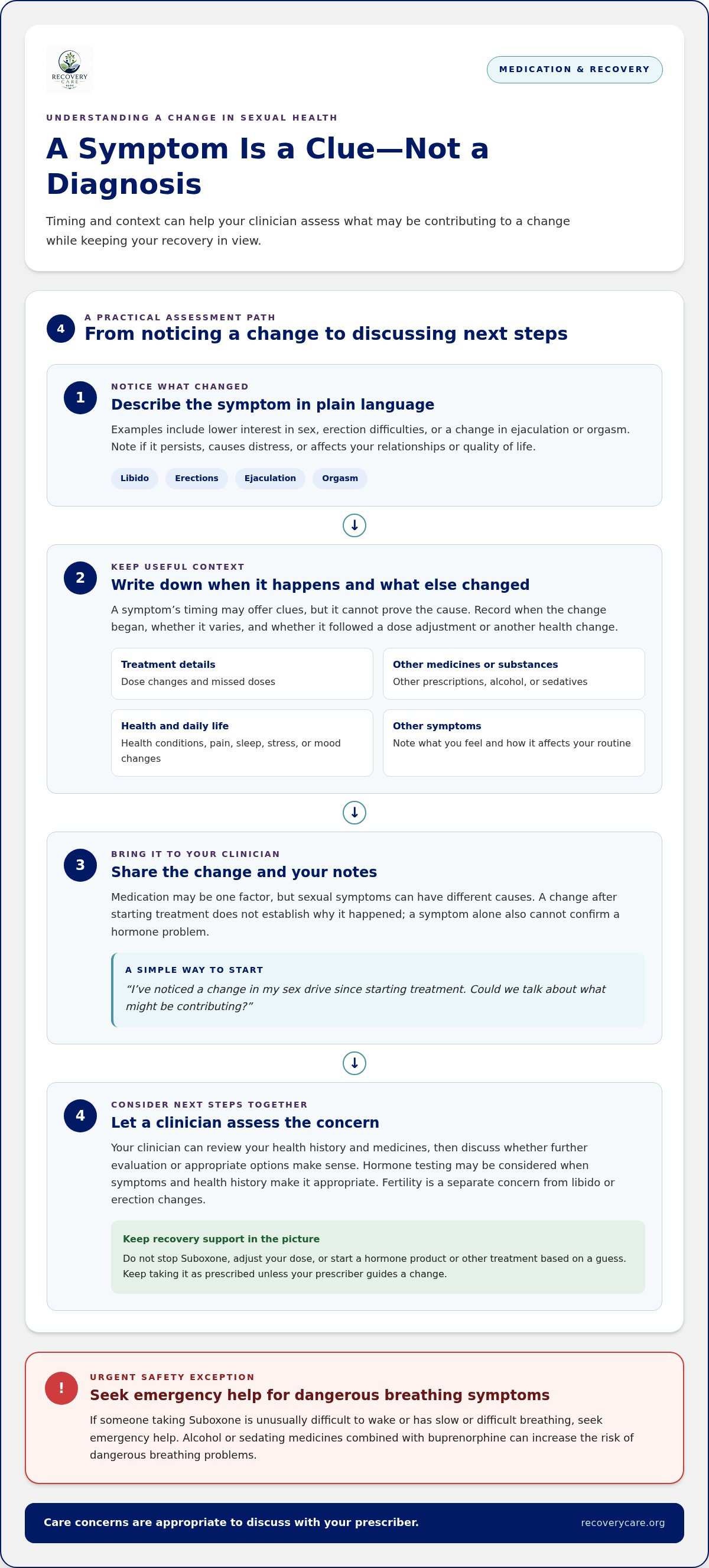
If you’re concerned, keep track of what changed and when, then raise it with your clinician. You can be direct: “I’ve noticed a change in my sex drive since starting treatment. Could we talk about what might be contributing?” Your symptoms are worth discussing, not self-diagnosing. Don’t stop taking Suboxone or adjust your dose on your own. A clinician can assess your concern and discuss next steps while keeping your recovery needs in view.
How Suboxone May Affect Men's Sexual and Reproductive Health
Changes in sexual function can be personal, frustrating, or hard to describe. If you’ve noticed a difference while taking Suboxone, it’s reasonable to ask whether the medication might be involved. These symptoms can have different causes, though, and a change after starting treatment doesn’t establish the cause on its own.
Possible changes in libido, erections, and ejaculation
Some men report lower interest in sex, difficulty getting or keeping an erection, changes in ejaculation, or a different experience of orgasm. These concerns aren’t inevitable, and they don’t mean you’ve failed at recovery. Mention them if they persist, cause distress, or affect your relationships or quality of life.
Medication may be one factor, but it isn’t the only possibility. Opioid use, other prescriptions, alcohol or sedatives, stress, mood changes, sleep problems, and health conditions can also affect sexual function. The timing can offer useful context: note when the change began, whether it varies, and whether it followed a dose adjustment or another health change. These details help a clinician assess the concern without jumping to conclusions.
The FDA’s FDA Information on Suboxone Side Effects explains reported adverse events, warnings, and precautions. It can help you understand the medication’s safety information, but it can’t determine why a particular sexual symptom is happening to you. Don’t start a hormone product, erectile dysfunction medicine, or other treatment based on a guess. A clinician can review your health history and current medicines before discussing appropriate options.
Hormones and fertility questions
Hormones may be part of an assessment if your symptoms and health history make testing appropriate. For example, a clinician may ask about changes in sexual desire alongside other symptoms, then decide whether hormone testing or another evaluation makes sense. A symptom alone can’t confirm low testosterone, and possible hormone involvement doesn’t automatically mean infertility or permanent harm.
Fertility is a separate concern from libido or erection changes. If you’re trying to conceive or have questions about reproductive health, say so directly; it gives your clinician important context. Claims about Suboxone’s effects on testosterone, fertility, or whether changes are reversible need careful medical interpretation. A personalized assessment is more useful than assuming an outcome based on general information.
It’s okay to use plain language: “I’ve noticed a change in my erections” or “My sex drive is different, and I’d like to understand why.” Recovery Care’s outpatient Suboxone treatment and primary care provide a setting to raise medication and health concerns during follow-up. Keep taking Suboxone as prescribed unless your prescriber guides a change.
How to Tell Suboxone Side Effects From Withdrawal or Other Causes
A symptom’s timing can offer useful clues, but it can’t prove what caused it. Nausea, trouble sleeping, anxiety, pain, and changes in sexual function may have more than one explanation. Symptoms alone can’t reliably identify whether a change is a Suboxone side effect, withdrawal, or something else. A clinician can consider the pattern alongside your treatment and health history.
Timing and symptom patterns to discuss
Think about when the symptom began and what was happening around that time. Did it start after beginning treatment, a dose change, a missed dose, or a new medicine? Does it come and go, or continue throughout the day? These details can help your care team understand the sequence, but timing alone doesn’t prove the cause.
A brief symptom log can make a conversation easier. Include:
- What you’re experiencing and when it occurs
- Recent treatment changes or missed doses
- Prescription medicines, over-the-counter products, and supplements
- Alcohol or sedative use, if relevant
- Other changes in sleep, stress, or health
Keep the notes factual, not perfect. A diary supports assessment but can’t replace a clinician’s evaluation. The MedlinePlus Drug Information on Buprenorphine and Naloxone offers general information about the medication and its use. Your prescriber can help apply that information to your situation.
Why a symptom may have more than one explanation
Withdrawal can involve symptoms that overlap with medication effects, and other factors may complicate the picture. An underlying health condition, stress, disrupted sleep, or another medicine could contribute. For example, a change in libido or erection quality might have several possible causes. Sharing when it started and what else changed is more useful than assuming Suboxone is responsible.
Alcohol and sedating medicines also deserve careful attention. The FDA warns that combining buprenorphine with alcohol or other central nervous system depressants, including sedatives, can increase the risk of serious effects such as slowed breathing. Tell your prescriber what you take or use, including medicines prescribed by someone else. Don’t stop or change a medicine on your own to see whether symptoms improve.
For broader context on how medication fits into opioid use disorder care, see this Suboxone treatment guide. If you’re trying to understand suboxone side effects in males, use your notes to start an open conversation, not to make a diagnosis or test a suspected cause by skipping, reducing, or stopping Suboxone. Follow your prescriber’s guidance and contact them about symptoms that concern you.
What Men Can Do About Suboxone Side Effects Safely
Side effects deserve attention, and you don’t have to choose between raising a concern and protecting your recovery. A calm, step-by-step response helps your care team understand what’s happening and decide what support may be appropriate. If you’re concerned about suboxone side effects in males, start with what you’ve noticed rather than trying to identify the cause alone.
- Write down the symptoms. Note what changed, when it began, how severe it feels, and whether it comes and goes.
- Check for urgent warning signs. Don’t wait for a routine appointment if someone is difficult to wake or having serious breathing problems.
- Contact your prescriber about nonurgent concerns. Share your notes and ask what next step is appropriate.
- Follow the agreed plan. Don’t skip, stop, or change your Suboxone dose unless your prescriber guides you to do so.
When to seek urgent medical help
Severe or slowed breathing, inability to wake, or a suspected overdose is an emergency. Call 911 or your local emergency number now. Don’t wait to see whether symptoms pass or rely on a routine clinic appointment.
Alcohol and sedating medicines can increase the risk of dangerous effects when combined with buprenorphine. If an emergency may involve a combination of substances, tell emergency responders what was taken, if you know. For other severe or rapidly worsening symptoms, seek urgent medical help rather than trying to manage them by changing a dose yourself.
How to prepare for a side-effect conversation
For a nonurgent concern, prepare a clear account of what’s happening. Include the symptom’s timing and severity, your dose schedule, any missed doses or recent treatment changes, other medicines or supplements, and relevant changes in your health or substance use. These details help your prescriber assess the situation and discuss a safe plan.
Sexual-health concerns are appropriate subjects for a clinical conversation. You can say, “I’ve noticed a change in my sex drive,” “I’m having trouble getting or keeping an erection,” or “I have questions about ejaculation, orgasm, or fertility.” You don’t need to know the cause before bringing it up. Your clinician can review possible contributors and discuss next steps without judgment.
For more context on how medication decisions fit into ongoing care, explore this guide to medication management for recovery. Recovery Care provides outpatient Suboxone treatment and medication management, so you can discuss side effects as part of your treatment.
Getting Support for Suboxone Side Effects Without Losing Recovery Support
Side effects are a reason to talk with your care team, not a reason to face treatment decisions alone. A follow-up visit gives you space to describe what has changed, ask questions, and work with your clinician on appropriate next steps. Raising concerns about suboxone side effects in males, including sexual-health symptoms, doesn’t mean you’re rejecting recovery or that treatment has failed.
What ongoing outpatient support can look like
Medication follow-up can include a collaborative review of how treatment is going, including benefits, unwanted symptoms, and questions about your health. Your clinician can consider symptom timing, your health history, and other medicines before discussing what to do next. A specific dose change or other intervention isn’t right for everyone, so make decisions with your prescriber rather than through trial and error on your own.
Recovery Care provides outpatient Suboxone treatment and medication management alongside primary care and behavioral health counseling. Primary care can help address broader health questions that may overlap with medication concerns. Counseling can support the emotional and behavioral aspects of recovery, including stress that may affect well-being.
Care is available in person and through telehealth consultations. Recovery Care accepts most major insurance plans, Medicare, and Medicaid. Coverage varies by individual plan, so acceptance doesn’t guarantee that a particular service will be covered.
Taking a respectful next step
Sexual-health concerns can feel difficult to bring up, but they belong in a conversation about your overall health. You can start simply: “I have a concern about a change in my sex life, and I’d like to discuss it as part of my treatment.” You don’t need to know whether the cause is medication, stress, another health issue, or something else before asking for help.
Before a follow-up, jot down what changed, when you noticed it, and what questions you want answered. Sharing what feels relevant is a useful start. Your clinician can listen, help assess possible explanations, and discuss next steps. Keep taking Suboxone as prescribed unless your prescriber advises a change.
If you’re ready to talk through your concerns, explore outpatient Suboxone care with Recovery Care. You can ask questions and discuss your health needs without making treatment decisions on your own.
Make Room for an Open Conversation
You deserve care that makes space for concerns affecting your health and daily life. You don’t need to have the cause figured out before asking about suboxone side effects in males. Bringing up a sensitive symptom is a constructive step, not a setback. A simple question can open a useful conversation about what you’re experiencing and what support may fit.
Recovery Care’s outpatient treatment is led by Medical Director Dr. Heather Rosen, MD. You can bring medication concerns to the care team and discuss next steps in the context of your recovery. You remain part of those decisions.
If you’re ready to talk, talk with Recovery Care about supportive outpatient treatment. You don’t have to navigate these concerns alone. Taking one honest step toward support can help you move forward with greater confidence.
Frequently Asked Questions
Can Suboxone affect a man's fertility or sperm count?
It’s not possible to conclude from a sexual symptom alone that Suboxone has lowered your sperm count or caused infertility. Fertility depends on several factors, and evidence about medication-related effects can’t predict an individual’s experience. If you’re trying to conceive or have concerns, tell your clinician. They can review your health and decide whether an evaluation, such as a semen analysis, is appropriate.
How long can Suboxone side effects last in men?
There isn’t one timeline that applies to everyone. Some effects may change as treatment continues, while others may persist or need clinical review. Note when a symptom starts, whether it changes, and how it affects your day, then share that information with your prescriber. Persistent or worsening symptoms deserve a discussion. Severe breathing problems or difficulty waking require emergency help.
Can Suboxone side effects begin after taking it for a while?
Yes, a new symptom can appear after you’ve been taking Suboxone for some time, though that doesn’t prove the medicine caused it. A dose adjustment, newly added medicine, change in alcohol or sedative use, or a health change may be relevant. Record what changed and when, then review it with your prescriber instead of changing your dose to test a possible cause.
Can I drive if Suboxone makes me sleepy or dizzy?
No. Don’t drive, cycle in traffic, or operate machinery while sleepy, dizzy, or otherwise impaired. These effects can interfere with alertness and safe coordination. Wait until you feel fully alert and steady, and ask your prescriber how to handle symptoms that continue or return. If sleepiness is severe or someone is difficult to wake, seek emergency help rather than driving them yourself.
Do Suboxone films and tablets cause the same side effects?
Films and tablets contain buprenorphine and naloxone, so they can share medication-related side effects. That doesn’t guarantee you’ll respond identically to each form. Don’t switch formulations or use someone else’s medication without instructions from your prescriber. If symptoms change after a prescribed switch, note when they began and tell your care team, including the exact product and strength shown on the packaging.
What should I do if I miss a dose of Suboxone?
Follow the missed-dose instructions your prescriber gave you, or contact the prescriber or pharmacist if you’re unsure. Don’t take an extra dose to make up for one unless your clinician specifically directs you to. If you’ve missed multiple doses, feel unwell, or are uncertain how to restart, get individualized guidance before changing your schedule. Keep the medication stored safely and take it only as prescribed.
Can alcohol or sleep medicines make Suboxone side effects worse?
Yes. Alcohol and medicines that cause sedation, including some sleep medicines, can intensify drowsiness and raise the risk of dangerously slowed breathing when combined with buprenorphine. Avoid alcohol, and check with your prescriber or pharmacist before using prescription or over-the-counter sleep aids. If someone who has taken Suboxone with alcohol or sedatives is hard to wake or has slow or difficult breathing, call emergency services immediately.


