
Can taking Suboxone for years harm your health, and would stopping be safer? If you’re worried about persistent symptoms, it’s understandable to want clear answers about the long term side effects of suboxone. Effects vary, and physical dependence on a prescribed medication isn’t, by itself, proof of addiction.
Some possible effects, including dental problems and hormone-related changes, are important to discuss with a clinician. Other concerns are less certain, and symptoms can have causes beyond Suboxone. That uncertainty doesn’t mean you should ignore how you feel or change your medication on your own.
This article explains what’s known about long-term effects, what remains unclear, and which symptoms may call for routine follow-up or urgent medical attention. You’ll also learn why stopping or changing treatment can bring its own risks, and how a qualified care team can help you weigh options based on your health and recovery goals. You deserve support and straightforward answers as you make decisions about your care.
Key Takeaways
- Learn what’s known about the long term side effects of suboxone and which possible effects still need more evidence.
- Understand why physical dependence during prescribed treatment isn’t, by itself, proof of addiction.
- Track symptoms, when they occur, how they affect you, and any other medicines you take to support a useful conversation with your prescriber.
- Know why medication changes should be discussed with your prescribing clinician rather than made on your own.
- See how outpatient medication management, primary care, and behavioral health counseling can support ongoing treatment discussions.
What Are the Long-Term Side Effects of Suboxone?
It’s reasonable to wonder what a medication may mean for your health over time, especially if you’ve noticed a symptom that doesn’t go away. Asking about the long term side effects of suboxone is part of informed care, not a sign that you’re doing anything wrong. Effects differ from person to person, and taking the medication for an extended period doesn’t mean you’ll develop lasting problems.
Suboxone combines buprenorphine, a partial opioid agonist, with naloxone. It’s prescribed as part of treatment for opioid use disorder. The combination and its uses are outlined in this overview of Buprenorphine/naloxone (Suboxone). A possible side effect is a symptom that may be related to a medication. It doesn’t automatically prove the medication caused it or that it will become a lasting health problem.
What does taking Suboxone long term mean?
There isn’t one treatment duration that fits everyone. Some people continue Suboxone as long as it remains appropriate for their health, recovery goals, and clinical needs. Review treatment duration with a clinician over time rather than treating it as a deadline that applies to every patient.
Duration alone doesn’t show that treatment is harmful, misused, or unsuccessful. The body may become physically dependent on buprenorphine, meaning it has adapted to the medication. That dependence, by itself, isn’t proof of addiction. Decisions about continuing or changing treatment should be individualized with the prescribing clinician.
Which long-term effects are established, possible, or uncertain?
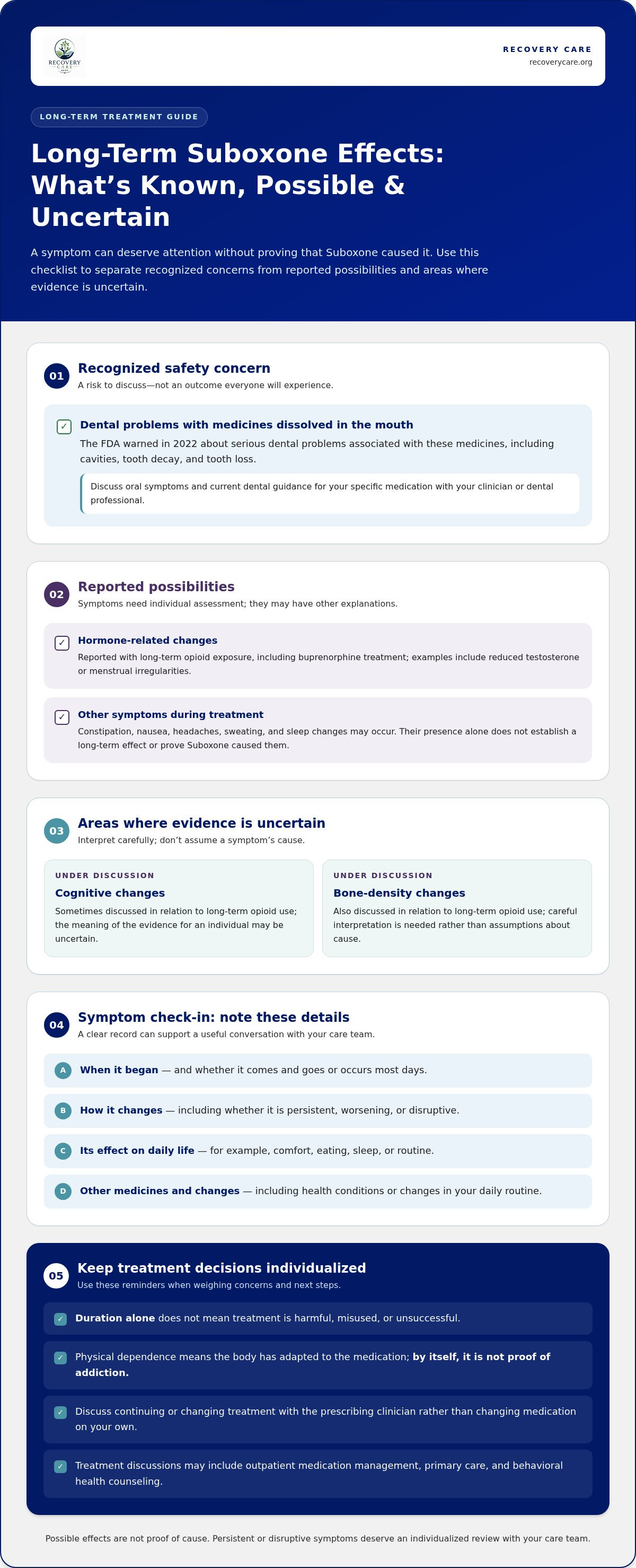
It helps to distinguish recognized risks from effects that are still being studied. FDA labeling and safety communications identify risks that deserve attention, but an identified risk doesn’t mean everyone will experience it. The FDA has warned that buprenorphine medicines that dissolve in the mouth can be associated with serious dental problems, including cavities and tooth loss. Ongoing dental care and discussion of oral symptoms are therefore relevant during treatment.
Hormonal changes, such as reduced testosterone or menstrual irregularities, have also been reported with long-term opioid exposure, including buprenorphine treatment. These concerns warrant a conversation with a clinician, but symptoms can have other explanations and need individual assessment. Cognitive changes and reduced bone density are other areas sometimes discussed in relation to long-term opioid use. The strength and meaning of evidence for a specific person may be uncertain.
- Recognized safety concern: Dental problems with medicines dissolved in the mouth.
- Reported possibility: Hormone-related changes that may affect sexual health or menstrual patterns.
- Areas with uncertainty: Cognitive effects and bone-density changes, which require careful interpretation rather than assumptions about cause.
Other symptoms, including constipation, nausea, headaches, sweating, and sleep changes, may occur during treatment, but their presence alone doesn’t establish that Suboxone caused a long-term effect. Health conditions, stress, and other medications may also contribute. If a symptom persists or affects daily life, note when it began and how it has changed, then share that information with your care team. A careful review can help distinguish a possible medication effect from other causes without treating long-term use as harmful by default.
Which Physical and Emotional Effects Can Occur During Ongoing Suboxone Treatment?
Symptoms can be frustrating, especially when you’re unsure whether they’re related to treatment. Possible effects differ from person to person, and a symptom that occurs while taking Suboxone isn’t automatically caused by it. Frequency, intensity, and duration matter. A clinician can help consider the full picture, including health conditions, other medications, and changes in your daily routine.
Physical symptoms to discuss with a clinician
Digestive changes such as constipation or nausea, along with headache and sweating, may occur during treatment. Sleep can also change, though disrupted rest may have more than one cause. These symptoms aren’t proof of lasting harm, but persistent, worsening, or disruptive changes deserve an individualized review. Note when they started and whether they come and go or occur most days.
- Digestive symptoms: Describe changes in bowel habits, nausea, and how they affect eating or daily comfort.
- Headache or sweating: Track when symptoms arise and whether anything else changed around the same time.
- Sleep changes: Explain whether you’re having trouble falling asleep, staying asleep, or feeling rested.
Oral health deserves particular attention with buprenorphine medicines that dissolve in the mouth. The FDA warned in 2022 about serious dental problems associated with these medicines, including cavities, tooth decay, and tooth loss. That warning identifies a risk, not an outcome that will happen to everyone. Ask your clinician or dental professional about current guidance for your specific medication, and discuss new tooth pain, sensitivity, or other changes. For another overview of reported effects, see Detailed Suboxone Side Effects.
Mood, sleep, and sexual-health concerns
Changes in mood, energy, sleep, or sexual health can be difficult to bring up. You deserve a respectful, matter-of-fact conversation. Some people report sexual changes, and hormonal effects have also been discussed with longer-term opioid treatment, but an individual symptom doesn’t establish Suboxone as the cause. Stress, other health concerns, and other medicines may contribute too.
Be specific where you can: note when the change began, whether it followed a medication or health change, and how it affects relationships, work, or everyday activities. For example, “I’ve felt unusually tired most afternoons for several weeks” gives your care team more to work with than “I don’t feel right.” You don’t need to decide on your own what the symptom means.
If these concerns affect your well-being, bring them to a clinician who can review them alongside your treatment and overall health. Recovery Care provides outpatient Suboxone treatment and medication management, as well as primary care and behavioral health counseling.
Is Long-Term Suboxone Treatment More Dangerous Than Continuing Opioid Use?
It’s understandable to worry that needing medication for a long time means it’s harming you. But prescribed treatment and untreated opioid use disorder are not the same situation. Suboxone has potential risks, and it isn’t the right choice for every person. At the same time, untreated opioid use disorder carries serious health risks. A clinician can help weigh both sides in light of your circumstances, rather than treating duration alone as proof of harm.
Dependence, addiction, and medication misuse are not interchangeable
Physical dependence means the body has adapted to a medication and may respond if it’s reduced or stopped. It can occur during prescribed treatment and does not, by itself, establish addiction. Addiction involves a broader pattern of difficulty controlling use and continued use despite harm; one symptom alone can’t diagnose it. Misuse means taking medication outside the prescribed plan. These terms describe different situations, and none should be used to shame someone seeking care.
How clinicians weigh ongoing treatment benefits and risks
There’s no single risk-benefit answer for everyone. During ongoing care, a clinician may consider how stable treatment feels, symptoms and side effects, health history, other medications, and your priorities. They can also discuss concerns such as sedation or interactions alongside the risks of opioid use disorder that is not being treated. The goal is an informed, individualized plan, not a promise that medication is risk-free or a presumption that it should continue indefinitely.
| Clinician-supervised Suboxone treatment | Untreated opioid use disorder |
|---|---|
| May help manage opioid use disorder, while requiring attention to side effects, interactions, and the person’s changing health needs. | Can leave a person exposed to ongoing harms related to opioid use, including overdose risk and effects on health and daily life. |
| Physical dependence can develop during treatment. It is not, by itself, proof of addiction or misuse. | Without a treatment plan, opioid use and its consequences may continue or change unpredictably. |
| Regular clinical discussion gives the care team a chance to review symptoms, goals, and whether the plan remains appropriate. | Risks and needs still deserve care and support; avoiding medication does not make opioid use disorder harmless. |
This comparison isn’t a forecast for any individual. The long term side effects of suboxone should be weighed alongside your health, treatment experience, and the risks you face without care. A comprehensive Suboxone treatment guide can offer broader context, while your clinician can help apply that information to your situation.
Do not stop Suboxone abruptly without guidance from your prescribing clinician. Changes can bring withdrawal symptoms and may disrupt treatment. Discuss concerns and possible options with the clinician who knows your care.
What Should You Do If You Notice Possible Long-Term Suboxone Side Effects?
A persistent symptom can feel unsettling, but you don’t have to figure out its cause on your own. A clear record of what’s happening can help your prescriber assess possible long term side effects of suboxone alongside other health factors. For nonurgent concerns, arrange a conversation with your care team rather than making medication changes based on guesswork.
Prepare for a medication follow-up
Before your appointment, jot down what you’ve noticed and how it affects you. Note when a symptom started, how often it occurs, whether it’s getting better or worse, and which daily activities it disrupts. Those details can make the discussion more useful. You don’t need a perfect record; a few notes are a good start.
- Describe the symptom. Note its onset, duration, severity, and pattern. Include whether it happens at a particular time or after a specific activity.
- List your medicines and substances. Share prescription and over-the-counter medicines, supplements, and any alcohol or other substance use. This helps your clinician consider possible interactions and other causes.
- Bring your questions. Ask what might explain the symptom, whether it needs evaluation, what options could address it, and when to follow up.
Be candid, even if a detail feels sensitive. The goal is to understand your health and support your care, not to judge you. Don’t stop, taper, or change your Suboxone dose without guidance from your prescribing clinician. If you’re concerned about treatment, tell the prescriber so you can discuss next steps together.
Recognize symptoms that need urgent attention
Routine side effects can usually be raised with your care team, but severe breathing difficulty or unresponsiveness may signal an overdose or another life-threatening emergency. Call 911 right away for a suspected overdose or immediate life-threatening emergency. Don’t wait for a scheduled appointment or try to manage a crisis through a routine clinic follow-up.
If naloxone is available during a suspected opioid emergency, use it according to the product instructions and call 911. Naloxone may temporarily reverse an opioid overdose, but emergency medical care is still needed. Follow the dispatcher’s directions and stay with the person until help arrives, if it’s safe for you to do so.
For concerns that aren’t emergencies, a clinician can review your symptoms and treatment in context. Recovery Care provides outpatient Suboxone treatment and medication management, with in-person and telehealth care options. Connect with Recovery Care about ongoing Suboxone treatment to discuss your concerns with a care team.
How Recovery Care Supports Ongoing Suboxone Treatment
Questions about symptoms, treatment duration, or recovery goals deserve a thoughtful conversation, not pressure to make a quick decision. Outpatient care provides a setting to review how treatment is going, discuss concerns, and consider your health as a whole. You can raise questions about the long term side effects of suboxone without assuming that a symptom is definitely caused by the medication or that treatment must end.
Discussing treatment concerns in a supportive care setting
Recovery Care provides outpatient Suboxone treatment and medication management, with follow-up discussions shaped around your concerns and care needs. Sharing a change in sleep, mood, dental health, or daily functioning gives your clinician useful context. Medication management supports a clinician-guided review of your care; it doesn’t mean a specific medication change will automatically be recommended.
Care also includes primary care and behavioral health counseling, which can make room for physical health concerns and emotional well-being in treatment conversations. Counseling may be a helpful part of support for some people, alongside medication care. You can learn more about opioid addiction counseling support as a related behavioral health resource.
Bring the questions that matter most to you. You might want to discuss how a persistent symptom affects daily life, what else could be contributing to it, or how your recovery goals fit into ongoing care. A clinician can consider your concerns alongside your health history and treatment experience, then discuss whether follow-up or further assessment may be useful. You remain part of the conversation.
Choosing a next step that feels manageable
Getting support doesn’t require you to have every answer in advance. Recovery Care offers outpatient Suboxone treatment in person and through telehealth. Telehealth can be an access option, though the right format depends on individual care needs. The clinic also provides primary care and behavioral health counseling, so treatment discussions can include more than medication alone.
Recovery Care accepts most major insurance plans, Medicare, and Medicaid. Coverage and costs can vary by plan, so review your plan details as you consider next steps. You can also use the clinic’s care information to understand outpatient options and prepare questions about coverage or what to expect from a conversation with the team.
It’s okay to move at a pace that feels manageable. If you’re ready to discuss ongoing Suboxone care or have questions about your treatment, explore Recovery Care treatment options. A supportive conversation can help you consider your concerns and goals without pressure to make a medication decision on your own.
Make Your Next Care Conversation Count
Questions about the long term side effects of suboxone don’t have to lead to an all-or-nothing decision. A useful next step is to bring your concerns and recovery priorities into an open conversation with a clinician, so decisions reflect your health and what matters to you. You deserve care that makes room for physical symptoms and emotional well-being.
Recovery Care offers outpatient Suboxone treatment and medication management, with in-person and telehealth care options. Primary care and behavioral health counseling are also available alongside recovery care. This coordinated approach creates space to discuss concerns as they arise and consider your needs over time, without pressure to have every answer before reaching out.
Explore Recovery Care treatment options and take a manageable step toward a conversation with a care team. Your questions are welcome, and support is available as you consider what feels right for your care.
Frequently Asked Questions
Can you take Suboxone for years safely?
Some people continue Suboxone for years when they and their clinician determine ongoing treatment is appropriate, but no universal duration guarantees safety. Like any medicine, it can have risks, and health needs may change over time. At follow-ups, mention new symptoms, changes in other medicines, and questions about your goals. You might ask what changes would prompt a review of your plan rather than making medication decisions on your own.
What are the most common long-term side effects of Suboxone?
Possible ongoing symptoms include constipation, nausea, headache, sweating, sleep disruption, or changes in sexual health. Experiences vary, and these symptoms can have other causes, such as stress, a health condition, or another medicine. The long term side effects of suboxone can’t be identified from a symptom list alone. If a concern persists or interferes with work, rest, or relationships, describe its timing and impact to your prescriber.
Does Suboxone cause permanent damage to your body?
Duration alone can’t determine whether you’ll experience lasting harm, and a persistent symptom doesn’t prove Suboxone caused permanent damage. Your clinician can review your symptoms, health history, and other medicines to assess your situation. For medication-specific safety information, consult current FDA prescribing information with your care team. Seek an individualized evaluation for a new or ongoing concern, particularly if it’s worsening or affecting everyday activities.
Can Suboxone cause dental problems when used long term?
Dental problems have been associated with buprenorphine medicines dissolved in the mouth, but risk can vary by product and individual circumstances. Follow the instructions for your specific medication and maintain routine dental care. Tell your prescriber and dentist if you notice tooth pain, sensitivity, or visible changes. Sharing which formulation you use can help them offer guidance that fits your treatment and oral health needs.
Is it dangerous to stop Suboxone suddenly?
Stopping suddenly can cause withdrawal symptoms and may make recovery less stable for some people. If you’re considering stopping because of a side effect or another concern, discuss it with your prescriber before changing how you take the medication. They can review your situation and goals with you. Don’t create your own taper schedule or skip doses to test whether a symptom improves.
Can Suboxone affect your mood, sleep, or sex drive?
Some people report changes in mood, energy, sleep, or sex drive during treatment, but these symptoms can have many causes, including stress, health conditions, or other medicines. Note when a change began, whether it varies, and how it affects daily life. Share those details with your clinician, especially if the symptoms persist or feel distressing. Don’t change your medication without discussing it with your prescriber.
What should I do if I have trouble breathing while taking Suboxone?
Severe trouble breathing, inability to wake, or suspected overdose is an emergency. Call 911 immediately. Don’t wait for a routine appointment or leave the person alone to see if symptoms pass. If naloxone is available, use it according to the product instructions and still seek emergency medical care. Follow the dispatcher’s directions while help is on the way, as breathing problems can become life-threatening quickly.


