
What if Medicaid could help you find care that feels thorough, respectful, and centered on you, not just a prescription? Searching for suboxone clinics that accept medicaid near me can raise practical questions about treatment costs, prior authorization, and whether a clinic offers support beyond medication. Those concerns are understandable, and you deserve clear answers without judgment.
This 2026 guide explains what to check when confirming Medicaid coverage, what to ask about prior authorization, and how to assess a clinic’s approach. Coverage details vary by plan, so verify benefits and requirements with both your Medicaid plan and the clinic before scheduling.
Recovery Care accepts Medicaid for Suboxone treatment and offers Sublocade and Vivitrol injections. Led by Dr. Heather Rosen, MD, the practice also offers primary care, behavioral health counseling, telehealth consultations, and in-person care. The steps below can help you prepare for a first conversation and compare options with more confidence.
Key Takeaways
- Search for suboxone clinics that accept medicaid near me, then confirm that the clinic accepts your specific Medicaid plan and is taking new patients.
- Ask whether your plan requires prior authorization for Suboxone, who handles the request, and how you will hear about the decision.
- Look for clear explanations of services and charges, respectful communication, and support that may include counseling or primary care.
- Before your first appointment, check that your coverage is active and gather your medication list, relevant medical history, and any plan notices.
- Compare options such as Suboxone, long-acting injections, behavioral health counseling, and primary care with a clinician.
Finding Suboxone Clinics That Accept Medicaid Near Me: Your Rights and Options
Searching for suboxone clinics that accept medicaid near me is a practical first step when treatment costs are a concern. Medication-Assisted Treatment (MAT) combines medications for opioid use disorder with supportive care. Suboxone contains buprenorphine and naloxone. Learn more about Buprenorphine/naloxone (Suboxone) and its role in treating opioid use disorder.
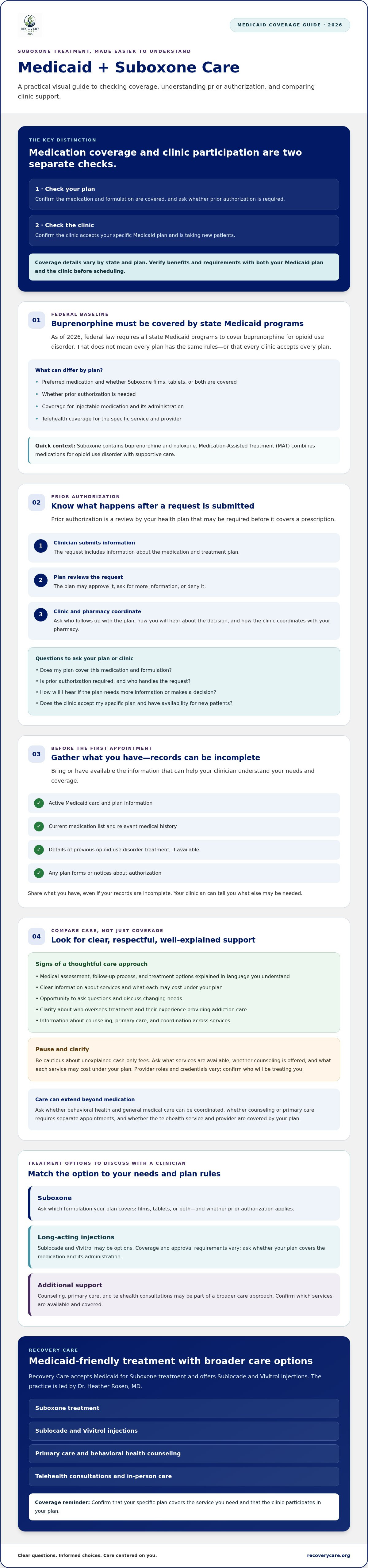
As of 2026, federal law requires all state Medicaid programs to cover buprenorphine for opioid use disorder. However, plan rules, preferred medications, and prior authorization requirements can vary. Coverage also does not mean every clinic accepts every Medicaid plan. Confirm participation with both your plan and the provider. A Medicaid-enrolled Suboxone clinic participates in Medicaid and provides covered addiction care under applicable program and state plan rules.
Why Quality Matters in Medicaid-Covered Care
Accepting Medicaid is only one part of choosing a clinic. Look for a provider that explains the medical assessment, follow-up process, and treatment options in language you understand. A clinic focused narrowly on prescriptions may not offer the broader support you want. Ask what services are available, whether counseling is offered, and what each service may cost under your plan. Be cautious about unexplained cash-only fees.
You should feel able to speak honestly, ask questions, and discuss changes in your needs. Ask who will oversee your treatment and about their experience providing addiction care. You can also ask whether a board-certified addiction specialist is involved. Provider roles and credentials vary, so confirm who will be treating you.
The Shift Toward Comprehensive Recovery in 2026
Addiction treatment can be considered alongside behavioral health and general medical care. Coordinating these needs through one provider or care team may reduce the need to repeat your history and help clinicians consider your overall health. Ask how the clinic coordinates care, which services are available, and whether you need separate appointments for counseling or primary care.
Telehealth consultations can be useful if getting to an office is difficult or you prefer to speak from a private location. Medicaid coverage for telehealth varies by state and plan, so confirm that your specific service and provider are covered before scheduling. Recovery Care offers telehealth consultations alongside Suboxone treatment, primary care, and behavioral health counseling, with care led by Dr. Heather Rosen, MD. Ask whether those options fit your needs and coverage.
How Medicaid Covers Suboxone and MAT in 2026
Medicaid coverage can make Suboxone treatment more accessible, but the details depend on your state plan. Federal law requires state Medicaid programs to cover buprenorphine for opioid use disorder. Plans may differ on whether they cover Suboxone films, tablets, or both, which formulation they prefer, and whether they require prior authorization. Before your appointment, ask your plan or pharmacy which formulation is covered. Also confirm that the clinic accepts your specific Medicaid plan.
Searching for suboxone clinics that accept medicaid near me can feel complicated when coverage rules are unclear. A clinic familiar with Medicaid may help you understand the steps, but approval rules and timing vary. For help locating treatment resources, SAMHSA's National Helpline offers confidential guidance and referrals.
Understanding Prior Authorization and Pharmacy Coordination
Prior authorization is a review by your health plan that may be required before it covers a prescription. Your clinician submits information about the requested medication and treatment plan. The plan may approve the request, ask for more information, or deny it. Ask the clinic who will follow up with the plan and how you will learn if anything else is needed. You can also ask how the clinic coordinates with your pharmacy.
To help your clinician prepare, gather:
- Your active Medicaid card and plan information
- Your current medications and relevant medical history
- Details of previous opioid use disorder treatment, if available
- Any forms or notices from your plan about authorization
Share what you have, even if your records are incomplete. Your clinician can tell you what else may be needed.
Medicaid for Injectable MAT: Sublocade and Vivitrol
Long-acting injectable treatments may be an option, but Medicaid coverage and approval requirements vary by plan. Ask whether your plan covers the medication and its administration, and whether prior authorization is required. Learn about the Sublocade injection, then discuss with a clinician whether it or Vivitrol may fit your treatment needs. Injectable treatment differs from taking a daily medication, but the right option depends on your health and clinical assessment. Confirm where the injection is provided and how follow-up is arranged.
Keep track of Medicaid renewal notices, too. Starting January 1, 2027, some adults aged 19 to 64 will need to renew every six months instead of annually. Requirements and timing can vary. Check notices from your state Medicaid agency, respond by the stated deadline, and keep your contact details current. Recovery Care accepts Medicaid for Suboxone, Sublocade, and Vivitrol treatment. Review Recovery Care’s treatment options and ask how the team can help you understand coverage steps.
Choosing a Medicaid Clinic: Quality Care vs. 'Suboxone Mills'
A clinic that accepts Medicaid should be willing to explain its care and billing clearly. Unexplained cash-only “side fees” or under-the-table payment requests are serious warning signs. Ask for an explanation of any charge and check with your Medicaid plan if something is unclear. Ask what clinical services are included, how follow-up works, and whether counseling is available. If a clinic focuses only on prescriptions, it may not provide the broader support you are looking for.
Responsible care should be individualized, not punitive. A clinician may recommend diagnostic tests or drug screening when relevant to your health assessment or treatment plan. You can ask why a test is being ordered, how the results will inform your care, and who can access them. Use SAMHSA's FindTreatment.gov to search for treatment providers and filter by options such as Medicaid and medication-assisted treatment. When comparing suboxone clinics that accept medicaid near me, look for clear answers, respectful communication, and a plan for follow-up.
The Importance of Holistic Health Monitoring
Recovery involves your whole health, not medication alone. Primary care can address general medical concerns, while routine physicals or blood work may be recommended based on your individual needs. For broader physical wellness needs such as nutritional counseling and weight management, community-focused providers like Quality Comprehensive Health Center offer dedicated care to support ongoing health goals. Ask how addiction treatment and general health care are coordinated, and whether any recommended service is covered by your plan. Learn more about primary care for recovery patients.
Patient Privacy and Confidentiality Rights
Privacy matters. HIPAA generally protects identifiable health information held by covered providers and health plans, though specific rules allow certain uses and disclosures. Ask the clinic how it handles records and communications. Insurance billing and plan communications may reveal that you received care. Telehealth can let you meet from a location you choose, but use a secure, private setting when possible.
Quality also shows in how you are treated. Clinicians should explain recommendations, invite questions, and treat you with dignity. Counseling can be part of that support; explore counseling for opioid addiction as one component of a broader treatment plan. Recovery Care offers behavioral health counseling and primary care alongside addiction treatment. Review Recovery Care’s treatment and care options to learn more.
What to Prepare for Your First Medicaid-Covered Appointment
A little preparation can make your first conversation easier. If you’re searching for suboxone clinics that accept medicaid near me, call before booking to confirm that the clinic accepts your specific Medicaid plan and is taking new patients with that coverage. Ask whether your plan requires prior authorization and what information the clinic needs from you.
Use this checklist to get ready:
- Check your coverage. Confirm with your state Medicaid agency or health plan that your eligibility is active for 2026. Bring your Medicaid card or have your member details available.
- Gather relevant medical history. Bring records of previous addiction treatment, if available, along with information about current or past health conditions.
- List your medications. Include prescriptions, over-the-counter medicines, and supplements so your clinician can review them.
- Confirm the clinic’s availability. Ask whether it accepts your plan, is taking new patients, and can explain authorization or intake steps before your appointment.
Telehealth vs. In-Person: Which Medicaid Option Is Best?
Telehealth may be convenient if travel is difficult or you prefer speaking from a private place. In-person visits may suit you better if you prefer meeting face to face or your care requires an office visit. Federal rules in effect through December 31, 2026, allow buprenorphine prescribing via telehealth without a prior in-person visit, but Medicaid coverage and clinic availability still vary. Ask your plan and provider what applies to your care. Read more about telehealth addiction counseling.
What Happens During the Intake Evaluation?
Your intake gives the clinician a chance to understand your health, treatment history, and goals. They may ask about medications, symptoms, and behavioral health needs, then discuss appropriate next steps and an individualized treatment plan. You can ask why a question or assessment is needed. You do not need to have every record ready to start the conversation. The goal is to understand how to support you, not to judge or interrogate you.
Recovery Care offers Medicaid-covered Suboxone treatment, telehealth consultations, primary care, and behavioral health counseling. Review Recovery Care’s treatment options and ask what to prepare for an initial conversation.
Recovery Care: Medicaid-Friendly MAT and Primary Care
Recovery involves your overall health, not only one prescription. Recovery Care is led by Dr. Heather Rosen, MD, and brings addiction treatment together with primary care and behavioral health counseling. The practice accepts Medicaid and Medicare for Suboxone treatment and offers Sublocade and Vivitrol injections. Ask which services are covered by your specific plan.
A clinician can discuss Suboxone treatment alongside your broader health needs and explain whether any assessments or tests are appropriate. Ask what they are for, how results will inform care, and whether your plan covers them.
The Recovery Care Difference: Beyond the Prescription
Medication is one part of a care plan. Recovery Care also offers behavioral health counseling and primary care, giving patients options to discuss emotional well-being and general health as treatment progresses. Ask how these services fit together and whether separate appointments or coverage checks are needed.
You should have space to ask questions, understand recommendations, and share concerns without being judged. As you compare suboxone clinics that accept medicaid near me, ask how the clinic coordinates medication treatment with counseling and primary care, and how it helps patients understand Medicaid requirements.
Starting Your Journey Today
Recovery Care offers telehealth consultations and in-person care. Appointment timing and availability can change, so contact the practice through its official channels to ask whether it is accepting new Medicaid patients, what appointment options are available, and what information to have ready. You can also ask how the practice handles privacy and what to expect during an initial conversation.
You do not need every answer before reaching out. Explain that you are looking for Medicaid-covered treatment and ask about Suboxone, other available options, counseling, primary care, and coverage. A first conversation can help clarify possible next steps without requiring you to make every decision at once.
Take Your Next Step Toward Supported Recovery
Finding suboxone clinics that accept medicaid near me means checking more than whether a provider accepts Medicaid. Confirm that the clinic accepts your specific plan, ask how it handles prior authorization, and look for respectful care that can address behavioral health and general medical needs alongside treatment.
Before your first appointment, check that your coverage is active and gather your medication list and relevant treatment history. Ask whether telehealth or in-person care is available and what to expect during the initial conversation. You deserve clear answers and care that treats you with dignity.
Recovery Care is led by Medical Director Dr. Heather Rosen, MD, and accepts Medicaid, Medicare, and most major insurance. Telehealth consultations and in-person care include Suboxone treatment, primary care, and behavioral health counseling. Contact Recovery Care to ask about Medicaid coverage and available treatment options.
Frequently Asked Questions
Does Medicaid pay for Suboxone prescriptions in 2026?
Yes. In 2026, Medicaid programs are required to cover buprenorphine for opioid use disorder, and Suboxone contains buprenorphine. However, your plan may have rules about covered formulations, participating providers, or prior authorization. Before filling a prescription, contact your Medicaid plan and pharmacy to confirm coverage for the prescribed medication and ask whether approval is needed. Coverage varies, so verify your own benefits rather than assuming every plan works the same way.
How do I find a Suboxone doctor near me that takes Medicaid?
To find suboxone clinics that accept medicaid near me, search SAMHSA’s FindTreatment.gov for providers and payment options, then confirm directly with the clinic that it accepts your specific Medicaid plan and is taking new patients. You can also call your plan for participating providers. Ask whether the clinician provides medication treatment, what follow-up and counseling are available, and whether prior authorization may be required. Recovery Care accepts Medicaid, but check your plan’s participation details before scheduling.
Can I get a Suboxone prescription via telehealth if I have Medicaid?
Possibly. Federal rules in effect through December 31, 2026, allow buprenorphine to be prescribed via telehealth without a prior in-person visit, when clinically appropriate and consistent with applicable requirements. Medicaid coverage for the appointment and prescription still depends on your state plan and circumstances. Before booking, ask your plan whether telehealth MAT is covered and confirm that the clinic offers a telehealth consultation for your needs. A clinician must assess whether Suboxone is appropriate for you.
What should I do if my Medicaid prior authorization for Suboxone is denied?
Ask your health plan for the reason for denial and any appeal deadline, then share the notice with your prescribing clinician. The clinic may be able to clarify what documentation is missing, submit additional clinical information, or discuss the review process with you. Ask your plan how to appeal and what forms or records it requires. Do not change or stop a prescribed treatment without speaking with your clinician. Approval decisions and timing vary by plan.
Are there any out-of-pocket costs for Medicaid patients at Recovery Care?
Recovery Care accepts Medicaid, but whether you owe anything depends on your specific plan, eligibility, covered services, and any applicable cost-sharing. Your individual responsibility depends on those details. Before an appointment or service, ask Recovery Care and your plan to verify coverage, authorization requirements, and any patient responsibility. Request a clear explanation of charges, including whether a service or medication is covered, so you can make an informed decision.
Does Medicaid cover long-acting injections like Sublocade or Vivitrol?
Coverage for Sublocade and Vivitrol depends on your state Medicaid plan and may involve prior authorization or other requirements. Ask whether the medication and its administration are covered, which provider can administer it, and whether you need approval before treatment. A clinician can explain how these options differ and whether either fits your health needs. Recovery Care offers Sublocade and Vivitrol injections and accepts Medicaid, but confirm your individual benefits with the practice and your plan.
What documents do I need for my first Medicaid Suboxone appointment?
Bring or have ready your Medicaid card and member information, a list of current prescriptions and over-the-counter medicines, and relevant medical history. Previous addiction treatment records can help, but contact the clinic if you do not have them. Ask what to do next rather than assuming missing paperwork should stop you from reaching out. Also bring any plan notices about coverage or prior authorization. Before the visit, ask whether the clinic needs specific forms or information to confirm your benefits.
Can I receive primary care and addiction treatment at the same clinic?
Yes. Some practices provide both, allowing clinicians to consider addiction treatment alongside general health needs. Recovery Care offers Suboxone treatment and primary care, as well as behavioral health counseling, through care led by Medical Director Dr. Heather Rosen, MD. Ask how appointments and records are coordinated, whether each service is covered by your Medicaid plan, and whether you need separate visits or authorization. Receiving these services through one practice may make it easier to discuss your overall health with a connected care team.


