

What if a Suboxone appointment feels less like a test and more like the start of a conversation? If you’re unsure what to expect or worried your history and goals won’t be heard, preparing a few questions to ask a suboxone doctor can help you feel more grounded and involved in decisions about your care.
You don’t need to have everything figured out before you arrive. A first visit is a chance to talk about your health, past treatment, current medications, and what you hope will change. Asking about medication safety, treatment options, and follow-up can help you understand the plan and raise concerns at your own pace.
This guide offers practical questions to bring to your appointment and ideas about what information may be helpful to share. You’ll also learn how to ask about counseling, primary care, and ongoing support. At Recovery Care, outpatient medication treatment is available in person or through telehealth, alongside behavioral health counseling and primary care. A manageable next step can begin with one honest question.
Key Takeaways
- Use questions to ask a suboxone doctor to clarify your goals, medication concerns, and the support you want as part of care.
- Ask for patient-specific instructions about starting treatment, possible side effects, medication interactions, and changes to report.
- Notice whether your care plan reflects your priorities and includes time to discuss concerns and follow-up.
- Clarify appointment format, privacy practices, follow-up, and insurance coverage so you know what to expect next.
- Recovery Care offers outpatient Suboxone treatment alongside behavioral health counseling and primary care, with in-person and telehealth care.
Questions to Ask a Suboxone Doctor Before Your First Appointment
A first appointment can feel like a lot, especially if you’re unsure what the clinician will ask or how treatment decisions are made. Bringing a few questions is a practical way to feel more grounded and take an active role in your care. You don’t need to know medical terms or have every detail ready. The goal is to make space for an honest conversation about what matters to you.
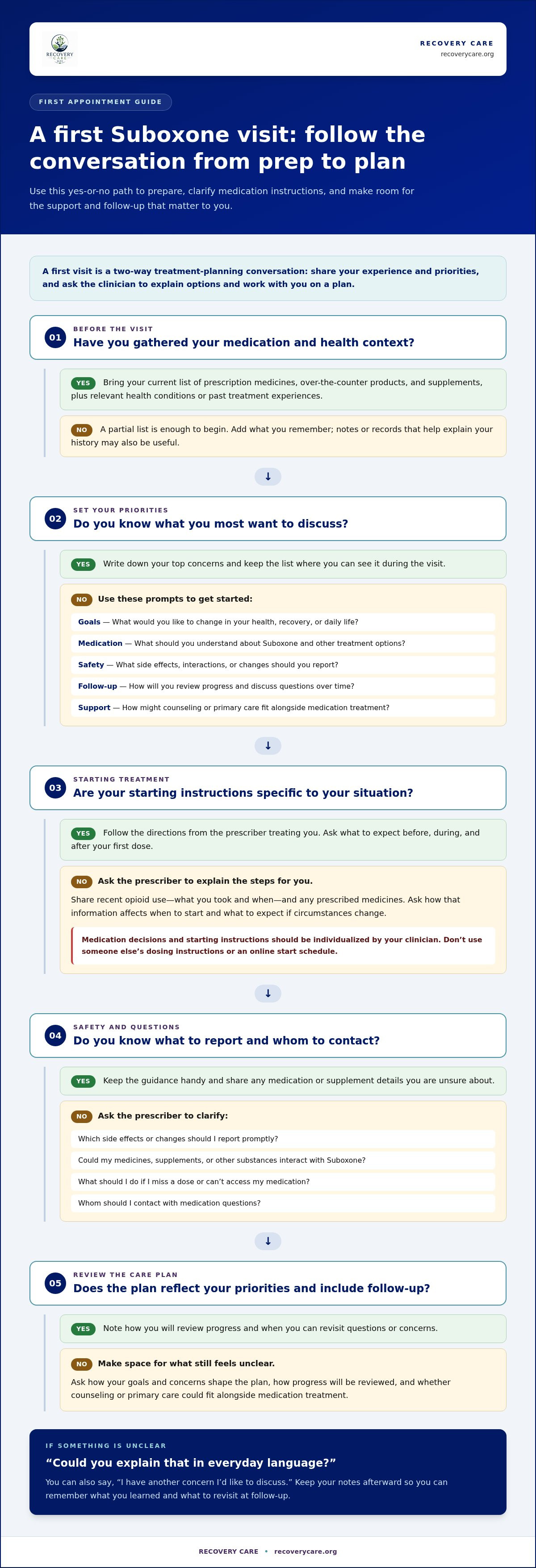
A useful first visit is a two-way treatment-planning conversation: you share your experience and priorities, and the clinician explains options and works with you on a plan. To prepare, jot down questions about:
- Your goals: What changes would you like to see in your health, recovery, or daily life?
- Medication: What should you understand about Suboxone and other treatment options?
- Safety: What side effects, interactions, or changes should you report?
- Follow-up: How will you review progress and discuss questions over time?
- Support: How might counseling or primary care fit alongside medication treatment?
Bring a current list of prescription medicines, over-the-counter products, and supplements, along with health conditions or past treatment experiences you think may be relevant. Notes or records that help explain your history may also be useful. Preparation doesn’t have to be perfect. A partial list and a few questions are enough to begin.
What should I tell the doctor about my health and treatment goals?
Share relevant health conditions, current medications, and what you’ve tried before, including what felt helpful or difficult. Describe what you hope might change in everyday life, such as feeling more stable, reconnecting with responsibilities, or getting support for your overall health. You can ask, “How might this information affect the plan we discuss?” Sharing context helps the clinician consider your situation rather than make assumptions.
How can I make sure my most important questions get answered?
Write down your top concerns before the appointment and keep the list where you can see it. The overview of Buprenorphine/naloxone (Suboxone) can help you identify terms you’d like the prescriber to explain in the context of your care. If something is unclear, try: “Could you explain that in everyday language?” You can also say, “I have another concern I’d like to discuss.” Your questions deserve attention, even if they seem small.
Keep your list afterward, too. It can help you remember what you learned and note anything to revisit at follow-up. The best questions to ask a suboxone doctor are the ones that help you understand your choices and speak up about what you need.
Ask About Suboxone, Starting Treatment, and Medication Safety
It’s reasonable to want clear instructions before taking a new medication. Suboxone treatment should be discussed in the context of your health, recent opioid use, other medications, and treatment goals. The prescriber should explain what applies to you and make room for questions, rather than expect you to work out a safe plan from general advice online.
Medication decisions and instructions for starting Suboxone should be individualized by the clinician treating you. Don’t use someone else’s dosing instructions or an online start schedule. Ask the prescriber to explain the steps for your situation and what to do if anything changes.
What should I ask about starting Suboxone?
Ask what to expect before, during, and after the first dose, and how the clinician will guide you through starting treatment. Be open about recent opioid use, including what you took and when, as well as any prescribed medications. You can ask, “How does that information affect your instructions for when to start?” Follow your prescriber’s directions rather than online dosing advice.
Useful questions to ask a suboxone doctor include:
- “What should I expect when I begin, and what should I do if I’m unsure about a symptom?”
- “How will you decide when I should take my first dose?”
- “What should I do if my circumstances change before I start?”
Ask the clinician to explain how Suboxone fits into your overall treatment plan. SAMHSA’s information on buprenorphine describes its role in treatment and can help you identify topics to discuss, including counseling and other support.
Which safety and medication-interaction questions matter?
Tell the prescriber about prescription medicines, over-the-counter products, supplements, and other substances you use. These details help the clinician consider possible interactions and give guidance tailored to you. If you’re unsure whether something matters, mention it anyway. You don’t have to decide on your own what belongs on the list.
- “Which side effects or changes should I report promptly?”
- “Could any of my medicines or supplements interact with Suboxone?”
- “What should I do if I miss a dose or can’t access my medication?”
Ask whom to contact with medication questions and what steps to take if you can’t follow the plan as discussed. If you’re considering treatment and want a supportive place to begin the conversation, learn about Recovery Care’s Suboxone treatment.
How to Tell Whether Your Suboxone Care Plan Is Personal and Collaborative
A Suboxone visit can involve medication decisions, but your goals and concerns should be part of the discussion. A collaborative conversation makes room to discuss what matters to you, how you’ll review progress, and what other support could be useful. If an answer feels unclear, ask for an explanation or note it as something to revisit.
Use these questions to ask a suboxone doctor how care will be shaped and reviewed:
- “How can we define meaningful progress based on what I want to change?”
- “How often will we review my plan, and what might lead us to adjust it?”
- “What support could complement medication treatment?”
Clear, collaborative answers
- The clinician asks about your priorities and explains how they inform the plan.
- You understand when progress will be discussed and how to bring up concerns.
- Medication, counseling, and other health needs can be considered together.
Questions to revisit
- You’re unsure how the plan connects to your goals.
- You don’t know when or how to discuss changes in your experience.
- You have questions about support that haven’t been addressed yet.
This isn’t a scorecard or a demand for perfect answers in one visit. It’s a practical way to notice what you understand and what you’d like to clarify. For broader context about treatment and recovery, the Suboxone treatment guide can help you prepare additional topics for discussion.
What should I ask about treatment goals and progress?
Ask how you and the clinician will decide what progress means for you, rather than assuming it has one definition. You might discuss changes in daily routines, health, or recovery priorities that feel important. Find out how often the plan will be reviewed and what could prompt a conversation about adjusting it. Difficult days or setbacks are information to share, not a reason for shame.
How will medication fit with counseling or other health needs?
Medication is one part of care. Ask what behavioral health counseling or other support may complement it, and whether primary care needs can also be discussed as part of your overall health. Counseling can provide space to work through emotional or behavioral concerns alongside medication treatment. For more on this kind of support, explore opioid addiction counseling.
Your plan can evolve as your needs and priorities become clearer. You’re allowed to ask questions, share preferences, and return to topics that need more attention.
Ask About Follow-Up, Privacy, Telehealth, and Insurance
Practical details matter, too. Knowing how appointments work, how to get follow-up guidance, how your information is handled, and what to expect from insurance can make the next step feel more manageable. Take these topics one at a time. Ask the care team to explain anything that feels unclear, and keep the answers somewhere you can refer to later.
Try this sequence of questions for your Suboxone doctor or care team:
- Appointment format: “Will visits be in person, by telehealth, or a combination? What should I prepare for either format?”
- Follow-up: “How are future visits arranged, and how should I raise a clinical question between appointments?”
- Privacy: “How is my health information handled, and what communication methods do you use?”
- Coverage: “Can you explain what my plan may cover and whether patient-specific costs or billing steps apply?”
- Next steps: “What should I expect after this conversation, and is there anything you need from me?”
What should I ask about appointments and follow-up?
Ask how follow-up visits are scheduled and what to do if a question comes up between them. In-person and telehealth appointments may call for different preparations, such as arranging travel or finding a private place with a reliable connection. Recovery Care provides outpatient care in person and through telehealth. For more context on virtual support, explore this guide to telehealth addiction counseling.
Clarify how you’ll receive appointment details and what to do if you need to reschedule. If you use telehealth, ask how the visit works, what technology you’ll need, and how to get help with a technical issue. Knowing these details can help you choose a format that fits your circumstances and arrive with fewer logistics questions.
How can I clarify privacy and insurance before treatment?
It’s okay to ask direct questions about privacy, such as: “Who can access my records?” “How do you handle calls, texts, or messages about my care?” and “Can I tell you how I prefer to be contacted?” The clinic can explain how it manages records and communications. If a particular kind of contact could concern you, say so and ask what options are available.
For insurance questions, have your plan information ready. Ask how benefits are reviewed, what the plan may cover, and whether patient-specific costs or billing steps apply. Coverage depends on the individual plan. Recovery Care accepts most major insurance plans, Medicare, and Medicaid, but your own benefits determine the details of your care.
Once you understand appointment format, follow-up, privacy, and coverage, you can decide what next step feels manageable. Explore supportive Suboxone care with Recovery Care.
Turn Your Questions Into a Clear Next Step With Recovery Care
Preparing questions doesn’t mean you need to make every decision before seeking care. It can help you identify what you want to understand, what matters in your daily life, and which concerns you’d like to discuss first. Questions to ask a suboxone doctor are a starting point for a thoughtful conversation, not a test you have to pass.
Recovery Care provides outpatient Suboxone treatment alongside behavioral health counseling and primary care, in person and through telehealth. Bringing a short list of priorities can help you use the first conversation to explore how these supports may fit your needs. The clinician can learn about your health and discuss appropriate options with you.
What can I expect from a first conversation with Recovery Care?
A first conversation is an opportunity to talk about your health history, questions, concerns, and treatment goals. Share what you hope might change and what feels uncertain; there’s no need to have polished answers. Medical Director Dr. Heather Rosen, MD, leads a compassionate, confidential care team. The clinician will consider your circumstances before discussing treatment decisions, so an appointment does not guarantee a particular medication or outcome.
If you feel nervous, begin with a simple statement: “I’m interested in learning about my options, and I have a few questions.” Then choose one concern to start with. If you need time to think, say so. A respectful conversation gives you space to understand the information and consider how it relates to your priorities.
What if I am not ready to begin treatment today?
You can ask questions without committing to an immediate decision. Learning how care works, what support may be part of a plan, and what follow-up could involve can help you decide what feels manageable. If you leave with unanswered concerns, write them down while they’re fresh. You can return to them when you feel ready to continue the conversation.
Recovery Care accepts most major insurance plans, Medicare, and Medicaid. Coverage and patient-specific benefits depend on the individual plan, so the care team can discuss your coverage questions without assuming what your plan will pay. Your next step can simply be gathering information, reviewing your notes, or talking through your goals at a later appointment.
Moving at a manageable pace is still moving forward. If you’re ready to explore outpatient Suboxone care with counseling and primary care as part of broader support, take the next step with Recovery Care.
Let One Question Open the Door to Care
You don’t have to feel completely certain before exploring support. A first conversation can help you understand what options may fit, and you can take time to think about what you learn. Questions to ask a suboxone doctor can help you speak up and make informed choices; you don’t need to have every answer in advance.
If you’re ready, choose a next step that feels possible: learn more about care, share what you’re hoping for, or begin a conversation. Recovery Care provides a supportive setting to discuss your needs without judgment. You remain part of the conversation as you consider what comes next.
Take a supported next step with Recovery Care. You deserve to be heard, and moving forward can begin at your own pace.
Frequently Asked Questions
What should I bring to my first Suboxone appointment?
Bring a current medication list, relevant health information, and questions you want to discuss. Include prescriptions, over-the-counter medicines, and supplements, plus allergies or past treatment details you think may matter. Insurance information can help with coverage questions. A short list of questions to ask a suboxone doctor can help you remember what you want clarified. If you don’t have every detail, bring what you can and explain what’s missing.
Can I ask a Suboxone doctor about other treatment options?
Yes. Ask which options may fit your health history, treatment preferences, and goals. Recovery Care offers outpatient treatment options that include Suboxone, Sublocade injections, and Vivitrol injections, along with behavioral health counseling and primary care. After learning about your situation, the clinician can discuss which options may be appropriate. You can also ask how each option is used and what follow-up or other support may be involved.
How long does a first appointment with a Suboxone doctor take?
Appointment length can vary based on your health history, questions, and what needs discussion, so there isn’t one duration that applies to everyone. If you have a scheduling constraint, mention it when arranging the visit and ask how much time to set aside. That can help you plan transportation, work, or caregiving responsibilities. You can also ask how to handle topics that need more discussion after the initial appointment.
Is a Suboxone doctor's appointment confidential?
Your care team can explain how it handles health information, records, and communication. Ask who may access your information, how messages or appointment reminders are sent, and what privacy choices are available. Don’t assume every communication method feels private in your circumstances. If you share a phone, email account, or living space with others, tell the team what contact method feels safest so you can discuss appropriate options.
Can I use telehealth to talk with a Suboxone doctor?
Recovery Care offers telehealth consultations, so you can ask about meeting remotely. The clinician can discuss whether telehealth fits your needs and explain how the appointment works. Before a virtual visit, consider whether you have a private place to talk and a device with a reliable internet connection. You can also ask what to do if the connection fails or you need to share documents during the conversation.
Does insurance cover appointments with a Suboxone doctor?
Coverage depends on your individual insurance plan and the care involved. Recovery Care accepts most major insurance plans, Medicare, and Medicaid, but acceptance doesn’t guarantee that a particular service is covered or determine what your plan may require. Share your plan information and ask how benefits are reviewed, whether prior approval applies, and what patient-specific costs or billing steps to understand before care begins.
What should I do if I feel uncomfortable asking my doctor a question?
You can write the question down and read it aloud, or start by saying, “I’m nervous to ask this, but I’d like to understand.” Asking for plain language or a moment to think is okay. If speaking feels difficult, ask whether you can share the concern another way or return to it later. Your comfort matters, and you deserve a respectful response without judgment.


