
What if a craving or setback is a signal to adjust your support, not proof that treatment has failed? If you’re receiving medication for opioid use disorder, uncertainty about what to do in a high-risk moment can feel overwhelming. The most useful relapse prevention strategies for MAT patients make room for real-life challenges while keeping care and safety at the center.
It’s understandable to want a clear plan that connects medication with counseling, supportive people, and everyday routines. A flexible approach can help you recognize personal warning signs, choose practical steps when cravings arise, and reach out for help without shame. Medication is an important part of treatment, and decisions about it belong in conversation with your prescriber.
This guide explains how to build a plan that works alongside MAT and can change as your needs do. You’ll learn what to include for high-risk moments, how to respond safely after a lapse or return to use, and how ongoing medical care and behavioral health counseling can support your next steps.
Key Takeaways
- Use a simple four-step process to notice patterns, identify risks, choose responses, and update your plan as life changes.
- Match your coping response to the moment, whether that means contacting someone you trust, changing your setting, or grounding yourself.
- Relapse prevention strategies for MAT patients work best when they support ongoing, individualized medication care rather than replace it.
- A lapse or missed appointment doesn’t erase your progress. Contact your MAT care team promptly to discuss safety and next steps.
- Regular medical follow-up, behavioral health counseling, and telehealth consultations can help keep your prevention plan connected to your needs.
What relapse prevention means for people receiving MAT
Needing continued support during recovery isn’t a personal failure. Opioid use disorder can require ongoing, individualized care, and a prevention plan helps you prepare for difficult moments rather than expect yourself to manage every risk alone. Relapse prevention means noticing potential risks, deciding how to respond, and staying connected to treatment that fits your needs and goals.
Medication for opioid use disorder (MAT) is a central part of treatment, but it doesn’t replace attention to behavioral, social, or practical needs. Stress, mental health symptoms, relationships, pain, housing concerns, or a disrupted routine may affect recovery. A plan can connect medication management with counseling and support from people you trust. The cognitive-behavioral approach described in Relapse Prevention also emphasizes recognizing high-risk situations and preparing coping responses.
A lapse or return to use is a reason to reassess support, not proof that treatment has failed. SAMHSA’s Treatment Improvement Protocol 63 emphasizes individualized care for opioid use disorder. A setback can be discussed with your care team as part of adjusting that care. People may use the terms lapse and return to use differently, so focus on what happened, your immediate safety, and the support you need next.
How does relapse prevention fit alongside MAT?
Keep medication questions with your prescribing clinician. Don’t stop, reduce, or change a medication on your own. If cravings, side effects, or concerns about treatment come up, tell your care team so you can discuss appropriate next steps together.
What should a prevention plan help you do?
A useful plan should be personal and easy to refer to under stress. It can help you recognize early changes, decide who to contact, and know what action to take if risk increases. Write down details specific to your life, then review them with your care team as your needs change.
- Notice warning signs: Identify changes in mood, sleep, routines, or connection with others that may signal you need support.
- Name your support people: Choose trusted contacts and record how to reach them, along with your MAT care team’s contact information.
- Plan for different situations: Note what you’ll try when cravings arise, whom you’ll contact if you experience a lapse, and how you’ll reconnect with care if you miss an appointment.
Planning ahead doesn’t mean predicting every challenge. It gives you a clearer next step while leaving room to ask for help and adapt your approach.
Build a relapse prevention plan around triggers and early warning signs
A useful plan doesn’t assume you’ll face the same challenges as anyone else. Stress, isolation, conflict, pain, or a change in routine can raise risk for some people, while other situations may matter more in your life. The goal is to notice what affects you and decide on supportive actions before you need them.
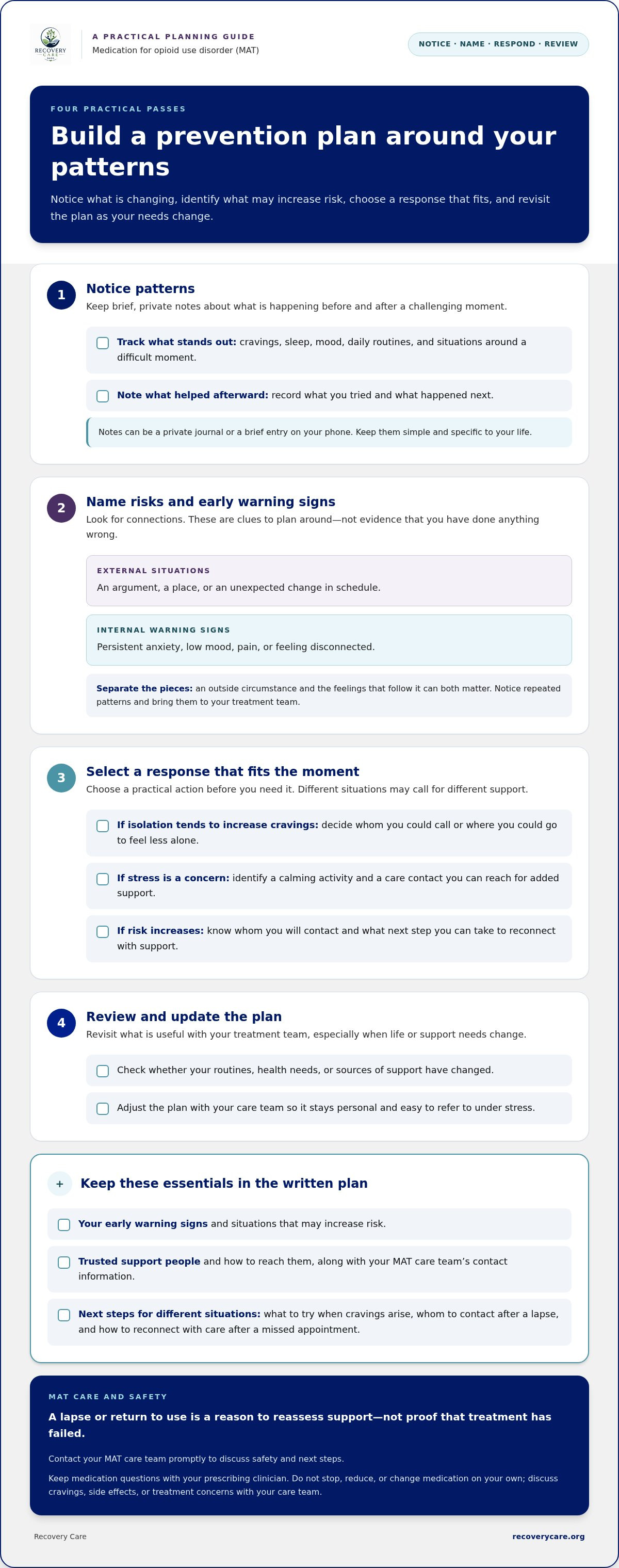
Notice patterns, name risks, select responses, and review the plan. This four-step sequence turns observations into practical choices without treating a difficult feeling or situation as a personal failing.
- Notice patterns. Keep a private journal or a brief note on your phone about cravings, sleep, mood, daily routines, and situations that stand out. Record what was happening before a challenging moment and what helped afterward.
- Name risks. Look for connections. An external trigger might be an argument, a place, or an unexpected schedule change. An internal warning sign might be persistent anxiety, low mood, pain, or feeling disconnected. These are clues, not evidence that you’ve done anything wrong.
- Select responses. Choose an action that fits the situation. For instance, if isolation tends to increase cravings, decide whom you could call or where you could go to feel less alone. If stress is a concern, identify a calming activity and a care contact you can reach for added support.
- Review the plan. Revisit what’s useful with your treatment team, especially when routines, health needs, or sources of support change.
How can you identify personal triggers and warning signs?
Keep notes simple and private. You might write down the time, your mood, sleep, how intense the craving felt in your own words, what was happening, and what you did next. Over time, this can help distinguish outside circumstances from internal experiences. A long workday is different from the worry you feel afterward, even if both contribute to a difficult evening. Bring repeated patterns to your treatment team to explore possible responses together.
What belongs in a written prevention plan?
Keep the plan short enough to use when you’re under pressure. Include information that helps you act, not a list of reasons to judge yourself. Consider writing down:
- Your personal early warning signs and situations that may increase risk.
- Grounding activities or other coping actions you’re willing to try.
- Trusted support contacts and the best way to reach them.
- Your existing medication and follow-up arrangements, including how you’ll reconnect with your care team if plans are disrupted.
Store the plan somewhere accessible, such as a phone note or a folded card, while protecting your privacy. Update it when an approach stops being useful or your circumstances shift. If you’re working with a counselor, behavioral health counseling can help you review patterns and shape a plan that feels realistic.
Choose coping strategies that match the risk, not a one-size-fits-all rule
A coping tool is most useful when it fits the moment. A brief grounding exercise may help you pause when stress rises, while stepping away or calling someone you trust may be a better response to pressure in a particular setting. These actions can support your recovery, but they don’t replace prescribed medication or clinical care. Behavioral health counseling can complement medication by helping you practice responses and work through challenges. Learn more about opioid addiction counseling and how it can support recovery planning.
| Situation | Possible response | When to seek clinical support |
|---|---|---|
| Cravings or stress are rising | Pause, take a few steady breaths, name what you can see and hear, or contact a trusted person. | Reach out to your care team if cravings intensify, keep returning, or feel difficult to manage. |
| You feel pressured or unsafe in a setting | Change your surroundings, move to a safer place, and call someone you’ve chosen for support. | Contact your care team to discuss recurring situations and plan for future safety. |
| Pain, sleep problems, or mood concerns are affecting you | Use a grounding activity while following your existing care plan. | Talk with your clinician about symptoms and appropriate treatment options. |
What can help when cravings or stress rise?
Try a small, low-risk action first: pause before responding, place your feet on the floor, or focus on a few details around you. If connection would help, call or message a support person you’ve chosen. These steps may create space to decide what to do next, but they aren’t a test of willpower or a substitute for care. Follow your clinician’s guidance for pain, sleep, or mental health concerns.
How can you prepare for higher-risk situations?
Before a disrupted routine, difficult conversation, or time around substance use, decide how you’ll leave if you need to and whom you can contact. Arrange your own way to step away where possible, and let a trusted person know what support would be useful. Planning doesn’t require you to avoid every challenge. It gives you options if the situation becomes harder than expected.
If you have medication-specific questions, bring them to your prescribing clinician. The Suboxone treatment guide also offers information about treatment. Don’t change or stop medication without discussing it with your prescriber. Recovery Care provides outpatient MAT and behavioral health support. Recovery Care’s treatment and counseling can help address both medication and day-to-day recovery needs.
Handling Lapses, Cravings, or Missed Appointments
A lapse doesn’t erase your progress or prove that treatment has failed. It does mean it’s time to focus on safety and reconnect with support. Shame can make it tempting to avoid care, but your MAT team needs honest information to review what happened and discuss next steps without blame or punishment.
What should you do if opioid use happens again?
Start with immediate safety. Contact your MAT care team promptly and share what you can about the substance used, when it happened, whether other substances may have been involved, and any symptoms or medication concerns. These details can help clinicians reassess your needs. Don’t stop, restart, reduce, or otherwise change prescribed medication on your own. Ask your prescriber what to do next.
If you suspect an overdose, call emergency services immediately. Signs can include being unable to wake someone, slow or absent breathing, or blue or gray lips or fingertips. If naloxone is available, give it according to its instructions, call emergency services, and stay with the person. Give rescue breaths if you’re trained and it’s safe to do so. Follow the dispatcher’s directions. The CDC’s overdose response guidance explains steps for recognizing and responding to an overdose. Naloxone does not replace emergency care.
How can you respond to missed care or a disrupted routine?
A missed appointment is a reason to reconnect, not to wait until things feel worse. Contact your clinic to arrange follow-up and explain if a schedule change, transportation, privacy, or another practical barrier made attendance difficult. Then choose one manageable support for next time, such as a calendar reminder, help from someone you trust, or planning around your routine.
If attending in person is difficult, telehealth consultations can help you stay connected to care. Telehealth may be useful for some people and situations. This overview of telehealth addiction counseling discusses how virtual support can fit into recovery care.
Cravings without a lapse also deserve attention, especially if they’re getting stronger, happening more often, or feel hard to manage. Write down what’s changed and share it with your treatment team. Avoid making medication decisions based on a difficult moment. Your prescribing clinician can help assess the situation and guide care.
Relapse prevention strategies for MAT patients should make it easier to return to support after a disruption, not demand a perfect record. Recovery Care offers outpatient medication treatment and behavioral health counseling to support ongoing care.
Keep relapse prevention connected to ongoing, individualized MAT care
A prevention plan can change as your health, priorities, and daily circumstances change. Ongoing MAT care gives you a place to discuss what’s working, what feels difficult, and what support you want next. That may mean reviewing cravings or other symptoms, talking through a new challenge, or raising questions about medication. These conversations help keep the plan grounded in your experience rather than a fixed set of expectations.
How can ongoing care adapt when your needs change?
Check-ins are a chance to work collaboratively with your care team. You can share progress and setbacks, revisit your recovery goals, and explain what matters most to you now. If your needs have shifted, your team can discuss appropriate support and follow-up. Medication changes require clinical assessment and guidance from your prescribing clinician, so bring questions to them rather than adjusting treatment on your own.
Your concerns deserve to be heard with dignity and respect. If privacy or confidentiality is on your mind, raise that early so you can discuss your concerns as part of care. Treatment is individual, and no specific medication plan or outcome can be promised. The aim is to keep support responsive, with decisions made in conversation with you and your clinician.
What is a manageable next step toward support?
You don’t have to solve everything at once. A practical first step might be writing down one question for your next appointment, describing a challenge that has been affecting your routine, or asking to review your prevention plan. If you’ve fallen out of contact with care, reaching out to re-establish follow-up can help you discuss what would make continued support more manageable.
Recovery Care provides outpatient MAT and ongoing medication management, along with behavioral health counseling. Telehealth consultations are also available to help maintain contact with care. Your clinician can discuss which format is appropriate for your needs. Together, medical and behavioral support can address different parts of treatment without assuming everyone needs the same approach.
The most useful relapse prevention strategies for MAT patients can be revisited over time, with room to talk honestly about symptoms, goals, and support needs. Take one step at a time. You can explore ongoing outpatient MAT and behavioral health support through Recovery Care when you’re ready to learn more.
Make your next step one you can manage
You don’t need to have every answer before reaching for support. Consider choosing one concern you’d like to discuss at your next check-in, or one small way to make ongoing care easier to maintain. That step can help turn relapse prevention strategies for MAT patients into a living part of your treatment, shaped around what matters to you now.
Recovery Care offers individualized outpatient MAT and medication management, behavioral health counseling, and telehealth consultations. Most major insurance plans, Medicare, and Medicaid are accepted. The team can discuss care options with you and help you explore support that fits your needs. There’s no need to approach the next step perfectly. Explore compassionate outpatient MAT support and move forward at a pace that feels manageable. You deserve care that treats you with dignity and keeps the door open to continued support.
Frequently Asked Questions
Can relapse happen while someone is taking MAT?
Yes. Medication treatment can support recovery, but it can’t remove every risk or prevent every return to opioid use. Changes in health, stress, access to support, or other circumstances may affect how you’re doing. If cravings increase or opioid use occurs, share that with your care team. This information helps your clinician understand what’s changed and consider whether your care or follow-up needs should be reviewed.
Does a lapse mean MAT is not working?
No. A lapse doesn’t automatically mean MAT isn’t helping or that you’ve lost progress. Treatment is individualized, and your experience gives your clinician useful information about your current needs. You might discuss when the lapse happened, any changes in cravings or symptoms, and barriers that made support harder to access. Be open about what occurred so you and your clinician can consider appropriate next steps together.
What should I do if I have cravings while taking MAT?
Tell your prescribing clinician or treatment team if cravings are strong, persistent, or different from what you’ve experienced before. Note when they happen and whether they relate to a change in routine, stress, or a medication concern. Follow your current medication instructions, and don’t take extra medication or change your dose on your own. Your clinician can assess what’s going on and advise you about next steps.
Can counseling help prevent relapse during MAT?
Yes. Counseling can help you understand patterns that affect recovery, work through emotional or relationship concerns, and practice ways to respond to challenging situations. It can also give you a space to discuss mental health needs that may affect your well-being. Counseling complements medication rather than replacing it. The focus and approach can be tailored to your goals and discussed with your care team.
What happens if I miss a MAT appointment?
Contact your clinic as soon as you can to ask about follow-up and any medication instructions relevant to your situation. Don’t assume you should double a dose, skip treatment, or make another change without guidance from your prescriber. If a practical issue caused the missed visit, such as a calendar mix-up or competing responsibility, consider setting a reminder or asking someone you trust to help you keep track.
Is naloxone part of relapse prevention for MAT patients?
Naloxone is a medication used to reverse an opioid overdose, so it’s part of overdose safety planning, not a treatment for cravings or a way to prevent opioid use. If naloxone is available, learn how to use it and let people close to you know where it is. If you suspect an overdose, call emergency services immediately, give naloxone according to its instructions, and stay with the person.
Should I stop MAT after a relapse?
No. Don’t stop or change MAT on your own after a lapse or return to use. Contact your prescribing clinician and describe what happened, including any concerns about your medication or symptoms. Your clinician can assess your situation and discuss treatment options with you. Honest communication helps keep decisions focused on safety and your individual needs, rather than on shame or the assumption that treatment has failed.
Can telehealth support relapse prevention during MAT?
Yes, telehealth consultations can help some people stay connected with their care team, discuss concerns, or access behavioral health support. They may be useful if travel or scheduling makes an in-person appointment harder, but a virtual visit won’t fit every clinical need. Your care team can discuss whether telehealth is appropriate for the conversation or follow-up you need and help you plan care accordingly.


