
What if an opioid use disorder medication works by blocking opioids rather than acting on the same receptors? The vivitrol shot for opioids takes this different approach. Understanding the opioid-free transition is an important part of deciding whether it may suit you. You may also have questions about withdrawal, side effects, overdose risk, and how this treatment compares with other medications.
Vivitrol is an extended-release form of naltrexone. It blocks opioid effects, but it must be started only after opioids have cleared from your body, often following an opioid-free period of 7 to 14 days. Starting too soon can trigger sudden, severe withdrawal, so a qualified medical professional should guide the timing. The right treatment depends on your health, circumstances, and preferences. You don’t have to work through those decisions alone.
This article explains how Vivitrol works, what to discuss before the first injection, and which safety concerns to raise with a clinician. It also covers how ongoing medical care and behavioral health counseling can support treatment. At Recovery Care, Vivitrol injections are part of outpatient care that includes medical consultation and medication management, with counseling available alongside treatment.
Key Takeaways
- The vivitrol shot for opioids works differently from buprenorphine-based treatment. Comparing how each option fits your needs can help you prepare for a conversation with a clinician.
- Starting Vivitrol requires careful planning because naltrexone can trigger sudden withdrawal if opioids remain in your body. The appropriate opioid-free period varies by person.
- Ask about side effects and overdose precautions, including risks related to missed doses or stopping treatment.
- Sharing details about recent opioid use, medications, and health conditions can make a medical consultation more useful.
- Vivitrol may be part of a broader recovery plan that includes ongoing medical care and behavioral health counseling.
What Is the Vivitrol Shot for Opioids, and What Does It Do?
Asking about medication is a reasonable first step, not a commitment to start it. The vivitrol shot for opioids is an extended-release injection of naltrexone, a prescription medication used to treat opioid dependence as part of a comprehensive plan that includes psychosocial support, such as counseling. A clinician can consider your health, treatment history, and goals when discussing whether it may fit your needs.
Naltrexone is an opioid antagonist. It attaches to opioid receptors and blocks them rather than acting like an opioid itself. In everyday terms, it can prevent opioids from producing their usual effects while the medication is active. Naltrexone is available in different forms, including the extended-release injection used in Vivitrol. The shot isn’t a stand-alone cure and doesn’t replace individualized medical care or recovery support.
How does naltrexone affect opioid receptors?
Think of opioid receptors as locks that opioids can activate. Naltrexone occupies those locks, making it harder for opioids to activate them. This blockade is different from easing withdrawal symptoms, and Vivitrol isn’t a medication to take while opioids are still in your system. It also doesn’t eliminate cravings for everyone. A blocked opioid effect is not protection from overdose. Taking more opioids to try to overcome the blockade can be dangerous.
What does once-monthly treatment mean in practice?
Vivitrol is a recurring, extended-release injection administered by a healthcare professional once a month. Unlike a daily pill, it provides medication over time after the injection. The dose can’t be removed once given, so discuss your medical history and treatment plan before starting.
Care doesn’t end on injection day. Follow-up appointments give your care team an opportunity to discuss how treatment is going and address concerns. Counseling can provide ongoing support between doses. At Recovery Care, Vivitrol injections are offered as part of outpatient care that includes medical consultation and medication management, with behavioral health counseling available alongside treatment. Your plan should reflect your needs rather than follow a one-size-fits-all approach.
Why Must Someone Be Opioid-Free Before a Vivitrol Injection?
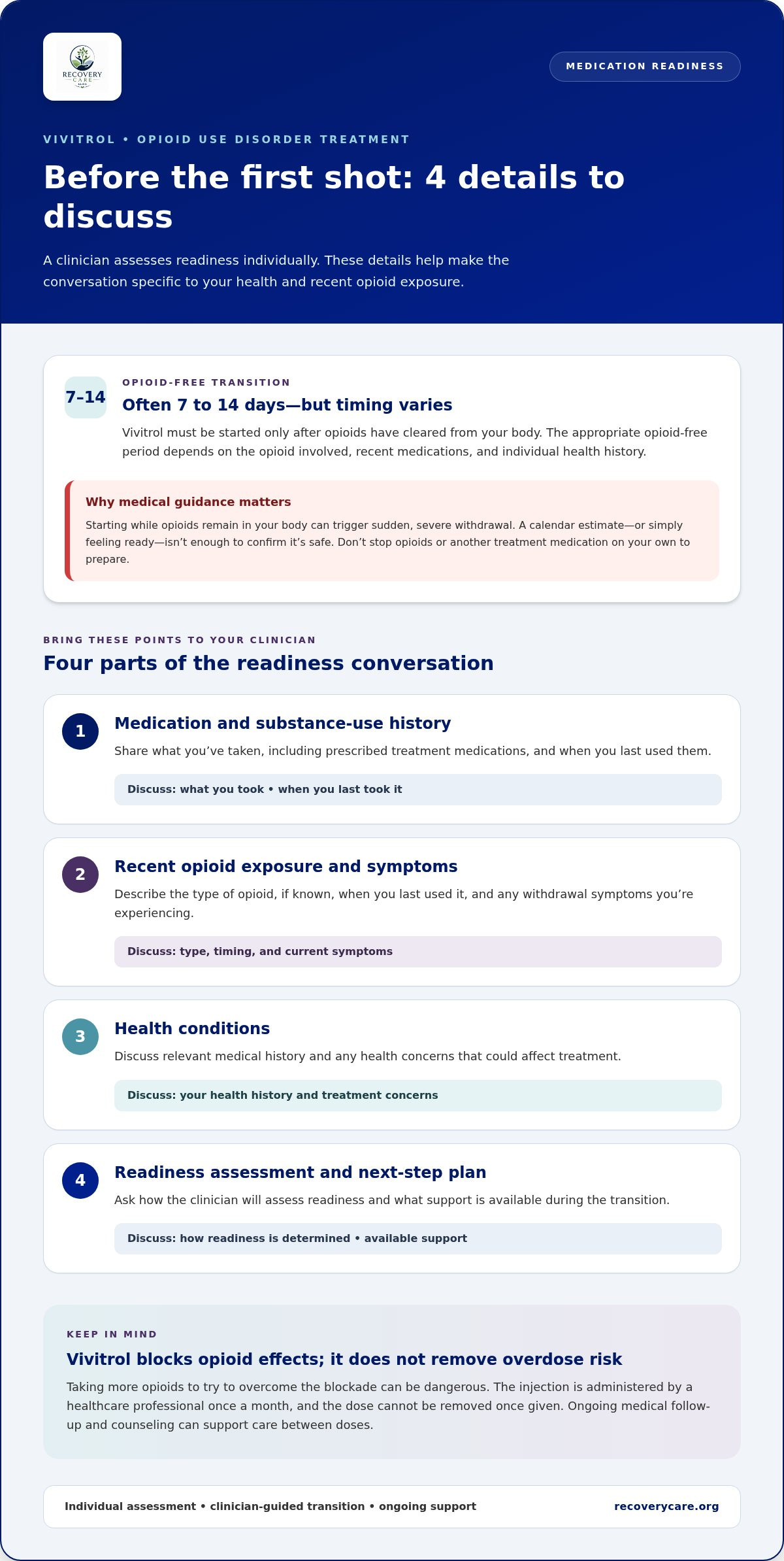
Before starting the vivitrol shot for opioids, a person needs to be opioid-free because naltrexone can trigger withdrawal if opioids are still in the body. The timing isn’t the same for everyone. It can depend on the opioid involved, recent medications, and individual health history, so a clinician should guide the transition. Don’t stop opioids or another treatment medication on your own to prepare for an injection.
What is precipitated withdrawal?
Precipitated withdrawal is a sudden onset of withdrawal symptoms after an opioid blocker displaces opioids from receptors. Symptoms may be severe, and the timing and experience can vary. A calendar estimate or feeling “ready” isn’t enough to confirm it’s safe to start. SAMHSA explains naltrexone treatment and the need to be opioid-free before beginning. If withdrawal symptoms become severe or concerning, seek prompt medical support.
How is readiness assessed before the shot?
The prescribing clinician determines readiness through an individual assessment, using current guidance and your health information. Be open about recent opioid exposure, prescribed medications, and any symptoms. This conversation is about planning safely, not judging your choices.
To make the readiness discussion more specific, prepare to talk about:
- Medication and substance-use history: Share what you’ve taken, including prescribed treatment medications, and when you last used them.
- Recent opioid exposure and symptoms: Describe the type of opioid if known, when you last used it, and any withdrawal symptoms you’re experiencing.
- Health conditions: Discuss relevant medical history and any concerns that could affect treatment.
- Next-step plan: Ask how readiness will be assessed and what support is available during the transition.
You don’t need to guess at the right timing or make the transition alone. If you’re comparing options, read our Suboxone treatment guide to learn about a different medication approach. Recovery Care’s outpatient medical consultations can help you discuss whether Vivitrol fits your circumstances and plan for care that may include counseling. Learn about outpatient treatment support.
Vivitrol Shot vs. Other Opioid Treatment: What Should You Weigh?
The vivitrol shot for opioids and buprenorphine-based treatment work in different ways and involve different routines. One isn’t automatically better for everyone. Compare how each approach works, how treatment is started, and what the routine involves. These are useful points to discuss with a clinician alongside your medication history and treatment goals.
| Consideration | Extended-release naltrexone (Vivitrol) | Buprenorphine-based treatment |
|---|---|---|
| Mechanism | An opioid antagonist that blocks opioid receptors. | A partial opioid agonist that activates opioid receptors in a controlled way. |
| Routine | A recurring injection administered by a healthcare professional. | May involve a regular medication routine or, for some treatment plans, a long-acting injection. |
| Starting treatment | Requires an opioid-free transition before the first injection, assessed by a clinician. | Has different initiation requirements; timing is planned with a clinician to reduce the risk of withdrawal. |
How is Vivitrol different from buprenorphine treatment?
Naltrexone blocks opioid receptors, while buprenorphine activates them partially. These different mechanisms affect how treatment is started and maintained. Vivitrol requires a person to be opioid-free before the first injection. Buprenorphine-based treatment has its own clinical starting plan and may involve a daily medication routine. Long-acting options offer another approach. For context, see our Sublocade and long-acting treatment guide.
Treatment choice should be individualized because health history, prior treatment, readiness, personal preferences, and recovery goals differ from person to person. A clinician can help weigh these factors and talk through questions or hesitation without treating them as failure.
What questions can help guide a shared decision?
Bring your questions and concerns into the conversation. You might ask:
- How does my treatment history or health affect which options may be appropriate?
- What medication routine and follow-up visits would each approach involve?
- How can counseling support my treatment, and what support is available between appointments?
- What should I do if I miss an appointment or have concerns about my medication?
Clear answers help you understand the practical differences, not just the medication names. Recovery Care offers outpatient medical consultations and medication management to support a personalized discussion of treatment options. You can explore outpatient treatment support as you consider your next step.
Vivitrol Safety: Side Effects, Overdose Risk, and Important Precautions
Understanding safety is part of deciding whether the vivitrol shot for opioids may fit your care. Like any medication, it can cause side effects, and the injection has specific precautions. Your prescribing clinician can review your health history, current medications, and questions before treatment and during follow-up.
Which side effects and health concerns need medical attention?
Commonly reported effects include nausea, headache, dizziness, tiredness, and reactions where the injection was given, such as pain, tenderness, swelling, or itching. Effects vary. Tell your care team about symptoms that are severe, worsening, or unusual.
Injection-site problems need particular attention. Seek prompt medical evaluation if the area becomes very painful or increasingly swollen, develops a hard lump or open wound, changes color, or appears infected. Rarely, serious reactions can damage tissue and may require treatment. Naltrexone can also affect the liver. Contact a clinician promptly about possible liver symptoms, such as yellowing of the skin or eyes, dark urine, or persistent pain in the upper right abdomen. Your clinician can assess whether Vivitrol is appropriate in light of liver concerns and any opioid medications you take.
Why does overdose risk require continued planning?
Vivitrol blocks opioid effects, but it does not guarantee protection from overdose. It doesn’t prevent overdose from non-opioid substances, and trying to overcome the opioid blockade by taking more opioids can lead to life-threatening overdose. Risk can also rise near the end of a dosing interval, after a missed injection, or after treatment is stopped. With time away from opioids, tolerance may decrease, so an amount previously tolerated can become dangerous.
Talk with your care team about having naloxone available and making a response plan with people you trust. Counseling and continued support can help you plan for changes in treatment. See this guide to opioid addiction counseling.
If you suspect an overdose, call 911 immediately. Give naloxone if available, follow the dispatcher’s instructions, and stay with the person until help arrives. Don’t wait to see whether symptoms pass.
For routine concerns, contact your care team rather than changing or stopping treatment on your own. Recovery Care offers outpatient medical consultations and Vivitrol injections, with behavioral health counseling available alongside treatment. Discuss Vivitrol care with Recovery Care.
Discussing the Vivitrol Shot and Taking a Supported Next Step
You don’t need every answer before speaking with a clinician. A consultation is a chance to explain your situation, understand your options, and ask whether the vivitrol shot for opioids could fit your care. Sharing what you know about recent opioid use, medications, and health concerns makes the discussion more useful. Asking questions doesn’t commit you to treatment.
What should you bring up in a Vivitrol consultation?
Consider jotting down notes before your appointment. Share what you’ve taken recently, your current medications, past treatment experiences, and health conditions. Include concerns about starting Vivitrol or anything that could make regular follow-up difficult. You don’t need a perfect history. Share what you know, and let the clinician help fill in the picture.
Questions you may want to ask include:
- How will you assess whether I’m ready to start?
- What risks or symptoms should I understand before treatment?
- What follow-up and medication management will I need?
- How can counseling support me, and what should I do if concerns come up between visits?
Your questions are welcome. You deserve a respectful conversation, without pressure or judgment. If you’re unsure about sharing sensitive information, ask how your health information is handled and who can access it.
How can outpatient care support recovery beyond the injection?
An injection is one part of care, not the whole plan. Medical follow-up can help track how treatment is going and address concerns, while medication management supports decisions over time. Behavioral health counseling can offer additional support with recovery goals and challenges. Counseling is an option to support your care, not a measure of your worth or commitment.
Recovery Care provides outpatient medical consultations and Vivitrol injections, with behavioral health counseling available alongside medication treatment. In-person and telehealth care are available. Telehealth can support some parts of care, such as a consultation, while injections require appropriate clinical arrangements for administration.
If you’re considering treatment, you can connect with Recovery Care to discuss outpatient support. A conversation can help you understand your options without pressure to decide before you’re ready.
Take Your Next Step With Support
Choosing treatment starts with understanding what each option involves. Vivitrol blocks opioid effects, but starting it requires a clinician-guided opioid-free transition. Its mechanism, readiness requirements, and injection routine differ from buprenorphine-based treatment, so the right fit depends on your health, history, preferences, and goals.
Safety planning matters, too. Discuss possible side effects, overdose risks if treatment is interrupted or stopped, and whether naloxone should be part of your plan. Medication can work alongside follow-up care and counseling, giving you support beyond the injection itself.
Recovery Care provides outpatient Vivitrol injections and medical consultations, with behavioral health counseling and telehealth consultations also available. Most major insurance plans, Medicare, and Medicaid are accepted, though individual benefits vary. You can take a first step by asking questions and talking through your options.
Talk with Recovery Care about outpatient Vivitrol treatment to discuss your options and take a supported next step.
Frequently Asked Questions
What is the Vivitrol shot used for in opioid addiction treatment?
Vivitrol is an extended-release naltrexone injection used with counseling and other psychosocial support to help prevent return to opioid use after withdrawal. The vivitrol shot for opioids blocks opioid receptors; it doesn’t ease withdrawal symptoms. A qualified clinician should assess whether it’s appropriate, explain potential risks, review your medications, and plan follow-up around your health and recovery needs.
How long do you have to be opioid-free before getting a Vivitrol shot?
The opioid-free period depends on your recent opioid use, medications, and clinical circumstances. Prescribing information generally calls for at least 7 to 10 days without opioids, but some situations may require a different or longer transition. Starting naltrexone too soon can trigger sudden, severe withdrawal. Don’t rely on a calendar estimate or stop prescribed treatment on your own. A clinician should assess your readiness and guide the timing.
Can Vivitrol cause withdrawal if opioids are still in your system?
Yes. If opioids remain in your body, naltrexone can displace them from receptors and trigger precipitated withdrawal, which may be severe. That’s why medical assessment before the injection matters. Tell your clinician honestly about recent opioid use, prescribed medications, and when you last took them. Don’t try to prepare by stopping treatment without guidance. Your care team can discuss a safer transition based on your circumstances.
How long does the Vivitrol shot last for opioid use disorder?
Vivitrol is an extended-release injection intended for once-monthly treatment, with the ongoing schedule guided by your prescribing clinician. Don’t assume its effects or overdose protection continue unchanged if an appointment is delayed or treatment stops. If you miss an injection, contact your care team for instructions rather than making assumptions about restarting. Ask how to plan for a treatment interruption and reduce overdose risk.
Does Vivitrol completely block an opioid overdose?
No. Vivitrol doesn’t guarantee protection from overdose, and taking more opioids to overcome the blockade can be life-threatening. Overdose risk may also rise after a missed dose or after stopping treatment, when opioid tolerance may be lower. Ask your care team about naloxone and an overdose response plan. If you suspect an overdose, call 911 immediately and give naloxone if available.
Can you take Suboxone and Vivitrol at the same time?
Suboxone contains buprenorphine, which works differently from naltrexone. Taking Vivitrol while buprenorphine or other opioids remain in your body can trigger precipitated withdrawal. Don’t combine, switch, or stop these medications without a clinician-guided plan. If you’re considering changing treatment, tell your care team what you take and when you last took it so they can discuss appropriate options and timing.
Does Vivitrol work without counseling?
Vivitrol is intended to be part of a broader treatment plan that includes psychosocial support, which may include counseling and ongoing medical care. Counseling can support recovery goals and help address challenges, but needing support doesn’t reflect a lack of commitment or worth. People’s needs differ. Ask your care team how follow-up, behavioral health counseling, and medication management can work together in a way that fits your circumstances.


