
What if the biggest obstacle to your health isn't the substance itself, but the fear of what happens to your career if you reach out for help? You've spent years building a professional reputation, and the anxiety of being discovered or facing the stigma of a traditional facility can feel paralyzing. It's a heavy burden to carry, but finding confidential addiction care shouldn't be another source of stress. You deserve a path forward that respects your dignity and your need for total discretion.
In 2026, private recovery is more accessible than ever. It's about utilizing modern medical tools like telehealth and the updated 42 CFR Part 2 privacy protections to secure your future. In this resource, you'll learn how to access world-class treatment, including Suboxone or Sublocade, while maintaining absolute privacy. We'll show you how integrated primary care and behavioral health fit into a busy schedule, ensuring your medical journey remains your business alone while you build a healthier, more stable life.
Key Takeaways
- Understand how 2026 updates to 42 CFR Part 2 and HIPAA regulations provide a robust legal framework to keep your medical records strictly private.
- Discover how outpatient treatment models allow you to maintain your professional reputation and work schedule while receiving high-level medical support.
- Learn why telehealth has become a premier tool for confidential addiction care, offering a secure way to attend appointments from the privacy of your home.
- Identify the specific red flags and essential questions to use when vetting a clinic's commitment to patient discretion.
- Explore how integrated primary care services can act as a natural privacy shield, masking your specialized treatment within routine medical visits.
What is Confidential Addiction Care? Understanding Your Privacy Rights
Confidential addiction care is more than a polite promise of silence. It's a specialized medical framework where your privacy is the primary logistical priority. In this setting, every administrative decision, from how appointments are scheduled to how records are stored, is designed to protect your identity and professional standing. While public health programs often serve a vital role, they can sometimes lack the individual discretion found in private outpatient care. Seeking help in a private setting ensures that your journey remains your personal business, allowing you to focus entirely on healing without the weight of outside observation.
True confidentiality isn't just about keeping a secret; it's about robust legal protection. It involves a commitment to shielding your medical history from unauthorized eyes, including employers or professional licensing boards. This level of care creates a secure environment where you can discuss your health openly with a medical team that values your dignity as much as your recovery.
Federal Protections: HIPAA and Beyond
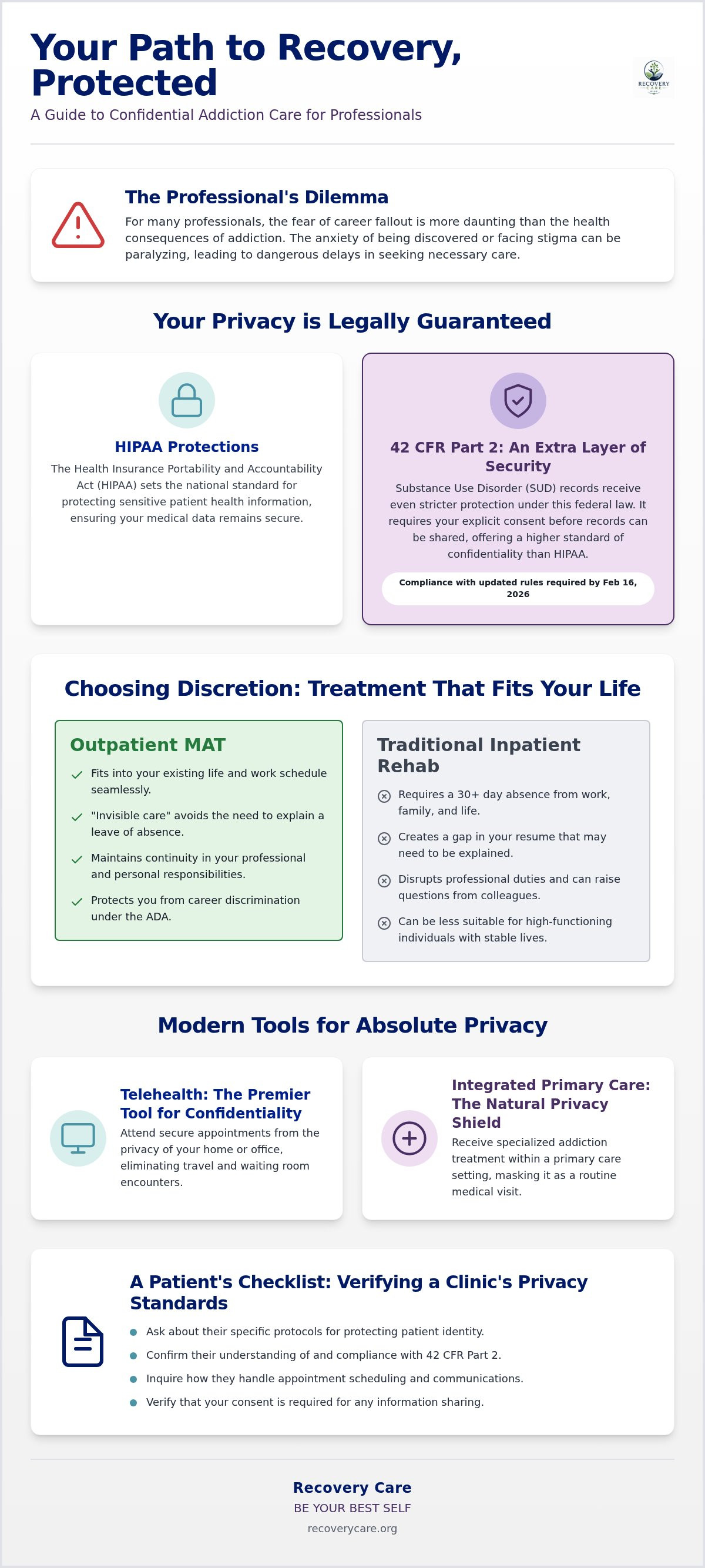
Your medical data is guarded by powerful federal laws. Most people are familiar with the Health Insurance Portability and Accountability Act, which sets the standard for protecting sensitive patient data. However, substance use disorder (SUD) records receive an additional layer of security under 42 CFR Part 2. By February 16, 2026, healthcare providers must comply with updated Final Rule requirements that align these protections more closely with HIPAA, improving care coordination while maintaining strict confidentiality.
This legal framework means your records can't be shared without your explicit, informed consent. You have the right to know exactly who sees your information and for what purpose. These safeguards ensure that your private health journey doesn't become public knowledge, giving you the peace of mind to pursue treatment like Suboxone or Sublocade injections without fear of legal or professional repercussions.
Why Discretion Matters for Long-Term Success
The fear of judgment is a significant barrier to seeking medical help. Stigma remains a reality, and for many high-functioning individuals, the perceived risk of social fallout feels too high to manage. Private care lowers this barrier by providing a non-judgmental space where your dignity is respected. When you feel secure, your anxiety levels drop, making it easier to engage with behavioral health counseling and medical treatments. Confidential care is the bridge between recognizing a problem and taking action. By removing the threat of exposure, you're free to build a sustainable future on your own terms.
The Professional’s Dilemma: Protecting Your Career During Recovery
For many professionals, the fear of professional fallout is more daunting than the health consequences of addiction. Attorneys, pilots, and nurses often worry that seeking help will alert their licensing board or HR department. This anxiety can lead to a dangerous delay in care. However, modern confidential addiction care is built specifically to address these concerns. Under the Americans with Disabilities Act (ADA), employees who are in recovery and not currently using illegal drugs are protected from discrimination. This means that as long as you're engaging in a supervised medical program, you have legal grounds to protect your position while you heal.
Discretion isn't just a preference for high-functioning individuals; it's a career necessity. Licensed professionals need to know that their medical journey won't become a matter of public record or workplace gossip. By choosing a provider that understands the nuances of professional standards, you can secure the help you need without triggering unnecessary alarms. It's about finding a balance between medical transparency with your doctor and absolute privacy from your professional network.
Outpatient MAT: The Discreet Alternative to Inpatient Rehab
Choosing suboxone treatment allows you to bypass the "missing from work" narrative entirely. Unlike inpatient programs that require a 30-day absence, outpatient Medication-Assisted Treatment (MAT) fits into your existing life. It's an invisible form of care. You don't have to explain a sudden leave of absence or a gap in your resume. You can attend your appointments and manage your health while maintaining your daily responsibilities. This continuity is often the key to sustainable success for those with high-stakes careers. Daily medication management is handled privately at home, ensuring your colleagues see only your continued performance and reliability.
Insurance and Privacy: Medicare and Medicaid Considerations
A common concern is whether insurance billing will tip off an employer. When working with medicaid suboxone doctors or using Medicare, your records are protected by Federal Confidentiality Regulations (42 CFR Part 2). These laws are incredibly strict about how substance use data is shared. Even if you use employer-sponsored insurance, your specific diagnosis and treatment details are shielded from your management. For those who require the highest level of anonymity, self-pay options provide an extra layer of separation from any insurance paper trail. If you're unsure which path is best for your situation, you can consult with our team to explore your options safely.
Telehealth vs. In-Person: Which Offers Better Confidentiality?
2026 has seen a massive shift in how we approach recovery. Telehealth is no longer just a convenience; it's the gold standard for maintaining absolute discretion. This evolution follows a period where the availability of addiction treatment programs offering telehealth options increased by approximately 143% between 2020 and 2021, according to industry data. When you choose virtual care, you eliminate the "waiting room anxiety" that often accompanies visiting a physical clinic. There's no risk of running into a neighbor, colleague, or acquaintance in a lobby. This logistical privacy is a game-changer for confidential addiction care, as it removes the need to explain your travel to a specific medical address.
Modern recovery relies on highly secure, encrypted platforms that meet or exceed federal standards. These virtual tools ensure that your conversations remain private and your data stays protected. As discussed by experts on privacy in telehealth addiction treatment, the digital space offers a level of anonymity that traditional settings struggle to match. You control your environment, choosing a quiet corner of your home or a private office where you feel most secure.
The Privacy Benefits of Virtual MAT
Engaging in telehealth addiction counseling allows you to bridge the gap between your daily life and your recovery goals without detection. You can schedule sessions during a lunch break or before your family wakes up, conducting your care from the safety of your own device. This model also simplifies medication management. Through online suboxone treatment, your prescriptions are handled electronically, allowing you to work with local pharmacies in a way that looks like any other routine medical need. There's no outward sign that your visit was for addiction care, providing a seamless layer of protection for your reputation.
When In-Person Care Still Makes Sense
While virtual options are powerful, some patients prefer the stability of a specialized, low-profile medical office. In-person visits are essential for certain treatments, such as receiving a sublocade injection. These long-acting options are incredibly discreet because they only require one visit per month, eliminating the need for daily medication at home. A physical office also allows for comprehensive diagnostic testing and a hands-on approach from your medical team. Many individuals find that a hybrid model, balancing virtual check-ins with occasional in-person visits for injections, provides the perfect mix of medical oversight and confidential addiction care.
A Patient’s Checklist: How to Verify a Clinic’s Privacy Standards
Choosing a provider for your recovery is a deeply personal decision that requires looking beyond standard medical credentials. You need to know that their administrative protocols are as rigorous as their clinical ones. When you search for confidential addiction care, you're trusting a team with your professional future and personal dignity. Red flags to watch for include high-volume waiting rooms where privacy is impossible or a clinic that gives vague answers about how they store your electronic health records. Don't hesitate to ask direct questions about their internal privacy culture during your first interaction. A clinic that values discretion will welcome these inquiries and provide transparent, reassuring answers.
Vetting Your Recovery Team
The individuals managing your care should be experts in discretion. Start by asking if the facility has a dedicated privacy officer responsible for overseeing data security. It's also vital to understand how they handle daily communication. Will they call your personal cell? Do they use encrypted portals for messaging? If you're in a high-stakes profession, ask if they have experience working with others in similar roles. A team familiar with the needs of licensed professionals will already have the necessary safeguards in place to protect your reputation and maintain your privacy throughout the process.
The Physical and Digital Security Audit
In 2026, your data must be locked down with modern tools. Ensure the clinic's telehealth platform is fully HIPAA-compliant and uses end-to-end encryption. You should also ask how laboratory results and drug testing are managed. Discreet clinics often use low-profile lab partners or private collection methods that don't broadcast the nature of the tests. Use this checklist to verify their standards:
- Confirm the clinic uses a secure, encrypted telehealth platform for all virtual visits.
- Ask for a written policy stating that your data is never shared with third-party marketing firms or data brokers.
- Verify that the medical director personally oversees all privacy and security protocols.
- Ensure that primary care and behavioral health services are integrated to provide a natural "privacy shield" for your treatment.
Taking these steps allows you to enter treatment with a sense of security and quiet confidence. You deserve to know that your records are protected by more than just a locked cabinet. If you're ready to find a provider that offers true confidential addiction care, you can schedule a confidential consultation with a team dedicated to your long-term success.
Recovery Care: Holistic Support Under One Roof
Integrated care isn't just about medical efficiency; it's a strategic tool for discretion. Most recovery centers focus exclusively on addiction, which can make a visit feel like a public statement. By housing confidential addiction care within a primary care setting, we offer you a natural layer of protection. Your appointments for Suboxone treatment or Sublocade injections are indistinguishable from a routine check-up or a blood pressure consultation. This dual-purpose environment allows you to maintain a single medical home for all your health needs, keeping your journey private while ensuring every aspect of your well-being is addressed.
Dr. Heather Rosen, MD, leads our team with a commitment to evidence-based care that never loses sight of the human element. We don't just prescribe medication; we provide a dedicated partnership. This approach combines behavioral health counseling with medication management to treat the person, not just the symptoms. We've found that a holistic focus leads to much better long-term outcomes than medication alone. By addressing the psychological and physical aspects of recovery simultaneously, we help you build a stable foundation for a future that doesn't rely on substances.
Primary Care as a Foundation for Recovery
A strong foundation in primary care allows us to identify and manage underlying health issues that often contribute to substance use. Chronic pain, untreated anxiety, or nutritional deficiencies can all play a role in your recovery journey. Through routine physicals and diagnostic testing, we treat the whole person. Having a single medical home means you don't have to coordinate between multiple offices or repeat your history to different providers. It's about convenience and continuity, ensuring that your primary doctor is fully aligned with your recovery goals.
Getting Started Today with Confidence
We believe that when you're ready to make a change, the process should be as seamless and low-pressure as possible. Our intake is designed to be supportive and welcoming, moving at a pace that feels comfortable for you. We offer same-day treatment options for those who are ready to begin their journey immediately. You shouldn't have to navigate a complex bureaucracy to get the help you deserve. Our team is here to guide you through every step with the quiet confidence and respect you've earned.
Start your private journey to recovery with Recovery Care today and discover how our integrated approach can protect your reputation while restoring your health.
Securing Your Future with Discretion and Dignity
Choosing to prioritize your health shouldn't mean risking everything you've worked so hard to build. As we've explored, the landscape of 2026 offers powerful protections and flexible models that make confidential addiction care a practical reality for even the busiest professionals. By leveraging updated federal privacy laws and the discreet nature of telehealth, you can receive life-changing support without the fear of social or career fallout. Whether you choose the convenience of virtual sessions or the stability of integrated primary care, your recovery remains your personal business.
At Recovery Care, we believe that dignity is a vital part of the healing process. Led by Medical Director Dr. Heather Rosen, MD, our team provides compassionate, non-judgmental outpatient care tailored to your unique lifestyle. We offer both telehealth and in-person options, ensuring you have the tools you need to succeed on your own terms. You've already taken the hardest step by acknowledging the need for change; now, let us help you navigate the path forward with the security and respect you deserve.
Take the first step toward a private, professional recovery at Recovery Care. Your journey toward total wellness starts here, in a safe space where your future is protected.
Frequently Asked Questions
Is addiction treatment truly confidential?
Addiction treatment is protected by rigorous federal laws that ensure your medical journey remains private. Your records are shielded by HIPAA and the even stricter 42 CFR Part 2 regulations. These laws prevent healthcare providers from disclosing your participation in a program or any related medical data without your written consent. In 2026, new rules further align these protections, making confidential addiction care a reliable standard for anyone seeking help while protecting their personal reputation.
Can my employer find out if I am on Suboxone?
Your employer cannot legally access your medical records or find out about your Suboxone treatment without your direct authorization. The Americans with Disabilities Act (ADA) provides significant legal protections for employees in recovery. By choosing an outpatient model, you can manage your health during non-work hours, eliminating the need for a leave of absence. This approach ensures your professional life remains unaffected while you receive the medical support necessary for long-term wellness and stability.
Does telehealth for addiction care follow the same privacy laws as in-person visits?
Telehealth services must adhere to the exact same federal privacy and security standards as traditional in-person medical visits. Providers use encrypted, HIPAA-compliant platforms to ensure your sessions are secure from unauthorized access. Additionally, the DEA has extended the ability for providers to prescribe buprenorphine via telehealth through the end of 2026. This allows you to receive high-quality care from the privacy of your own home without compromising your legal or medical confidentiality.
Will my insurance company tell my family about my treatment?
Insurance companies are bound by privacy laws, but if you are a dependent on someone else's policy, they may see an Explanation of Benefits (EOB). While the EOB doesn't always list specific session details, it may show the provider's name. If absolute family privacy is your priority, you can discuss self-pay options or specific billing requests with your provider. This ensures your confidential addiction care remains between you and your medical team, avoiding any unexpected disclosures.
What is the difference between HIPAA and 42 CFR Part 2?
HIPAA is the general standard for protecting all health information, while 42 CFR Part 2 provides enhanced protection specifically for substance use disorder records. Part 2 is more restrictive, often requiring specific consent for disclosures that might be permitted under HIPAA's general treatment or payment rules. As of February 16, 2026, a new Final Rule brings these two regulations into closer alignment, making it easier for your doctors to coordinate care while maintaining your strict privacy.
How does Recovery Care ensure my privacy during virtual appointments?
Recovery Care utilizes state-of-the-art, encrypted communication tools to protect every virtual interaction. Our platforms are fully HIPAA-compliant, ensuring that your video consultations and digital records are shielded from outside eyes. Because we integrate addiction treatment with primary care, your appointments appear as routine medical visits on billing statements or schedules. This "privacy shield" provides an extra layer of security, allowing you to focus on your recovery with total peace of mind.
Can I get a Suboxone prescription online without a public record?
While all medical prescriptions create a record, it is a private health record protected by law, not a public one. When you receive a Suboxone prescription through a secure online consultation, that information is stored in a confidential medical file. It does not appear in background checks, public databases, or employment screenings. Your pharmacy is also bound by strict confidentiality rules, ensuring that your medication management remains a private matter between you and your healthcare providers.
What happens to my records if I stop treatment?
If you stop treatment, your medical records remain under the same strict federal protections they had while you were active. Healthcare providers are required by law to retain medical records for a specific period, typically between seven and ten years. During this time, your information cannot be shared without your consent, just as if you were still a patient. Your history of seeking help remains a protected part of your private medical past, never a public liability.


