
What if your recovery didn't require you to put your life on hold? Choosing to start outpatient MAT services is an incredibly brave step, yet it's often clouded by the fear of painful withdrawals or the anxiety of being judged in a sterile, impersonal clinic. You've likely wondered how you'll balance daily medication with your family responsibilities or if you'll have to choose between your job and your health. It’s a heavy burden to carry, but you don't have to carry it alone.
We understand that the path to wellness isn't one-size-fits-all, and this guide is here to simplify your journey. You'll gain a comprehensive understanding of your recovery options, comparing the benefits of daily Suboxone with monthly injections like Sublocade or Vivitrol. We’ll also walk through the latest 2026 telehealth flexibilities and integrated care strategies, giving you the confidence to choose a treatment method that fits your lifestyle. From your first consultation to long-term support, we're outlining a non-judgmental path that prioritizes your success and your peace of mind.
Key Takeaways
- Compare the flexibility of daily Suboxone with the convenience of monthly long-acting injections like Sublocade or Vivitrol.
- Discover how modern outpatient MAT services provide a non-judgmental path to recovery while allowing you to stay connected to your work and family.
- Learn how telehealth options bridge the gap for those with busy schedules, providing access to expert care from the comfort of home.
- Understand the vital role of integrated behavioral health and primary care in supporting your physical and emotional well-being.
- Gain clarity on navigating insurance coverage and the simple steps involved in starting your personalized treatment plan.
Understanding Outpatient MAT Services and Their Role in Recovery
Choosing a path toward healing is a deeply personal decision that requires both courage and the right support. Outpatient MAT services represent a flexible, evidence-based standard for recovery that allows you to prioritize your health without pausing your life. At its core, Medication-Assisted Treatment (MAT) is the clinical use of FDA-approved medications, combined with counseling and behavioral therapies, to provide a whole-person approach to wellness. It's designed to quiet the noise of cravings and shield you from the physical pain of withdrawal, all while you continue to live at home, go to work, and care for your family. You don't need to stay in a hospital to find lasting success.
When Understanding Opioid Use Disorder, it helps to view it as a chronic medical condition rather than a moral failing. Just as someone with diabetes uses insulin to regulate their system, MAT helps stabilize your brain chemistry. This shift toward "low-barrier" care means that in 2026, getting the help you need is faster and more accessible than ever. We focus on immediate access to medication because we know that when you're ready to start, every hour matters. This model is often the most sustainable choice for working professionals and parents who need a treatment plan that bends to fit their lives, not the other way around.
The Three Pillars of Comprehensive Outpatient Care
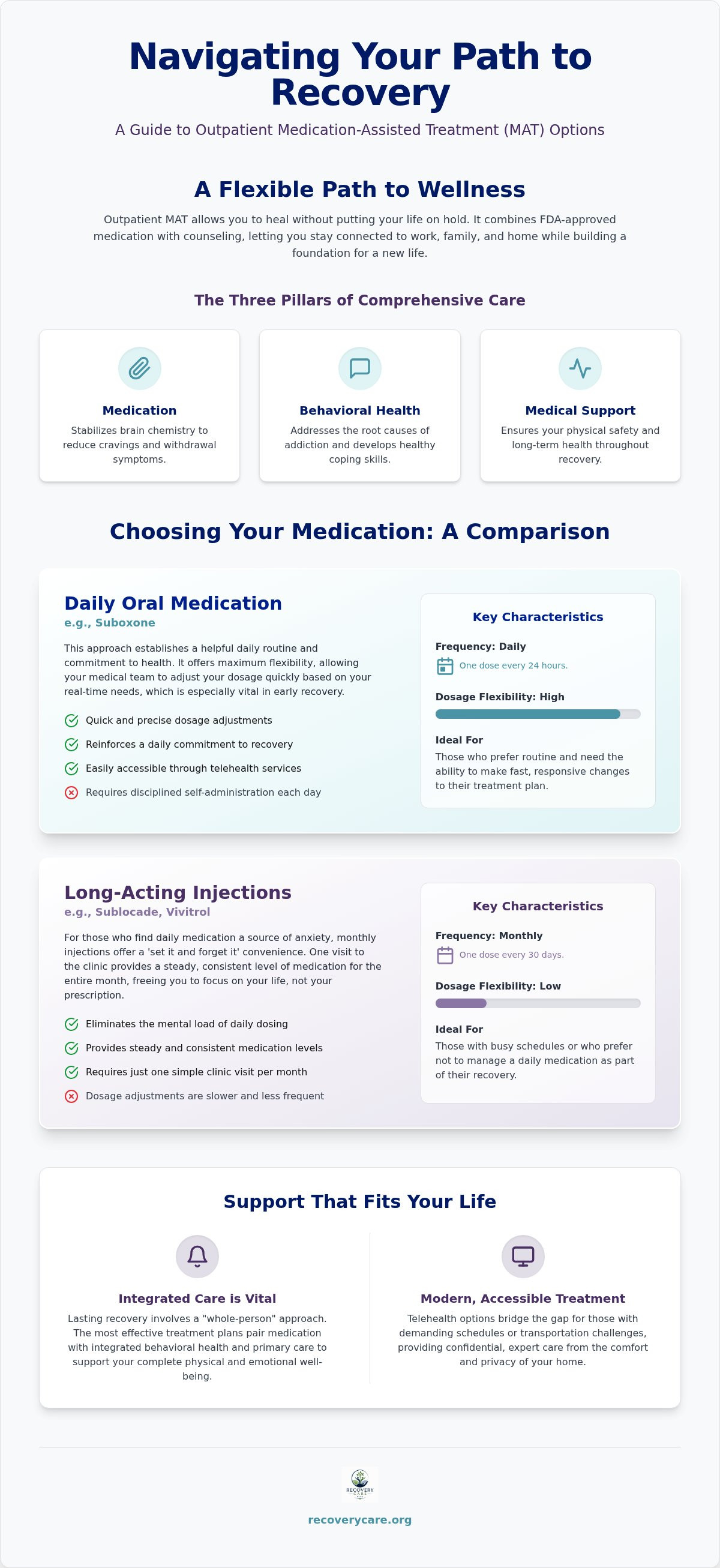
A high-quality program for outpatient MAT services isn't just about a prescription; it's about a foundation for a new life. First, we use medications like Suboxone or Sublocade to stabilize your brain chemistry and reduce the urge to use. Second, behavioral health counseling helps you address the root causes of addiction and develop healthy coping mechanisms. Finally, continuous medical monitoring ensures your safety and long-term health. This three-part strategy ensures that you aren't just surviving the day but are actually thriving in your recovery.
Who is the Ideal Candidate for Outpatient MAT?
This level of care is a perfect fit if you have a stable living environment and a desire to maintain your daily routines. It's especially effective for those transitioning from higher levels of care who still need medical stabilization to stay on track. If you're looking for a confidential, non-judgmental medical partnership, this path offers the privacy and dignity you deserve. We're here to act as your steady, knowledgeable guide, providing the tools you need to build a more positive and secure future on your own terms.
Comparing Medication Options: Daily Suboxone vs. Long-Acting Injectables
Deciding on the right medication is a pivotal step in your recovery journey. When exploring outpatient MAT services, you'll find that the "best" option is simply the one that aligns with your physical needs and your daily lifestyle. Both daily oral medications and monthly injections are evidence-based tools designed to stabilize your brain chemistry, but they offer different experiences in terms of routine and flexibility. Understanding these differences helps you move forward with confidence and clarity.
Federal guidelines for Medication-Assisted Treatment (MAT) emphasize that these medications are most effective when paired with professional support. Whether you prefer the structure of a daily habit or the convenience of a monthly visit, our goal is to ensure you feel secure and supported throughout the entire process.
Suboxone: The Proven Standard for Daily Management
Suboxone, a combination of buprenorphine and naloxone, has long been the foundation of outpatient recovery. For many, the act of taking a daily film provides a helpful sense of routine and a tangible daily commitment to their health. One of the greatest benefits of this approach is its adaptability. Because you're taking it every day, your medical team can adjust your dosage quickly based on how you're feeling in real-time. This immediate feedback loop is especially helpful during the early stages of stabilization. Additionally, the availability of online suboxone treatment has made this option more accessible than ever, allowing you to manage your care without the stress of frequent travel.
Long-Acting Injectables: Sublocade and Vivitrol
If you find that worrying about a daily prescription adds to your anxiety, long-acting injectables might be a better fit. These medications change the recovery timeline by providing a steady, consistent level of medication in your bloodstream for an entire month. For example, sublocade injections use a buprenorphine-based formula that slowly releases over 30 days, eliminating the "highs and lows" that some people feel with daily dosing. This "freedom factor" allows you to focus on your life, work, and family without being tethered to a pill bottle. Vivitrol offers a different path; it's a naltrexone-based injection for those pursuing an opioid-free recovery by blocking the effects of opioids entirely. Both options provide a safety net that remains in place even if life gets busy.
Choosing the right path is a conversation we're ready to have whenever you're ready. If you'd like to learn more about which medication fits your life, you can explore our personalized treatment options to find the support that feels right for you.
Telehealth vs. In-Person MAT: Which Setting Fits Your Life?
Choosing the right environment for your recovery is just as important as choosing the right medication. In the past, seeking help often meant rearranging your entire schedule to accommodate clinic hours. Today, outpatient MAT services offer a level of flexibility that respects your time and your privacy. Whether you prefer the comfort of your living room or the face-to-face support of a physical office, the goal remains the same: providing a safe, supportive space for you to heal. We believe that your treatment should bend to fit your life, not the other way around.
The Advantages of Virtual Recovery
For many, the biggest barrier to starting treatment is the logistics of getting there. Virtual care removes the need for long commutes and the stress of finding childcare or taking time off work. Through telehealth addiction counseling, you can connect with your care team in minutes. This setting offers a unique layer of privacy, as you don't have to worry about running into someone you know in a waiting room. In 2026, federal flexibilities continue to allow providers to prescribe life-saving medications like buprenorphine via telemedicine, ensuring that geography is never an obstacle to your success. Many patients find that same-day consultations are much easier to secure online, allowing them to start their journey the moment they feel ready.
When In-Person Care is Essential
While digital tools are powerful, certain aspects of your health require a physical presence. Your initial medical evaluation often involves a physical exam and diagnostic laboratory testing to ensure your treatment plan is safe and tailored to your body's needs. If you've chosen a long-acting injectable like Sublocade or Vivitrol, you'll visit the clinic once a month for administration. These visits are also a wonderful opportunity to build a deeper, face-to-face connection with your medical and counseling team. There's a specific kind of reassurance that comes from being in a room with experts who are dedicated to your well-being and understand your journey.
Regardless of the setting you choose, maintaining confidential addiction care is our highest priority. We use secure, HIPAA-compliant platforms for virtual visits and maintain the strictest privacy standards in our offices. Many of our patients find that a hybrid model works best. You might come in person for your monthly injection and initial check-ups, then use telehealth for your weekly counseling sessions. This balanced approach gives you the clinical oversight you need with the convenience you deserve, creating a sustainable path for long-term success.
Beyond Medication: The Importance of Integrated Behavioral and Primary Care
True recovery is about much more than just managing physical symptoms. While medication is a powerful tool for stabilization, lasting success often depends on healing the whole person. Comprehensive outpatient MAT services work best when they integrate behavioral health and primary care into a single, supportive environment. This holistic approach ensures that you aren't just treating a condition, but are instead building a foundation for a healthier, more fulfilling life. By addressing your physical, emotional, and mental well-being simultaneously, we can help you navigate the complexities of recovery with confidence.
Behavioral Health: Individual and Group Counseling
Counseling is where you develop the practical tools needed to maintain your progress. In individual sessions, you'll work one-on-one with a professional to identify personal triggers and create custom strategies for high-stress situations. This personalized attention ensures your therapy plan matches your specific recovery goals. Group therapy offers a different kind of strength by reducing the isolation that often accompanies addiction. Building a community of peers who truly understand your journey provides a unique safety net and a sense of belonging. Together, these sessions help you address the root causes of substance use and develop healthy coping mechanisms that last a lifetime.
Primary Care: Protecting Your Long-Term Health
It’s common for physical health to take a backseat during active use. Our integrated model brings primary care back into focus, allowing you to manage chronic conditions that may have been neglected. Your medical team acts as your primary health advocate, monitoring your overall wellness as you progress through treatment. Routine care includes:
- Regular Blood Work: Monitoring organ function and nutritional levels to ensure your body is healing.
- Diagnostic Testing: Using screenings to ensure medication safety and treatment compliance.
- Chronic Disease Management: Addressing issues like high blood pressure or respiratory concerns.
- Preventative Screenings: Staying ahead of health risks with consistent medical oversight.
Treating co-occurring mental health disorders, such as anxiety or depression, is also a vital part of this integrated care. When these conditions are managed alongside substance use, the risk of return to use decreases significantly. This seamless blend of services means you don't have to navigate multiple clinics or explain your history to different doctors. Everything you need is in one place, managed by a team that knows you and respects your journey. If you're ready to start a plan that treats you as a whole person, connect with our care team today to begin your comprehensive wellness journey.
Starting Your Journey: Insurance, Compliance, and Next Steps
Taking the first step toward recovery is often the hardest part of the process, but it's also the most rewarding. When you're ready to explore outpatient MAT services, we prioritize making your entry as smooth and stress-free as possible. You shouldn't have to worry about complicated paperwork or clinical barriers when you're focusing on your health. Our team is here to act as your advocate, ensuring that your transition into care is handled with the dignity and confidentiality you deserve. Whether you're reaching out for the first time or returning to care, we're ready to help you start your journey today.
We understand that the idea of compliance and drug testing can sometimes feel intimidating. In our program, we reframe these requirements as supportive clinical tools rather than a form of punishment. Regular testing allows your medical team to ensure that your medication levels are safe and that your treatment plan is working effectively. It’s a way for us to celebrate your progress and identify areas where you might need a little extra support. This transparent, non-judgmental approach helps build a foundation of trust between you and your care team, which is essential for long-term success.
Insurance and Financial Accessibility
Navigating the costs of care is a common concern, but you have more options than you might realize. In 2026, federal laws like the Mental Health Parity and Addiction Equity Act ensure that insurance plans can't impose more restrictive requirements on substance use treatment than they do for other medical services. This means that outpatient MAT services are more accessible than ever. We accept most major private insurances, and we have extensive experience working with Medicare and Medicaid. Our professional recovery support team will personally verify your benefits, so you'll know exactly what's covered before you even walk through the door. If you don't have traditional insurance, we can discuss alternative paths to ensure you don't have to delay your recovery.
Your First Week in Outpatient MAT
Once you make the initial call, the process moves quickly. Most patients can complete their medical evaluation and receive their first dose of medication within just a few days. During this first week, your primary goal is stabilization. You'll work closely with your doctor to monitor how your body responds to the medication and adjust the dosage to ensure you're comfortable. The induction phase is the critical first 72 hours of treatment where your body begins to stabilize on the medication. It's normal to feel a mix of emotions during this time, but having a clear timeline and realistic expectations will help you feel more secure as you move toward lasting relief from cravings and withdrawal symptoms.
If you're ready to take that first step, a confidential consultation is just a phone call away. We're here to answer your questions, verify your insurance, and help you choose the path that fits your life. You don't have to do this alone; we're ready to walk beside you every step of the way.
Your Path to a Brighter Future Starts Here
You now have a clearer picture of how modern outpatient MAT services can adapt to your unique life. Whether you choose the daily routine of Suboxone or the monthly convenience of an injectable like Sublocade, the most important factor is finding a plan that makes you feel secure and supported. By integrating behavioral health and primary care, you're not just managing a condition; you're investing in your long-term wellness and reclaiming your time for the people who matter most. This holistic approach ensures that every aspect of your health is prioritized as you build a more positive future.
Under the board-certified medical leadership of Dr. Heather Rosen, our team provides a compassionate, non-judgmental environment where your dignity is always the priority. We offer both telehealth and in-person options to ensure your care is as accessible as it is effective. Start your journey to recovery with Recovery Care today and discover the steady, expert guidance you deserve. You've already taken the bravest step by seeking information. We're here to help you take the next one with confidence, hope, and the dedicated support you need to succeed.
Frequently Asked Questions
Is outpatient MAT as effective as inpatient rehab?
Outpatient MAT is highly effective and is considered the gold standard for many individuals. Research indicates that medication assisted treatment significantly reduces the risk of overdose and helps people maintain long term recovery. Unlike residential programs, these services allow you to stay connected to your support system, job, and family. This real world application of recovery tools often leads to more sustainable lifestyle changes because you're learning to manage triggers in your actual environment.
Does Medicaid cover outpatient MAT services like Suboxone?
Yes, Medicaid and Medicare widely cover these essential treatments. Recovery Care accepts most major insurance plans, including Medicaid, to ensure that financial barriers don't stand in the way of your health. Federal regulations established in 2024 now require Medicaid programs to cover all FDA approved MAT medications. Our team will work directly with your provider to verify your specific benefits so you can focus entirely on your healing without worrying about hidden costs.
Can I switch from daily Suboxone to a monthly injection?
Many patients successfully transition from daily films to monthly injections once they are clinically stable. Moving to a long acting option like Sublocade can offer a greater sense of freedom and eliminate the anxiety of remembering a daily dose. Your medical provider will evaluate your progress and help determine the best timing for this switch. This transition is a common goal for those looking for more flexibility in their outpatient MAT services.
How long does a typical outpatient MAT program last?
The duration of treatment is entirely personalized to your specific needs and recovery goals. Some individuals use medication for several months, while others find that long term maintenance for a year or more provides the best protection against return to use. Because opioid use disorder is a chronic condition, we view treatment as an ongoing journey of wellness. We don't rush the process; instead, we move at a pace that ensures your safety and stability.
Will my employer find out if I am receiving MAT services?
Your privacy is strictly protected by federal law, and your employer won't be notified of your treatment. Under HIPAA and updated 42 CFR Part 2 regulations, your substance use disorder records are kept confidential and can't be shared without your explicit consent. We prioritize a safe, non-judgmental environment where your personal information remains secure. You can seek the help you need with the confidence that your professional reputation and privacy are fully respected.
Do I need to go through detox before starting outpatient MAT?
You don't need to complete a separate, traditional inpatient detoxification program before beginning MAT. In fact, medications like Suboxone are specifically designed to manage the symptoms of withdrawal and can be started once you are in a mild state of withdrawal. This induction process helps you transition safely and comfortably into recovery without the need for a hospital stay. Our medical team will guide you through this initial phase with constant, compassionate support.
Can I receive MAT services entirely through telehealth?
You can receive much of your care through telehealth, but some components may require an in person visit. While consultations and counseling are easily handled via secure video calls, receiving long acting injections like Sublocade or Vivitrol must be done at a clinic. We offer a hybrid model that combines the convenience of virtual visits with the necessary clinical oversight of in person medical evaluations. This ensures you receive the highest standard of professional care.
What happens if I miss a dose of my medication?
If you miss a dose, the most important step is to contact your care team for guidance. Don't take a double dose to make up for the one you missed. Because medications like buprenorphine stay in your system for an extended period, missing a single dose usually doesn't cause immediate withdrawal. Our outpatient MAT services are designed to provide a steady safety net, and we're here to help you get back on track.


