
What if your first week on Suboxone doesn’t follow a predictable day-by-day script? If you’re wondering what to expect first week on suboxone, it’s understandable to feel unsure about when treatment will begin, how the first dose may feel, or whether withdrawal and side effects could get worse. Each person’s experience can vary, and your clinician will guide the start of treatment based on your situation.
The first week is a period of individualized adjustment, not a test you have to manage alone. Some people feel relief from withdrawal or cravings, while others notice side effects such as nausea, headache, sweating, constipation, or trouble sleeping. Tell your care team about symptoms that feel intense, persist, or concern you. Severe breathing problems or swelling of the face or throat need urgent medical attention.
This article explains how the first week may unfold, what symptoms to report, and how follow-up with a clinician can support a safer start. You’ll also find guidance on discussing cravings, daily responsibilities, and questions about your treatment plan, so you can approach each next step with more confidence and support.
Key Takeaways
- What to expect first week on suboxone can differ from person to person, so your clinician will guide when treatment begins based on your circumstances.
- Learn why induction is clinician-guided and how starting too soon after certain opioids may lead to precipitated withdrawal.
- Know which changing or mild symptoms to monitor, and when a concern calls for prompt contact with your provider.
- Prepare for treatment by gathering your medication and health information, writing down questions, and planning how to reach your care team.
- Follow-up helps your clinician review how treatment is going and discuss next steps, with counseling or primary care as possible supports when appropriate.
What to Expect During Your First Week on Suboxone
Starting treatment can bring questions, and there’s no single first-week experience that applies to everyone. You may be wondering when to begin, how the first dose will feel, or whether symptoms will change. Your clinician will guide the start based on your recent opioid use, health history, and treatment plan. The goal is an individualized process, not a fixed schedule or a promise of a symptom-free first week.
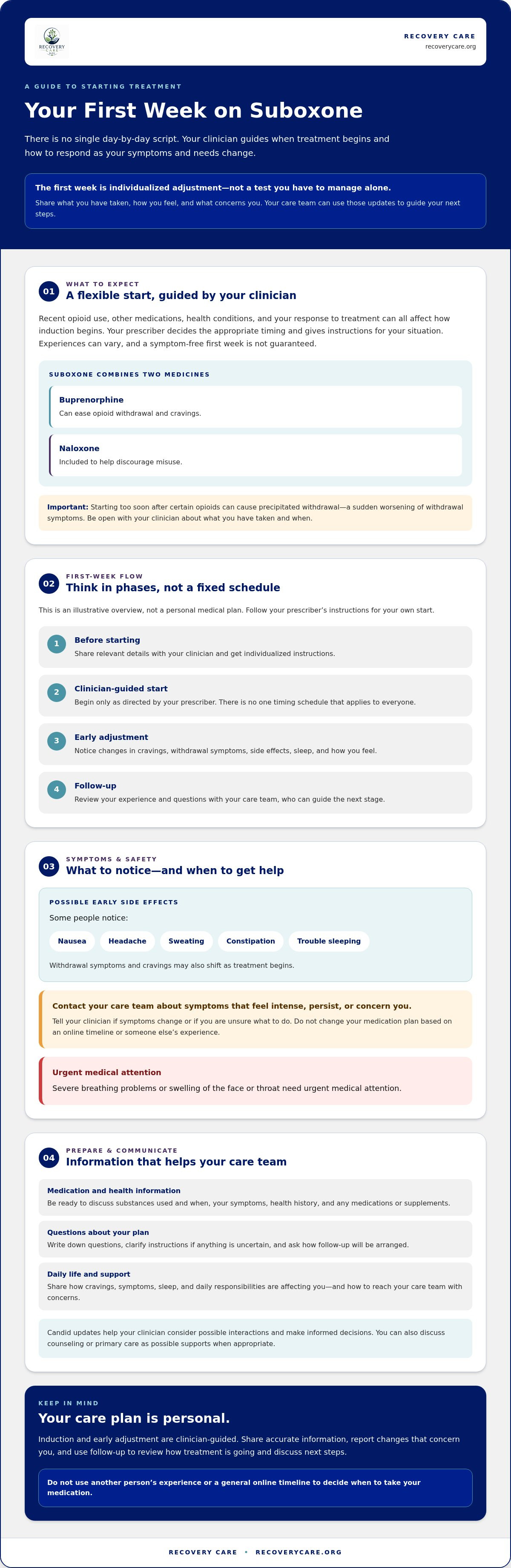
Suboxone combines buprenorphine, a medication that can ease opioid withdrawal and cravings, with naloxone, which is included to help discourage misuse. The effects and use of this combination are explained in this overview of buprenorphine/naloxone. Your prescriber will explain how it applies to your care and when to start. Starting too soon after certain opioids can cause precipitated withdrawal, a sudden worsening of withdrawal symptoms, so be open with your clinician about what you’ve taken and when.
Why the first week can look different for each person
Recent opioid use, other medications, health conditions, and your response to treatment can all influence how induction begins. Your prescriber decides the appropriate timing and gives you instructions for your own situation. Don’t use someone else’s experience or a general online timeline to decide when to take your medication. Ask how follow-up will be arranged and whom to contact if you’re unsure or symptoms change.
A flexible timeline for the first several days
The first week is often best understood in phases rather than as a day-by-day checklist. Cravings, withdrawal symptoms, and possible side effects can shift as treatment begins and your care team reviews how you’re responding. Check-ins may be arranged as appropriate to discuss concerns and next steps.
Illustrative timeline only, not a personal medical plan
- Before starting: Share relevant details with your clinician and get individualized instructions.
- Clinician-guided start: Begin only as directed by your prescriber.
- Early adjustment: Notice and report changes in cravings, withdrawal symptoms, or how you feel.
- Follow-up: Review your experience and questions with your care team; they’ll guide the next stage.
That flexible approach is central to what to expect first week on suboxone. If the process feels different from what you anticipated, let your clinician know rather than changing your medication plan on your own. Honest updates help your care team understand what support may be useful.
How Suboxone Induction and Early Adjustment Work
Induction is the clinician-guided process of beginning buprenorphine treatment. It’s more than taking a first dose: your prescriber considers your symptoms, recent opioid use, other medications, and health history to decide how to start and what monitoring may be appropriate. Sharing accurate information helps your care team make a plan that fits your circumstances.
What happens at the start of treatment?
During an assessment, your clinician may ask what substances you’ve used and when, what symptoms you’re experiencing, and what medications or supplements you take. These details matter because buprenorphine can displace other opioids from the same receptors in the brain. If that happens before the other opioids have cleared enough, withdrawal may suddenly intensify.
Precipitated withdrawal is a sudden worsening of withdrawal symptoms that can occur when buprenorphine displaces other opioids from brain receptors before the body is ready for the transition.
Your prescriber determines the appropriate start and monitoring plan for you. There isn’t one waiting period or schedule that applies to everyone. Follow your prescriber’s instructions, not timing advice from an online post or another person’s experience. If you’re uncertain about what you’ve been told, ask your care team to clarify before proceeding.
Why follow-up and medication review matter
Early follow-up gives you and your clinician a chance to review how treatment is going. Be ready to describe changes in withdrawal symptoms, cravings, side effects, sleep, or your ability to manage daily activities. Your care team can use those updates to guide the next steps in your individualized plan.
Be candid about all medications, supplements, and substance use, even if you’re worried about being judged. This information helps your clinician consider potential interactions and make informed decisions about your care. Don’t adjust your medication based on online advice; contact your prescriber with questions or concerns.
For more context on treatment and how medication may fit into care, explore the Suboxone Treatment: A Comprehensive Guide to Opioid Recovery in 2026. If you’re considering clinician-guided treatment, you can also learn about Suboxone treatment and support through Recovery Care.
Are First-Week Symptoms Normal, or Should You Call Your Provider?
It can take time to understand how you’re responding to Suboxone, and a new or changing symptom doesn’t automatically mean something is wrong. Possible side effects include nausea, headache, constipation, sleep changes, or tiredness, but not everyone experiences them. Pay attention to how you feel and contact your prescriber if symptoms are worsening, persistent, or interfering with daily activities. If you’re unsure, it’s appropriate to ask.
Knowing what to expect first week on suboxone includes knowing when to speak up. Your clinician can help assess your concerns in context and advise you on the next step. Don’t change, skip, or add medication without guidance from your prescriber.
Questions and symptoms to report promptly
Keep a brief record to help explain what’s happening. Note when a symptom began, how severe it feels, and when you took medication according to your prescribed plan. Share changes in cravings or withdrawal symptoms, side effects, and any difficulty following your instructions. Be open about other medications, alcohol, or other substances too. Honest details help your care team understand your situation and offer relevant guidance.
Contact your prescriber promptly if withdrawal symptoms worsen, side effects persist or concern you, or you’re uncertain about your treatment plan. Don’t wait for a scheduled check-in if you need clarification. If you can’t reach your prescriber, follow the contact or escalation instructions they gave you.
When symptoms may be an emergency
Severe trouble breathing, being unable to wake someone, or suspected overdose requires immediate emergency help. Call 911. If naloxone is available, use it according to its instructions while emergency services are on the way. Suboxone can increase the risk of breathing problems when combined with other central nervous system depressants, including alcohol or benzodiazepines. Don’t delay emergency care while trying to contact your regular provider.
Before treatment begins, ask your care team what to do if urgent concerns arise and whether a personalized safety plan is appropriate. Knowing whom to contact and what steps to take can make it easier to act calmly if a serious situation occurs. Mild or changing symptoms deserve a conversation; emergency warning signs need immediate action.
How to Prepare for Your First Week on Suboxone
A little preparation can make it easier to focus on your care and ask the questions that matter to you. You don’t need to predict exactly how the week will feel. Instead, gather useful information, understand how to reach your care team, and follow your clinician’s instructions for starting and taking medication.
A simple checklist before the first appointment
Bring or prepare a current list of prescriptions, over-the-counter medicines, and supplements. Include relevant health history and be honest about substance use, since these details can help your clinician make an informed plan. Before the appointment, write down questions you don’t want to forget, such as:
- What should I expect during induction, and what symptoms should I report?
- How will follow-up be arranged, and whom should I contact with a treatment question?
- How should I reach the clinic if I’m uncertain about my instructions?
Ask how appointments and urgent clinical questions are handled. Keep the contact information somewhere easy to find, and follow your prescriber’s directions exactly. Don’t adjust your medication based on general online advice or another person’s experience.
Making the week easier to manage
If possible, plan routines that leave room for appointments and rest, while keeping up with essential responsibilities in a manageable way. You might track cravings, symptoms, sleep, or side effects in a note on your phone or in a journal. Include when changes began and how they affect your day. This record can help you describe your experience, but it isn’t a substitute for contacting your care team when you have a concern.
Decide whether you’d like a trusted person to know you’re starting treatment or help you keep track of questions. That choice is yours. Keep emergency resources easy to locate, and ask your care team what to do if you have an urgent safety concern.
Medication is one possible part of a recovery plan. If you’re interested in behavioral health support, the guide Opioid Addiction Counseling: 2026 Behavioral Health Guide offers additional context about counseling. Recovery Care provides outpatient Suboxone treatment, and care may also include behavioral health counseling or primary care when appropriate. If you’d like to explore your options, explore confidential treatment support.
Preparing this way can make what to expect first week on suboxone feel less uncertain. Keep your questions close, share changes with your clinician, and take the process one step at a time.
How Ongoing Suboxone Care Supports the First Week and Beyond
The first week is one part of treatment, and follow-up can give you and your clinician a chance to review how you’re responding and discuss what comes next. Bring up changes in symptoms or cravings, side effects, and any concerns about how treatment fits into daily life. Those conversations help inform your care plan; there’s no single timeline or set of services that suits everyone.
What to look for in ongoing treatment support
As you consider care, ask how medication management and follow-up are handled, and how to raise non-emergency questions between appointments. It’s also reasonable to ask how your progress and concerns will be reviewed over time. Counseling or primary care may be useful complementary options, depending on your health needs and preferences. They aren’t requirements for every person, and the right supports can be discussed with your clinician.
Taking a next step that feels manageable
Recovery Care offers outpatient Suboxone treatment, with in-person care and telehealth consultations. Appointment formats and telehealth eligibility can depend on current circumstances, so confirm what’s available for you directly. You can also ask about insurance coverage; individual eligibility and coverage should be verified with the clinic and your plan.
If you’re comparing options, you might ask:
- How will my clinician review my response and concerns?
- What appointment formats may be available for my situation?
- How can I ask questions between visits, and what should I do if I have an urgent concern?
- Are counseling or primary care options appropriate for my needs?
Understanding what to expect first week on suboxone is a useful starting point, but support can continue as your needs change. You don’t have to have every decision settled before asking questions. A conversation can simply help you understand available options and whether they feel right for you.
Talk with Recovery Care about treatment options when you feel ready. Asking questions doesn’t commit you to treatment.
Take Your Next Step With Support
Knowing what to expect first week on suboxone can help you feel more prepared, but your experience and treatment plan will be personal. Your clinician guides the start and follow-up, so share changes in symptoms, cravings, or side effects and ask when you’re unsure. Keep following your prescribed plan rather than relying on general timelines or advice from others.
Recovery Care provides outpatient Suboxone treatment with in-person care and telehealth options. Care is led by Medical Director Dr. Heather Rosen, MD. The clinic reports accepting most major insurance plans, Medicare, and Medicaid, but coverage and telehealth eligibility can vary, so confirm current details directly.
You don’t have to make every decision today. A conversation can help you understand your options without committing to treatment. Talk with Recovery Care about confidential outpatient treatment and take the next step at a pace that feels manageable. Support is available as you consider what may work for you.
Frequently Asked Questions
What should I expect on the first day of Suboxone?
Your first day will follow the plan your prescriber sets for you, so it may not match someone else’s experience. Your clinician considers your symptoms, recent opioid use, health history, and medications when deciding when to begin and how to monitor you. You may notice withdrawal or cravings change, or experience side effects. Follow your instructions and contact your care team if symptoms worsen or you’re unsure what to do.
How long does it take to feel better after starting Suboxone?
Some people notice withdrawal symptoms begin to ease within 30 to 60 minutes after a first dose, but the response varies and relief isn’t guaranteed to be immediate or complete. Cravings and other symptoms may also change over time. Your clinician can help assess your response during follow-up. If you’re not feeling better, symptoms worsen, or you’re concerned, contact your prescriber rather than changing your medication plan yourself.
Can Suboxone make withdrawal worse at first?
Yes, starting too soon after some opioids can trigger precipitated withdrawal, a sudden worsening of withdrawal symptoms. Buprenorphine can displace other opioids from receptors in the brain, which may bring on this reaction if the timing isn’t right for your circumstances. That’s why your prescriber guides when to begin. Don’t rely on a general online waiting period; tell your clinician what you’ve taken and follow their specific instructions.
What are common side effects during the first week on Suboxone?
Possible side effects include nausea, headache, constipation, sweating, sleep changes, and tiredness. They aren’t inevitable, and each person’s response can differ. Keep track of what you notice, when it began, and whether it affects daily activities. Tell your prescriber if a side effect is intense, persistent, or worrying you. Don’t add or change medication to manage it without guidance from your care team.
What should I do if I still have cravings while taking Suboxone?
Contact your prescriber and explain how often cravings occur, how strong they feel, and whether anything seems to bring them on. Ongoing cravings are worth discussing, even if other symptoms have improved. Your clinician can review your response and discuss appropriate next steps. Be honest about other medications and substance use, too. Don’t take extra medication or change your prescribed plan unless your prescriber directs you to.
Can I work or drive during my first week on Suboxone?
It depends on how you feel and how the medication affects you. Suboxone may cause drowsiness or dizziness, especially as you’re adjusting, so don’t drive or do safety-sensitive work if you feel impaired. Ask your prescriber what precautions fit your situation, and follow medication instructions. Be particularly cautious about combining Suboxone with alcohol or sedating medicines, including benzodiazepines, because this can increase the risk of breathing problems.
When should I get emergency help while taking Suboxone?
Call 911 for severe trouble breathing, unresponsiveness, inability to wake someone, or a suspected overdose. If naloxone is available, use it according to its instructions while emergency services are on the way. Don’t wait to contact your regular prescriber before getting emergency help. Ask your care team about a personal safety plan, including what warning signs to watch for and what steps people around you can take if an emergency occurs.


