
What if the goal of a Suboxone appointment isn’t to leave with a prescription, but to find out what care is safest for you? It’s understandable to want clear answers before booking, especially if you’re unsure whether telehealth is appropriate or what a clinician will ask. A suboxone prescription online consultation is a medical assessment, not a guaranteed route to medication.
This guide explains what to expect from an online appointment, what information can help you prepare, and how a clinician considers whether Suboxone may fit your needs. It also covers how your location, insurance, and next steps may affect the process.
At Recovery Care, telehealth consultations are one option within outpatient treatment, with care planning shaped around each person’s needs. A clinician may ask about your health history, current medications, opioid use, and when you last used opioids to assess safety and discuss appropriate care. Before the visit, gather those details, your insurance information, and a photo ID, and find a quiet, private place to talk. Recovery Care accepts most major insurance plans, Medicare, and Medicaid, but participation, benefits, and service availability should be confirmed for your situation.
Key Takeaways
- A suboxone prescription online consultation is an evaluation, not a guaranteed prescription. Learn what may shape a clinician’s recommendation.
- Use a simple preparation checklist to organize details and questions before your appointment.
- Ask about telehealth eligibility, privacy practices, and appointment format before booking.
- Check your location and insurance benefits directly with the care team and your health plan, since availability and coverage can vary.
- Explore how Recovery Care’s outpatient treatment and telehealth consultations may help you discuss appropriate next steps.
What does a Suboxone prescription online consultation involve?
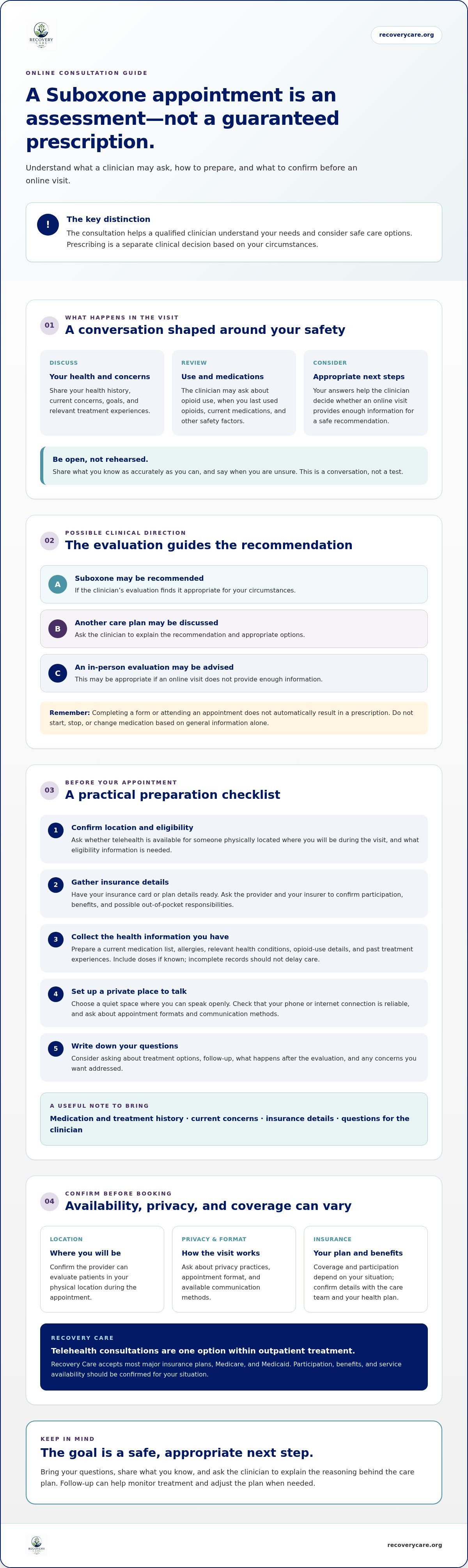
Asking about treatment is a meaningful first step. You can bring questions or concerns to the conversation. A suboxone prescription online consultation is a clinical evaluation, not a promise of medication. The clinician considers your health history, current concerns, goals, and potential care options before recommending what may be appropriate for you.
In short: an evaluation helps a clinician understand your needs; prescribing is a separate clinical decision; and follow-up helps monitor your treatment plan and adjust it when needed. Suboxone combines buprenorphine and naloxone. For a neutral overview of the medication and its use, see Buprenorphine/naloxone (Suboxone).
What happens during an online Suboxone evaluation?
The clinician may first confirm your identity and where you’re physically located, then ask about your health and what brought you to the appointment. Be prepared to discuss symptoms, current and past opioid use, prior treatment, medications, and relevant safety factors. Your answers help the clinician understand the broader picture, including whether the timing of medication may affect safety.
This is a conversation, not a test. Share what you know as accurately as you can, and say when you’re unsure. You should have time to ask about possible options, follow-up, and any concerns you have. Depending on what the clinician learns and what care is suitable, they may recommend Suboxone, another care plan, or an in-person evaluation.
Is an online consultation the same as an online prescription?
No. Completing a form or attending an appointment doesn’t automatically result in a prescription. Only a qualified clinician can determine whether Suboxone is appropriate after evaluating your circumstances. If medication isn’t recommended, ask the clinician to explain why and discuss other appropriate options.
Prescribing and telehealth requirements can depend on current rules and your location. Before booking, confirm that the provider can evaluate patients where you’ll be during the appointment. The clinician may also need to decide whether an online visit provides enough information to make a safe recommendation. Be open about when you last used opioids and any other medications or substances. Don’t start, stop, or change medication based on general information alone.
Thinking of the visit as an assessment can make the process feel more manageable. The purpose is to understand your needs and identify a safe next step, with prescribing and follow-up decisions guided by the clinician’s evaluation.
How to prepare for your online Suboxone consultation
You don’t need a perfect medical record or rehearsed answers to make a first appointment useful. A little preparation can help you feel more settled and give the clinician a clearer picture of your needs. Be honest, even if some details are difficult to share or you’re unsure of exact dates. Complete information supports a more individualized assessment.
A practical preparation checklist
- Confirm location and availability. Ask whether telehealth appointments are available for someone physically located where you’ll be during the visit, and what eligibility information the provider needs.
- Check your insurance. Have your insurance card or plan details ready. Ask the provider and your insurer to confirm participation, benefits, and whether you may have out-of-pocket responsibilities.
- Gather the health information you have. Make a current medication list, including doses if known, and note allergies, relevant health conditions, and past treatment. Include details about opioid use and previous treatment experiences if you’re comfortable sharing them. Don’t delay care because your records are incomplete.
- Set up a private place to talk. Choose a quiet space where you can speak openly, and check that your phone or internet connection is reliable. Ask which appointment formats and communication methods are available.
- Write down questions. A short list can help you remember what matters, especially if you feel nervous during the visit.
For a first visit, prepare your medication and treatment history, current concerns, insurance details, a private place to talk, and the questions you want answered.
Questions to bring to the appointment
Ask what treatment options may be considered, what follow-up could involve, and what happens after the evaluation. If the clinician recommends a plan you weren’t expecting, ask them to explain the reason and what other appropriate options may be available.
You can also ask how your information is handled and how the care team communicates with patients. Confirm insurance participation and benefits rather than assuming your plan will cover the visit or treatment. If medication is recommended, ask how pharmacy coordination works and what steps to expect next. These questions can clarify the process without assuming a prescription is automatic.
Make the conversation your own
For a suboxone prescription online consultation, preparation isn’t about having the “right” answers. It’s about sharing what you know so the clinician can assess your situation with care. If you’re considering an evaluation, review Recovery Care’s treatment information and ask the team about location eligibility, insurance, and appointment details.
How a clinician decides whether Suboxone is an appropriate option
An online visit can make it easier to speak with a clinician, but careful medical judgment is still essential. The clinician considers your health as a whole and makes an individualized recommendation based on the information available, your concerns, and your treatment goals. A suboxone prescription online consultation is an opportunity to discuss care, not a shortcut around an assessment or a guarantee of medication.
The clinician may consider your symptoms and opioid use history, previous treatment experiences, other medications, and health conditions. They may also ask whether a telehealth evaluation provides enough information to recommend a safe next step. These details matter because a care plan should fit the person, not just the condition being discussed.
Why does the clinician ask about health and treatment history?
Your history helps the clinician understand your needs, consider safety, and decide what options may be suitable. Be candid about prescribed and nonprescribed medications, health conditions, prior treatment, and anything else you think could affect care. If you don’t know a precise date or detail, say so rather than guessing. Discuss individual questions about how your health or medications may affect treatment with the treating clinician.
There’s no single answer that determines whether Suboxone is right for everyone. Online access may make the conversation more convenient, but the clinician still has to weigh the details you share and decide whether more information is needed before making a recommendation.
What if Suboxone is not recommended at the first visit?
A different recommendation isn’t a personal failure or a rejection. The clinician may suggest another care plan, ask for additional evaluation, or recommend an in-person visit if that would help clarify your needs. Ask what led to the recommendation and what the next step is, including whether follow-up or other support is available.
Keep the conversation open. If you’re unsure about the plan, ask the clinician to explain it in everyday language and discuss your concerns. Don’t start, stop, or change medication based on this article or someone else’s experience. Follow guidance from your treating clinician, who can consider your specific circumstances and answer questions about your care.
How to check telehealth availability, privacy, and insurance before booking
Before scheduling a suboxone prescription online consultation, confirm the practical details that determine whether a visit is possible and what to expect. Availability, insurance participation, and appointment formats can vary, and a provider may not be able to see patients in every location. A few direct questions can help you decide whether to book before sharing sensitive information or setting aside time for an appointment.
Use this checklist before booking
- Provider availability: Ask whether a clinician can see patients who will be physically located in your state during the appointment. Confirm current availability for your location rather than assuming telehealth is offered nationwide.
- Appointment details: Ask whether the visit is by video, phone, or another format, what technology you’ll need, and how scheduling works. Find out whether an in-person visit may be recommended as part of evaluation or follow-up.
- Insurance and patient responsibility: Check with the provider whether your specific plan is currently accepted and whether it covers the consultation and related care. Contact your insurer, too, to verify benefits and ask about any deductible, copay, or other potential out-of-pocket responsibility. Coverage depends on your plan and should be confirmed before care.
- Privacy and communication: Ask how health information and records are handled, what secure communication methods are available, and how the care team will contact you. You can ask these questions before discussing personal health details.
Confirm details directly
Insurance directories and online listings may not reflect current participation or whether a specific service is covered. Confirm both points with the provider and your health plan, and keep a note of whom you spoke with and what they advised. If you’re unsure about privacy or technology, ask for an explanation in plain language before proceeding.
Recovery Care offers telehealth consultations alongside in-person outpatient care and accepts most major insurance plans, Medicare, and Medicaid. Participation, benefits, and service availability need to be checked for each person, including where they’ll be located for the visit.
Ask Recovery Care about current telehealth options, including location eligibility, appointment format, and insurance verification, before deciding whether to book.
How to take the next step with Recovery Care
Taking the next step can be straightforward, and you don’t need every answer before reaching out. Recovery Care offers outpatient medication-assisted treatment, including Suboxone, and telehealth consultations alongside in-person care. A conversation or evaluation can help you understand what options may fit your situation, but it doesn’t guarantee treatment eligibility or a prescription.
A practical path is to confirm that services are currently available where you’ll be located, ask whether your insurance plan participates and what benefits may apply, then arrange an evaluation if you decide to proceed. During the visit, you and the clinician can discuss your health and goals and clarify appropriate next steps. The team can also answer questions about appointment formats and what information may be helpful to bring.
What can you expect when contacting Recovery Care?
Share your preferred appointment format and ask what options are currently available. Confirm location eligibility, insurance participation, and any steps to verify your benefits. You can also ask what to prepare, such as a medication list or relevant treatment history. If you’re unsure what to ask, start with the concern that matters most to you.
Recovery Care’s team aims to provide individualized, confidential support. You can ask questions without deciding on a treatment plan in advance. An evaluation is a chance to discuss your needs and learn what the clinician recommends, not a commitment to a particular medication or outcome.
How does online care fit into ongoing recovery support?
A telehealth consultation may be the beginning of an outpatient care relationship, with follow-up planning based on your needs and the clinician’s recommendations. Medication is only one part of care. Recovery Care also offers behavioral health counseling, which may be discussed as part of its service range. Ask the team which options are available and appropriate for you.
If you’re gathering information before an appointment, reviewing Recovery Care’s Suboxone treatment guide and telehealth addiction counseling guide may help you prepare questions about care options. Ask the team how to access these resources and whether they relate to services available for your location.
If you’re considering a suboxone prescription online consultation, contact Recovery Care to ask about current telehealth options, location eligibility, insurance participation, and what to expect from an evaluation. You don’t need to have everything figured out before starting the conversation.
Take a supported next step toward care
An online consultation is a clinical assessment, not a guaranteed prescription. A clinician considers your health history, current concerns, and goals before recommending appropriate next steps. Preparing your medication and treatment history, questions, and insurance details can help you feel more ready for the conversation.
Recovery Care offers outpatient medication-assisted treatment, including Suboxone, and telehealth consultations alongside in-person care. Led by Medical Director Dr. Heather Rosen, MD, the team provides individualized support. Recovery Care accepts most major insurance plans, Medicare, and Medicaid, but participation, benefits, and telehealth availability depend on your circumstances and should be confirmed.
If you’re considering a suboxone prescription online consultation, ask about your location, coverage, appointment options, and what to expect. You don’t need every answer before reaching out. Ask Recovery Care about a confidential consultation and explore whether its services may fit your needs. Asking questions is a meaningful step toward finding care that feels right for you.
Frequently Asked Questions
Can I get a Suboxone prescription through an online consultation?
A clinician may prescribe Suboxone after evaluating you online if it’s clinically appropriate and current requirements allow it. A suboxone prescription online consultation doesn’t guarantee a prescription. Based on your needs, the clinician may recommend another treatment option, more assessment, or an in-person visit. Before booking, ask whether the provider can see patients located where you’ll be during the appointment and what information to prepare.
What happens during an online Suboxone consultation?
The clinician typically asks about your health, current concerns, medications, and treatment history, then discusses possible next steps. The exact process can vary by provider and circumstance. Be candid so the clinician can make an informed, individualized assessment. You can also ask about treatment options, follow-up, privacy, and insurance. If you’re unsure about an answer, say so rather than guessing.
Do I need to be in a particular state for an online Suboxone consultation?
Possibly. Telehealth availability can depend on where you’re physically located during the appointment and whether the clinician is authorized to provide care there. Don’t assume a provider serves every state. Before scheduling, confirm that your location is within the clinic’s current service area and ask whether evaluation or follow-up may require an in-person visit.
What should I have ready for an online Suboxone appointment?
If available, gather a list of current medications, allergies, relevant health conditions, and previous treatment experiences. Write down your main concerns and questions, too. You don’t need a perfect or complete record to start the conversation. Find a private place to speak and check that your phone or internet connection works. If you’re unsure which documents are needed, contact the clinic before your appointment.
Does insurance cover an online Suboxone consultation?
Coverage depends on your plan, the provider’s current participation, and the specific services involved. Ask the clinic whether it accepts your plan, then contact your insurer to verify benefits and any patient costs before care. Recovery Care accepts most major insurance plans, Medicare, and Medicaid, but participation and coverage should be confirmed for your situation. An accepted plan doesn’t guarantee that every service is covered.
What if the clinician does not prescribe Suboxone after the consultation?
The clinician may recommend additional evaluation, another treatment option, or an in-person appointment based on your needs. That’s part of individualized care, not a personal failure or a reason to stop seeking support. Ask the clinician to explain the recommendation, what follow-up may be available, and what steps you can take next. Don’t start, stop, or change medication without guidance from a qualified professional.


