
What if the medicine you're considering isn't just a replacement for a habit, but a bridge back to the person you used to be? Many people facing the weight of opioid dependence worry they're simply trading one substance for another; however, understanding what is suboxone used for reveals a much more hopeful reality. It's not about staying high. It's about finding the level ground you need to breathe again. We know how exhausting the constant cycle of intense physical withdrawal and mental cravings can feel. It's a heavy burden to carry alone, and the fear of the unknown often keeps people from seeking the help they deserve.
You deserve a life that isn't defined by the next dose or the fear of getting sick. In this guide, you'll discover how Suboxone works to stabilize your brain chemistry and manage those overwhelming symptoms that make recovery feel impossible. We'll show you how this treatment serves as a steady foundation for a healthier, opioid-free life, allowing you to return to your family and your daily routine with confidence. We'll explore the science of stabilization, the role of professional counseling, and how a comprehensive care plan helps you reclaim your future.
Key Takeaways
- Suboxone is an FDA-approved medication that stabilizes brain chemistry, providing a secure and steady platform for long-term recovery.
- Gain a clear understanding of what is suboxone used for, specifically how it silences intense cravings and prevents the physical pain of withdrawal.
- Explore how this treatment addresses both physical symptoms, such as muscle aches and nausea, and the psychological "mental fog" caused by opioid dependence.
- Learn why the most successful recovery plans combine medication with behavioral health counseling to treat the whole person rather than just the symptoms.
- Discover the simple, confidential steps to begin your journey toward a normal life through flexible options like telehealth and personalized outpatient care.
Defining Suboxone and Its Role in Modern Recovery
Suboxone is an FDA-approved medication specifically designed to treat Opioid Use Disorder (OUD). It serves as a vital component of Medication-Assisted Treatment (MAT), which is a comprehensive approach that combines medicine with behavioral health counseling. When you're searching for what is suboxone used for, it's helpful to view it as a medical bridge. It helps you transition from the chaotic "survival mode" of active use to a "thriving mode" where your physical and mental health can finally take center stage. This treatment isn't a shortcut; it's a clinically proven tool that respects your dignity while providing the biological support necessary for long-term change.
The Ingredients: Buprenorphine and Naloxone
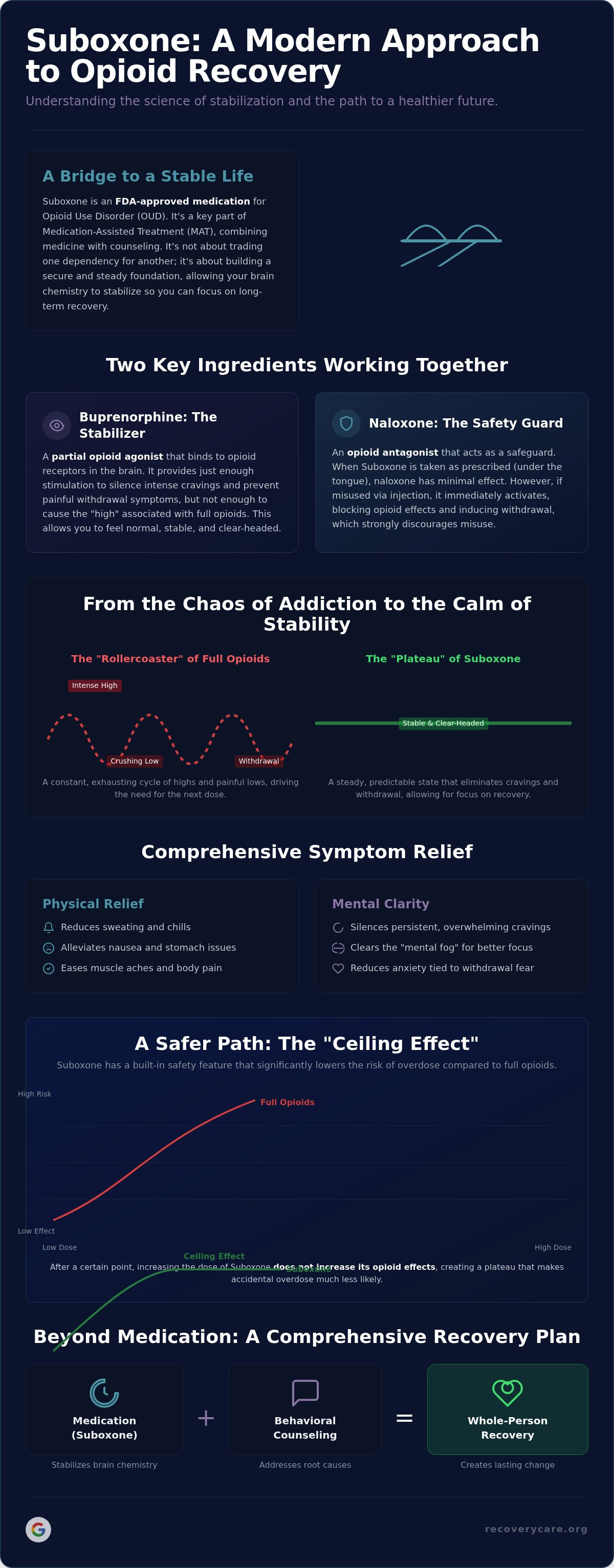
The effectiveness of this treatment comes from how its two main ingredients work together. Buprenorphine is a partial opioid agonist. It binds to the same receptors in the brain as other opioids, but it doesn't create the same intense euphoria or "high." Instead, it satisfies the receptors just enough to stop withdrawal symptoms and silence the constant mental noise of cravings. This allows you to feel normal and clear-headed throughout the day. It provides a sense of calm that is often missing during the early stages of recovery.
Naloxone is the second ingredient, and it acts as a safety guardrail. When you take Suboxone correctly under the tongue, the naloxone isn't absorbed into your system in a significant way. However, if the medication is dissolved and injected, the naloxone activates immediately. This blocks the opioid effects and causes sudden withdrawal symptoms, which effectively discourages misuse. Suboxone is a combination medication that utilizes buprenorphine to manage cravings and naloxone to discourage misuse, creating a safer path for long-term recovery.
Why Stabilization is the First Step to Healing
Healing can't happen when your body is in a state of constant alarm. Suboxone provides a "ceiling effect," which is a unique pharmacological feature that makes it much safer than full agonists like oxycodone or fentanyl. After a certain point, the effects of the medication don't increase even if the dose does. This significantly lowers the risk of accidental overdose and provides a predictable, steady state for your body. It replaces the "rollercoaster" of addiction with a level, manageable experience.
This biological stability gives your brain's neurochemistry the time and space it needs to begin repairing itself. When you aren't trapped in the agonizing cycle of withdrawal, you can finally focus on the other parts of your recovery plan. It's about more than just stopping a habit; it's about giving yourself the physical peace required to engage in counseling, repair relationships, and return to the life you love. Understanding what is suboxone used for helps you see that stabilization is the quiet foundation upon which a new, healthier future is built.
How Suboxone Works to Silence Cravings and Withdrawal
If you've ever felt the panic of a looming withdrawal, you know the physical and mental toll it takes. Active opioid use creates a punishing "rollercoaster" effect. You experience a brief, intense high followed by a crushing low that sends you searching for the next dose just to feel normal. This cycle makes it nearly impossible to focus on work, family, or your own well-being. Understanding what is suboxone used for starts with seeing how it flattens this rollercoaster into a steady, manageable plateau. Because it has a long half-life, the medication stays in your system for a significant amount of time, usually requiring only a once-daily dose to keep you feeling stable and clear-headed.
The Science of Partial Agonists vs. Full Opioids
Think of your brain's opioid receptors as tiny locks. Full opioids, such as heroin or oxycodone, are keys that turn the lock completely, flooding your system with dopamine and creating a high. Suboxone is different. It's a partial agonist, which means it's a key that fits into the lock but only turns it halfway. It provides enough stimulation to stop withdrawal and silence cravings without causing euphoria. Because the "lock" is already occupied by Suboxone, other opioids can't attach to it. This "blocking effect" is a powerful safety feature that significantly reduces the risk of an accidental overdose.
It's common to worry about "trading one addiction for another," but there's a vital medical distinction to make here. Addiction is characterized by chaotic, compulsive, and harmful behaviors. Physical dependence on a prescribed medication, when managed by a doctor, is a stable medical state. By using professional Suboxone treatment, you're replacing a destructive cycle with a controlled medical plan that allows your brain to function normally again. This stability is what gives you the mental energy to engage in therapy and long-term healing.
The Safety Profile: How Naloxone Prevents Misuse
The addition of naloxone in the formula is an intentional safety measure designed for your protection. When you take the medication sublingually as intended, the naloxone is poorly absorbed and doesn't interfere with the buprenorphine's helpful effects. It essentially stays in the background while you go about your day. However, if the medication is diverted or injected, the naloxone activates immediately. This triggers "precipitated withdrawal," which is a sudden and intense onset of withdrawal symptoms. This built-in guardrail ensures the medication is used safely and effectively as a foundation for your recovery. Knowing what is suboxone used for helps you appreciate these clinical layers that prioritize your safety and long-term success.
What Specific Symptoms Does Suboxone Treat?
When you're caught in the cycle of opioid use, your body and mind are constantly on high alert. If you've ever tried to stop on your own, you know that the physical and mental symptoms can feel insurmountable. This is exactly what is suboxone used for; it's a medical intervention that targets the specific distress signals your body sends when it's deprived of opioids. By quieting these signals, it creates the quiet space you need to focus on your long-term health. It acts as a safety net, catching you before you fall back into the painful cycle of active use.
Managing Physical Withdrawal Symptoms
Early recovery is often marked by a collection of flu-like symptoms that can be physically exhausting. These aren't just "in your head," they are real, physiological responses to a change in your brain's chemistry. Suboxone is highly effective at easing these burdens, including:
- Deep muscle and bone aches
- Nausea, vomiting, and digestive distress
- Excessive sweating and sudden chills
- Persistent insomnia and restlessness
To ensure the medication works as intended, it's vital to start treatment when you're already in a state of mild withdrawal. If you take it too early, the medication can actually trigger symptoms rather than soothing them. Most patients report that their physical distress begins to fade within 30 to 60 minutes after their first dose is administered. This rapid relief allows you to move from a state of physical crisis to one of manageable stability, making it much easier to stay committed to your recovery goals.
Reducing the Psychological Burden of Cravings
The mental aspect of recovery is often the most challenging part to manage alone. Cravings aren't a reflection of your willpower or your character; they are a biological urge driven by the brain's reward system. Opioid Use Disorder often leaves people in a constant state of "mental fog," accompanied by intense anxiety and irritability. Suboxone helps clear this fog by quieting the brain's alarm system. When your mind isn't fixated on where the next dose will come from, you're much better equipped to engage in behavioral health counseling and other supportive therapies.
Beyond the initial days of detox, this treatment also helps manage Post-Acute Withdrawal Syndrome (PAWS). These are the lingering symptoms, like mood swings and sleep disturbances, that can last for weeks or months. By providing a steady baseline, the medication prevents the drug-seeking behavior that often leads to relapse. Understanding what is suboxone used for helps you see it as a tool for the whole person, ensuring that both your body and your mind have the support they need to heal together.
The Importance of a Comprehensive Recovery Plan
Physical stability is a powerful first step, but lasting recovery requires a structure that supports your entire life. While medication manages the biological side of Opioid Use Disorder, it doesn't automatically heal the emotional or social challenges that often accompany it. When asking what is suboxone used for, it's vital to recognize it as the bedrock of a much larger healing process. At Recovery Care, we believe in a "Whole Person" philosophy. This means we treat the physical symptoms while also addressing your mental and emotional well-being under one supportive umbrella. This integrated approach ensures you aren't just surviving, but truly building a life you enjoy.
Why Medication is More Effective with Counseling
If medication is the foundation, then behavioral health counseling is the frame of your new life. Therapy provides you with the tools to handle stress, grief, or boredom without turning back to substances. It's about more than just talking; it's about developing practical coping mechanisms that work in the real world. We offer both individual and group therapy sessions to help you rebuild a sense of community and social support. These services are essential because they help you understand the "why" behind your past choices, allowing you to make different ones moving forward. Our behavioral health team works closely with our medical providers to ensure your care is seamless and personalized to your specific needs.
Integrating Primary Care for Holistic Health
Many people entering recovery have spent years neglecting their general physical health. Chronic conditions like high blood pressure, nutritional deficiencies, or untreated infections can make the recovery process feel even more difficult. This is why we integrate primary care services directly into our treatment model. Managing your overall health is a key part of staying sober; when you feel physically strong, you're better equipped to handle the mental work of recovery. Under the leadership of Medical Director Dr. Heather Rosen, MD, our team provides routine physicals and diagnostic testing alongside your addiction treatment.
By treating co-occurring health issues, we help you remove the physical barriers to your success. You don't have to juggle multiple doctors or explain your history over and over again in different offices. We provide a confidential, non-judgmental environment where your total health is the priority. If you're ready to experience a program that looks at more than just a single symptom, we invite you to learn more about our integrated recovery services today. Understanding what is suboxone used for within this holistic context ensures you have the best possible chance at a healthy, opioid-free future.
Navigating Your Path to Treatment and Support
Deciding to seek help is a profound act of courage. It's the moment you choose to stop letting a substance dictate your future and start reclaiming your identity. Understanding what is suboxone used for is a vital part of that education, but the next step is finding a team that treats you with the dignity you deserve. We've designed our process to be low-barrier, meaning we prioritize getting you into an appointment quickly without unnecessary hurdles. Your privacy is our highest priority, and you can expect a strictly confidential, non-judgmental environment from the very first phone call.
Recovery isn't a sprint. It's a marathon that requires patience, clinical expertise, and long-term support. We don't just help you get through the first week; we stay by your side as you navigate the months and years ahead. Our goal is to provide a sense of security so you can focus on the hard work of healing. Whether you are just starting to explore your options or you're ready to begin today, our team serves as your steady guide through every phase of the process. We are here to ensure that your transition into treatment feels seamless, secure, and well-supported. For individuals seeking a more personalized level of support, therecoverycoachny.com offers private recovery coaching and case management to assist with the complexities of building a new life.
We know that life doesn't stop when you decide to enter recovery. Barriers like transportation, childcare, or a demanding work schedule can make traditional clinic visits feel impossible. That's why we offer virtual MAT consultations through our telehealth platform. This allows you to receive high-quality care from the privacy and comfort of your own home. It's a discreet way to manage your treatment while maintaining your daily responsibilities. For those who prefer a face-to-face connection, we also provide in-person options. Even if you are not in our immediate area, you can explore Walk-in Clinic Services at Sage Creek Medical Center to see how an integrated approach to primary care can support your recovery journey. This flexibility ensures that you have access to the specialized care you need to succeed, no matter your personal circumstances.
Financial concerns should never be the reason someone chooses not to seek help. We're committed to making treatment accessible to everyone, regardless of their financial status. Recovery Care accepts Medicare, Medicaid, and most major insurance plans to ensure that cost isn't a barrier to your well-being. When you're considering what is suboxone used for and how it fits into your life, we can help you navigate the logistics of your coverage. Our team offers confidential insurance verification, so you'll know exactly what to expect before your first visit. You don't have to figure this out alone. Reach out to us today to take that first, vital step toward a healthier, opioid-free life.
Taking the Next Step Toward Lasting Stability
Recovery is more than just stopping a habit; it's about rebuilding a life where you feel in control again. You've seen how this treatment serves as a medical bridge, providing the physical peace needed to engage in counseling and primary care. Understanding what is suboxone used for helps demystify the process, showing that it's a foundation for biological stability rather than a simple replacement. By silencing cravings and managing withdrawal, you can finally shift your focus from survival to growth.
You don't have to navigate this journey alone. Our team, led by Medical Director Dr. Heather Rosen, MD, is dedicated to providing a confidential and supportive environment tailored to your needs. We accept Medicare and Medicaid to ensure that high-quality care remains accessible, and we offer both telehealth and in-person options for your convenience. It's time to move toward the life you and your family deserve. Start your recovery journey with a confidential consultation at Recovery Care today. Your future is bright, and we are ready to help you reach it.
Frequently Asked Questions
Is Suboxone just replacing one addiction with another?
No, Suboxone is a medical treatment designed to stabilize brain chemistry rather than fuel a chaotic addiction. While you may develop a physical dependence on the medication, this is medically managed and allows you to function normally in your daily life. Addiction involves compulsive, harmful behaviors and a constant search for a high. Suboxone removes that "high" while silencing the painful withdrawal symptoms that often lead to relapse.
Does Suboxone cause dental problems or tooth decay?
The FDA has reported that buprenorphine medications dissolved in the mouth can lead to dental issues like tooth decay or cavities. To protect your oral health, it's recommended to rinse your mouth with water after the medication has completely dissolved. You should also wait at least one hour before brushing your teeth. Regular dental checkups and open communication with your recovery team help manage these risks while you focus on your long-term health.
How long do I need to stay on Suboxone treatment?
There is no fixed timeline for how long you should remain on this medication. Some people find success after several months, while others benefit from staying on the treatment for years to maintain their stability. Recovery is a personal journey, and your doctor will work with you to determine the right duration. The goal is to ensure you're physically and emotionally strong enough to maintain sobriety before considering a gradual, medically supervised taper.
Can I drive or work while taking Suboxone?
Most patients can safely drive and work once they've reached a stable dose and their body has adjusted to the medication. During the first few days of treatment, you might experience some drowsiness or dizziness. It's important to see how you feel before operating heavy machinery or driving long distances. Once stabilized, the clarity provided by the medication often makes it easier to perform well at work and stay focused on your professional responsibilities.
What happens if I miss a dose of Suboxone?
If you miss a dose, you should take it as soon as you remember. However, if it's almost time for your next scheduled dose, skip the missed one and continue with your regular routine. Never take a double dose to make up for a missed one. Because of the medication's long half-life, you likely won't feel withdrawal symptoms immediately, but staying consistent is key to maintaining the steady state required for your recovery.
Can Suboxone be used for pain management as well as addiction?
While Suboxone is primarily FDA-approved for treating Opioid Use Disorder, its main ingredient, buprenorphine, is also an effective pain reliever. Some doctors use it "off-label" to manage chronic pain, especially for patients who have a history of substance use issues. This dual benefit is a common reason people ask what is suboxone used for. It provides a safer alternative to full-agonist opioids while helping you manage physical discomfort and cravings simultaneously.
Is Suboxone safe to take during pregnancy?
Yes, medical professionals often recommend continuing Suboxone during pregnancy because untreated opioid use or active withdrawal poses a much higher risk to the baby. Stabilization prevents the "cycle of withdrawal" that can lead to pregnancy complications. While the baby may experience mild neonatal abstinence syndrome after birth, it's generally manageable. Your care team will closely monitor your health to ensure both you and your baby remain safe and supported throughout the entire process.
How do I find a Suboxone doctor who takes Medicaid?
Finding accessible care is a top priority for many families. When researching what is suboxone used for, it's encouraging to know that providers like Recovery Care accept Medicaid and Medicare to keep treatment affordable. You can also use the SAMHSA online treatment locator to find local clinics that accept your specific insurance. Our team offers both in-person and telehealth options, making it easier for you to start your journey with a provider who respects your financial situation.


