
What if the most significant barrier to finding opioid withdrawal help isn't the physical challenge, but the fear of being treated like a number instead of a person? You've likely spent nights wondering if you can survive the nausea and bone-deep aches, only to be met with the even colder fear of medical judgment. It's exhausting to feel like you're fighting your own body while searching for a provider who truly understands the weight of what you're carrying. We believe that your path to recovery should be defined by dignity, not just a clinical diagnosis.
You deserve a recovery plan that prioritizes both your physical comfort and your long-term peace of mind. In this guide, we'll show you how to manage withdrawal symptoms safely through a blend of medical expertise, at-home support, and compassionate care. We'll explore the roles of Suboxone and Vivitrol in stabilizing your health, explain how telehealth provides a confidential bridge to treatment, and outline a clear roadmap for lasting sobriety. By combining primary care with behavioral health counseling, we ensure you have the specialized tools needed to reclaim your life on your own terms.
Key Takeaways
- Learn why professional medical guidance is essential for managing the specific biological changes opioids cause in your brain's reward centers.
- Discover how simple changes to hydration and nutrition can support your body's natural recovery process while using at-home comfort measures.
- Explore how evidence-based medications provide reliable opioid withdrawal help by quieting physical cravings and restoring your stability.
- Understand why a holistic approach including behavioral health counseling is the most effective way to address the root causes of addiction.
- Find out how to access confidential care through telehealth and navigate insurance options like Medicaid and Medicare to begin your path forward.
Understanding Opioid Withdrawal: Why Professional Help Matters
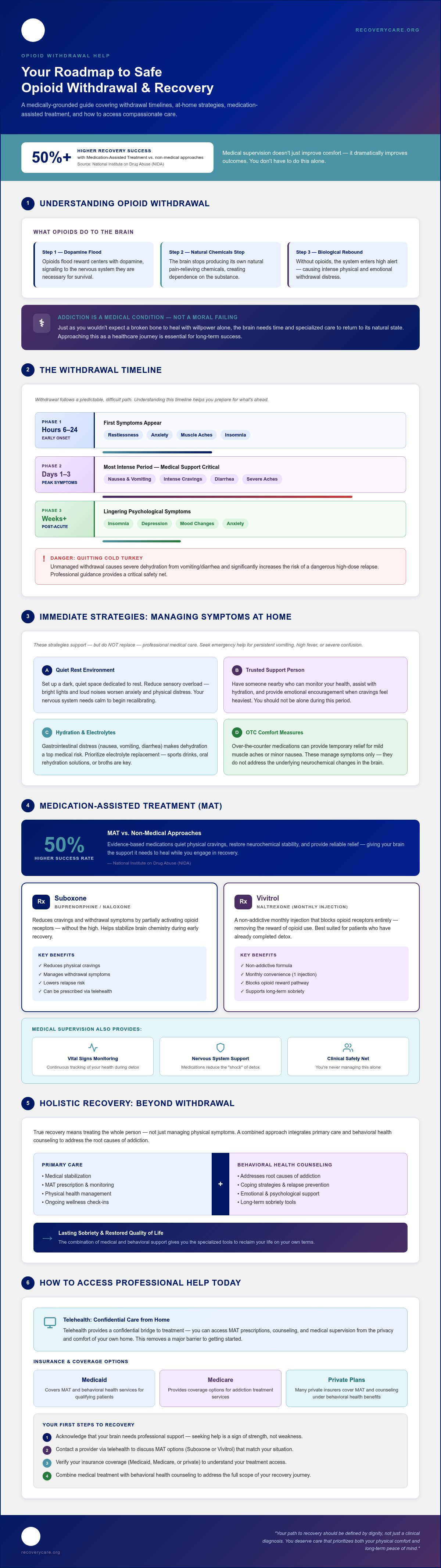
Withdrawal isn't just a physical hurdle; it's your body's attempt to recalibrate after a period of dependence. When you stop using opioids, your system reacts to the sudden absence of a substance it's come to rely on for basic functions. It's a complex physiological shift, not a sign of weakness. Seeking opioid withdrawal help is the first step in acknowledging that your brain and body need professional support to heal safely and effectively.
Opioids fundamentally rewire how your brain processes pain and pleasure. By flooding the reward centers with dopamine, these substances tell your nervous system they're necessary for survival. Over time, your brain stops producing its own natural pain-relieving chemicals. When the drug is removed, your system enters a state of high alert. This biological "rebound" is what causes the intense physical and emotional distress commonly associated with detox.
It's vital to understand that addiction is a chronic medical condition. It isn't a moral failing, nor is it a lack of willpower. You wouldn't expect someone with a broken bone to simply "wish" it healed; similarly, your brain needs time and specialized care to return to its natural state. Approaching this as a healthcare journey rather than a character test is essential for your long-term success.
Attempting to quit "cold turkey" can be overwhelming and even dangerous. Beyond the extreme discomfort, it often leads to severe dehydration from vomiting or diarrhea. Because the physical pain is so intense when unmanaged, the risk of a high-dose relapse is significantly higher when you try to handle it alone. Professional guidance ensures you don't have to endure this pain without a safety net.
The Timeline of Opioid Withdrawal
The journey through withdrawal follows a predictable, albeit difficult, path. Understanding this timeline helps you prepare for what's ahead. Early symptoms like restlessness, anxiety, and muscle aches typically begin within the first 6 to 24 hours. Peak symptoms, including nausea and intense cravings, usually occur between days one and three. Finally, post-acute withdrawal can involve lingering psychological symptoms like insomnia or depression that last for several weeks.
Why Medical Supervision is the Gold Standard
Choosing professional opioid withdrawal help provides a stabilizing force for your nervous system. Medical supervision ensures your vital signs are monitored while providing access to medications that reduce the "shock" of detox. Research from the National Institute on Drug Abuse (NIDA) shows that medication-assisted treatment increases recovery success by over 50% compared to non-medical approaches. This clinical safety net makes the process safer and far more manageable.
Immediate Strategies for Managing Withdrawal Symptoms Safely
Managing the first few days of withdrawal requires a focused approach to your physical surroundings and biological needs. While seeking opioid withdrawal help from a medical professional is the safest path, there are immediate steps you can take at home to ease the initial transition and support your body's natural detoxification process. These strategies don't replace clinical care, but they do provide a necessary foundation of stability as you prepare for the next steps in your journey.
It's helpful to remember that physical comfort is a tool for stabilization, not the final goal. Over the counter medications may offer temporary relief for minor muscle aches or mild nausea, but they don't address the underlying neurochemical changes in the brain. If you find yourself struggling with persistent vomiting, high fever, or severe confusion, it's vital to stop home management and seek professional medical intervention immediately. Your safety is always the highest priority.
Creating a Supportive Home Environment
Sensory overload often makes withdrawal feel much more intense. Bright lights, loud noises, or high-traffic areas in your home can trigger anxiety and physical distress. Setting up a quiet, dark space dedicated entirely to rest allows your nervous system to begin recalibrating without unnecessary interruptions. It's also essential to have a trusted support person nearby. This individual can monitor your health, help you stay hydrated, and provide the emotional encouragement needed when cravings feel particularly heavy.
The Role of Hydration and Nutrition
Gastrointestinal distress is a common part of the withdrawal process, making electrolyte replacement a top priority. Dehydration is one of the most frequent reasons for medical complications during detox, so sipping on water, broth, or electrolyte-balanced drinks throughout the day is crucial. Stick to small, frequent meals that are easy on the stomach, such as toast or crackers. You should also avoid caffeine and nicotine during this time. These stimulants can significantly worsen the restlessness, heart palpitations, and insomnia you're already trying to manage.
While these home strategies make the process more bearable, they're the bridge to the clinical care that truly restores your health. If you're ready to move beyond just managing symptoms, exploring telehealth options for professional support can provide the medical foundation needed for lasting change. True recovery involves more than just getting through the initial "sickness"; it requires a comprehensive plan that addresses the root of the addiction and provides a clear path toward a healthier future.
Medication-Assisted Treatment (MAT): The Science of Relief
While home-based comfort measures provide a supportive environment, clinical intervention serves as the true engine of recovery. Medication-Assisted Treatment (MAT) is widely recognized as the gold standard for opioid withdrawal help because it bridges the gap between physical distress and mental clarity. This evidence-based approach doesn't rely on medication alone; instead, it combines specialized prescriptions with behavioral health counseling to treat the root causes of addiction. By addressing the biological and psychological aspects of recovery simultaneously, MAT provides a comprehensive safety net that traditional detox often lacks.
There's a persistent myth that using medication to treat opioid use disorder is simply "trading one drug for another." This couldn't be further from the truth. When prescribed by a medical professional, these medications stabilize your brain chemistry rather than causing impairment. They quiet the internal "noise" of cravings and eliminate the physical pain of withdrawal, allowing you to focus on your family, your job, and your personal growth. It's a tool for stabilization that empowers you to take back control of your life.
How Suboxone and Subutex Provide Immediate Help
Suboxone and Subutex are often the first line of defense during the early stages of recovery. The primary ingredient, buprenorphine, acts as a partial opioid agonist. This means it "fills" the brain's receptors enough to stop withdrawal symptoms and block cravings without producing the intense euphoria associated with misuse. Suboxone is a combination of buprenorphine and naloxone designed to stabilize brain chemistry. Because it occupies these receptors so effectively, it also acts as a shield, preventing other opioids from having an effect if they're introduced to the system.
By taking these receptors "offline" from the cycle of addiction, these medications allow patients to return to daily functioning much faster than they would through traditional detox. You can wake up without the fear of getting sick, which provides the emotional space necessary to participate in counseling. It’s about restoring a sense of normalcy so you can start making healthy decisions again without being driven by the constant need to avoid physical pain.
Long-Term Prevention with Vivitrol and Sublocade
Once initial stabilization is achieved, long-acting medications like Vivitrol and Sublocade offer an added layer of security for ongoing sobriety. Vivitrol is a monthly injection that acts as an antagonist, meaning it completely blocks the effects of opioids. If a person were to use an opioid while on Vivitrol, they wouldn't feel any effect, which significantly reduces the psychological incentive for relapse. It's an excellent option for those who have already completed the initial detox phase and want a "safety switch" in place.
Sublocade provides a different type of support by delivering a steady, month-long release of buprenorphine. This eliminates the need for daily dosing, which can be a helpful tool for those who want to move away from the daily ritual of taking medication. Choosing the right path depends on your unique medical history and long-term recovery goals. Your medical team will work with you to determine which option provides the most reliable foundation for your specific journey toward health.
Holistic Recovery: Treating the Whole Person Beyond Withdrawal
Achieving physical stabilization through medication is a monumental first step, but it's only the beginning of a truly sustainable recovery. Real healing requires looking beyond the immediate symptoms to understand the person behind the diagnosis. While opioid withdrawal help focuses on the acute phase of stopping drug use, a holistic approach ensures that every aspect of your well-being is nurtured. This means addressing the emotional scars, physical health complications, and social challenges that often accompany long-term substance use.
Dignity is a cornerstone of this process. Many individuals arrive at treatment feeling like they've been reduced to a statistic or a "case." Our team, led by Medical Director Dr. Heather Rosen, MD, prioritizes a non-judgmental environment where you're treated with the respect you deserve. Rebuilding your self-esteem is just as vital as clearing your system of substances. When you feel seen and heard by your medical providers, the path to long-term sobriety feels less like a struggle and more like a return to your true self.
The Impact of Behavioral Health Counseling
For individuals whose recovery journey also involves exploring their authentic self, specialized support like gender identity therapy Arizona can provide a safe space to address unique identity-related challenges alongside their sobriety goals.
Counseling provides the essential "why" behind the recovery process. It's the space where you can safely explore the root causes of substance use, whether those involve past trauma, chronic stress, or co-occurring mental health conditions. By integrating behavioral health into your recovery plan, you gain the psychological tools needed to navigate life's challenges without returning to old patterns.
- Developing Coping Mechanisms: Learn practical strategies to manage triggers and stress in real-time.
- Addressing Mental Health: Treat underlying anxiety or depression that may have fueled the initial dependence.
- Building Community: Connect with a support system that understands the unique hurdles of the recovery journey.
Primary Care and Diagnostic Testing
Opioid use can often mask other health issues or lead to secondary medical concerns. Integrating routine primary care into your recovery ensures that your body is healing from the inside out. For those navigating recovery alongside other serious health conditions, Sunridge Medical offers specialized care for complex chronic diseases using advanced alternative medicine. This comprehensive oversight allows for a more seamless transition back to a healthy, active lifestyle.
Your recovery shouldn't be fragmented. By combining primary care with specialized addiction treatment, you receive a unified level of care that prioritizes your entire future. If you're looking for a partner who values your health as much as you do, start your holistic journey with Recovery Care today. We accept most insurance plans, including Medicaid and Medicare, to ensure that high-quality, compassionate care remains accessible to everyone who needs it.
How to Access Professional Opioid Withdrawal Help Today
Taking the first step toward professional opioid withdrawal help is often the most daunting part of the entire journey. The fear of being judged or the logistical headache of finding a reliable provider can feel like insurmountable walls. We want you to know that those walls don't have to exist. Modern medicine has evolved to meet you exactly where you are, providing a secure bridge from the isolation of addiction to the safety of a dedicated clinical support team. You're not just a patient; you're a person who deserves a path to wellness that's both accessible and respectful.
Choosing the right partner for your recovery means finding a team that values your privacy and your time. A compassionate recovery center should offer a clear path forward that includes evidence-based MAT, such as Suboxone or Vivitrol, alongside holistic primary care and behavioral health counseling. When these elements are integrated, you aren't just treating a symptom; you're rebuilding your life. Look for providers who prioritize a non-judgmental atmosphere led by experienced medical directors who understand the complexities of your situation.
The Benefits of Telehealth for Recovery
Telehealth has transformed how individuals access care, offering a layer of privacy and convenience that wasn't possible in years past. You can consult with a medical professional from the comfort of your own home, which removes the barriers of transportation and scheduling for busy individuals. This continuous support through virtual check-ins ensures that your medication management remains steady and responsive to your needs as your body heals. It's a flexible way to maintain the clinical connection necessary for long-term success without the stress of frequent travel.
Navigating Insurance and Costs
We understand that navigating the financial side of healthcare can be overwhelming. At Recovery Care, we believe that life-saving medical assistance should be accessible to everyone who seeks it. Our team works closely with major insurers, including Medicare and Medicaid, to ensure your focus remains on your health rather than administrative hurdles. When you look at the long-term financial picture, the cost of active addiction far outweighs the investment in a medically supported future. We're here to help you understand your coverage so that your transition into treatment is as seamless and stress-free as possible.
You don't have to manage this alone. The opioid withdrawal help you need is available right now, and it's more accessible than you might think. By choosing a partner who understands both the clinical and emotional complexities of recovery, you're choosing a safer, more stable future. Take that first step today. Your health, your dignity, and your future are worth the effort.
Your Path to a Healthier Future Starts Here
Seeking opioid withdrawal help is a courageous decision that marks the beginning of your recovery journey. Throughout this guide, we've explored how medical stabilization through MAT provides a safer, more humane alternative to the physical shock of detoxing alone. By integrating behavioral health counseling and routine primary care, you can address the root causes of addiction while ensuring your body heals from the inside out. Recovery isn't just about stopping a substance; it's about restoring your dignity and building a life where you feel supported every step of the way.
Under the expert medical direction of Dr. Heather Rosen, MD, our team provides the specialized care you deserve. Whether you prefer in-person visits or confidential telehealth consultations from the privacy of your home, we're here to help you navigate your coverage, as we proudly accept both Medicaid and Medicare for all services. You don't have to face this transition without a safety net. Begin your journey to recovery with compassionate, professional support from Recovery Care. We're ready to walk this path beside you with the respect and expertise you need to succeed.
Frequently Asked Questions
Is opioid withdrawal life-threatening?
While opioid withdrawal is rarely directly fatal for healthy adults, it can lead to life-threatening complications if left unmanaged. Severe vomiting and diarrhea can cause extreme dehydration and electrolyte imbalances, which put significant strain on the heart. Seeking professional opioid withdrawal help ensures your vitals are monitored. A medical team can provide stabilization to prevent these dangerous physical shocks to your system, making the process much safer than attempting it alone.
How long does it take for Suboxone to stop withdrawal symptoms?
Most patients begin to feel physical relief within 20 to 45 minutes after their first dose of Suboxone. While the initial sickness begins to subside quickly, it may take a few days of supervised dosing to reach full stabilization. This medication works by filling the brain's receptors, effectively quieting the intense cravings and physical pain. Our providers work closely with you during this induction phase to ensure your dosage is perfectly balanced for your comfort.
Can I get opioid withdrawal help through telehealth?
Yes, you can access comprehensive opioid withdrawal help from the privacy of your own home through our telehealth consultations. This option is ideal for those with busy schedules or transportation barriers. During a virtual visit, our medical team can evaluate your symptoms, discuss treatment options like Suboxone, and develop a personalized recovery plan. Telehealth ensures you receive consistent support and medication management without the stress of traveling to a physical clinic during early recovery.
Does Medicaid or Medicare cover opioid addiction treatment?
Medicaid and Medicare provide robust coverage for medication-assisted treatment (MAT) and behavioral health counseling. Recovery Care proudly accepts these plans to ensure that high-quality addiction care remains accessible to everyone in our community. Your coverage typically includes your initial consultations, ongoing medication management, and therapy sessions. Our administrative team is happy to help you verify your specific benefits so you can focus entirely on your health and long-term recovery goals.
What is the difference between Suboxone and Vivitrol?
Suboxone and Vivitrol serve different roles in the recovery journey. Suboxone contains buprenorphine to stop active withdrawal symptoms and cravings by partially activating brain receptors. In contrast, Vivitrol is a monthly injection that acts as a total blocker. It doesn't treat active withdrawal; instead, it prevents any opioids from having an effect if used. Choosing between them depends on whether you need immediate stabilization or a long-term safety net after detox is complete.
What should I expect during my first appointment for withdrawal help?
Your first appointment is designed to be a warm, non-judgmental experience where we get to know you as a person. You'll meet with a medical professional to discuss your health history, your goals, and your current symptoms. We may perform basic diagnostic testing to ensure your safety before starting any medication. By the end of the visit, you'll have a clear, personalized roadmap for recovery that includes medical stabilization and behavioral health support.
Can I work while undergoing medication-assisted treatment?
Many patients find that medication-assisted treatment actually makes it easier to maintain their employment. Because medications like Suboxone eliminate the highs and lows of addiction and the pain of withdrawal, you can return to your daily responsibilities with a clear head. MAT is designed to restore your ability to function in your career and family life. Our flexible telehealth options also make it much easier to schedule check-ins around your existing work commitments.
How do I know if I need professional help for withdrawal?
If you've attempted to stop using opioids on your own and found the physical pain or psychological cravings too intense to manage, professional help is recommended. Signs you need clinical support include severe gastrointestinal distress, extreme anxiety, or a history of relapse during previous quit attempts. Professional care provides the medical safety net and emotional tools necessary to break the cycle of dependence. You don't have to wait for a crisis to choose a safer path forward.


