
Vivitrol is a monthly naltrexone injection used to treat opioid use disorder or alcohol use disorder. Vivitrol side effects and risks include nausea, headache, dizziness, injection-site reactions, liver problems, and dangerous opioid withdrawal or overdose in certain situations. Serious symptoms, such as trouble breathing, severe changes at the injection site, or yellowing of the eyes, need prompt medical attention.
It makes sense to look beyond what the medicine is intended to do and understand how it may affect your body. Learning about vivitrol side effects and risks can help you recognize warning signs and prepare questions for your healthcare provider. Vivitrol is administered by a healthcare provider and works best as part of a broader treatment plan, not as a standalone approach to recovery.
This article covers common side effects, injection-site warning signs, possible liver symptoms, and precautions providers consider before treatment. You’ll also learn how Vivitrol can fit alongside counseling and other support, helping you better understand vivitrol side effects and risks before discussing your care.
Key Takeaways
- Learn which injection-site changes may need medical attention and when a reaction shouldn’t be watched at home.
- Understand why an opioid-free period matters before treatment and how opioid use can create serious risks during or after Vivitrol.
- Recognize common side effects and identify symptoms that may signal an allergic reaction or another urgent problem.
- Know which liver-related warning signs to watch for and why your health history and medications matter.
- See how Vivitrol may fit into addiction treatment alongside counseling and other ongoing support.
Can a Vivitrol shot cause injection site reactions?
Yes. Vivitrol can cause injection-site reactions ranging from pain and bumps to blistering, open wounds, or a dark scab. Seek urgent medical care for severe or rapidly worsening changes, especially blistering or an open wound. Contact your healthcare provider if the reaction worsens or hasn’t improved within two weeks.
Mild injection-site pain, tenderness, or a small bump can occur after the dose. These reactions usually improve within a few days, while injection-site pain typically resolves within 3-7 days after each injection. Notice whether discomfort is easing or getting worse, and tell your provider about changes that concern you.
More serious reactions can include:
- Intense or increasing pain around the injection site
- Marked swelling, blistering, or a skin lesion
- An open wound or dark scab
- Changes that worsen after several days instead of settling
Rarely, blistering or skin lesions may require surgery. Tissue necrosis means tissue has died, and severe skin damage needs prompt medical assessment. An open wound, dark scab, or spreading blister is not ordinary injection soreness. Get immediate medical attention for severe reactions that worsen over several days.
Track when the reaction began and how it changes. Note, for example, whether a bump is shrinking, pain is increasing, or a blister has opened. Share these details with your healthcare provider. If the area becomes more painful or looks worse over several days, seek care promptly rather than waiting for the two-week mark.
An allergic reaction differs from a local injection-site problem, but it can also require emergency care. Symptoms may include a rash, swelling of the face, eyes, mouth, or tongue, wheezing, chest pain, or feeling faint. Get emergency medical care immediately for swelling or trouble breathing after an injection.
A healthcare provider administers Vivitrol, so report any previous injection reaction before starting treatment or receiving another dose. Describe your symptoms and how long they lasted. This helps the provider assess the reaction and consider next steps in your treatment. Don’t dismiss severe pain, blistering, or an open lesion as routine.
Emotional distress also deserves timely support during treatment. In the United States, people can call or text 988 for the Suicide and Crisis Lifeline, according to the Substance Abuse and Mental Health Services Administration. For severe injection-site changes, contact a healthcare provider or seek urgent medical care; 988 is for emotional crisis support.
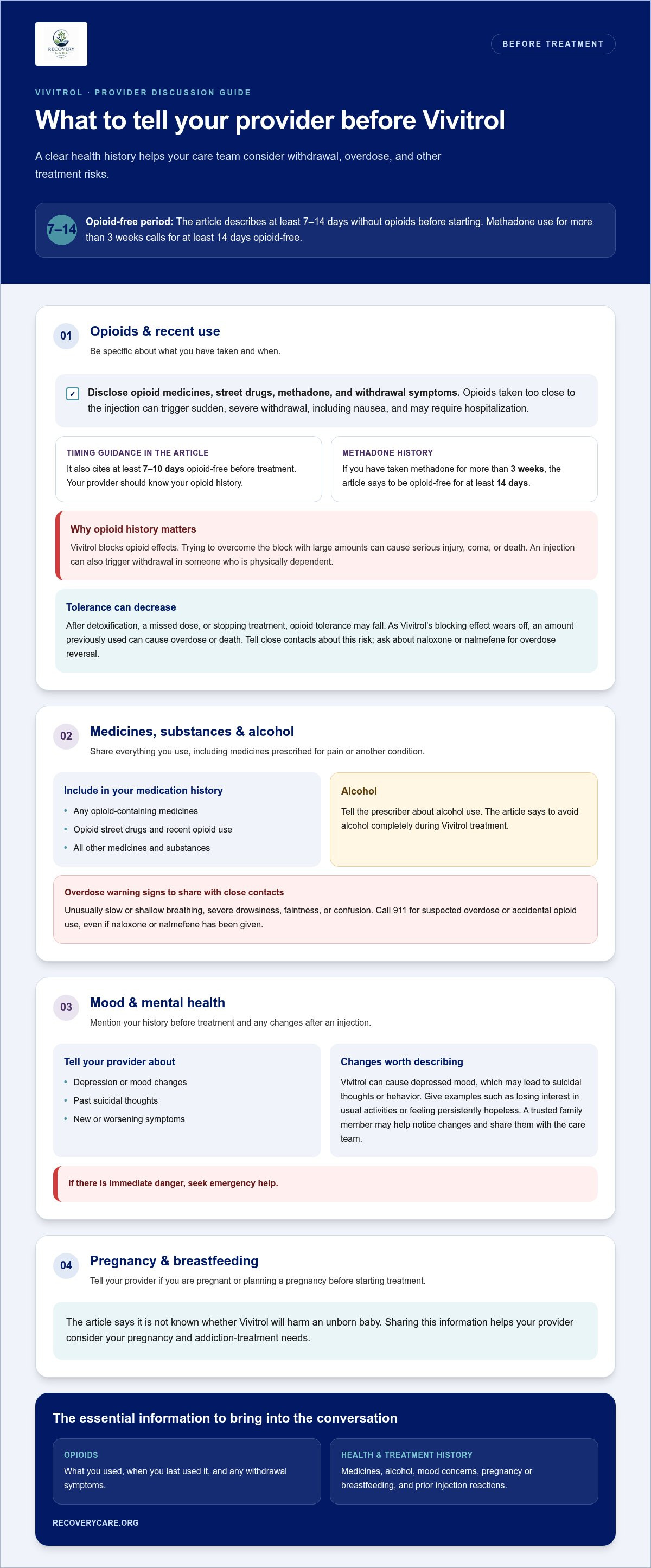
WHAT SHOULD I TELL MY HEALTHCARE PROVIDER BEFORE RECEIVING VIVITROL?
Before a Vivitrol injection, tell your provider about opioid use, medications, alcohol use, mood concerns, and pregnancy or breastfeeding. These details help identify potential withdrawal, overdose, and other treatment risks.
Opioid Use Before Starting Treatment
The opioid-free period is the time without opioids required before Vivitrol can be started safely. Taking opioids too close to the injection can trigger sudden, severe withdrawal, including nausea, and may require hospitalization.
People should be opioid-free for at least 7 to 14 days before starting Vivitrol. Another recommendation is at least 7-10 days before beginning treatment. People who have taken methadone for more than 3 weeks should be opioid-free for at least 14 days before beginning Vivitrol.
Tell the prescriber about opioid medicines, street drugs, methadone, and withdrawal symptoms. Vivitrol blocks opioid effects, but taking large amounts to overcome the block can cause serious injury, coma, or death. Physical dependence needs careful attention because an injection can trigger withdrawal.
Opioid tolerance can decrease after detoxification, a missed dose, or stopping treatment. As Vivitrol’s blocking effect wears off, an opioid amount you previously used can cause overdose or death. Tell close contacts about this risk, and ask about naloxone or nalmefene for overdose reversal.
Mood, Depression, and Suicide Risk
Vivitrol can cause depressed mood, which may lead to suicidal thoughts or behavior. Tell your healthcare provider about depression, mood changes, or past suicidal thoughts before treatment, and report any new or worsening changes after an injection.
Describe specific changes, such as losing interest in usual activities or feeling persistently hopeless. A trusted family member can also help notice changes and share them with the care team. If there’s immediate danger, seek emergency help.
Interactions With Medicines and Substances
Vivitrol blocks opioid effects, so disclose any opioid-containing medicines, opioid street drugs, and recent opioid use. Trying to overcome the block with large opioid amounts can cause overdose, coma, or death. Opioid use can also become more dangerous as tolerance decreases.
Tell the prescriber about all medicines and substances you use, including alcohol. Avoid alcohol completely during Vivitrol treatment. Mention medicines containing opioids, even if prescribed for pain or another condition, so your treatment plan accounts for them.
Tell family and close contacts about overdose warning signs, including unusually slow or shallow breathing, severe drowsiness, faintness, or confusion. Call 911 for suspected overdose or accidental opioid use, even if naloxone or nalmefene has been given.
Pregnancy and Breastfeeding Risks
It isn’t known whether Vivitrol will harm an unborn baby. Tell your healthcare provider if you’re pregnant or planning a pregnancy before starting treatment, so your pregnancy and addiction-treatment needs can be considered together.
If you’re breastfeeding, tell your prescriber before receiving an injection and discuss the treatment decision. Include your current medications and substance-use history in that conversation. Don’t stop or delay addiction treatment on your own; any changes to care should account for both your health and the baby’s needs.
WHAT ARE THE POSSIBLE SIDE EFFECTS OF VIVITROL?
Common Vivitrol side effects include nausea, headache, dizziness, sleepiness, vomiting, and injection-site pain. They may ease over varying periods, while severe allergic symptoms need urgent attention.
Vivitrol’s side-effect profile is not directly interchangeable with those of oral naltrexone, buprenorphine, or methadone. Each treatment has distinct effects and precautions, so a simple ranking would not show which option best fits a person’s health and treatment needs.
Common Side Effects
Common side effects are unwanted symptoms that may occur during Vivitrol treatment. Knowing what to expect can help you describe changes clearly and distinguish familiar discomfort from symptoms that need prompt care.
Reported effects include nausea, sleepiness, headache, dizziness, vomiting, decreased appetite, painful joints, muscle cramps, cold symptoms, trouble sleeping, and toothache. Fatigue, upper abdominal pain, and injection-site pain can also occur. Briefly recording symptoms and when they began can help you discuss their impact during healthcare visits.
Some reactions need more than routine monitoring. Vivitrol can cause an allergic reaction, with symptoms such as rash, swelling of the face or tongue, wheezing, chest pain, or feeling faint. Trouble breathing or facial swelling requires immediate emergency care. Some people also develop allergic-reaction pneumonia, which may need hospital treatment.
Typical Side-Effect Duration
Typical duration describes how long symptoms may continue, although individual experiences vary. This timing can help you notice whether a symptom is improving or needs medical attention.
Nausea after the first injection usually improves within a few days, and nausea or stomach pain often eases within a few days. Headache and trouble sleeping usually improve within 1-2 weeks. Headache may last from days to a couple of weeks, while muscle pain can continue for a few days to a couple of weeks.
Unusual tiredness can take several weeks to fully improve. Injection-site pain typically resolves within 3-7 days after each injection. Keep track of symptoms that persist, intensify, or interfere with daily activities, and share that pattern with your healthcare provider rather than assuming every reaction follows the same timeline.
Side Effects by Treatment Use
Vivitrol is used for alcohol dependence and opioid dependence after opioid detoxification. These uses describe why it is prescribed; reported common side effects include nausea, headache, and dizziness in either case.
For alcohol dependence, tell your healthcare provider about side effects that affect sleep, appetite, or daily activities. Avoid alcohol completely during Vivitrol treatment. For opioid use disorder, mention injection-site symptoms and any changes after the dose. Even when using the medication as intended, take new or severe symptoms seriously.
Vivitrol can cause dizziness or sleepiness, so avoid driving, operating machinery, or other dangerous activities until you know how it affects you. Report side effects to your healthcare provider; also, Vivitrol side effects can be reported to the FDA through MedWatch or by calling 1-800-FDA-1088.
Liver damage and hepatitis symptoms
Vivitrol can cause liver damage or hepatitis, and serious liver symptoms may mean treatment needs to stop. Knowing the warning signs can help you report changes promptly and discuss liver monitoring during treatment.
Liver-Related Warning Symptoms
Liver-related warning symptoms are physical changes that may signal liver irritation or injury during Vivitrol treatment. Watch for stomach-area pain lasting more than a few days, dark urine, yellowing of the whites of the eyes, or unusual tiredness. A healthcare provider may need to assess these symptoms and decide whether treatment should stop.
Note when a symptom begins and whether it continues. For example, record how long stomach-area pain lasts or whether dark urine occurs along with unusual tiredness. Tell your healthcare provider about these changes rather than treating them as routine discomfort. Nausea can be a common side effect, but persistent stomach-area pain is a separate warning sign to report.
These symptoms differ from opioid withdrawal and overdose symptoms. Don’t assume new tiredness or abdominal discomfort is caused by recovery, withdrawal, or something else. Describe what you’re experiencing and when it began. If you notice yellowing in the whites of your eyes or dark urine, include those details when you report your symptoms.
Signs of Liver Injury
Signs of liver injury include symptoms of hepatitis or other liver problems that develop during treatment. Vivitrol contains naltrexone, and high doses of naltrexone can cause liver problems. Vivitrol treatment for opioid use disorder can also be associated with elevated liver enzymes, so liver health matters when discussing treatment.
Your health history can affect the risk. Alcohol-related liver disease, hepatitis B, hepatitis C, and medicines that may damage the liver can raise concern about liver injury with Vivitrol. Before treatment begins, share these diagnoses and medications, including medicines taken for other health needs. This helps your healthcare provider consider your risks and monitoring needs.
Regular liver function tests are advised during naltrexone treatment. Ask how liver monitoring fits into your care, and report warning symptoms rather than waiting for a routine appointment. Test results and symptoms are different kinds of information, so share both when discussing your care. If serious liver-problem symptoms occur, treatment may need to stop.
Keep a brief record for your next healthcare conversation: the symptom, when it began, how long it lasted, and any relevant medication changes. For example, note persistent stomach-area pain separately from nausea. A clear timeline can help your provider assess possible liver damage or hepatitis and consider next steps in treatment.
Vivitrol as part of addiction treatment
Vivitrol is an extended-release form of naltrexone used to treat alcohol use disorder and opioid use disorder. For opioid use disorder, it helps prevent relapse after opioid detoxification. A healthcare provider gives the injection about 1 time each month. Its role is specific: it’s one medical component of recovery, not a replacement for counseling, behavioral support, or ongoing care.
Naltrexone blocks opioid effects. Taking large amounts of opioids to overcome this block can cause serious harm. Vivitrol also carries overdose risks as its effect wears off, especially if opioid tolerance has decreased. Keep these risks in mind when considering how medication fits into a recovery plan, including support between injections.
For alcohol use disorder, Vivitrol is used alongside a plan to stop drinking before treatment begins. Counseling and behavioral health services can address triggers, coping strategies, and circumstances connected to alcohol use. For opioid use disorder, treatment starts after detoxification, and the medication’s role is relapse prevention. The aim is to pair medication with support for the demands of daily recovery.
Vivitrol treatment also involves paying attention to how you feel and function. Nausea, headache, dizziness, sleepiness, or muscle cramps can affect daily routines, while liver warning symptoms need prompt discussion with a healthcare provider. Tracking symptoms between injections gives you concrete details to share, such as when nausea began or whether muscle pain is improving. This can make treatment conversations more focused.
Vivitrol is not the only medication used in addiction treatment. Buprenorphine-based care, including Suboxone, works differently from naltrexone, which blocks opioid effects. This distinction matters because Vivitrol requires an opioid-free period before treatment, while other approaches differ in how treatment begins and is managed. Discussing your opioid use, detoxification status, health history, and treatment priorities can help shape an informed plan with your doctor.
A useful treatment plan connects the medication schedule with behavioral support, symptom monitoring, and a clear response to changing risks. If you’re weighing Vivitrol for opioid use disorder or alcohol use disorder, explore Vivitrol treatment options as a next step in considering care.
Recovery Care: Suboxone Treatment
Recovery Care provides Suboxone Treatment for people considering medication-assisted treatment for opioid addiction. If Vivitrol’s opioid-free requirement or side effects raise questions, a conversation about treatment options can help you understand what may fit your needs. Recovery Care also provides Vivitrol Injections, Sublocade Injections, and Telehealth Consultations.
Discuss your opioid use, health history, and treatment priorities with a care professional. These details matter when weighing options such as naltrexone, the medicine in Vivitrol, and buprenorphine-based Suboxone Treatment. You can also ask how behavioral health support may complement medication in your care.
For a supportive next step, visit Recovery Care online or contact Recovery Care to discuss treatment.
Take your next step with support
Understanding vivitrol side effects and risks can help you take part in decisions about your care. Use what you’ve learned to identify the questions that matter most to you and share your treatment priorities with a healthcare professional. A thoughtful conversation can connect your concerns with a practical next step.
Recovery Care provides Suboxone Treatment, Sublocade Injections, and Vivitrol Injections. If you’re weighing options or still have questions about vivitrol side effects and risks, discuss what support may fit your recovery goals.
Contact Recovery Care for support. Taking time to explore your options is a positive step toward care that respects your needs.
Frequently Asked Questions
What is VIVITROL?
VIVITROL is an extended-release naltrexone injection used to treat alcohol dependence and prevent relapse to opioid dependence after opioid detoxification. A healthcare provider administers it about once each month. For opioid use disorder, it works by blocking opioid effects, so it must be started after an opioid-free period. It can be used alongside counseling and behavioral health therapies as part of a broader treatment plan.
WHAT IS THE MOST IMPORTANT INFORMATION I SHOULD KNOW ABOUT VIVITROL®?
The key safety points are to avoid opioids while receiving VIVITROL and to discuss recent opioid use before treatment. Starting it too soon after opioid use can trigger sudden, severe withdrawal. Opioid-free time is generally at least 7 to 14 days; people who have taken methadone for more than 3 weeks should be opioid-free for at least 14 days. Trying to overcome the opioid block can cause overdose, coma, or death.
Does Vivitrol cause hair loss?
Hair loss isn’t included among the common Vivitrol side effects listed in the treatment information summarized here. If you notice hair shedding after starting treatment, note when it began and whether it changes, then tell your healthcare provider. Share any recent medication or health changes as well. This context can help identify possible causes and guide next steps without stopping or changing treatment on your own.
Is weight gain possible from using Vivitrol?
Weight gain isn’t included among the common Vivitrol side effects listed in the treatment information summarized here. Decreased appetite is listed, but appetite and weight can change for many reasons during recovery. If your weight changes, note when it started and mention changes in appetite, eating, or other medicines during a healthcare visit. Your provider can consider these details alongside your overall health and treatment plan.
Will I have withdrawal symptoms if I suddenly stop using Vivitrol?
The key concern after stopping Vivitrol is increased sensitivity to opioids as tolerance falls, which can raise overdose risk. Using an amount you took before treatment may be dangerous. Tell close contacts about this risk and ask your healthcare provider about naloxone or nalmefene for overdose reversal. If you return to opioid use and develop unusually slow breathing, severe drowsiness, or confusion, call 911 for emergency help.
What are the common side effects of Vivitrol (naltrexone injection)?
Common effects include nausea, sleepiness, headache, dizziness, vomiting, decreased appetite, painful joints, muscle cramps, cold symptoms, trouble sleeping, and toothache. Note which symptoms affect daily activities, such as dizziness before driving or nausea that interrupts meals. Avoid driving or operating machinery until you know how Vivitrol affects you. Tell your healthcare provider about symptoms that are severe, persistent, or concerning.
What serious or rare risks and warning signs are associated with Vivitrol?
Serious risks include severe injection-site reactions, allergic reactions, depressed mood that may lead to suicidal thoughts or behavior, and allergic-reaction pneumonia. Trouble breathing or swelling of the face or tongue requires emergency care. An open injection-site wound or worsening severe pain also needs prompt medical attention. Opioid overdose is another serious danger, including after treatment stops. Call 911 for suspected overdose or accidental opioid use, even after naloxone is given.
Can Vivitrol cause liver damage, and what symptoms should prompt medical care?
Yes. Vivitrol can cause liver damage or hepatitis, and serious liver symptoms may require stopping treatment. Contact your healthcare provider about stomach-area pain lasting more than a few days, dark urine, yellowing of the whites of your eyes, or unusual tiredness. Tell them about liver conditions and medicines that may affect the liver. Regular liver function tests are advised during naltrexone treatment, so discuss monitoring as part of your care.


