
If you’re asking, “how does vivitrol work for opioid addiction,” start with the key difference: Vivitrol (extended-release naltrexone) blocks opioid receptors instead of activating them. While the medication is active, it can limit the effects of opioids. It does not eliminate every craving or resolve all the personal challenges that can come with recovery.
It’s understandable to wonder whether starting treatment could trigger withdrawal, or what happens if opioid effects are blocked. Vivitrol must be started only after a person is opioid-free following detoxification. Starting too soon can cause sudden, severe withdrawal. The right timing depends on your circumstances and requires careful clinical assessment.
This guide explains how Vivitrol may affect opioid use and cravings, why preparation matters, and what to understand about overdose risk if treatment is delayed or stopped. It also covers how clinician-guided medication management can fit alongside counseling and outpatient support. At Recovery Care, Vivitrol is part of a broader approach to care. A medical evaluation helps determine whether it may suit your needs.
Key Takeaways
- Learn how does vivitrol work for opioid addiction by blocking opioid receptors, and why that does not make it an overdose treatment or guarantee against opioid use.
- Understand why Vivitrol must not be started until opioids have cleared from the body. The opioid-free interval depends on the medication used and clinical circumstances.
- See what a clinician may review before treatment, including recent opioid use, other medications, medical history, and your recovery goals.
- Explore how outpatient Vivitrol treatment can fit into a broader plan that includes medication management and behavioral health counseling.
- Consider Vivitrol as one option to discuss with a clinician, rather than assuming it is the right fit for everyone.
What Is Vivitrol for Opioid Addiction, and What Does It Do?
It’s reasonable to want a clear explanation of a medication before considering it. Vivitrol is the brand name for an extended-release injectable form of naltrexone. Under clinician guidance, it is used to help prevent relapse to opioid dependence after detoxification.
Unlike opioid agonist medications, Vivitrol is not an opioid and does not activate opioid receptors. Its active ingredient, naltrexone, is an opioid antagonist. In plain language, an antagonist attaches to certain receptors without turning them on. Opioid-receptor antagonism means occupying opioid receptors in a way that can block or reduce the effects of opioids while the medication is active. This is the basic answer to “how does vivitrol work for opioid addiction,” though receptor blockade is only one part of a recovery plan.
What is naltrexone, and how is Vivitrol different?
Naltrexone is the medication’s active ingredient; Vivitrol is its extended-release injectable formulation. A healthcare provider gives the injection, typically once every four weeks, rather than having you take a daily pill. The formulation releases medication over time, but it is not suitable for everyone. A clinician considers your health, treatment history, and circumstances when discussing whether it may fit your needs. For an additional overview of its naltrexone pharmacology and mechanism of action, see the reference on naltrexone.
What Vivitrol is, and is not, intended to do
Vivitrol is intended to support relapse prevention after opioid detoxification. By blocking or reducing opioid effects while active, it may change the effects a person experiences if they use opioids. It does not produce an opioid effect itself. That distinction matters, but it is not a guarantee that someone will not use opioids or experience cravings.
Medication is one possible part of care, not a substitute for individualized recovery support. Counseling and clinical follow-up can help address stress, habits, relationships, and other factors that medication alone does not resolve. Support needs can change over time, so treatment planning should leave room to revisit goals and options.
Vivitrol is not an overdose-reversal medication or a shield against every risk. Trying to overcome its blocking effects by taking more opioids can be dangerous. Overdose risk may also rise if treatment is delayed or stopped as tolerance changes. Discuss these risks openly with a clinician. The goal is to understand the options and make a careful, informed plan with support.
How Does Vivitrol Work? Understanding Opioid-Receptor Blockade
If “opioid-receptor blockade” sounds technical, the basic idea is straightforward: naltrexone attaches to opioid receptors without activating them. This can make opioids less able to produce their usual effects while Vivitrol is active. That explains one part of how does vivitrol work for opioid addiction, but it is just as important to understand what the medication cannot do.
What does it mean to block opioid receptors?
Think of an opioid receptor as a lock and an opioid as a key. Naltrexone can occupy the lock, leaving less opportunity for an opioid to connect and trigger its effects. The analogy has limits: receptors and medications interact through complex biological processes, not literal locks and keys. Still, it helps explain why an opioid may have reduced effects when naltrexone is active.
Receptor blockade can reduce opioid effects, but it does not treat withdrawal symptoms by activating opioid receptors or make opioid use safe. Vivitrol is not an overdose-reversal medication, and its effects do not guarantee protection from opioid use or overdose. Trying to overcome the blockade by taking more opioids can be dangerous. If an overdose is suspected, seek emergency help immediately.
How does an injection differ from daily medication?
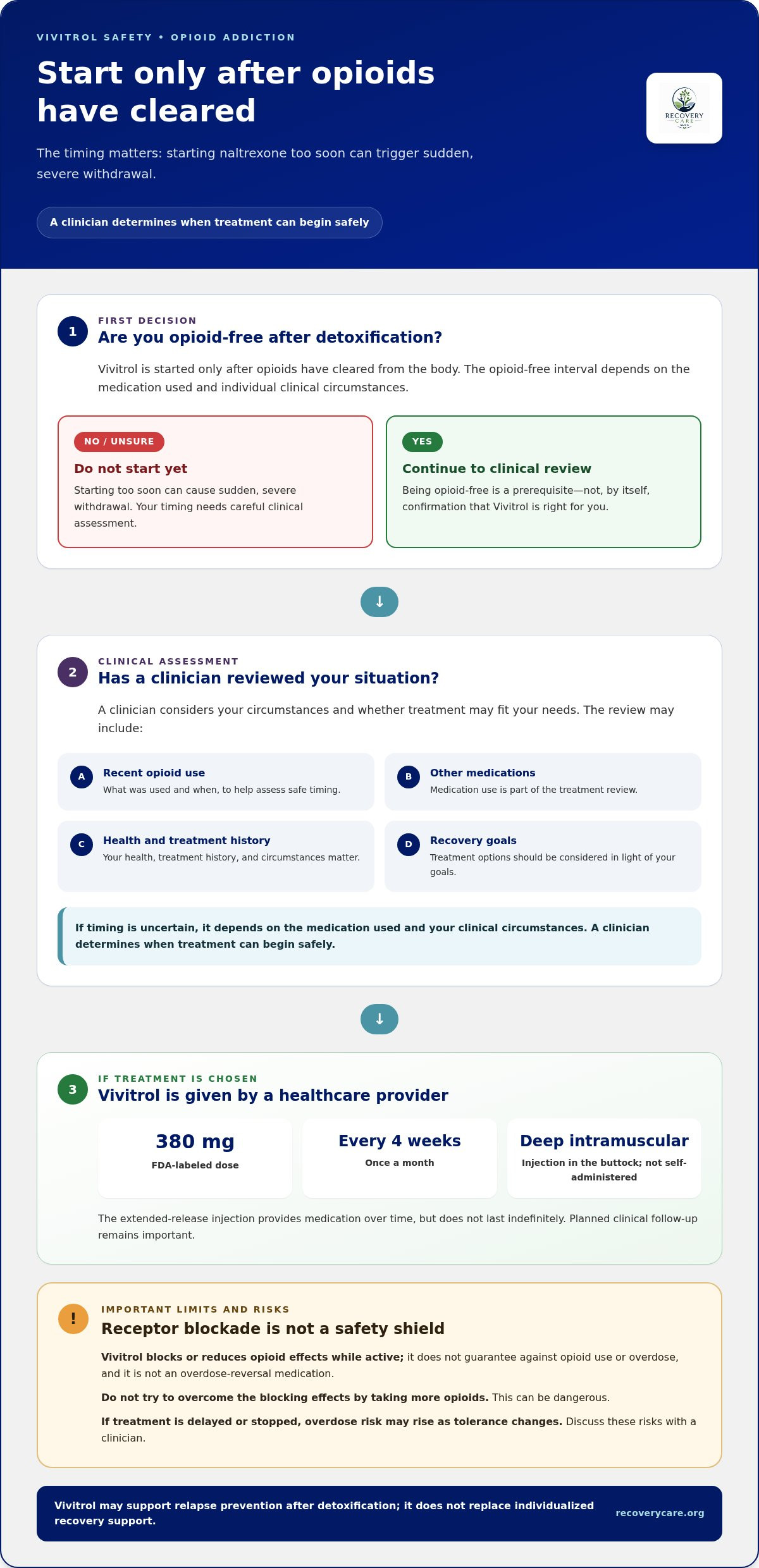
Vivitrol is an extended-release injection intended to provide medication over time, rather than requiring a person to take an oral dose each day. The FDA-labeled dose is 380 mg, administered by a healthcare provider as a deep intramuscular injection in the buttock once every four weeks, or once a month. It is not a self-administered shot.
The schedule means medication administration is less frequent than taking a daily pill, but the injection still requires planned clinical follow-up. A clinician can discuss appointment timing and what to do if an injection is delayed. The extended-release format does not mean the medication’s effects last indefinitely, so treatment plans need ongoing review.
How is receptor blockade different from other medication approaches?
Vivitrol works differently from Suboxone. Naltrexone blocks opioid receptors, while buprenorphine, the active opioid medication in Suboxone, partially activates them. Neither approach is automatically the right fit for every person. These differences are one reason clinical assessment and individual treatment goals matter.
Receptor blockade should also be distinguished from withdrawal management. Vivitrol does not ease withdrawal by supplying an opioid-like effect. If opioids are still present in the body, starting naltrexone can trigger severe, sudden withdrawal. SAMHSA explains this treatment consideration in its guidance on naltrexone for opioid use disorder. A clinician determines when treatment can begin safely based on the person’s circumstances.
Recovery Care provides clinician-guided Vivitrol care, including medication management and support tailored to individual needs.
Vivitrol Safety: Why Treatment Must Start After Opioids Leave the Body
Starting Vivitrol at the right time is a safety issue, not a test of willpower. If opioids are still affecting the body, naltrexone can displace them from opioid receptors and trigger precipitated withdrawal: a sudden, intense onset of withdrawal symptoms. This differs from ordinary withdrawal, which develops as opioid levels fall over time. Precipitated withdrawal can be severe and may require urgent medical care.
Why must someone be opioid-free before the first injection?
FDA prescribing information generally calls for an opioid-free period of at least 7 to 10 days after short-acting opioids and up to 14 days after long-acting opioids or medications such as buprenorphine. These are general ranges, not a personal countdown. The appropriate timing can vary with the medication used and individual clinical circumstances, so do not use a calendar alone to decide when to start.
A clinician assesses recent opioid exposure, current medications, and treatment readiness before an injection. They may use a urine drug screen or other clinical checks to help evaluate whether opioids remain in the body. Be candid about all opioid use, including prescribed medication, buprenorphine, or methadone. This information helps the care team plan safely, without judgment. The MedlinePlus guide to naltrexone injection also outlines precautions and patient safety information.
What risks and warning signs deserve medical attention?
Vivitrol can cause injection-site reactions. Contact a healthcare professional promptly about worsening pain, swelling, hardening, bruising, or a wound near the injection area. Rarely, serious tissue damage can occur and may need medical treatment. Naltrexone can also affect the liver. Report symptoms such as yellowing of the skin or eyes, dark urine, or persistent pain in the upper abdomen to a clinician.
Opioid blockade does not make taking opioids safe. Trying to override it with larger amounts can lead to overdose, including fatal respiratory depression. Risk can also increase after an injection is missed or treatment ends because opioid tolerance may have decreased. A dose that was once tolerated may then be dangerous. Make overdose prevention and what to do if treatment is delayed part of ongoing care discussions.
If someone may be overdosing, call emergency services immediately. Naloxone can reverse an opioid overdose, but emergency help is still needed. Keep naloxone available if recommended for you or someone close to you, and make sure people nearby know where it is and how to use it. Understanding how does vivitrol work for opioid addiction includes knowing the limits of receptor blockade and the importance of clinician-guided treatment decisions.
What Happens Before and During Vivitrol Treatment?
Starting Vivitrol is a clinician-guided process, not something to begin on your own. An evaluation gives you and the care team a chance to discuss whether the medication fits your health needs, recent opioid use, and recovery goals. It is also a chance to ask questions without judgment, including what to expect from treatment and what other support may help.
How does a clinician assess readiness for Vivitrol?
The conversation may cover your opioid use and when you last used opioids, any previous treatment, your medical history, and all medications or supplements you take. Be open about prescribed pain medicine and medications used for opioid use disorder, since these details can affect treatment timing and safety. Your clinician can also discuss your goals, concerns, and preferences.
Readiness is not determined by one answer or a universal checklist. The clinician considers your circumstances and evaluates whether you are opioid-free enough to start safely. They may use a urine drug screen or another appropriate assessment. If the timing is not right, the next step is a treatment conversation, not blame. A clinician can explain what needs attention and discuss a safe plan rather than rushing toward an injection.
Before treatment, discuss relevant health conditions, including liver concerns, and ask about possible side effects and overdose precautions. This helps the care team weigh potential risks, explain how opioid blockade may affect pain treatment, and plan for ongoing care. If you are unsure what to share, bring a current medication list and describe your recent treatment history as accurately as you can.
What should patients expect after the injection?
Follow-up after the injection helps the clinician assess how you are tolerating treatment, review your progress, and respond to changing needs. Tell the care team about new or concerning symptoms, difficulties keeping follow-up appointments, or changes in your recovery goals. Ongoing communication matters, especially if you miss an appointment or are considering stopping treatment.
Vivitrol can be one component of an individualized plan. Counseling may help you work through stressors, relationships, routines, and other experiences connected to recovery. Medication management provides a place to review treatment over time. The right supports depend on you. Discuss which forms of outpatient care feel useful and how they might fit around your daily life.
Understanding how does vivitrol work for opioid addiction is only part of making an informed decision. Assessment and follow-up connect the medication’s potential role with your circumstances, safety needs, and support plan. Recovery Care provides outpatient Vivitrol treatment with medical evaluation and medication management, alongside behavioral health counseling. To discuss how this approach could fit your goals, talk with Recovery Care about Vivitrol treatment.
How Recovery Care Supports Vivitrol Treatment and Ongoing Recovery
Vivitrol can be an option for some people, but it is not the best fit for everyone. The decision depends on your health, treatment history, readiness, preferences, and recovery goals. At Recovery Care, outpatient Vivitrol injections are part of clinician-guided care that includes medical evaluation and medication management, with treatment decisions made with your individual needs in view.
Understanding how does vivitrol work for opioid addiction can help you ask informed questions, but choosing an approach involves more than understanding how a medication acts in the body. A clinician can talk through possible benefits, risks, and other medication options with you. If you are considering Suboxone as another approach, discuss how its treatment process differs and what may suit your circumstances.
How can medication and counseling work together?
Medication management and counseling can support different parts of recovery. Medical follow-up gives you a chance to discuss how treatment is going and address health concerns. Behavioral health counseling can support emotional wellbeing, stress management, relationships, and challenges that may affect recovery. Neither replaces the other, and the right combination depends on your needs.
Primary care can also be part of a broader picture of health alongside addiction treatment. Recovery Care’s approach is compassionate, confidential, and non-judgmental. You should be able to speak openly about your history, concerns, and goals, and take part in decisions about your care with dignity and respect.
How can someone take a next step with Recovery Care?
A medical consultation can begin with a discussion of your health history, recent opioid use, medications, and what you hope to achieve. Recovery Care offers care in person and telehealth consultations. Telehealth can support consultation, but it does not replace the in-person visit needed for a Vivitrol injection.
Most major insurance plans, Medicare, and Medicaid are accepted, though individual coverage varies. Your coverage and treatment needs are personal, and the care team can discuss them as part of planning. You do not have to arrive with every decision made. A first conversation can help you understand whether Vivitrol or another treatment approach may align with your needs and what ongoing support could look like.
If you’re ready to explore your options, talk with Recovery Care about treatment options. You do not need to have everything figured out before starting a conversation.
Take Your Next Step With Support
Understanding how does vivitrol work for opioid addiction can help you prepare for a thoughtful conversation, but you do not have to decide on your own whether it belongs in your care plan. Your health history, recovery goals, and preferences matter. Bring questions, discuss concerns, and take the time you need to consider your options.
At Recovery Care, treatment planning can include outpatient Vivitrol injections and medication management, with behavioral health counseling and primary care alongside addiction treatment. The goal is to consider the whole person, not just one medication. Most major insurance plans, Medicare, and Medicaid are accepted, though coverage varies by plan.
A conversation is a practical place to begin. Discuss whether Vivitrol may fit your needs, what support could complement treatment, and what questions to consider next. There is no need to have everything figured out first. Talk with Recovery Care about treatment options and take the next step at a pace that feels right for you.
Frequently Asked Questions
Does Vivitrol stop opioid cravings?
No. Vivitrol may reduce cravings for some people, but it does not reliably eliminate them. In a clinical trial, participants receiving Vivitrol with counseling reported a greater reduction in cravings than those receiving counseling with placebo, but individual experiences vary. If cravings continue or change, tell your clinician rather than adjusting treatment on your own. Counseling and follow-up can help address triggers and strengthen support alongside medication.
How long do you have to be opioid-free before starting Vivitrol?
The needed opioid-free period depends on the substance and your clinical circumstances. FDA prescribing information generally calls for at least 7 to 10 days after short-acting opioids and up to 14 days after longer-acting opioids or medications such as buprenorphine. These are not instructions to start treatment on your own. Tell your clinician what you’ve taken and when, so they can assess your readiness and help plan a safe start.
Can Vivitrol make you go into withdrawal?
Yes. If it is given while opioids are still in your system, Vivitrol can trigger sudden, severe withdrawal. This differs from withdrawal that develops as opioids gradually leave the body. Do not determine your readiness by symptoms or a personal countdown alone. If you feel unwell after an injection, contact a healthcare professional promptly. Severe symptoms need urgent medical attention.
Can you still get high while taking Vivitrol?
Vivitrol can block or reduce opioid effects while it is active, but it cannot guarantee that opioids will not affect you. Trying to overcome the blockade by taking larger amounts is dangerous and can lead to overdose or death. Do not test whether the medication is still working by using opioids. If you are concerned about a lapse or feel at risk of using, contact your care team for support.
Does Vivitrol treat an opioid overdose?
No. Vivitrol is a long-acting medication for relapse prevention, not an emergency overdose treatment. If you suspect an overdose, call emergency services immediately and use naloxone if it is available. Naloxone can reverse an opioid overdose, but emergency care is still necessary. If you or someone close to you takes Vivitrol, discuss overdose response planning with a clinician and make sure people nearby know how to get help.
What happens if you miss a Vivitrol injection?
Contact your prescribing clinician as soon as you realize an injection is overdue. They can advise you about the next step based on your treatment timeline and current circumstances. Do not take extra medication or attempt to make up the dose yourself. As the medication’s effect wanes or treatment stops, opioid tolerance may be lower, so returning to a previously used amount can increase overdose risk.
Can Vivitrol be used with counseling?
Yes. Vivitrol can be part of a treatment plan that includes counseling, with each offering a different kind of support. Medication follow-up can address treatment questions, while counseling may help you work on coping strategies, relationships, or situations that feel challenging in recovery. Your care team can shape the plan around your needs and adjust it over time.


