
What if a telehealth addiction assessment isn’t a test to pass, but a first conversation about the support you may need? It’s understandable to wonder what a clinician will ask, what details to share, or whether a glitch or interruption could throw you off. Knowing how to prepare for a telehealth addiction assessment can help you feel steadier and make the conversation more useful.
You don’t need perfect answers or a polished account of your experiences. The clinician is there to understand your health, substance use, medications, and goals, not to judge you. Share what you can, and say when you’re unsure. That gives the clinician a clearer picture of your needs.
This guide covers what information to gather, what to expect during the appointment, and how to prepare your space and technology. It also includes questions to ask about care options and next steps, so you can leave the conversation with a clearer sense of what comes next.
Key Takeaways
- Think of the assessment as a clinical conversation, not a test you need to pass.
- Use a flexible checklist to gather medication details, allergies, health conditions, and treatment history you know.
- Check the appointment instructions, your device, connection, and privacy before the visit.
- Knowing how to prepare for a telehealth addiction assessment can help you discuss sensitive topics in your own words.
- Before the visit ends, ask what happens next, who will follow up, and how to get in touch with questions.
What Happens During a Telehealth Addiction Assessment, and Why Preparation Helps
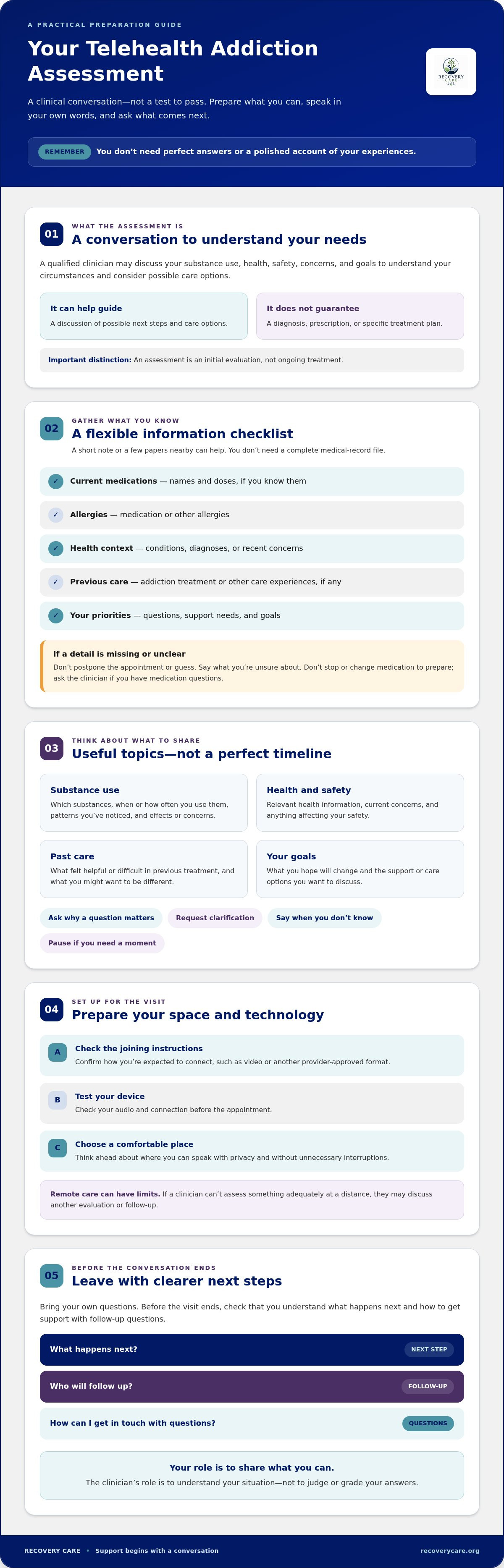
A telehealth addiction assessment is a clinical conversation about your substance use, health, safety, concerns, and goals. It helps a qualified clinician understand your circumstances and discuss possible care options. An assessment is an initial evaluation, not ongoing treatment. It can help guide what may happen next, but it doesn’t guarantee a diagnosis, prescription, or specific treatment plan.
Thinking about how to prepare for a telehealth addiction assessment can help you share useful context, but there’s no test to pass and no need to memorize every detail. If you’re unsure about a date or answer, say so. The purpose is to understand you as a whole person, not to judge you or grade your responses.
What questions might a clinician ask?
The clinician may ask which substances you use, how often you use them, and how they affect your daily life. They may also ask about your current concerns, previous treatment or other care, health and safety, and what you hope will change. These questions help guide a discussion around your needs, not test whether you can provide a perfect timeline. You can ask why a question matters, request clarification, or say when you don’t know.
Is a telehealth assessment different from an in-person visit?
The clinical purpose is similar: to understand your needs and consider possible next steps. The main difference is how you connect, such as by video or another format the provider approves. Telehealth broadly refers to health services delivered using communication technologies. For an appointment, you’ll also need to follow the setup instructions and choose a space where you can speak comfortably. Remote care can have limits. If a clinician can’t assess something adequately at a distance, they may discuss another evaluation or follow-up.
Practical preparation can help you focus on the conversation instead of troubleshooting. Check how you’re expected to join, test your device’s audio and connection, and think ahead about where you can talk without unnecessary interruptions. For more on how virtual support may fit into addiction care, read telehealth addiction counseling.
Preparation isn’t about shaping your answers to get a particular outcome. It’s about making it easier to describe what’s happening and ask for the information you need. Bring questions of your own, pause if you need a moment, and check that you understand what the clinician says about possible next steps.
What Information to Gather Before Your Telehealth Addiction Assessment
You don’t need a complete file of medical records to have a useful assessment. Gather what’s easy to access, but don’t postpone the appointment because something is missing. A short note on your phone or a few papers nearby can help you remember details, especially if you feel nervous.
Accurate information about medications and health can help a clinician understand your situation and inform the assessment. Use this flexible checklist as a starting point:
- Current medications, including names and doses if you know them
- Medication or other allergies
- Relevant health conditions, diagnoses, or recent health concerns
- Previous addiction care or treatment experiences, if any
- Questions, support needs, or goals you’d like to discuss
Bring what you have. If a detail is unclear, note that rather than guessing. Don’t stop or change any medication to prepare for the appointment. Ask the clinician if you have questions about your medications.
How to organize your health and treatment history
Keep your notes simple: a medication list, a note about relevant health conditions, and any details you remember about previous care may be enough to start the conversation. Include doses when available, but don’t worry if you can’t find every label or record. Mark uncertain dates or details as uncertain, and let the clinician know what you’re unsure about.
What should you be ready to discuss about substance use?
Consider jotting down which substances you use, when or how often you use them, patterns you’ve noticed, and any effects or concerns. You don’t need a perfect timeline. Honest details help the clinician understand your needs and discuss appropriate options. If you’re worried about why something is being asked, ask how the information will guide your care.
If you’ve tried treatment before, note what felt helpful or difficult and what you’d want to be different this time. If you have questions about medication options, you can read about Suboxone treatment and opioid recovery and bring questions to a qualified clinician. Recovery Care offers telehealth consultations. You can review its telehealth consultation information as you consider what to ask about the process.
These notes are prompts, not a script. Knowing how to prepare for a telehealth addiction assessment means bringing the context you can, sharing it at your own pace, and speaking up when you need clarification.
How to Prepare Your Space, Device, and Privacy for a Virtual Assessment
A little setup can help you focus on the conversation instead of troubleshooting during it. You don’t need a perfect home office. Follow the clinic’s instructions and make the space work as well as you can.
- Confirm the appointment instructions. Check how to join, whether you need an app, and what to do if you have trouble connecting. Use the clinic’s instructions rather than an unfamiliar link.
- Test your device. Charge your phone, tablet, or computer. Check your internet connection, camera, and audio. Keep the clinic’s contact information nearby in case it provided a backup method.
- Choose a private spot. If safely available, find a quiet place where you can speak without interruption. Headphones and silenced notifications may help if they’re comfortable and suitable for you.
- Join as directed. Have your device ready and follow the clinic’s guidance for connecting. If you need accessibility, interpretation, or technology support, contact the clinic beforehand to ask what options are available.
How can you make the appointment more private and comfortable?
Choose a location where you feel at ease and can speak freely, if that’s possible. You might close a door, let others know you need uninterrupted time, or use headphones to hear more easily. Privacy matters, but circumstances aren’t always ideal. If someone may overhear or you can’t find a private place, tell the clinician and ask what alternatives may be available. Don’t assume a particular setup guarantees privacy. Ask the clinic if you have questions about how the visit is conducted.
What if video or internet access does not work?
Technology problems can happen. If your connection is unreliable, test it ahead of time and check the clinic’s troubleshooting instructions. If the video fails or you can’t join, contact the clinic using the details it provided and ask whether there’s an approved alternative or guidance on rescheduling. A failed connection doesn’t mean you can’t receive care, but the clinic can explain what options are available for your appointment.
For how to prepare for a telehealth addiction assessment, keep the essentials simple: follow the joining instructions, charge your device, check the sound and connection, and plan for as much privacy as you can. If a barrier remains, let the clinic know rather than trying to solve it alone or using a different link or platform without checking first.
How to Feel Ready for Sensitive Questions Without Rehearsing Answers
It’s understandable to feel anxious about discussing substance use, health, or past experiences with someone you haven’t met. You don’t need polished answers or a complete timeline. The goal isn’t to prove that you’re ready for care, abstinent, or eligible for a particular option. You deserve to be treated with respect, whatever your circumstances.
Honest information can help the clinician understand what’s going on and discuss possible next steps. Share what you can, at your own pace. If a question feels unclear, ask what it means or why it’s part of the assessment. You can also say you’re unsure or don’t remember.
What questions can you ask the clinician?
Writing down a few questions beforehand may make it easier to speak up during the visit. For example, you might ask:
- “What will this assessment cover?”
- “How will you use the information I share?”
- “What care options might we discuss, and what could happen next?”
- “Who should I contact if I have questions after the appointment?”
- “How is privacy handled during the visit, and how can I check my insurance coverage?”
You don’t have to ask everything at once. Choose the questions that matter most to you. Ask the clinic directly about its privacy practices and insurance verification. Coverage depends on individual eligibility and should be confirmed.
What if you feel overwhelmed during the conversation?
You can pause. Try saying, “Could I have a moment?” or “That’s difficult for me to talk about right now.” If you don’t know or remember an answer, say so rather than guessing. You can ask the clinician to clarify a question or return to it later. If you’re exploring counseling alongside medical care, learn more about opioid addiction counseling support.
Knowing how to prepare for a telehealth addiction assessment isn’t about rehearsing a script. It’s about giving yourself permission to ask questions, take a breath, and share what you’re comfortable sharing. The clinician can explain what information is useful and what options may be appropriate to discuss.
If you’d like to ask about Recovery Care’s telehealth consultations or what to expect, contact Recovery Care with your questions.
What Happens After the Assessment, and How to Take the Next Step
The assessment may lead to a discussion of care options, a request for additional evaluation, or a follow-up appointment. What happens next depends on your individual needs and the clinician’s assessment, so there isn’t one outcome everyone should expect. Before you finish the visit, make sure you understand whether you need to take any next steps or wait for someone to contact you.
Ask practical questions such as: “Who will follow up with me, and how?” “If I have questions later, who should I contact?” and “Is there another appointment or evaluation to arrange?” Clarifying these details can make the time after the conversation feel less uncertain. If you don’t understand an instruction, ask the clinician to explain it in a different way.
How do you understand a recommended care plan?
If a clinician discusses a care option, ask what it’s intended to address, what potential benefits and risks to consider, and what follow-up may involve. Medication decisions require an individualized clinical discussion. Completing an assessment doesn’t guarantee a prescription or treatment. If medication options come up, you can learn about long-acting recovery options and bring any questions to your clinician.
You can also ask how behavioral health counseling or primary care might fit into a broader plan. Recovery Care provides behavioral health counseling and primary care alongside addiction care, but whether a particular service is appropriate depends on your circumstances and clinical discussion.
How can you check access and coverage before moving forward?
Ask the clinic to confirm whether telehealth services are available for your circumstances, which insurance plans it participates in, and what patient costs or other responsibilities may apply. Recovery Care reports accepting most major insurance plans, Medicare, and Medicaid, subject to individual eligibility and verification. Participation doesn’t guarantee that your specific service will be covered, so check with both the clinic and your insurer before making decisions based on expected benefits.
If you’re in immediate danger, experiencing a suspected overdose, or facing another urgent medical crisis, contact emergency services rather than waiting for a routine appointment. A telehealth assessment is not an emergency response.
Knowing how to prepare for a telehealth addiction assessment includes knowing how to clarify what happens afterward. Take the next step at your pace, and ask Recovery Care about telehealth consultations if you’d like to learn about access, eligibility, or coverage.
Take Your Next Step With Confidence
Preparing doesn’t mean having every answer ready. A few notes about your health, medications, substance use, and goals can help you share what matters. Checking your device and choosing a private space can also make the conversation easier to focus on. You can ask for clarification, pause, or say when you’re unsure.
An assessment is a conversation to understand your needs and discuss possible next steps, not a test you need to pass. Knowing how to prepare for a telehealth addiction assessment can help you feel more grounded, but you don’t need to have everything perfectly organized before reaching out.
Recovery Care offers telehealth consultations and outpatient addiction treatment, with behavioral health counseling and primary care as part of its care. Most major insurance plans, Medicare, and Medicaid are accepted, but eligibility and coverage for a specific service should be verified.
Ask Recovery Care about telehealth consultations and, if you’re considering an appointment, ask about access, coverage, and what to expect. A first conversation can be a manageable step toward understanding your options. You deserve support and respect as you consider what comes next.
Frequently Asked Questions
What should I have ready for a telehealth addiction assessment?
If you’re wondering how to prepare for a telehealth addiction assessment, gather what you can, but don’t delay care if some details are missing. A list of current medications and doses, allergies, relevant health conditions, and previous treatment can help. You may also note your substance-use concerns and goals. Keep your appointment instructions and clinic contact information nearby, and make sure your device is charged and ready to connect.
What questions are asked during a telehealth addiction assessment?
A clinician may ask which substances you use, how often you use them, how they affect you, and whether you have concerns about your health or safety. They may also ask about previous treatment, current medications, relevant health history, and what you hope to change. These questions help the clinician understand your circumstances and discuss possible care. You can ask why a question matters, request clarification, or say when you’re unsure.
Do I need to be sober for a telehealth addiction assessment?
There isn’t one answer that applies to every assessment, so ask the clinic if you’re concerned about being able to take part. Be honest with the clinician about any recent substance use and how you’re feeling. You don’t need to hide information or try to create a particular impression to deserve respectful care. If you’re in immediate danger or experiencing a medical emergency, contact emergency services rather than waiting for an appointment.
Can I have a telehealth addiction assessment on my phone?
You may be able to use a phone if it meets the clinic’s requirements and supports the appointment format. Check the joining instructions first, and test your connection, camera, and audio if you’ll be using video. Keep your phone charged and choose a place where you can speak as privately as possible. If you’re unsure whether your device will work, contact the clinic for guidance before the appointment.
Is a telehealth addiction assessment confidential?
Clinics take privacy seriously, but no provider should promise absolute confidentiality in every circumstance. Ask the clinic how your information is handled, who may access it, and what privacy practices apply to the telehealth visit. You can also choose a private space and use the clinic’s approved connection instructions. If someone may overhear you or you’re uncomfortable with the setup, tell the clinician and ask what alternatives may be available.
What happens after a telehealth addiction assessment?
After the assessment, the clinician may discuss possible care options, recommend additional evaluation, or suggest a follow-up appointment. The next step depends on your individual needs, and outcomes vary. Before the visit ends, ask whether you should take any action, who will contact you, and how to follow up with questions. If you’re unsure what was recommended, ask the clinician to explain the options and practical next steps clearly.
Can I get medication after an online addiction assessment?
An assessment doesn’t guarantee a prescription. A qualified clinician needs to discuss your health, treatment history, and needs before determining whether medication may be appropriate. You can ask about options such as Suboxone, Sublocade, or Vivitrol, including their purpose and potential risks. Recovery Care offers outpatient addiction treatment and telehealth consultations, but eligibility and care decisions are determined individually. Confirm directly with the clinic what services and coverage may apply to you.


