
What if feeling unusually sleepy or dizzy isn’t something you should simply wait out? If you’re searching for “signs my suboxone dose is too high,” it makes sense to want a clear answer, especially if you feel mentally slowed or worry about being judged for speaking up. These symptoms can be concerning, but they can’t confirm on their own that your dose is too high.
This article explains which symptoms may warrant a prompt review with your prescriber, what details can help guide that conversation, and why changing your dose without medical advice can be unsafe. It also covers signs that need emergency help: very slow or shallow breathing, being difficult to wake, or bluish lips or skin. If these occur, call emergency services now.
A dose concern is a valid reason to ask for support, not a reason to feel ashamed or stop treatment on your own. The steps below can help you describe what you’re experiencing, consider other possible factors, and ask your prescriber about a safe next step.
Key Takeaways
- Possible signs my suboxone dose is too high include unusual sleepiness, dizziness, confusion, or impaired coordination, but symptoms alone can’t confirm the cause.
- Note when symptoms begin and share their timing, any recent treatment changes, sleep, and other medicines with your prescriber.
- Severe sleepiness, difficulty waking, or slow or difficult breathing needs emergency help.
- For non-emergency concerns, contact your prescriber for guidance rather than stopping, skipping, splitting, or changing your dose on your own.
- A care team can review your symptoms, medication history, and treatment response to help determine appropriate next steps.
What are the signs my Suboxone dose is too high?
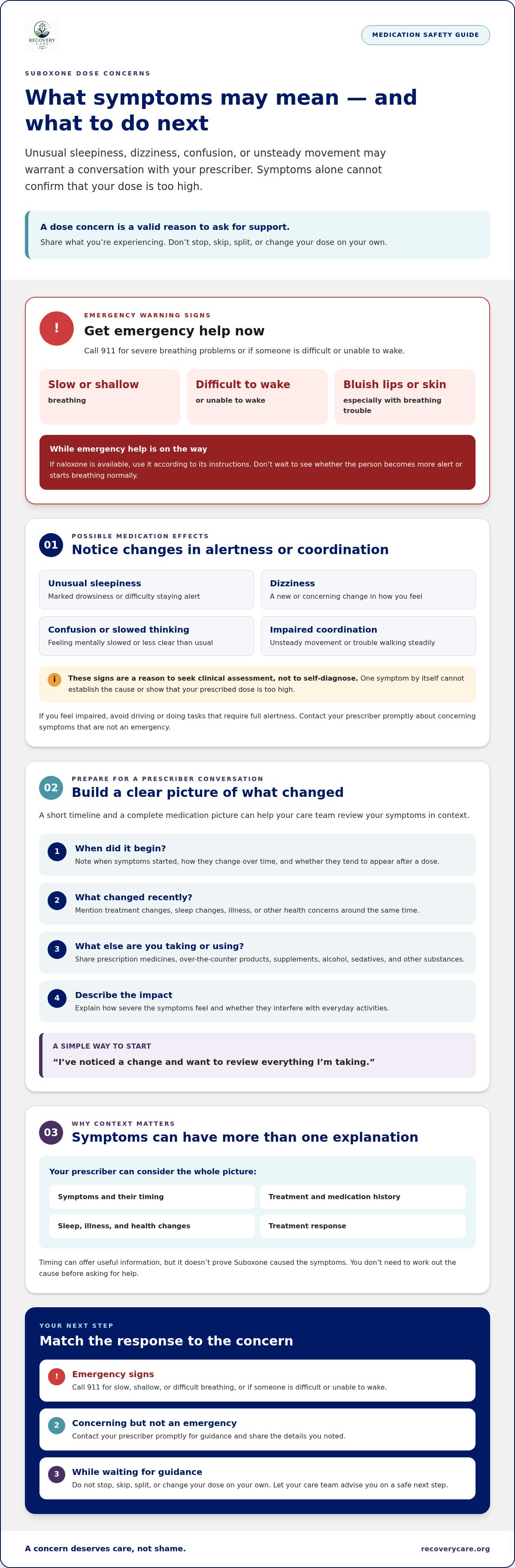
It’s okay to have concerns about how Suboxone is affecting you. Sharing them with your prescriber isn’t a failure or a reason for shame. It’s a useful part of reviewing your care. If you’re wondering about the signs my suboxone dose is too high, unusual sleepiness, dizziness, confusion, slowed thinking, or unsteady movement may warrant a conversation. These symptoms can’t diagnose the cause on their own.
Changes in alertness or coordination can be a reason to seek clinical assessment, not to self-diagnose. Buprenorphine is the active ingredient in Suboxone, and its effects and risks are described in this overview of buprenorphine. A clinician can consider your symptoms alongside your treatment and medication history.
Possible signs of excessive medication effects
Pay attention to marked drowsiness or difficulty staying alert, especially if it’s new, worsening, or interfering with everyday activities. Dizziness, confusion, slowed thinking, and trouble walking steadily are also worth reporting. If you feel impaired, avoid driving or doing tasks that require full alertness.
When you contact your prescriber, be ready to describe how severe the symptoms feel, when they started, and whether they tend to appear after a dose or treatment change. Changes in sleep or other medicines may also be relevant. A single symptom can’t establish that your prescribed dose is too high, so report what you’ve noticed rather than changing your dose yourself.
When symptoms may be an emergency
Slow, shallow, or difficult breathing, or being unable to wake someone, are emergency warning signs. Call 911 for suspected overdose or severe breathing problems. If naloxone is available, use it according to its instructions while emergency help is on the way. Don’t wait to see whether the person becomes more alert or starts breathing normally.
- Get emergency help: Call 911 for breathing difficulty or inability to wake.
- Use naloxone if available: Follow the product instructions while waiting for responders.
- For concerning but non-emergency symptoms: Contact your prescriber promptly for guidance.
Why Suboxone side effects do not always mean the dose is too high
Feeling different after taking Suboxone can raise understandable questions, but a symptom doesn’t automatically mean your dose is excessive. Changes in alertness or balance can have more than one explanation. The timing and circumstances can help a prescriber assess what’s happening. The SAMHSA guidance on the safe and effective use of buprenorphine offers background on this medication and its role in treatment.
A clinician considers your symptoms, their timing, your medications, and your health history together. That context can help distinguish a possible medication effect from other factors and guide a safe next step. Searching for “signs my suboxone dose is too high” may help you name your concern, but it can’t determine the cause or establish whether your dose needs to change.
Dose effects, treatment changes, and other possible causes
Think about when the symptoms began and whether anything changed around that time. Note whether they appear after a dose, began after a treatment adjustment, or vary from day to day. This timeline gives your prescriber useful information, but it doesn’t prove Suboxone caused the symptoms. Don’t assume they’ll resolve on their own.
Other circumstances can affect how alert or steady you feel. Poor sleep, an illness, or another health concern may contribute, so mention these changes too. A clinician can weigh them alongside your treatment response instead of drawing a conclusion from one symptom in isolation.
Why medication and substance details matter
Share an accurate list of everything you take or use, even if you’re unsure it’s relevant. Include prescription medicines, over-the-counter products, supplements, alcohol, sedatives, and other substances. Some combinations can raise safety concerns, and your care team needs the full picture to assess them. You don’t need to work out which substance caused what before asking for help.
It’s understandable to worry that being honest could lead to judgment or disrupt treatment. Sharing these details supports a careful safety review; it isn’t about assigning blame. If you’re unsure how to bring it up, you can say, “I’ve noticed a change and want to review everything I’m taking.”
If you’d like to discuss your symptoms as part of outpatient care, you can learn more about outpatient Suboxone treatment. A prescriber can review your circumstances and advise you on next steps. Don’t change your medication on your own while waiting for guidance.
How to tell a routine side effect from a serious Suboxone safety concern
Not every uncomfortable symptom is an emergency, but it can be hard to judge what you’re experiencing on your own. The patterns below can help you choose a next step, but they can’t diagnose the cause or rule out danger. If symptoms are worsening or you’re unsure how urgent they are, seek professional advice promptly. If breathing or responsiveness is affected, don’t wait for a routine appointment.
| Symptom pattern | Urgency | Appropriate next contact |
|---|---|---|
| Mild or occasional dizziness or sleepiness, with normal breathing and responsiveness | Non-emergency, but worth reporting if it persists, disrupts daily activities, or concerns you | Contact your prescriber or treatment team for guidance |
| Persistent or worsening sleepiness, confusion, slowed thinking, or changes in coordination | Prompt clinical review, especially if the symptoms are new or affect your ability to function safely | Contact your prescriber or treatment team promptly |
| Slow, shallow, or difficult breathing; inability to wake; or suspected overdose | Emergency | Call 911. Use naloxone if available, following its instructions |
Symptoms to report promptly to the prescriber
Persistent or disruptive sleepiness, dizziness, confusion, and unsteady movement are reasons to check in with your treatment team, particularly if they’re new, getting worse, or making everyday tasks difficult. Describe what changed and when it began. Your prescriber can assess whether you need an evaluation or whether a treatment adjustment should be considered. Don’t change your dose on your own.
Symptoms that call for emergency help
Breathing difficulty, inability to wake someone, or suspected overdose requires emergency help. Call 911 rather than waiting for a prescriber to respond or for a scheduled visit. If naloxone is available, use it according to its instructions while emergency help is on the way. Naloxone is an emergency response tool, not a replacement for calling 911.
Symptoms don’t always fit neatly into a chart. Even if your concern seems mild, contact a healthcare professional if it worsens or you’re uncertain. Searching for “signs my suboxone dose is too high” can offer general information, but only a clinician can assess your individual symptoms and recommend what to do next.
What to do if you think your Suboxone dose is too high
Noticing possible signs my suboxone dose is too high can feel unsettling, but you don’t have to work out the cause alone. Use symptoms as a reason to seek appropriate guidance, not to change your treatment without support. Follow these steps:
- Act first if there may be an emergency. If you or someone else has slow, shallow, or difficult breathing, can’t be woken, or may be experiencing an overdose, call 911. If naloxone is available, use it according to its instructions while emergency help is on the way. Don’t wait for a routine appointment.
- Contact your prescriber about concerning symptoms. For new, persistent, worsening, or disruptive effects that aren’t an emergency, reach out to your prescriber or treatment team promptly. They can decide whether you need an evaluation or a change to your care plan.
- Write down what you’ve noticed. Record when symptoms started, how severe they feel, and whether they seem to change after you take Suboxone. Note recent treatment changes, sleep problems, illness, or other health concerns that may help explain the timing.
- Share a complete list of medicines and substances. Include prescriptions, over-the-counter products, supplements, alcohol, sedatives, and other substances. Accurate details help your care team assess safety. You can also ask which symptoms should prompt urgent care and how to contact the team if concerns arise.
Prepare for a useful conversation
A short written timeline can make it easier to explain what’s happening, especially if you feel tired or mentally slowed. You don’t need to decide whether Suboxone caused the symptoms before calling. Try saying, “I’ve noticed these changes, and I’d like help reviewing them.” Asking honest questions is part of care, not a reason for shame.
Avoid changing your dose on your own
Don’t stop, skip, split, or otherwise change your Suboxone dose based on an online symptom list or without your prescriber’s guidance. Unsupervised changes can disrupt your prescribed treatment plan, and symptoms alone can’t establish what adjustment, if any, is appropriate. If you’ve already taken your medication differently than prescribed, tell your care team so they can advise you safely.
For support with medication concerns as part of outpatient care, learn about outpatient Suboxone treatment. Contact your prescriber for individualized guidance, and use emergency services for severe symptoms.
How a Suboxone care team can review your dose and support recovery
Raising a concern about your medication is a reasonable part of care. If you’re noticing possible signs my suboxone dose is too high, a clinician can help you sort through what you’re experiencing without assuming your dose is the cause or needs to change.
What an outpatient medication review may involve
A medication review can start with a conversation about your symptoms, when they occur, your current medicines and substances, and how treatment is working for you. Notes about symptom timing, severity, and changes in your routine can make this conversation more specific. Share your recovery goals and any concerns about how symptoms affect daily life.
The clinician considers this information alongside your treatment response and safety. They determine whether further assessment or a change to your treatment plan is appropriate. A review doesn’t guarantee a dose reduction or any particular outcome. Its purpose is to identify a suitable next step based on your circumstances.
Getting supportive follow-up care
Recovery Care provides outpatient Suboxone treatment and medication management, with behavioral health counseling and primary care also available. Telehealth consultations may be an option for some people, depending on the concern and individual circumstances. Confirm availability and suitability directly. Coverage can vary, so check current insurance participation with the clinic.
You deserve to ask questions without being judged. If you’d like to explore whether Recovery Care’s outpatient services may fit your needs, contact Recovery Care to ask about care options, telehealth availability, and current coverage. For an emergency, call 911 rather than waiting for an outpatient appointment.
Take your concerns to a supportive care team
Sleepiness, dizziness, confusion, or changes in coordination can be reasons to ask for a medication review, but they can’t confirm on their own that your dose is too high. If you’re searching for “signs my suboxone dose is too high,” remember that symptoms need context, and your prescriber can help assess them. Don’t stop, skip, split, or change your medication without medical guidance.
Breathing difficulty or being unable to wake someone requires emergency help. Call 911 rather than waiting for a routine appointment. For other new or concerning symptoms, share when they began, how they affect you, and what medicines or substances you use.
Recovery Care offers outpatient Suboxone treatment and medication management, with telehealth consultations and behavioral health counseling also available. Care is led by Medical Director Dr. Heather Rosen, MD. If you’d like to explore care options, talk with Recovery Care about outpatient treatment options. A respectful conversation can help you understand possible next steps, and you deserve support as you continue your recovery.
Frequently Asked Questions
Is sleepiness a sign my Suboxone dose is too high?
Unusual or persistent sleepiness can be a reason to contact your prescriber, but it doesn’t prove your dose is too high. If you’re asking about the signs my suboxone dose is too high, note when the sleepiness occurs and whether it follows a dose, a treatment change, poor sleep, or use of other medicines or substances. If someone is difficult to wake or has breathing problems, call 911 and use naloxone if available, following its instructions.
Can Suboxone make you feel dizzy or confused?
Dizziness or confusion can have different causes, so these symptoms alone can’t show whether Suboxone or its dose is responsible. Contact a clinician if they’re new, severe, persistent, or worsening, and describe when they started and any other medicines or substances you use. Don’t drive or do hazardous tasks while impaired. Seek emergency help for severe confusion, inability to wake, or breathing difficulty.
What happens if my Suboxone dose is too high?
Excessive medication effects may include pronounced sleepiness or impaired alertness, but symptoms vary and can’t confirm a dose problem by themselves. A clinician needs to consider your symptoms and circumstances before recommending next steps. Slow, shallow, or difficult breathing, or being unable to wake, is an emergency. Call 911. Don’t stop or change your medication on your own; contact your prescriber about non-emergency concerns.
Should I skip my next Suboxone dose if I feel too sleepy?
Don’t skip, stop, or change a prescribed dose unless your prescriber instructs you to. Contact your treatment team promptly about marked or persistent sleepiness so they can advise you based on your situation. If you’re hard to wake, breathing abnormally, or appear to be in immediate danger, call 911 rather than waiting for a routine response. If naloxone is available, use it according to its instructions while help is on the way.
Can alcohol or other medications make Suboxone side effects worse?
Alcohol, sedatives, and other medicines may affect safety, so tell your clinician what you take or use. The effect of a specific combination can’t be determined without considering your individual situation. Share an accurate list of prescription and over-the-counter medicines, supplements, alcohol, and other substances, including when you used them. Don’t withhold information out of fear of judgment. Get emergency help for breathing difficulty or inability to wake.
When should I call 911 after taking Suboxone?
Call 911 for slow, shallow, or difficult breathing, inability to wake someone, or suspected overdose. Don’t wait for a routine appointment or a message back from a prescriber. If naloxone is available, use it according to its instructions while emergency help is on the way, and stay with the person if it’s safe to do so. A routine call to a treatment team is not a substitute for emergency care.
Can a clinician lower or change my Suboxone dose?
A prescriber can review your symptoms, treatment response, other medicines, and health history to decide whether a change to your treatment plan is appropriate. A review doesn’t guarantee a dose reduction or a particular outcome; the next step depends on your individual needs and safety. Be open about what you’re experiencing and ask questions. Don’t adjust the dose yourself while waiting for guidance from your prescriber.


