
Imagine sitting at your kitchen table, scrolling through search results while a knot of anxiety tightens in your chest. You're ready to take the next step, but you're terrified that the person on the other end of the phone will treat you like a criminal instead of a person. When you search to find suboxone doctor care, you're looking for more than just a prescription; you're looking for a fresh start. You deserve a partner who understands that recovery is a path toward a better future, not a series of hoops to jump through.
We understand that the fear of withdrawal symptoms or the stress of figuring out if Medicaid covers your treatment can feel like a brick wall. This guide will give you the tools to identify, evaluate, and connect with a qualified provider who offers the non-judgmental, holistic support you deserve. We'll explore how to verify your insurance quickly, use new 2026 telehealth regulations to your advantage, and find a medical team that integrates mental health support with your physical recovery so you can move forward with peace of mind. You aren't alone in this, and the path to a healthier life is closer than it feels.
Key Takeaways
- Understand what to look for in a licensed medical professional who specializes in Medication-Assisted Treatment (MAT) and how buprenorphine supports your long-term health.
- Learn how to find suboxone doctor options that accept Medicaid, Medicare, and private insurance to ensure your recovery journey is accessible and affordable.
- Discover the flexibility of 2026 telehealth regulations, allowing you to connect with qualified providers through virtual consultations from the comfort of your home.
- Get a clear roadmap for your first appointment, including how to gather necessary medical records and what to expect during the initial evaluation.
- Identify the advantages of a holistic care model that integrates primary care and behavioral health with medications like Suboxone, Sublocade, or Vivitrol.
What to Look for When You Search for a Suboxone Doctor
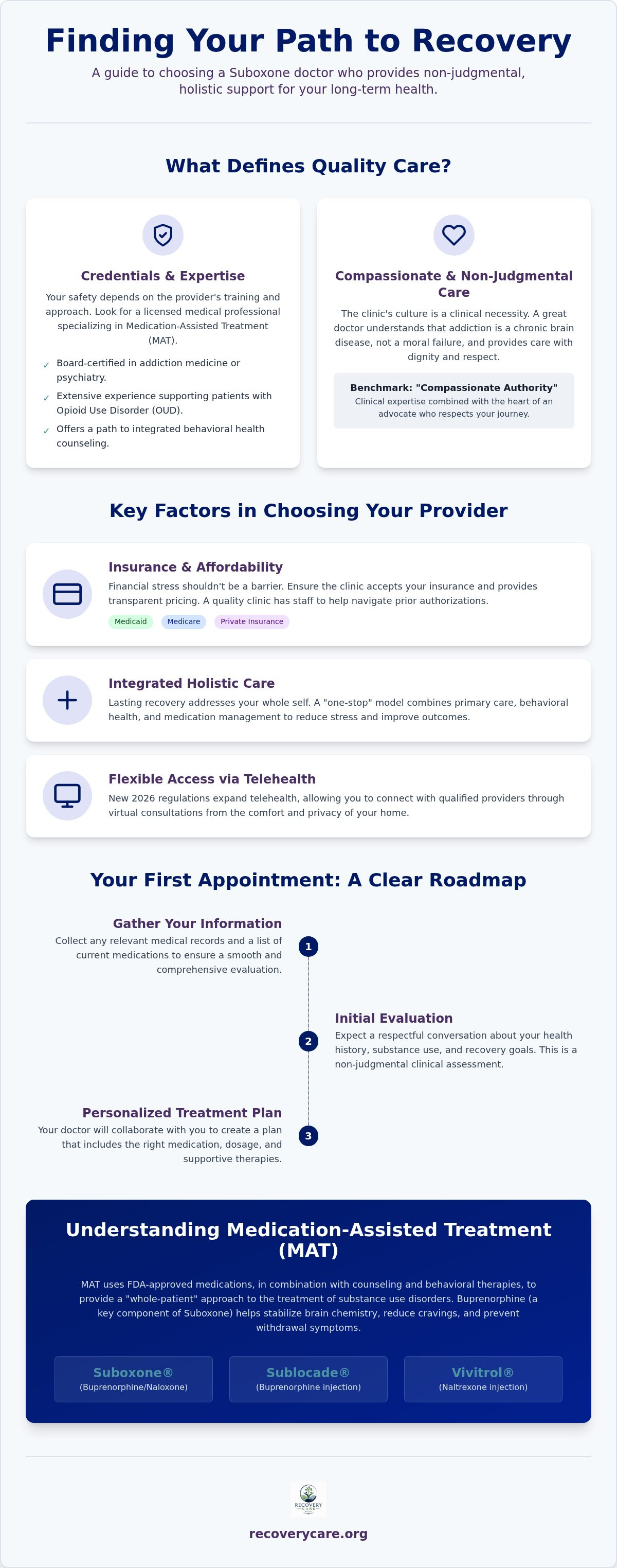
When you decide to find suboxone doctor care, you aren't just looking for a name on a list; you're looking for a licensed medical professional who specializes in Medication-Assisted Treatment (MAT). These providers are experts in the complex science of how the brain responds to opioids. They use Buprenorphine/naloxone (Suboxone) to help stabilize your brain chemistry, reduce cravings, and prevent withdrawal symptoms. This combination is essential because it allows you to focus on your life rather than the physical pain of recovery.
A great doctor understands that addiction is a chronic, relapsing brain disease, not a moral failure or a lack of willpower. This perspective is vital. It shifts the focus from fixing a person to managing a health condition. We call this benchmark Compassionate Authority. It means your doctor has the clinical expertise to guide your medical journey while maintaining the heart of an advocate who respects your dignity.
Credentials and Expertise in Addiction Medicine
Your safety depends on the doctor’s training. As of June 8, 2026, the federal requirement for practitioners to have a special X-waiver to prescribe buprenorphine has been eliminated, which means more clinicians can help. However, you still need to verify that your provider is experienced. Look for these specific indicators of quality care:
- Board Certification: Ideally, your doctor should be board-certified in addiction medicine or psychiatry.
- Specialized Experience: Ask how many patients with Opioid Use Disorder (OUD) they currently support.
- Holistic Integration: The best providers don't just write a script; they offer a path to behavioral health counseling and primary care.
The Importance of a Non-Judgmental Environment
The culture of the clinic matters as much as the medication itself. If you feel like a number or like a criminal, your chances of staying in treatment drop significantly. You can often gauge a doctor’s empathy during your very first phone call. Pay attention to how the staff speaks to you. Are they warm and welcoming? Do they answer your questions with patience? A supportive environment fosters trust, which is the foundation of long-term recovery success. When you find suboxone doctor services that prioritize respect, you're much more likely to stay committed to your goals. Dignity isn't just a nice addition; it's a clinical necessity.
Essential Criteria for Choosing the Right MAT Provider
Choosing the right partner for your recovery is a decision that impacts every part of your life. When you begin to find suboxone doctor options, it's easy to feel overwhelmed by the technicalities. You need more than just a medical professional; you need a team that respects your time, your budget, and your personal goals. For those with complex psychiatric needs, such as thought disorders or psychosis, specialized resources like Pand Health can offer the intensive evaluation and support required. To find suboxone doctor care that actually fits your life, you must look beyond the prescription pad and evaluate how the clinic supports your entire well-being.
Insurance, Medicaid, and Medicare Acceptance
Financial stress shouldn't be a barrier to your health. One of the first questions you should ask any potential provider is whether they accept your specific insurance plan. While tools like SAMHSA's FindTreatment.gov are excellent for identifying local options, you still need to confirm that the clinic is equipped to handle Medicaid, Medicare, or private insurance. Many patients find that the most difficult part of the process is navigating prior authorizations. A high-quality clinic will have dedicated staff to help you manage these hurdles, ensuring your medication is covered and available when you need it. If you're paying out-of-pocket, ask for clear, transparent information about the costs of visits and laboratory testing so there are no surprises on your journey.
Integrated Primary Care and Behavioral Health
Treating Opioid Use Disorder (OUD) is rarely just about the medication. Recovery is most successful when it addresses your underlying physical and mental health. This is where many traditional clinics fall short. A provider who integrates primary care services can manage your routine physicals, diagnostic testing, and chronic conditions all in one place. This "one-stop" approach reduces the stress of traveling to multiple offices and ensures that your various treatments don't conflict with one another.
In addition to physical health, behavioral health counseling is a cornerstone of lasting change. Whether it's individual therapy or group sessions, having access to mental health support within the same practice allows for a more cohesive care plan. Your medical doctor and your counselor can work together to adjust your treatment as you grow and heal. Choosing a provider like Recovery Care ensures your primary health needs are met alongside your recovery goals, providing a stable foundation for the future. This level of integrated support transforms a simple medical appointment into a comprehensive recovery strategy.
Telehealth vs. In-Person Suboxone Treatment
Choosing the right format for your recovery is about finding a balance between your medical needs and your daily life. When you begin to find suboxone doctor services, you'll notice two distinct paths: virtual telehealth and traditional in-person visits. Both models are designed to provide high-quality Medication-Assisted Treatment (MAT), but they offer different types of support. Your choice should reflect where you are in your journey and what will help you stay most consistent with your care.
The Rise of Online Suboxone Doctors
Virtual appointments have significantly expanded access to care, especially for those in rural areas or with demanding schedules. Current 2026 regulations have made this path more accessible than ever. As of December 31, 2025, a permanent rule allows practitioners to prescribe an initial supply of up to six months of buprenorphine via telehealth without a prior in-person visit. Broader telehealth flexibilities for controlled substances remain in effect through December 31, 2026. This means you can begin your recovery from the safety and privacy of your own home. Virtual care is often the best fit if you have reliable internet, a private space for calls, and a pharmacy nearby that stocks your medication. It's important to remember that after the initial six-month period, an in-person visit is required to continue telehealth prescriptions under this specific rule.
When In-Person Care is the Better Choice
When In-Person Care is the Better Choice
Despite the convenience of digital care, many people find that visiting a clinic in person provides a necessary sense of structure and safety. In-person care is essential if your treatment plan involves long-acting injectables like Sublocade or Vivitrol. These medications require clinical supervision for administration and offer the benefit of not having to remember a daily dose. Beyond medication, in-person visits allow your doctor to perform physical examinations and diagnostic testing that can't be done over a screen. This hands-on approach is often preferred by those who value a face-to-face connection with their medical team or those who need integrated primary care for other health conditions. On-site laboratory testing also ensures that your health is being monitored closely, providing peace of mind as your body heals. If you feel that a physical recovery space helps you stay focused, an in-person clinic may be your strongest ally. When you find suboxone doctor support that offers both options, you gain the flexibility to transition between formats as your needs evolve. For individuals who require a higher level of daily structure, finding a MASH certified sober living environment can complement your medical care by providing a safe, supportive community during the transition to long-term recovery.
Taking the leap to find suboxone doctor care is the single most courageous step in your recovery. It's natural to feel a mix of relief and apprehension as your first appointment nears. This meeting is the foundation of your new life. Preparing ahead of time doesn't just make the process smoother; it gives you a sense of control over your health. Your medical team isn't there to audit your past. They're there to secure your future.
One of the most critical parts of this visit is the induction process. This is the period where you transition from other opioids to Suboxone. For this to be safe and effective, you must be honest about your recent substance use. If you start Suboxone too soon after your last use, you may experience precipitated withdrawal, which is intense and uncomfortable. Your doctor will guide you on the exact timing to ensure the transition is as gentle as possible. Trusting your provider with the truth is the best way to protect your physical comfort and safety.
Questions to Ask Your Potential Doctor
Recovery is a marathon, not a sprint. You need to know that your doctor is prepared for the long haul. When you find suboxone doctor support that feels right, use the first visit to ensure your philosophies align. Consider asking these questions during your initial evaluation:
- What is your philosophy on long-term medication management?
- How does this clinic handle setbacks or relapses? A compassionate provider will view these as opportunities for care adjustment rather than reasons for discharge.
- What specific behavioral health support or counseling do you offer alongside the medication?
What to Bring and What to Expect
The first visit is usually the longest because it involves a deep dive into your health history. You'll likely go through an intake interview, a physical evaluation, and a collaborative treatment planning session. To make the most of your time, bring the following items:
- A valid photo ID and your current insurance card.
- A list of all current medications and any relevant medical records.
- A list of goals you want to achieve in your first week of recovery.
Setting realistic expectations for the first seven days is key. You won't feel perfect overnight, but you should feel a significant reduction in cravings and withdrawal symptoms. This allows you to focus on your mental and emotional healing. If you're ready to start this chapter with a team that truly cares, reach out to Recovery Care today to schedule your initial consultation and take your first step toward freedom.
Why Recovery Care is the Right Choice for Your Journey
Recovery Care stands out because we prioritize your dignity as much as your physical health. When you seek to find suboxone doctor care that truly supports you, you're looking for a team that sees the person behind the diagnosis. Under the leadership of our Medical Director, Dr. Heather Rosen, we've built a practice that bridges the gap between addiction medicine and general wellness. We don't believe in sterile, detached treatment. Instead, we offer a safe, confidential space where you can be honest about your challenges without fear of judgment.
Our whole-person approach is what makes us unique. Most clinics only focus on the medication, but we understand that Opioid Use Disorder (OUD) affects your entire life. By housing Suboxone treatment, primary care, and behavioral health counseling under one roof, we ensure that no part of your health is ignored. This integrated model means your recovery is supported by a team that communicates internally, ensuring your treatment plan is cohesive and responsive to your evolving needs.
Comprehensive Treatment Options: Beyond Daily Suboxone
We recognize that every journey is different, so we offer a range of Medication-Assisted Treatment options tailored to your lifestyle. While daily Suboxone is a life-saving tool for many, others prefer the freedom of long-acting injectables like Sublocade or Vivitrol. These options provide a stable foundation for those who want to move away from daily dosing. To keep you physically strong, we integrate diagnostic testing and routine primary care into our regular workflow. This allows us to monitor your overall health while our behavioral health team provides the emotional stability needed to navigate the psychological aspects of recovery. Having these resources in one place reduces the stress of coordinating multiple providers.
Getting Started with Recovery Care Today
We've simplified the path to wellness because we know that when you're ready for help, you shouldn't have to wait. We've removed the red tape that often makes it difficult to find suboxone doctor services. Our team is experienced in working with Medicaid, Medicare, and most major private insurance plans to ensure your care is covered and accessible. We handle the complex paperwork and prior authorizations so you can focus entirely on your healing. If you're ready to experience a higher standard of care, it's time to speak with a compassionate professional at Recovery Care today. Your future is waiting, and we're here to help you reach it with confidence and security.
Your Path to a Healthier Future Starts Here
Choosing to reclaim your life is a brave decision, and the partner you choose to guide you makes all the difference. We've explored how to evaluate a provider's expertise, the flexibility of 2026 telehealth rules, and the vital importance of integrated primary care. When you are ready to find suboxone doctor services that treat you with the dignity you deserve, remember that your choice of provider is the foundation of your long-term success. You don't have to navigate this journey alone or feel like a number in a sterile system.
At Recovery Care, led by Medical Director Dr. Heather Rosen, MD, we provide a warm and non-judgmental environment where your physical and emotional health are treated as one. We accept Medicaid, Medicare, and most major insurance plans to ensure that high-quality care is accessible to everyone. By combining Medication-Assisted Treatment with behavioral health and primary care, we offer the stability you need to move forward. Find a compassionate Suboxone doctor at Recovery Care and start your recovery today. You have the strength to heal, and we're here to walk beside you every step of the way.
Frequently Asked Questions
Is it possible to find a Suboxone doctor that accepts Medicaid?
Yes, it is entirely possible to find a Suboxone doctor that accepts Medicaid. Many specialized clinics, including Recovery Care, prioritize accessibility by accepting Medicaid, Medicare, and most major insurance plans. This ensures that life-saving medication-assisted treatment is available to those who need it most, regardless of their financial situation. Always confirm coverage with the clinic's administrative staff during your first call to ensure your specific plan is accepted without any complications.
Can I get a Suboxone prescription during a telehealth appointment?
Yes, you can receive a Suboxone prescription via telehealth. Current 2026 regulations allow practitioners to prescribe an initial supply of buprenorphine through audio-video or audio-only consultations. This flexibility is designed to help you begin your recovery journey from home. It's important to know that after the initial six months of telehealth treatment, a single in-person visit is typically required to maintain your prescription under the permanent rules established for addiction medicine.
What is the difference between a Suboxone clinic and a primary care doctor?
A traditional Suboxone clinic focuses exclusively on addiction treatment, while a primary care doctor manages general health. However, when you find suboxone doctor care through an integrated provider like Recovery Care, you get the best of both worlds. We combine specialized MAT with routine physicals, diagnostic testing, and chronic disease management. This holistic approach ensures your recovery is supported by a team that understands how addiction affects your overall physical and mental well-being.
How quickly can I start treatment once I find a doctor?
Many providers strive to start treatment as quickly as possible, often offering appointments within a few days of your initial inquiry. At Recovery Care, we understand that the window of willingness to seek help can be brief. Once you complete your initial evaluation and intake, your medical team will determine the safest time for your induction. This process ensures you start your medication at the right moment to avoid uncomfortable withdrawal symptoms and maximize success.
Do I need a referral to see a Suboxone specialist?
In most cases, you do not need a formal referral from another physician to see a Suboxone specialist. You can reach out directly to a clinic to schedule an intake appointment. However, some specific private insurance plans or HMOs may require a referral for specialist services to be fully covered. It's always a good idea to speak with your insurance provider or the clinic's billing department to verify your plan’s specific requirements before your first visit.
Will my Suboxone treatment be kept confidential from my employer?
Yes, your treatment is strictly confidential and protected by federal law under HIPAA. Your employer cannot access your medical records or know that you are receiving Suboxone treatment without your explicit, written consent. We prioritize a safe and private environment for all our patients. This legal protection allows you to focus on your recovery and professional life with the peace of mind that your medical journey remains a private matter between you and your doctor.
What happens if my Suboxone doctor doesn’t offer counseling?
If your doctor doesn't offer counseling, you should seek it through an outside mental health professional. Medication is most effective when paired with behavioral health support. This is why we integrate counseling directly into our care model. Having both medical and emotional support under one roof ensures your team can collaborate on your progress. If you find suboxone doctor services lacking this component, look for a provider that treats the whole person rather than just the symptoms.
How do I know if a Suboxone doctor is legitimate and certified?
A legitimate Suboxone doctor must be a licensed medical professional with a valid DEA registration. While the federal X-waiver requirement was eliminated in 2023, you should still verify that your doctor is board-certified in addiction medicine or psychiatry. You can check their credentials through state medical boards or look for established practices with clear leadership, such as those led by experienced Medical Directors like Dr. Heather Rosen. Transparent clinics will always be happy to discuss their qualifications.


