
What if the most significant barrier to your recovery isn't the physical challenge, but the fear of being judged the moment you walk through a clinic door? It's a common anxiety, often fueled by memories of clinical environments that felt more like interrogation rooms than places of healing. You might feel overwhelmed by changing federal regulations or nervous about the intake process, wondering if you'll be treated with the respect you deserve. We understand that taking this step requires immense courage, and you shouldn't have to carry the weight of uncertainty on top of everything else.
In this guide, we'll help you identify a qualified provider and explain exactly what to expect from a suboxone clinic to ensure your first appointment is a supportive, dignified experience. You'll learn how to find licensed professionals who offer comprehensive care, including behavioral health and primary services under one roof. We'll also preview the transition from initial intake to long-term recovery options like Sublocade or Vivitrol, giving you a clear, steady map for the journey ahead. Your path to a healthier future starts with clarity and a team that truly listens.
Key Takeaways
- Modern federal regulations have removed the X-Waiver requirement, meaning more licensed healthcare providers can now offer the support you need.
- Learn exactly what to expect from a suboxone clinic during your first visit to help ease anxiety about the intake process and medical screenings.
- Use reliable tools like the SAMHSA practitioner locator and your insurance directory to find a qualified provider who accepts Medicare or Medicaid.
- Integrated care models that combine addiction medicine with primary care services provide a more stable and holistic foundation for your overall well-being.
- Recovery is a long-term journey that may include transitioning to convenient, long-acting options such as Sublocade or Vivitrol injections.
Who Can Prescribe Suboxone? Understanding Modern Regulations in 2026
A Suboxone provider is a medical professional authorized to treat Opioid Use Disorder (OUD) with FDA-approved medications. In the past, finding this specialized care often felt like searching for a needle in a haystack because of restrictive federal laws. Today, the landscape is much more welcoming and accessible. Any licensed healthcare provider with a standard DEA registration that includes Schedule III authority can now prescribe these essential medications. This means your path to recovery is no longer confined to a few specialized centers; it is integrated into the broader medical community where you can receive the help you need.
This regulatory shift is about more than just paperwork. It represents a vital move toward treating addiction with the same urgency and respect as any other chronic medical condition. When you are researching what to expect from a suboxone clinic, you'll find that many modern facilities offer a level of privacy and comfort that wasn't always available. This change helps strip away the old "addiction clinic" stigma, allowing you to receive care in a professional, office-based setting where you feel like a valued patient rather than a number. It's a more dignified way to start your journey toward a healthier future.
The End of the X-Waiver: What It Means for You
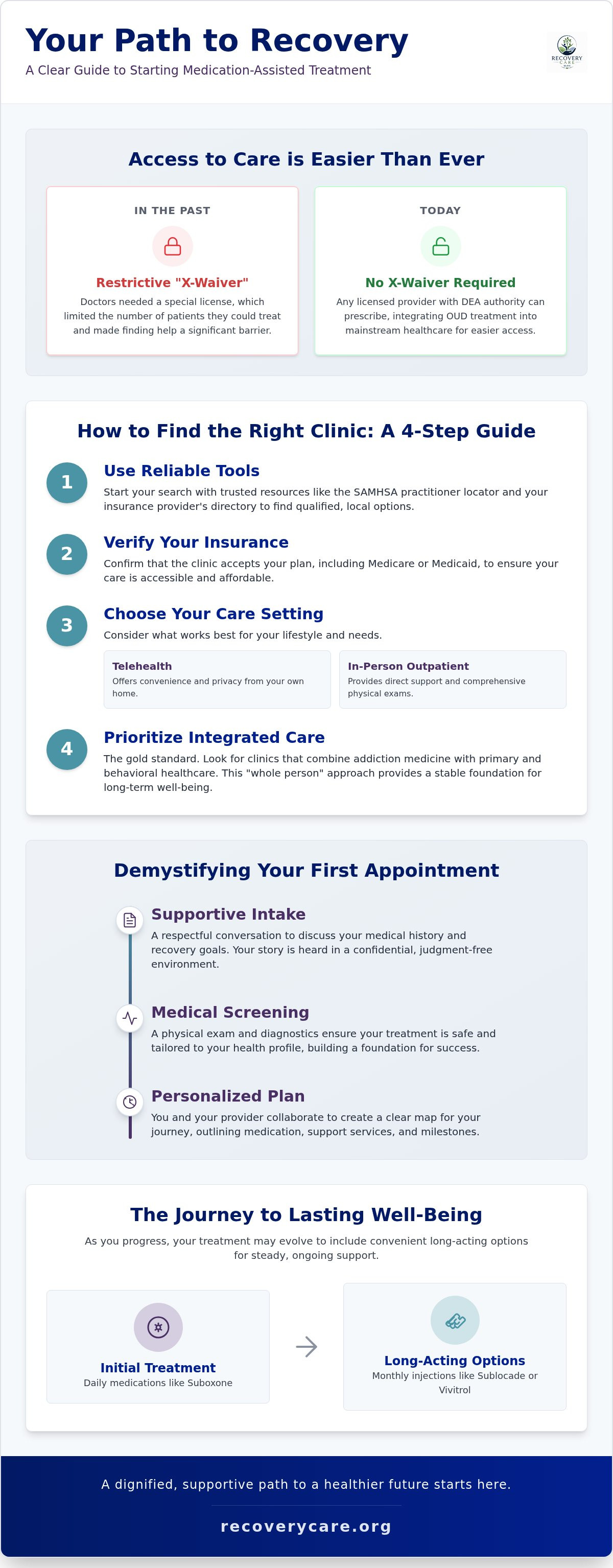
Until recently, doctors had to jump through significant hoops to help patients with buprenorphine. They needed a specialized "DATA-Waiver," often called an X-Waiver, which limited how many people they could treat. The 2023 removal of the X-Waiver changed everything. You no longer have to verify if a doctor has a specific "X" on their DEA license to know if they can help. This federal law change has made it significantly easier to get a prescription from a primary care provider or a local outpatient center. The DEA still ensures that prescribing remains safe and compliant, but the barriers that once kept people from starting their journey have finally come down, making it easier for you to find a licensed provider quickly.
Authorized Medical Professionals
You have several options when choosing who will guide your recovery. Authorized professionals include Medical Doctors (MDs) and Doctors of Osteopathic Medicine (DOs), as well as Nurse Practitioners (NPs) and Physician Assistants (PAs) who have prescriptive authority. While the number of available providers has grown, it is still important to choose a team that understands the complexities of addiction medicine. Understanding what to expect from a suboxone clinic involves finding a provider who balances clinical knowledge with deep, human empathy. You deserve a partner who looks at your whole health, including primary care needs, to ensure your recovery is built on a stable and supportive foundation from day one.
Types of Specialists: What to Expect from Different MAT Providers
When you begin your journey toward healing, you'll find that several different types of medical professionals are authorized to provide Medication-Assisted Treatment (MAT). Choosing the right partner depends on your unique health history and personal goals. A Primary Care Physician (PCP) can manage your recovery alongside your general health needs, while Addiction Medicine Specialists focus exclusively on the complexities of substance use disorders. If you are also managing a mental health condition like anxiety or depression, an Addiction Psychiatrist or a dedicated resource like Hope Therapy Center can provide essential support for a dual diagnosis.
The "Integrated Care" model is widely considered the gold standard in modern medicine. This approach brings your physical and mental health support under one roof, ensuring that your care team communicates effectively. If you're wondering what to expect from a suboxone clinic, look for a facility that treats you as a whole person rather than just a set of symptoms. Having one cohesive team reduces the stress of coordinating between different offices and ensures your recovery is built on a solid, comprehensive foundation.
There is a significant clinical advantage to treating chronic conditions like blood pressure, diabetes, or minor infections in the same office where you receive OUD treatment. When your provider understands your full medical history, they can tailor your recovery plan to support your overall physical health. Routine physicals and integrated diagnostic testing are vital tools that help track your progress and catch health issues early. This eliminates the "silo" effect in healthcare, where different doctors work in isolation. You can find this level of personalized, all-in-one support at integrated recovery centers that prioritize your dignity and long-term wellness.
Addiction Medicine Specialists
While many doctors can now prescribe recovery medications, an ASAM-certified specialist has undergone extensive training in the neurobiology of addiction. These experts are particularly helpful for patients with complex medical histories or those who haven't found success with traditional daily medications. They often lead the way in providing specialized, long-acting options like Sublocade and Vivitrol injections. These treatments can offer a month of steady support, which helps many people focus on their lives without the ritual of daily dosing. Knowing what to expect from a suboxone clinic led by specialists means you'll have access to the most advanced tools available for maintaining long-term sobriety.
Comparing Clinic Settings: Telehealth vs. In-Person Outpatient Care
Choosing where you receive care is a vital step in your recovery journey. The environment should feel like a sanctuary where you're heard and respected. You generally have four main options when seeking treatment. Specialized outpatient MAT clinics offer a comprehensive approach, combining medication management with behavioral health support. Private practices provide a traditional, one-on-one office experience. Telehealth platforms offer high-access, confidential care through secure video links. Finally, community health centers serve as a resource for those needing sliding scale fees or specific insurance acceptance. Understanding what to expect from a suboxone clinic in these various settings helps you select a path that fits your life.
Every setting has its own rhythm and benefits. Outpatient clinics are often the best choice for those who want a "one-stop" experience, where primary care and addiction specialists work together. Private practices might feel more intimate, while community centers focus on broad accessibility. Your comfort is the priority. You should feel empowered to ask questions about the clinic’s philosophy and how they handle patient privacy before you even schedule your first visit. This ensures your treatment starts in an environment that aligns with your personal values.
The Rise of Telehealth for Suboxone
Virtual visits have revolutionized how people access care, especially for those in rural areas or with demanding schedules. In the 2026 legal landscape, initial telehealth consultations are widely available, allowing you to start your journey from the safety and privacy of your own home. These platforms use secure, HIPAA-compliant technology to maintain strict confidentiality. You'll receive the same high-level medical expertise as you would in person, but without the stress of a long commute or the fear of being seen at a clinic. It's a discreet, modern way to stay consistent with your maintenance plan while managing your daily responsibilities.
Outpatient Care vs. Inpatient Detox
For families seeking more information on the different levels of care and support, you can learn more about Addiction Centre to find a variety of helpful resources.
It's helpful to clarify that Suboxone is primarily an outpatient tool designed for long-term stability. Unlike residential programs that require you to leave your life behind, outpatient care allows you to stay in your own home and community. This integration is essential for building a sustainable recovery while you continue to work, attend school, or care for your family. Outpatient treatment provides the necessary clinical structure and professional guidance without the disruption of a residential stay. When you know what to expect from a suboxone clinic, you'll see that the focus is on helping you thrive in your real-world environment, providing a steady hand as you navigate the stages of long-term healing.
How to Find the Right Suboxone Clinic: A Step-by-Step Guide
Finding a provider who sees you as a person, not a diagnosis, is the first real victory in your recovery. You deserve a partner who respects your time and your journey. To begin, use the SAMHSA Buprenorphine Practitioner Locator or your insurance provider's online directory to find licensed experts in your area. Once you have a list, verify that they accept your specific plan, including Medicare or Medicaid, to prevent any stressful financial surprises. This initial research ensures you are looking in the right places for high-quality, professional care.
When you call a potential office, ask about their intake process and if they offer same-day or next-day availability. A quality clinic understands that the window of opportunity for starting treatment is often small and will act with urgency. During this conversation, pay close attention to their tone. Look for keywords like "holistic" and "non-judgmental." If the staff sounds rushed or dismissive, it may be a sign to keep looking. Before your first visit, gather your medical history and a list of current medications to help the team understand what to expect from a suboxone clinic visit that is tailored specifically to your needs.
Vetting Your Potential Provider
Your first interaction with a clinic sets the stage for your entire recovery. Ask three critical questions: "Do you offer behavioral counseling?", "Do you handle primary care?", and "What is your policy on long-term maintenance?" These answers will tell you if the clinic is invested in your total well-being or just providing a transaction. Red flags include providers who don't offer counseling or who seem overly focused on the administrative side of care. You should feel a sense of relief after your first phone call. If you don't feel respected and heard from the very beginning, they may not be the right fit for your long-term success. You can schedule a confidential consultation with a team that prioritizes your dignity and health.
Navigating Insurance and Medicaid
Finding medicaid suboxone doctors shouldn't feel like an uphill battle. Most insurance companies offer a "Find a Doctor" tool that filters for providers who accept your specific coverage. Once you find a provider, they should help you navigate "Prior Authorization." This is a standard process where the insurance company confirms the medical necessity of the treatment. A supportive clinic handles the heavy lifting of this paperwork for you. Always prioritize centers that explicitly mention accepting Medicare and Medicaid, as this often reflects a commitment to community accessibility and inclusive care. Understanding these logistics is a key part of knowing what to expect from a suboxone clinic and ensures your focus stays on your healing, not the bills.
The Recovery Care Difference: Why Integrated Support Matters
Recovery Care isn't just a medical facility; it's a dedicated partnership designed to support every aspect of your well-being. Under the guidance of our Medical Director, Dr. Heather Rosen, we have cultivated a culture that prioritizes clinical excellence alongside deep human empathy. We believe that recovery is most successful when you feel seen and respected as an individual. By combining expert addiction medicine with essential primary care services, we remove the stress of managing multiple doctors and fragmented health records. This is a core part of what to expect from a suboxone clinic that truly values your long-term success and personal dignity.
Behavioral health counseling is a non-negotiable component of our treatment model because we know that healing involves more than just biology. While medications like Suboxone, Sublocade, or Vivitrol provide the physical stability you need to move forward, counseling provides the emotional tools required for lasting change. To supplement your clinical care, you can check out Courtney Recovered for personalized sobriety coaching and toolkits designed to help you thrive. We offer the flexibility you need to stay consistent with your plan, whether you prefer the personal connection of in-person visits or the convenience of telehealth consultations. You don't have to choose between your recovery and your daily responsibilities; we are here to ensure your care fits into your life seamlessly.
Our team looks far beyond the prescription pad to ensure your body is healing as a whole. We use integrated diagnostic testing to monitor your physical health while you focus on your recovery goals, ensuring that every part of your wellness is tracked. The synergy between routine medical physicals and specialized MAT allows us to catch and treat minor health issues before they become major obstacles. Our goal is not just to help you achieve sobriety, but to partner with you in building a thriving, healthy life that you feel proud of every day.
Starting Your Journey Today
Taking the first step is often the hardest part, so we have made our intake process as smooth and secure as possible. We maintain an unwavering commitment to patient confidentiality, ensuring your privacy is protected at every stage of the process. When you schedule your first consultation, you can expect a warm greeting and a clear explanation of what to expect from a suboxone clinic during your first week of care. You'll meet with experts who are personally invested in your future and ready to answer your questions. Your decision to seek help is an act of incredible bravery, and we are here to provide the steady, knowledgeable guidance you need to move toward a more positive and stable future.
Your Path to a Healthier, More Stable Future
Choosing to start treatment is a powerful decision that changes the trajectory of your life. You now have a clearer understanding of the modern regulations and integrated care models that make high-quality support more accessible than ever before. By focusing on providers who offer both addiction medicine and primary care services, you ensure that your whole body is supported throughout every stage of the journey. This integrated approach provides the stability you need to move forward with quiet confidence.
Knowing exactly what to expect from a suboxone clinic helps remove the anxiety of the unknown, allowing you to focus entirely on your healing and personal growth. At Recovery Care, led by Medical Director Dr. Heather Rosen, we provide a safe, non-judgmental environment where your dignity is always the priority. We proudly accept Medicare and Medicaid and offer flexible telehealth options to ensure that expert care is always within reach. You've already done the hard work of seeking information. Now, let us provide the steady guidance and clinical excellence you deserve. Take the first step toward a healthier future with Recovery Care; schedule your confidential consultation today.
Frequently Asked Questions
Can any family doctor prescribe Suboxone?
Yes, any licensed family doctor or primary care provider with a standard DEA registration that includes Schedule III authority can now prescribe Suboxone. This change occurred in 2023 when federal regulations removed the specialized DATA-Waiver requirement. It's now much easier to receive recovery support through your regular medical office. This shift helps integrate addiction treatment into general healthcare, making it more private and accessible for everyone who needs it.
Do I need a special referral to see a Suboxone doctor?
You don't typically need a special referral to visit an outpatient recovery center, though it's always wise to check your specific insurance plan's requirements first. Most clinics allow you to schedule a consultation directly with their medical team. This direct access is a key part of what to expect from a suboxone clinic that prioritizes quick, life-saving support. We encourage you to reach out as soon as you feel ready to start.
How do I find a Suboxone doctor that accepts Medicaid near me?
You can find a provider by using the SAMHSA Buprenorphine Practitioner Locator or your state's insurance directory. Many integrated clinics, including Recovery Care, specifically accept Medicaid and Medicare to ensure that high-quality medical support is accessible to the entire community. When you call a potential clinic, ask their intake team directly about their insurance policies. This helps you avoid surprise bills and allows you to focus entirely on your recovery in a supportive environment.
What is the difference between an addiction specialist and a regular doctor?
While any licensed doctor can now prescribe these medications, an addiction specialist has completed advanced training in the neurobiology of substance use disorders. These experts often have deep experience handling complex medical cases and may offer specialized treatments like long-acting Sublocade injections. Regular doctors are excellent for integrated care, but a specialist provides an extra layer of expertise for those who need more intensive, dedicated support during their long-term recovery journey.
Can I get a Suboxone prescription through a telehealth appointment?
Yes, you can receive a Suboxone prescription through a secure, HIPAA-compliant telehealth appointment. Modern regulations allow for virtual consultations to increase access for those with busy schedules or limited transportation options. During your video visit, you'll meet with a licensed provider who will evaluate your medical history and create a personalized treatment plan. This convenient option maintains your privacy while providing the same level of clinical excellence you'd receive in a traditional office setting.
What should I bring to my first appointment with a Suboxone provider?
You should bring a valid photo ID, your insurance or Medicaid card, and a comprehensive list of your current medications. It's also helpful to have your medical history ready to share with the team. Part of what to expect from a suboxone clinic visit involves a detailed conversation about your health goals. Having these documents ready helps the intake process move smoothly, allowing your provider to focus on building a compassionate, effective care plan for you.
Is Suboxone treatment covered by Medicare?
Yes, Suboxone treatment is generally covered by Medicare, often under Part B for outpatient services or Part D for the medication itself. Most integrated clinics accept Medicare to help patients manage their recovery alongside their primary health needs. It's important to choose a provider that understands how to navigate Medicare billing to ensure your visits are covered. Our team can help you understand your specific coverage so you can start treatment with total peace of mind.
How long will I need to see a Suboxone doctor?
The duration of your treatment is a personal decision made between you and your doctor. Some people use medication for a few months, while others benefit from long-term maintenance that lasts years. Recovery is a journey, not a race, and there's no "right" timeline for healing. Beyond medical care, services like Sober Coach provide personalized one-on-one support and intensive workshops to help you maintain your progress. Your provider will work with you to adjust your plan based on your progress, ensuring you always feel stable, supported, and empowered as you move toward a healthier life.


