
The first Vivitrol shot can bring noticeable side effects, while its opioid-blocking effect starts on the day it’s given and lasts about 28 days. Knowing what to expect after your first Vivitrol shot means preparing for possible nausea, headache, dizziness, or soreness where the medicine was injected. Before starting, you must be opioid-free for at least 7 to 14 days to avoid sudden withdrawal.
It’s understandable to want clear answers before starting a medication that can affect how you feel and approach recovery. Vivitrol is one part of treatment; ongoing support, including counseling and recovery programs, also matters. This guide explains how the medication works and what you may experience after your first injection, while recognizing that recovery is personal.
You’ll learn how the shot is given, when it starts working, how long its effects last, which side effects to watch for, and how counseling and other recovery support can complement treatment. You’ll also find guidance on when symptoms call for prompt medical attention, so you can approach your next steps with more clarity.
Key Takeaways
- Learn which common effects may follow the first injection and what symptoms deserve prompt medical attention.
- Understand how the healthcare provider gives the shot and how to respond to a concerning injection-site reaction.
- Know which stomach, liver, and mood changes to watch for while receiving Vivitrol.
- Get a clear picture of when Vivitrol begins working and how long its opioid-blocking effect lasts.
- See how counseling and recovery programs can complement medication as part of ongoing support.
WHAT ARE THE POSSIBLE SIDE EFFECTS OF VIVITROL?
After a first Vivitrol injection, side effects can include nausea, headache, dizziness, sleepiness, and soreness near the injection site. Understanding what to expect after your first Vivitrol shot can help you notice changes and describe them clearly. The cost depends on the case and is given after a quote request; insurance coverage varies by plan, and the VIVITROL Co-pay Savings Program excludes people enrolled in Medicare, Medicaid, or other federal or state healthcare programs.
Common Vivitrol Side Effects
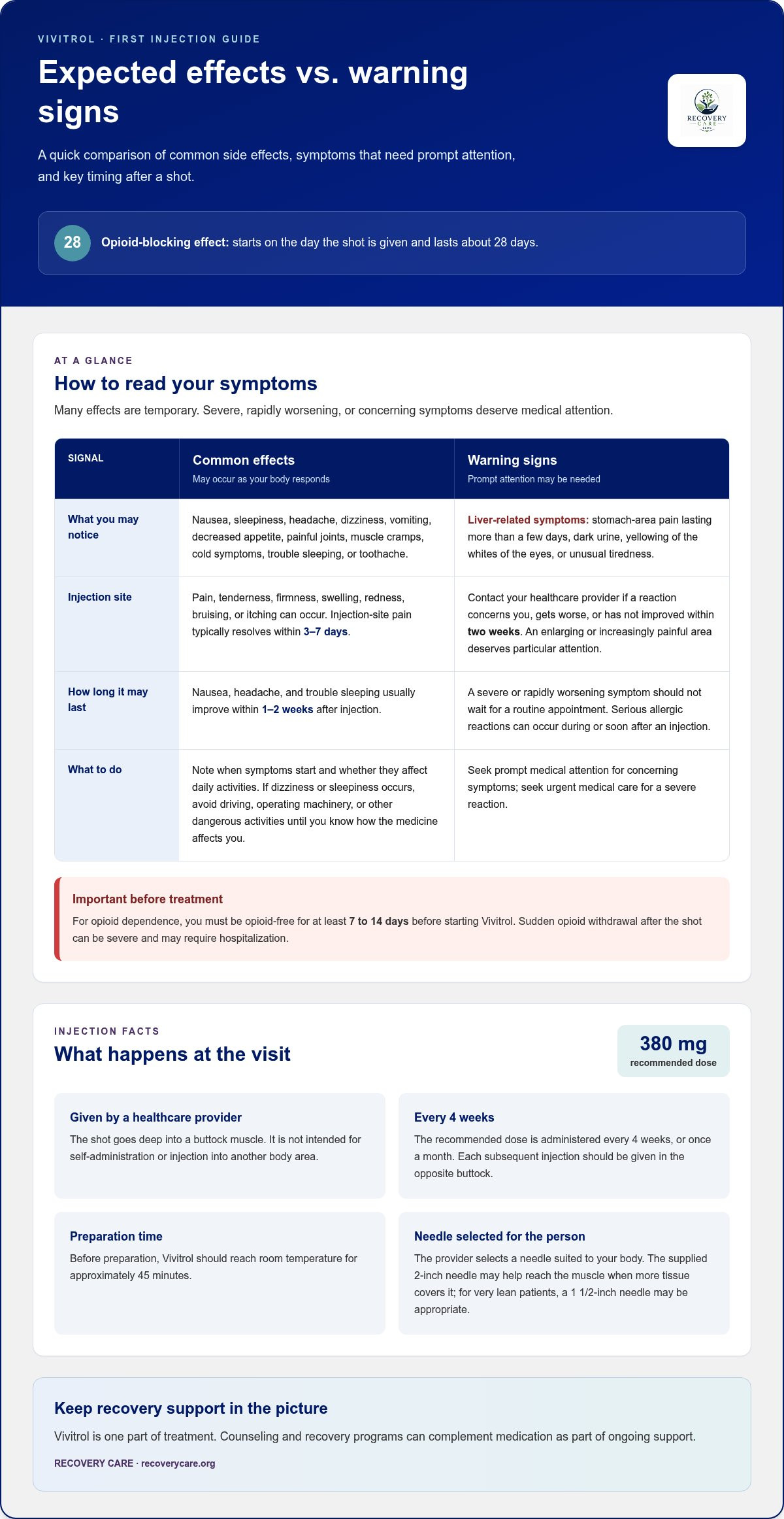
Common Vivitrol side effects are symptoms that may occur as your body responds to the medicine. They can include nausea, sleepiness, headache, dizziness, vomiting, decreased appetite, painful joints, muscle cramps, cold symptoms, trouble sleeping, and toothache.
The first injection may cause more noticeable effects than later doses. Keep track of symptoms such as nausea or difficulty sleeping, noting when they start and whether they affect daily activities. This record can help you explain what has changed during follow-up care.
Physical Side Effects
Physical side effects are changes in how your body feels after Vivitrol, including general symptoms and reactions around the injection site. Reactions may include pain, tenderness, firmness, swelling, redness, bruising, or itching.
Injection-site pain typically resolves within 3-7 days after each injection. Other physical effects can include vomiting, reduced appetite, joint pain, or muscle cramps. If dizziness or sleepiness occurs, avoid driving, operating machinery, or other dangerous activities until you know how the medicine affects you.
Serious Side Effects
Serious side effects may require urgent medical attention, unlike common effects such as temporary nausea or a headache. Sudden opioid withdrawal after Vivitrol can be severe and may require hospitalization, so being opioid-free before treatment is an important safety step.
Serious allergic reactions can occur during or soon after an injection. Watch for stomach-area pain lasting more than a few days, dark urine, yellowing of the whites of your eyes, or unusual tiredness. These symptoms may indicate a liver problem. Seek prompt medical attention for severe or rapidly worsening symptoms.
Side-Effect Duration
Side-effect duration is the time a symptom continues after the injection. Nausea, headache, and trouble sleeping usually improve within 1-2 weeks after injection, while injection-site pain typically resolves within 3-7 days.
Knowing what to expect after your first Vivitrol shot also means paying attention to whether symptoms are easing or worsening. Contact your healthcare provider about an injection-site reaction that concerns you, gets worse, or hasn’t improved within two weeks after the injection. For a severe reaction, seek urgent medical care rather than waiting for a routine appointment.
Before starting Vivitrol for opioid dependence, you must be opioid-free for at least 7 to 14 days to help prevent sudden withdrawal. If a concerning reaction occurs, note the symptom, when it began, and how it changes, then share those details with your healthcare provider.
How and where is the Vivitrol injection given?
A Vivitrol injection is a dose of extended-release naltrexone administered by a healthcare provider. It’s injected deep into a buttock muscle, usually once a month. At the first visit, your provider may discuss preparation and possible injection-site reactions.
The recommended dose is 380 mg, administered every 4 weeks or once a month. A healthcare provider gives the injection, which must go deep into the gluteal muscle. The medication is not intended for injection into another body area or for self-administration.
Before preparation, Vivitrol should reach room temperature for approximately 45 minutes. The provider selects a needle suited to your body: the supplied 2-inch needle may help the medication reach the muscle when more tissue covers it. For very lean patients, a 1 1/2-inch needle may be appropriate to help avoid contact with the periosteum, the tissue covering bone.
Injection-site reactions are changes in the skin or tissue around the shot, such as pain, tenderness, firmness, swelling, redness, bruising, or itching. These reactions can follow an injection, and the first dose may bring more noticeable side effects than later doses. Each subsequent injection should be given in the opposite buttock, allowing time between doses for the previous site to recover.
Injection-site pain typically resolves within 3-7 days after each injection. Watch the area as it heals. Contact your healthcare provider about a reaction that concerns you, worsens, or hasn’t improved within two weeks. An enlarging or increasingly painful area deserves particular attention, rather than being treated as ordinary soreness.
Vivitrol blocks opioid effects, which can affect both overdose risk and pain treatment. Trying to overcome the blockade with large amounts of opioids can cause serious injury, coma, or death; opioid overdose or accidental opioid use requires calling 911, even if naloxone or nalmefene is given. Tell healthcare professionals involved in pain care that you receive naltrexone, because opioid medicines may not work as expected while the blockade is active.
Before the first injection for opioid dependence, a person must be opioid-free for at least 7 to 14 days to reduce the risk of severe, sudden opioid withdrawal. This timing is a key part of safe preparation, not a reaction to wait out after the shot. Alcohol withdrawal is different: Vivitrol doesn’t eliminate or reduce those symptoms.
As you plan an injection visit, consider how medication fits into broader care. A conversation about treatment planning can help you understand the steps involved and prepare questions about the injection schedule, reactions, or pain care.
Does Vivitrol cause stomach problems?
Stomach problems are digestive symptoms, such as nausea or ongoing abdominal pain, that may occur during Vivitrol treatment. Nausea is a reported side effect, while stomach-area pain lasting more than a few days may signal a more serious concern and needs attention.
Liver monitoring means watching for changes that may point to liver injury during treatment. Warning signs include stomach-area pain lasting more than a few days, dark urine, yellowing of the whites of the eyes, and unusual tiredness. If you notice these symptoms, contact a healthcare professional promptly and describe when they began.
Hepatotoxicity is liver injury associated with a medicine or substance. Naltrexone-related hepatotoxicity has been reported at doses six times greater than FDA-recommended dosages. This does not mean persistent abdominal pain or yellowing should be ignored. Share any liver-related symptoms and relevant medical history with your treatment team before another injection.
Medical eligibility is an assessment of whether Vivitrol is appropriate for your health and treatment needs. Liver concerns can be difficult to interpret without context. Before treatment, tell your healthcare professional about current symptoms, previous liver problems, and medicines you take. During treatment, promptly report new dark urine, persistent stomach pain, or yellowing.
Mood monitoring means noticing changes in your feelings, thoughts, or behavior during treatment. Vivitrol may cause depressed mood, which can lead to suicidal thoughts, suicidal behavior, or suicide. Tell someone you trust and contact a healthcare professional if you notice a marked mood change. If there is immediate danger or a risk of self-harm, seek emergency help now.
Medication precautions help reduce risks while Vivitrol blocks opioid effects. Don’t try to overcome the blockade by taking larger amounts of opioids; this can cause serious injury, coma, or death. Tell healthcare professionals that you receive Vivitrol before pain treatment, since opioid medicines may not work as expected while the blockade is active.
As the opioid-blocking effect decreases or wears off, taking opioids in amounts used before treatment can cause overdose and death. You may also be more sensitive to lower amounts. Call 911 for an opioid overdose or accidental opioid use, even if naloxone or nalmefene has been given.
Alcohol needs separate consideration. Vivitrol does not eliminate or reduce alcohol withdrawal symptoms, so don’t rely on it to manage withdrawal. Tell a healthcare professional about your alcohol use and any withdrawal symptoms. Don’t stop or change prescribed medicines without discussing the change with the prescriber.
When Vivitrol starts working and how long its effects last
Vivitrol’s opioid-blocking effect starts on the first day it’s injected and lasts for approximately 28 days. Its first peak in the blood occurs about 2 hours after injection, but side effects and opioid-blocking effects follow different timelines.
The opioid-blocking effect is the medicine’s action that reduces the effects of opioids. Vivitrol blocks opioid effects for approximately 28 days after administration. Its concentration begins to decline two weeks after dosing, so the blockade can weaken before the next injection. Keep the scheduled appointment, usually every 4 weeks or once a month, and don’t try to overcome the blockade by taking more opioids. Large amounts can cause serious injury, coma, or death.
Opioid-free preparation means having no opioids in the body before the first Vivitrol dose. To reduce the risk of precipitated withdrawal, a person must be opioid-free for at least 7 to 14 days beforehand. Withdrawal symptoms can be sudden and severe if Vivitrol is given too soon. People transitioning from buprenorphine or methadone may remain vulnerable to precipitated withdrawal for as long as 2 weeks.
Side-effect duration is how long symptoms continue after the injection. Nausea after Vivitrol is usually experienced after the first injection and lasts only a few hours or days. Nausea, headache, and trouble sleeping usually improve within 1-2 weeks after injection. General side effects often ease within the first few days or weeks, though unusual tiredness can take several weeks to improve.
Injection-site effects are local symptoms where the shot was given, such as soreness or tenderness. These may last about a day, while injection-site pain typically resolves within 3-7 days. Contact your healthcare provider about a reaction that concerns you, worsens, or hasn’t improved within two weeks after the injection. Note when it began and how it changes.
Managing side effects means tracking symptoms and sharing useful details with your healthcare provider. Record when nausea, dizziness, sleepiness, or other changes begin, how long they last, and whether they affect daily activities. Vivitrol may cause dizziness and sleepiness, so avoid driving, operating machinery, or other dangerous activities until you know how it affects you.
The first injection can bring more noticeable side effects than later doses, and maintaining a regular Vivitrol schedule typically results in fewer side effects over time. Individual responses vary: a symptom’s intensity, the first dose, and whether it improves or worsens all help guide a follow-up conversation. Seek prompt medical help for severe symptoms, and call 911 for opioid overdose or accidental opioid use, even if naloxone or nalmefene is administered.
Use alongside counseling and recovery programs
Recovery support includes counseling and structured care alongside medication treatment. Vivitrol must be used with other alcohol or drug recovery programs, such as counseling, to be effective. The injection blocks opioid effects, but it doesn’t teach coping skills, address personal triggers, or create a plan for difficult moments. Those parts of recovery need attention, too.
Counseling provides space to work through experiences, choices, and challenges connected with substance use. You can discuss situations that bring cravings, practice responses to stress, and identify people you can turn to for support. These conversations can also help you notice changes in mood or daily routines and share them with your care team.
A recovery plan is a practical outline for managing treatment and everyday needs. Coordinate your Vivitrol schedule with counseling appointments, and bring questions about side effects or changes in opioid cravings to those conversations. Between visits, note situations that increase stress or make recovery harder. Specific examples, such as conflict at home or an unexpected change in routine, can make the next discussion more useful.
Alcohol recovery may also require ongoing support. Vivitrol is used to treat alcohol dependence, but it doesn’t eliminate or reduce alcohol withdrawal symptoms. If you’re experiencing withdrawal, tell a healthcare professional rather than relying on the injection to manage it. Counseling can also give you space to discuss drinking patterns and the circumstances surrounding them.
Medication and counseling address different parts of recovery, so a consistent routine can help you keep both in view. Consider these steps:
- Keep track of injection and counseling appointments in one calendar.
- Write down questions or new symptoms before each visit.
- Choose a trusted person to contact when a difficult situation arises.
- Bring examples of challenges and progress to counseling sessions.
Recovery can involve adjustments as your needs and circumstances change. Discuss changes in mood, cravings, drinking, or treatment routines with your healthcare team, and keep counseling connected to your medication plan. If you’re ready to talk through how counseling can fit alongside treatment, connect with a care team about supportive next steps.
Recovery Care: Suboxone Treatment
Recovery Care offers Suboxone Treatment for people seeking outpatient medication-assisted treatment for opioid addiction. If you’re considering Vivitrol or want to discuss how treatment fits your recovery goals, a conversation can help clarify your options. Recovery Care also provides Vivitrol Injections, Sublocade Injections, and Telehealth Consultations.
Medication is one part of care. Recovery Care also offers Behavioral Health Counseling to support you as you work through challenges and build recovery strategies alongside treatment. The right next step depends on your needs and treatment history, including whether you’re starting medication or discussing a change. Don’t stop or switch medication without guidance from a healthcare professional.
Contact Recovery Care to discuss treatment and support options.
Choose a Supported Next Step
Preparing for what to expect after your first Vivitrol shot can help you take an active role in recovery. The next step is building support that fits your needs over time. Consider what would make follow-through easier: a treatment plan you understand, space to discuss concerns, or help staying connected with care as circumstances change. You deserve to have these conversations without judgment.
Recovery Care offers Suboxone Treatment, Sublocade Injections, and Vivitrol Injections. A conversation about your goals and treatment history can help you explore which option may fit your situation and how ongoing support could become part of your plan. You don’t need to have every answer before reaching out.
Contact Recovery Care to discuss support and take a thoughtful next step toward care that feels manageable and connected.
Frequently Asked Questions
What is VIVITROL?
VIVITROL is a prescription extended-release naltrexone injection used to treat alcohol dependence and prevent opioid relapse after detoxification. A healthcare provider administers it as part of a treatment plan, not as a medication to manage opioid withdrawal. For opioid treatment, an important preparation step is being opioid-free before the injection. Counseling and other recovery support can address needs medication alone doesn’t cover.
Does Vivitrol cause mood swings?
Vivitrol may cause depressed mood, which can include serious changes in thoughts or behavior. Pay attention to changes such as persistent sadness, loss of interest, or thoughts of suicide, and tell a healthcare professional promptly. If you or someone nearby may be in immediate danger, call 911 or seek emergency help. Sharing mood changes early helps your care team respond and consider the support you need.
How does Vivitrol support a long-term recovery journey?
Vivitrol can support recovery by blocking opioid effects, but it isn’t a complete recovery plan by itself. It must be used alongside other alcohol or drug recovery programs, such as counseling. Counseling, for example, can help you identify situations linked to substance use, plan how to respond to cravings, and build routines that support treatment. Keep medication appointments and counseling connected so both remain part of your care.
WHAT IS THE MOST IMPORTANT INFORMATION I SHOULD KNOW ABOUT VIVITROL®?
The most important safety points are to start Vivitrol only after the required opioid-free period and never try to overcome its opioid blockade. For opioid dependence, people must be opioid-free for at least 7 to 14 days before starting, to reduce the risk of severe sudden withdrawal. Taking large amounts of opioids to overcome the blockade can cause serious injury, coma, or death. Call 911 for overdose or accidental opioid use, even after naloxone or nalmefene.
What does Naltrexone do to the body?
Naltrexone blocks opioid receptors, reducing or preventing opioid effects while Vivitrol is active. It doesn’t remove opioids from the body or treat opioid withdrawal, so the timing of the first injection matters. Naltrexone is also used to treat alcohol dependence, but Vivitrol doesn’t eliminate or reduce alcohol withdrawal symptoms. Tell your healthcare provider about opioid use, alcohol use, and other medicines before treatment.
What side effects are common after the first Vivitrol shot, and how long do they last?
Common effects can include nausea, headache, dizziness, sleepiness, vomiting, decreased appetite, muscle cramps, joint pain, and trouble sleeping. The first injection can make side effects more noticeable than later doses. Nausea, headache, and trouble sleeping usually improve within 1-2 weeks, though nausea may last only a few hours or days. Record symptoms and their timing to describe changes clearly at follow-up.
How long does injection-site pain or swelling last after Vivitrol, and what helps?
Injection-site pain typically resolves within 3-7 days, while soreness or tenderness may last about a day. Swelling, redness, bruising, itching, or firmness can also occur. Keep track of whether the area is improving or worsening. Contact your healthcare provider about a reaction that concerns you, gets worse, or hasn’t improved within two weeks. Avoid treating a worsening reaction as routine soreness.
When does Vivitrol start working after the first injection?
Vivitrol starts working on the day it’s injected. Its first peak in the blood occurs about 2 hours after injection, and its opioid-blocking effect lasts approximately 28 days. The concentration begins to decline two weeks after dosing, so keep the next injection appointment on schedule. The medicine’s opioid-blocking action is different from how quickly side effects appear or fade, so track those symptoms separately.


