
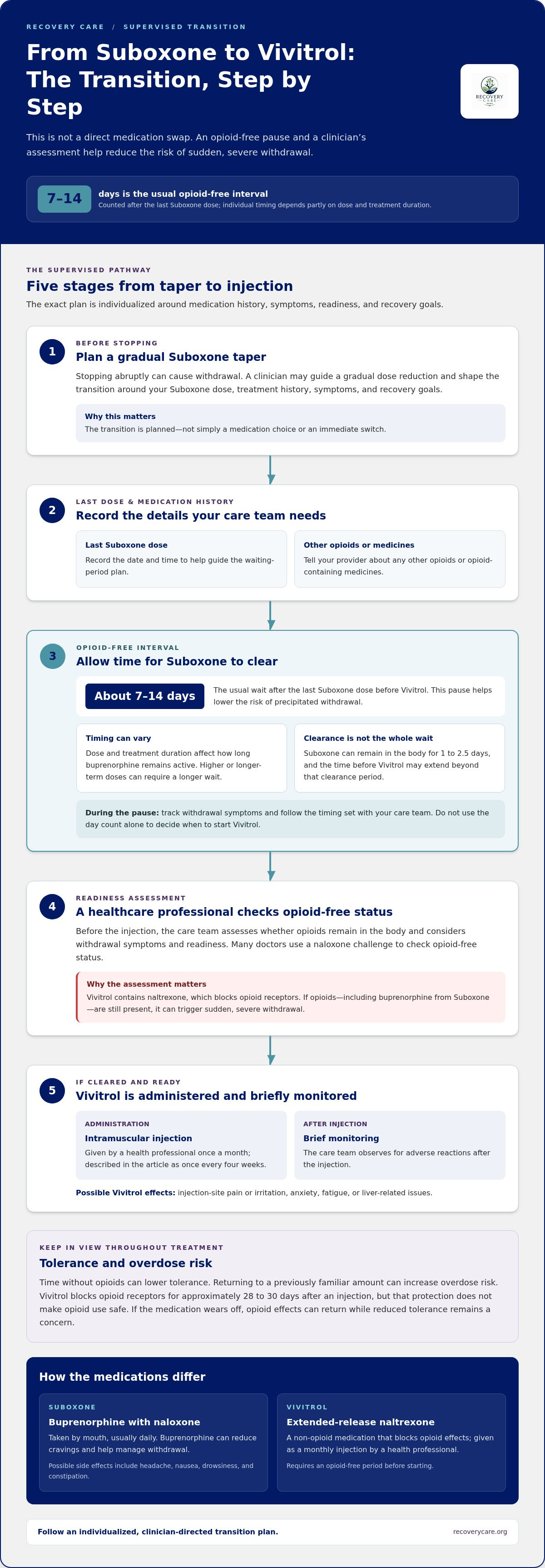
The transition requires an opioid-free pause, not a direct medication swap. The usual opioid-free wait when switching from Suboxone to Vivitrol is about 7 to 14 days after the last Suboxone dose. Vivitrol should be started only after opioids, including Suboxone, have cleared enough to reduce the risk of sudden, severe withdrawal.
If you’re considering switching from Suboxone to Vivitrol, the waiting period can feel like the hardest part, especially when you’re trying to stay comfortable and protect your recovery. This guide explains why the opioid-free period matters, what can affect the transition, and how the medications differ. Suboxone contains buprenorphine and can help manage cravings and withdrawal; Vivitrol contains naltrexone and blocks opioid effects. You’ll also learn what a supervised transition may involve, so you can understand the steps and discuss them with your care team.
Key Takeaways
- Plan a gradual Suboxone taper rather than stopping abruptly, since withdrawal can follow sudden discontinuation.
- Allow an opioid-free period before Vivitrol; the timing depends partly on your Suboxone dose and treatment history.
- Understand the difference: buprenorphine can reduce cravings and withdrawal, while naltrexone blocks opioid effects.
- Use the comparison and transition steps in this guide to prepare for a conversation about which medication may fit your recovery needs.
Switching From Suboxone To Vivitrol: How Long To Wait?
After the last Suboxone dose, the usual opioid-free period before Vivitrol is about 7 to 14 days. The exact transition plan considers withdrawal symptoms, medication effects, and your recovery needs.
Medical Evaluation and Transition Plans
A medical evaluation helps shape the transition around your Suboxone dose, treatment history, current withdrawal symptoms, and recovery goals. This differs from simply choosing a medication: it sets the sequence and support for moving between them. Vivitrol costs in the United States vary by medication, administration, and insurance coverage; coverage depends on your plan, and exact costs depend on the case and are provided after a quote request.
Withdrawal Management and Supervision
Stopping Suboxone abruptly can cause withdrawal, so a taper may be used to reduce the dose gradually. A supervised rapid induction may shorten the transition in some circumstances, but it does not remove the need to assess opioid-free status before Vivitrol. Withdrawal management focuses on symptoms and safety as the medication clears, rather than rushing to the next treatment. Medical supervision helps guide each step.
Medication Administration and Clinic Visits
Suboxone is taken by mouth, while Vivitrol is an intramuscular injection administered by a health professional once a month. Brief monitoring after the injection allows the care team to observe for adverse reactions. Possible Suboxone side effects include headache, nausea, drowsiness, and constipation; Vivitrol may cause injection-site pain or irritation, anxiety, fatigue, or liver-related issues. These differences can inform medication discussions.
Precipitated Withdrawal Risks
Precipitated withdrawal can happen if Vivitrol is given while opioids, including buprenorphine from Suboxone, remain in the body. Naltrexone blocks opioid receptors and can trigger sudden, severe withdrawal when opioids are still present. Waiting about 7 to 14 days after the last Suboxone dose helps lower this risk. The transition also considers dose and treatment duration, which can affect how long buprenorphine remains active.
| Option | Medication approach | Administration | Transition consideration |
|---|---|---|---|
| Suboxone | Buprenorphine with naloxone | Taken by mouth | Taper before changing treatment |
| Vivitrol | Naltrexone blocks opioid receptors | Monthly injection | Requires an opioid-free period |
| Planned transition | Individualized medication change | Clinician-directed steps | Accounts for withdrawal and readiness |
Choose based on your treatment goals, readiness for withdrawal, and the medication routine that best fits your recovery stage.
Opioid-free period before starting Vivitrol
After Suboxone, the usual opioid-free interval before a Vivitrol injection is about 7 to 14 days. The pause allows buprenorphine to clear and helps reduce the risk of sudden withdrawal.
Reduced Tolerance and Overdose Risk
Time without opioids can lower tolerance, so returning to a previously familiar amount can increase overdose risk. Vivitrol blocks opioid receptors for approximately 28 to 30 days after an injection, but that protection does not make opioid use safe. If the medication wears off, opioid effects can return, and reduced tolerance remains a concern. Keep overdose risk in mind throughout treatment, not just during the waiting period.
Vivitrol Induction After Abstinence
Vivitrol is started after opioid abstinence, including abstinence from Suboxone. Before the injection, a healthcare professional assesses whether opioids remain in the body; many doctors use a naloxone challenge to check opioid-free status. This step is not simply a matter of counting days: the assessment considers whether the medication has cleared. Follow your treatment plan rather than starting the injection on your own.
The 7-to-14-day range reflects differences in Suboxone dose and treatment duration. Higher or longer-term doses can require a longer wait. Suboxone can remain in the body for 1 to 2.5 days, and the time needed before Vivitrol may extend beyond that clearance period. A longer opioid-free interval can also be needed after methadone or other buprenorphine treatment.
- Record the date and time of your last Suboxone dose.
- Tell your provider about other opioids or opioid-containing medicines.
- Track withdrawal symptoms and follow the planned injection timing.
Because the waiting period and induction both matter, discuss Vivitrol injection care as part of a supervised treatment plan.
How buprenorphine and naltrexone work
Suboxone and Vivitrol use different medications to support treatment for opioid use disorder. Understanding how buprenorphine and naltrexone act helps explain why the transition requires an opioid-free period.
Suboxone combines buprenorphine with naloxone. Buprenorphine is a partial opioid agonist: it can reduce cravings and manage withdrawal without working like a full opioid agonist. Suboxone is usually taken daily, providing a consistent medication routine as part of recovery. Its benefits include support for cravings and withdrawal; possible side effects include headache, nausea, drowsiness, and constipation.
Vivitrol contains extended-release naltrexone, a non-opioid medication. Rather than activating opioid receptors, naltrexone blocks opioid effects. The injection is given once every four weeks. Naltrexone is also available as a daily pill, while Vivitrol offers a monthly injection schedule. Vivitrol can also be used to treat alcohol use disorder, unlike Suboxone, which is approved to treat opioid use disorder.
| Medication | How it works | Routine | Key consideration |
|---|---|---|---|
| Suboxone | Buprenorphine reduces cravings and helps manage withdrawal | Usually daily | Can be started while a person is in early withdrawal |
| Vivitrol | Naltrexone blocks opioid effects | Injection every four weeks | Requires opioid abstinence before initiation |
| Methadone | Different opioid medication | Not detailed here | Transitioning may require a longer opioid-free period |
Suboxone’s daily routine may suit someone seeking help with cravings and withdrawal. Vivitrol may suit someone ready for an opioid-free start and a monthly injection. The two medications are not taken together during the transition.
Moving from methadone or another buprenorphine treatment to naltrexone can require a longer opioid-free period than the usual 7 to 10 days. The previous medication, dose, and time since the last dose shape the plan. Compare the daily support of buprenorphine with naltrexone’s blocking action, then weigh which approach aligns with your treatment goals and recovery stage.
Switching from Suboxone to Vivitrol
The transition involves tapering Suboxone, stopping it, allowing an opioid-free interval, then assessing readiness for Vivitrol. It can take a few weeks overall, since both the taper and waiting period matter. Suboxone and Vivitrol shouldn’t be taken together: buprenorphine is an opioid agonist, while Vivitrol’s naltrexone blocks opioid receptors.
- Plan the taper. A taper may lower Suboxone by 2 mg every few days or weeks, depending on how you feel. Some people taper to 1-2 mg daily before stopping.
- Record the last dose. Keep track of when you stop Suboxone and tell your care team about other opioid medicines, including products containing naloxone.
- Allow opioid-free time. The usual interval before Vivitrol is about 7 to 14 days after the last Suboxone dose. Higher or longer-term doses may call for a longer wait.
- Assess readiness for injection. A healthcare professional evaluates opioid-free status and withdrawal symptoms before giving Vivitrol.
The taper and waiting period serve different purposes. Gradually reducing Suboxone may help limit withdrawal symptoms; the opioid-free interval helps lower the risk of precipitated withdrawal when Vivitrol is started. Don’t shorten the planned interval or begin the injection based only on how you feel. Buprenorphine can remain in the body after the last dose.
Keep behavioral and addiction treatment support in place during the transition. Medication changes can bring cravings or withdrawal, and gaps in care can complicate recovery from opioid use disorder. If you experience symptoms or have concerns about relapse while waiting, tell your healthcare professional promptly. Follow the agreed plan for medication changes and starting Vivitrol.
For help discussing a medication transition and ongoing treatment, explore Vivitrol injection treatment.
Recovery Care: Suboxone Treatment
Recovery Care offers Suboxone Treatment and Vivitrol Injections for people considering medication options for opioid use disorder. If you’re weighing a transition, the care team can help you discuss the medication change, the opioid-free interval, and support that may fit your recovery goals.
Suboxone Treatment may be relevant if you’re continuing buprenorphine-based care, while Vivitrol Injections are an option to discuss when considering naltrexone. Telehealth Consultations offer another way to talk about treatment. The next step is a clear discussion of your current medication and transition goals, without rushing the process.
Contact Recovery Care to discuss your treatment options and next steps.
Choose a Supported Next Step
Changing medication can also be a chance to clarify what you want your recovery care to support, such as managing cravings, maintaining treatment consistency, or preparing for a different medication approach. A switch from Suboxone to Vivitrol should be planned around your treatment history and goals, with a healthcare professional guiding the decision and transition.
Recovery Care offers Suboxone Treatment, Sublocade Injections, and Vivitrol Injections. The best next step depends on your circumstances and the treatment approach you want to discuss. A conversation can help you identify questions to raise and consider which option aligns with your recovery priorities.
Contact Recovery Care to discuss your options and take the next step at your own pace. Supportive care can help make that step feel more manageable.
Frequently Asked Questions
What is Vivitrol®?
Vivitrol is an extended-release naltrexone medication given as an injection for opioid use disorder and alcohol use disorder. Naltrexone is not an opioid; it blocks opioid effects. A healthcare professional administers the injection, so it isn’t a medication you take at home like an oral tablet. Its role and timing differ from medications that help manage cravings and withdrawal.
Is Vivitrol just a stronger version of Suboxone?
No. Vivitrol isn’t a stronger Suboxone; the medications work differently. Suboxone combines buprenorphine and naloxone, and buprenorphine can reduce cravings and help manage withdrawal. Vivitrol contains naltrexone, which blocks opioid effects rather than acting as an opioid medication. This distinction matters when considering treatment goals: one supports ongoing medication treatment, while the other requires opioid abstinence before it is started.
How long after the last Suboxone dose can you start Vivitrol?
The usual wait is about 7 to 14 days after the final Suboxone dose. The transition plan also accounts for your dose, treatment duration, and any other opioid exposure. For example, tell the healthcare professional about opioid-containing medicines taken during the waiting period. Don’t use a calendar date alone to decide when to receive the injection; readiness is assessed before treatment begins.
What opioid-free period is required before starting Vivitrol after buprenorphine?
After Suboxone, which contains buprenorphine, the typical opioid-free period is about 7 to 14 days. Transitions from methadone or other buprenorphine treatment can require longer than the usual 7 to 10 days used for some opioid transitions. Share the medication, dose, and last-dose timing with the healthcare professional, since those details help shape the waiting plan.
How is readiness for Vivitrol confirmed, including naloxone challenge or urine testing?
A healthcare professional assesses opioid-free status before the first injection. Many doctors use a naloxone challenge to check for physical dependence; urine toxicology can also provide information about recent opioid exposure. In the X:BOT trial, researchers recorded negative opioid urine screens as an outcome measure. Test results and timing are considered alongside your medication history and symptoms.
How do Suboxone and Vivitrol compare for opioid use disorder effectiveness and relapse prevention?
In the 570-person X:BOT trial, 94% of participants assigned to Suboxone started treatment successfully, compared with 72% assigned to Vivitrol. The trial found a difference in opioid-abstinent days between the groups. Relapse occurred in 57% and 65%, respectively. These are trial results, not a prediction of any one person’s recovery.


