
You can’t make a loved one choose recovery, and an ultimatum may leave them feeling defensive or ashamed. If you’re wondering how to help an addict who doesn't want help, choose a calm moment, speak from care rather than blame, and be clear about what you can and can’t do. Talk when they’re sober, and remember that they don’t have to hit “rock bottom” before change is possible.
It’s understandable to feel frightened, exhausted, or unsure whether to keep trying. This guide explains why someone may refuse treatment, how to open a compassionate conversation, and how to set boundaries without turning them into threats. You’ll also learn what you can do if they continue using, when an intervention specialist may help you plan a conversation, and how to respond to an urgent safety concern. You can offer support and keep the door open, while recognizing that the decision to pursue recovery belongs to them.
Key Takeaways
- Learn why fear, shame, or withdrawal symptoms may contribute to treatment refusal, and how understanding the reason can shape your next step.
- Offer practical, nonjudgmental support while avoiding actions that conceal or enable the substance use.
- Set clear boundaries you can maintain, and communicate them as limits on your own actions rather than threats.
- Use calm, caring language to keep the conversation open, and explore treatment options when your loved one is ready to consider help.
1. How to stop substance use without treatment
You can’t make another person stop using; recovery requires their own commitment. Learning about addiction can help you understand changes in behavior and consider what support may be useful. If you’re unsure how to help an addict who doesn't want help, start with a calm, respectful conversation rather than trying to control their choices. Withdrawal symptoms can contribute to returning to drug use, so encourage them to discuss withdrawal and treatment with a health professional.
Suggest a manageable first step, such as talking with a doctor, therapist, or addiction specialist. Treatment doesn’t have to begin with inpatient or outpatient rehabilitation. For opioid addiction, prescribed medication can reduce cravings and withdrawal symptoms. Counseling or a clinical appointment can help someone explore available options and decide what they may be willing to try.
Choose a time when your loved one is sober. Mention one specific concern, such as a missed commitment, without accusations or threats. You could say, “I’m worried about your drug use, and I can help you talk with a doctor.” If they refuse, leave the offer open. If you’re unsure how to help an addict who doesn't want help through a one-on-one conversation, you can seek guidance from a counselor or treatment team.
Involuntary treatment rules vary by state. A parent or spouse may have a legal intervention option in some situations, but involuntary commitment for drug or alcohol addiction isn’t legal in Alabama. Don’t assume you can arrange treatment without consent; learn the rules that apply where your loved one lives.
If you suspect an overdose or another immediate crisis, call 9-1-1. Naloxone can temporarily reverse an opioid overdose. If the person becomes violent or threatens suicide, move to safety and call 9-1-1 for immediate help. Don’t try to manage an imminent threat alone.
2. Why Won't My Loved One Get Addiction Treatment?
Refusing treatment can stem from fear, shame, or uncertainty about what recovery involves. A person may also worry about withdrawal, losing privacy, or being judged by family members. Addiction affects the brain and behavior, so repeated use isn’t simply a choice to ignore your concerns. Ask what feels hardest about getting help, then listen before suggesting solutions.
Offer one practical choice instead of pressing for a commitment: help find treatment options, arrange an appointment, or accompany your loved one to speak with a professional. For example, ask whether they’d rather discuss medication, counseling, or another program. An intervention can focus on showing care and building a support network, rather than cornering someone with blame.
Support doesn’t mean covering up the effects of substance use. Paying bills caused by substance use or lying to an employer to conceal missed work can shield the person from consequences and make change harder to face. You can express care while declining to provide money for drugs or alcohol. Be specific about what you can offer instead, such as a meal or help finding treatment.
Notice what happens after conversations to see whether your approach is helping. Does your loved one share more openly, consider an appointment, or ask about recovery? If discussions repeatedly become hostile, pause and seek guidance from a counselor. Family members can also seek individual counseling or join groups such as Al-Anon, Nar-Anon, and SMART Recovery Family & Friends. These groups offer shared experience and practical support during a difficult time.
Yes, enabling behaviors can make it easier for substance use to continue without facing its effects. Ending financial support for substance use or refusing to conceal it can set a clearer boundary while preserving offers of practical, recovery-focused help.
SAMHSA’s National Helpline helps people find substance-use treatment resources. The 988 Suicide & Crisis Lifeline supports people facing mental health distress or suicide risk; family members can use it for crisis support, too.
For support with your own wellbeing, explore care options for recovery support.
3. Setting and enforcing consequences
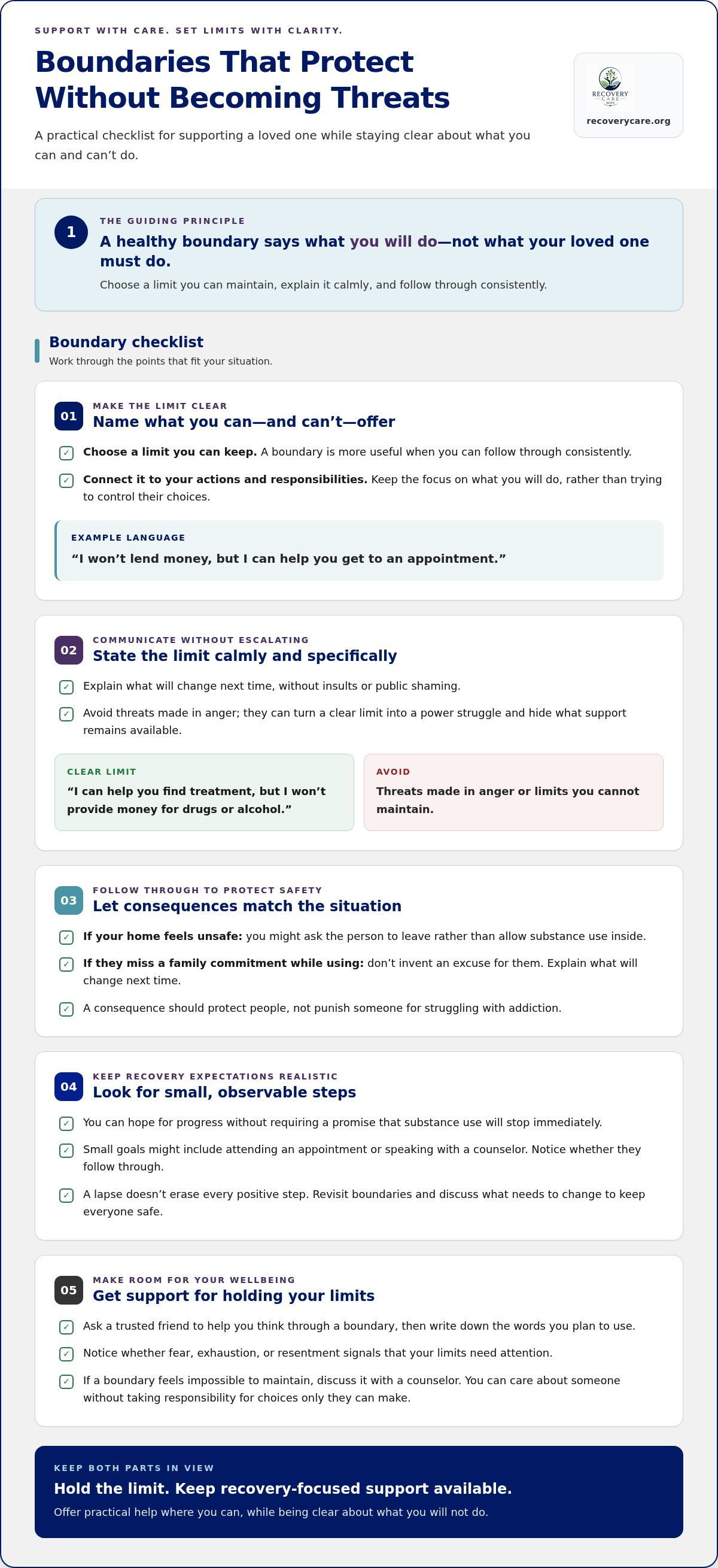
A healthy boundary states what you will do, not what your loved one must do. Choose a limit you can keep, such as, “I won’t lend money, but I can help you get to an appointment.” Explain it calmly, then follow through consistently. Avoid threats made in anger: they can turn a clear limit into a power struggle and obscure what support remains available.
Connect consequences to your own safety and responsibilities. If substance use makes your home unsafe, you might ask the person to leave rather than allow use inside. If they miss a family commitment while using, don’t invent an excuse for them. Explain what will change next time, and apply the limit without insults or public shaming. A consequence should protect people, not punish someone for struggling with addiction.
Keep your expectations for recovery realistic. You can hope for progress without requiring a promise that substance use will stop immediately. Set small, observable goals, such as attending an appointment or speaking with a counselor, and notice whether they follow through. Recovery can include setbacks, so a lapse doesn’t erase every positive step. It does mean you can revisit boundaries and discuss what needs to change to keep everyone safe.
Your mental health matters, too. Ask a trusted friend to help you think through a boundary before stating it, then write down the words you plan to use. Notice how you feel after each interaction: fear, exhaustion, or resentment may signal that your limits need attention. If a boundary feels impossible to maintain, discuss it with a counselor. You can care about someone while declining to take responsibility for choices only they can make.
4. Communicating with care rather than confrontation
Choose a calm moment when your loved one is sober, then describe one specific concern. “I felt scared when you drank and drove home” is clearer than “You’re ruining everything.” An “I” statement names your emotional response without labeling the person. Speak slowly, give them room to answer, and avoid turning the conversation into a debate about whether they have a problem.
Listen for what may be behind their refusal. They might fear withdrawal symptoms, stigma, or losing control over treatment choices. Reflect what you hear: “You’re worried treatment will take you away from work.” Then ask what kind of support would feel acceptable. Encourage them to consider one manageable next step, such as discussing options with a health professional.
Motivational interviewing helps someone who feels unsure explore both sides of that uncertainty without arguments or threats. A trained professional uses open questions and reflective listening to help the person express their own concerns and reasons for considering change.
Keep the conversation focused on care, not a forced promise. If alcohol use affects a family gathering, explain the impact and ask what would make the next gathering safer. Recognize small steps, such as agreeing to learn about treatment or asking about counseling. If the exchange becomes heated, pause and return to it later instead of pressing for an answer.
For a more structured conversation, Community Reinforcement and Family Training (CRAFT) is an evidence-based approach that teaches positive communication to loved ones. A counselor can help you practice responses for your specific situation, including how to encourage treatment without taking responsibility for another person’s choices. Take a step toward support if you’re ready to discuss what may help.
Recovery Care: Suboxone Treatment
Recovery Care offers Suboxone Treatment for people considering medication-assisted treatment for opioid addiction. If your loved one is open to discussing care, a treatment conversation can help them explore whether this option fits their needs. Recovery Care also offers Sublocade Injections, Vivitrol Injections, and Telehealth Consultations, giving patients options to discuss with the care team.
You can share this information without pressure or save it for when your loved one is ready to explore treatment. The choice to seek care is theirs, and you can make a next step easier to consider.
Visit Recovery Care to learn more about treatment options.
Keep the Next Step Within Reach
Readiness can change, and a future conversation may open a door that feels closed today. Keep a simple next step in mind, such as helping your loved one talk through treatment options when they’re willing. You don’t have to solve everything in one conversation, and their decision doesn’t define the care or concern you’ve shown.
If you’re still considering how to help an addict who doesn't want help, remember that support can include getting guidance for yourself, too. A conversation with a treatment team can help you understand possible options and decide what information to share when your loved one is ready. Recovery Care can discuss treatment options with you, including care for opioid addiction.
Contact Recovery Care to discuss options. A thoughtful next step can begin with a conversation, and you can take it at your own pace.
Frequently Asked Questions
Can You Commit Someone to Rehab?
Involuntary treatment depends on state law and the circumstances; family members can’t assume they have authority to require rehab. A parent or spouse may have a legal intervention option in some situations, but involuntary commitment for addiction isn’t legal in Alabama. If you’re considering this route, learn the rules that apply where the person lives and seek legal guidance before taking action.
How Do You Help Someone on Drugs Who Doesn’t Want Help?
Offer a practical choice they can accept without making a major commitment. For example, ask whether they’d be willing to speak with a doctor about sleep, anxiety, or another concern, rather than asking them to agree to a full treatment plan right away. You can also offer to help find information or accompany them to an appointment. Keep the offer open if they decline.
How Can You Help Make Sure an Intervention Succeeds?
No intervention can guarantee a particular outcome, but preparation can make the conversation more focused and caring. An intervention team usually includes 4 to 6 people who matter to the person, and planning can take several weeks. Agree beforehand on the concern each person will share, avoid blame, and make the goal a supportive network rather than forcing an immediate decision.
How Do You Find a Treatment Program to Offer at the Intervention?
Start by considering the substance involved, the person’s health concerns, and the kind of care they might consider. A counselor or treatment team can help the family think through options that fit those needs. For opioid addiction, prescribed medication may be one treatment approach; counseling can also be part of care. Suggest a clear next step, such as discussing choices with a qualified professional.
How Should I Respond If My Loved One Refuses to Go to Rehab?
Don’t treat “no” as the end of every future conversation. You might say, “I hear that you’re not ready for rehab. If you want to talk about another kind of help, I’ll listen.” Keep your own limits clear, and don’t make recovery depend on a single conversation. A person can reconsider treatment later, and small steps toward discussing care matter.
If They Keep Refusing, How Do I Get Them to Stop Drinking or Using Without Treatment?
You can’t make another person stop, and only they can commit to recovery. Keep learning about addiction and notice changes that may signal relapse, such as anxiety, anger, moodiness, or poor judgment. If opioid overdose is a concern, learn how naloxone can temporarily reverse an overdose and recognize signs that require emergency help. Continue offering a path to professional support without taking control of their choices.


